





What is the purpose of damp heat test?
2026/02/04
Share:

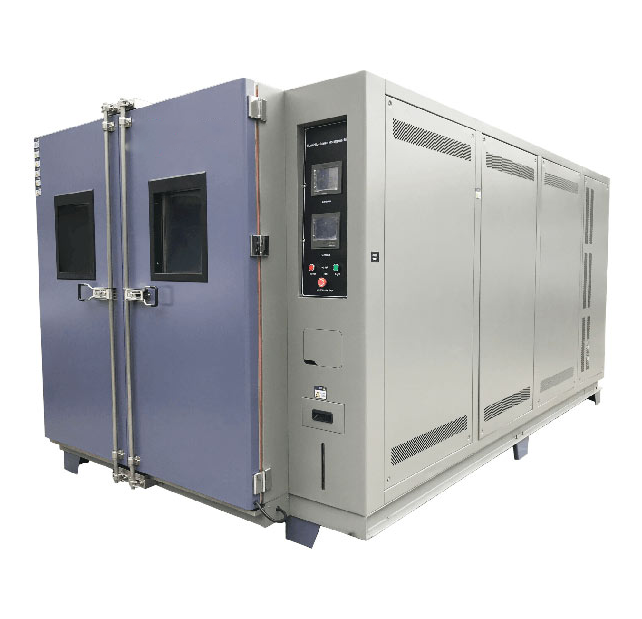
This article provides a comprehensive discussion on the purpose of damp heat testing, covering basic principles, typical testing standards, applications across various fields, and its significance in product development and quality control.
Basic Concept and Classification of Damp Heat Testing
Damp heat testing involves placing test specimens in a controlled high-temperature and high-humidity environment, assessing their performance under specified temperature, relative humidity, and exposure duration. There are two primary types of damp heat tests:
1. Steady-State Damp Heat Test
In a steady-state damp heat test, the specimen is subjected to constant high temperature and humidity for a period of time, without cycles of temperature or humidity changes. Standards such as IEC 60068‑2‑78 define this type of test, which evaluates the ability of products or components to withstand prolonged humid conditions.
2. Cyclic Damp Heat Test
Compared with steady-state testing, cyclic damp heat testing alternates between high-temperature, high-humidity conditions and lower temperature or humidity conditions, creating cycles of condensation and drying. This method more effectively reveals failure modes such as moisture ingress into enclosures, crack propagation, and accelerated corrosion. IEC 60068‑2‑30 is a representative standard for cyclic damp heat testing.
Primary Objectives of Damp Heat Testing
1. Assess Product Reliability in Humid Environments
The core purpose of damp heat testing is to evaluate the stability and operational reliability of products under high-humidity conditions. In real environments, high temperature and humidity often occur simultaneously, accelerating material aging, corroding electrical components, reducing insulation resistance, and damaging enclosures. Damp heat testing exposes these potential failure modes early, enabling design improvements during the development stage.
In electronic products, moisture ingress can lead to short circuits on printed circuit boards, reduced insulation performance, and metal component corrosion—failures that might otherwise take years to appear under normal conditions. Damp heat testing, as an accelerated aging method, reproduces such degradation within a shorter timeframe, allowing the R&D team to identify issues before production.
2. Verify Environmental Adaptability and Compliance
Before market entry, products usually need to meet specific industry standards or regulatory requirements. Many standards mandate damp heat testing to ensure that products can operate reliably under intended environmental conditions. Fields such as telecommunications, automotive electronics, and defense have clear requirements for damp heat performance.
Damp heat testing also serves as part of compliance verification. By checking whether products maintain functionality and performance under prescribed damp heat conditions, manufacturers can demonstrate conformity with international or industry standards and gain certification for market access.
3. Improve Product Quality and Prevent Field Failures
Even if a product appears compliant under normal testing, high humidity in complex environments can be a hidden cause of failure. Damp heat testing subjects products to conditions exceeding expected environmental stress, revealing weaknesses in materials, design, or manufacturing processes for targeted improvement.
For example, certain plastics may absorb moisture and deform under hot, humid conditions, while rubber seals may expand or harden, losing sealing performance. These issues can compromise system functionality. Damp heat testing detects such problems, allowing corrections during pilot production.
Common Failure Modes Revealed by Damp Heat Testing
Damp heat conditions can trigger various physical, chemical, and electrical failures, including:
1. Corrosion
In high humidity, water condensation on metal surfaces can create electrochemical corrosion, causing oxidation, poor contact, or open circuits. This effect is particularly critical for solder joints and PCB traces.
2. Insulation Degradation
Moisture lowers material insulation resistance, increasing the risk of dielectric breakdown. This is especially important in electrical equipment and electronic packaging, where damp heat testing can evaluate the safety margin of insulation systems.
3. Material Deformation and Aging
Moisture absorption can change the mechanical properties of plastics, rubbers, and other materials, causing swelling, softening, or embrittlement. These changes affect not only appearance but also assembly integrity, sealing, and structural reliability.
4. Performance Parameter Drift
Damp heat may alter electrical parameters such as resistance or capacitance, affecting device operation. Such drifts are difficult to replicate in normal environments but can be quantified in damp heat testing to assess risk.
Applications of Damp Heat Testing Across Industries
Damp heat testing is widely applied in virtually all industries where environmental reliability is critical.
Electronics and Electrical Products
Electronic components and systems are particularly sensitive to moisture. Micro-cracks in integrated circuit packages and gaps between leads can serve as moisture ingress paths. Damp heat testing checks PCB assembly integrity, packaging quality, and identifies potential failures. Electrical connectors and relay contacts may also experience poor contact or surface oxidation, affecting overall system reliability.
Automotive Industry
Vehicles in different regions may encounter hot, humid conditions. Engine compartments, lighting, and interior plastics may degrade due to moisture exposure. Damp heat testing during automotive component development verifies the durability of seals, sensors, and other devices under high-temperature, high-humidity conditions.
Medical Devices and Instruments
Medical equipment requires high precision and stability over long-term use. Damp heat can impact electronic components and accelerate material aging. Testing ensures that devices maintain measurement accuracy and operational stability under humid conditions, which is critical for reliability validation.
Materials and Chemical Products
The behavior of plastics, rubbers, coatings, and other materials under damp heat is vital for material selection and design. Damp heat testing reveals long-term physical changes caused by moisture, providing reliable data for material development and application.
Testing Procedure and Key Control Elements
Effective damp heat testing requires a strict procedure and precise environmental control:
Temperature and Humidity Settings
Set temperature and humidity combinations according to product type and standard requirements. Typical conditions include high temperatures (40°C, 55°C, 85°C) and high relative humidity (85%RH or above).
Duration and Exposure Cycles
Test duration ranges from several hours to hundreds of hours, depending on testing objectives and expected product lifespan. Longer exposure better simulates long-term real-world effects.
Preconditioning and Post-Test Evaluation
Specimens often undergo preconditioning to ensure consistent testing. After testing, detailed assessments of functionality, appearance, mechanical, and electrical performance are conducted to analyze the impact of damp heat.
Damp heat testing is an essential environmental reliability test that not only verifies product adaptability under high temperature and humidity but also identifies potential risks early in the design phase, enhances product quality, and ensures compliance with standards. Through systematic damp heat testing, engineers can detect material, process, or design flaws in advance and implement corrective measures, ensuring robust performance in complex environments.
The significance of damp heat testing extends beyond technical evaluation to product lifecycle management, market competitiveness, and user experience assurance. As industry demands for reliability continue to rise, damp heat testing will remain an indispensable component of product development and quality systems.
Previous: Wet Leakage Current Test System,IEC 61215
N e x t : What is the difference between IEC 61215 and 61730?
