





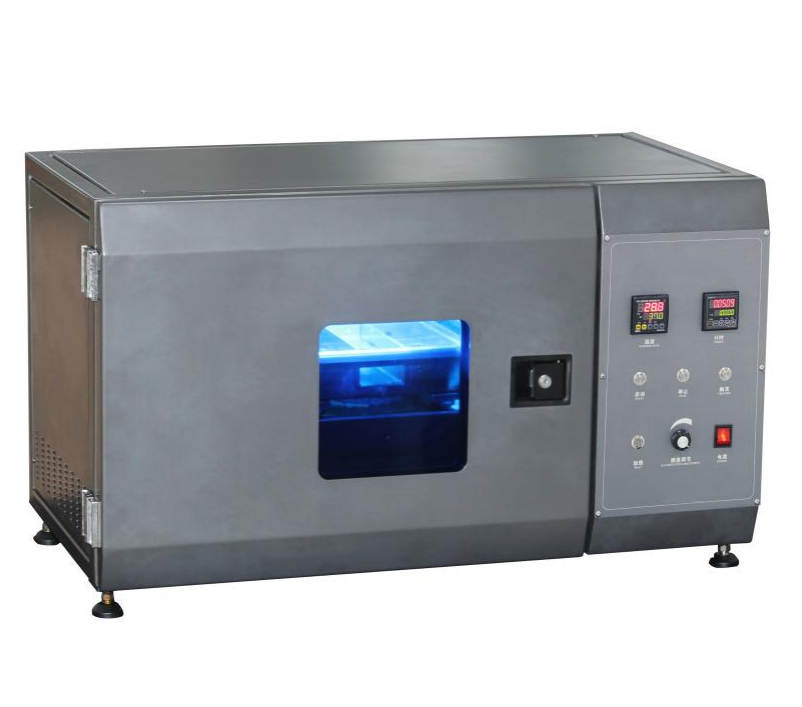
Dental material color stability tester,YY0270.1-2011
2026/02/05
Share:

The purpose of colour stability testing is not only to compare the aesthetic durability of different materials but also to assess whether materials can maintain their original colour under simulated oral conditions over time. This property directly relates to the longevity of restorative materials and patient satisfaction, making it a critical component of the dental material evaluation system.
Dental Material Colour Stability Tester
A dental material colour stability tester is a laboratory device used to evaluate the extent of colour changes in dental materials—particularly polymer-based composites, denture base materials, and other restorative materials—under controlled light and immersion conditions. It simulates routine oral use by exposing specimens to accelerated aging environments using standardized light sources and controlled temperature and humidity, followed by colour analysis to quantify changes.
This tester can simulate various environmental stresses, including high-intensity light, ultraviolet radiation, circulating water baths (approximately 37 °C to mimic oral temperature), and humidity changes. By comparing the initial colour of a material with its post-aging colour, its colour stability can be determined. Results are usually expressed as colour difference values (e.g., ΔE) or other quantitative indices.
The primary function of the instrument is to provide a standardized, repeatable, and comparable testing platform, enabling research institutions, material developers, quality control laboratories, and dental clinics to consistently evaluate colour durability.
Standards and Testing Specifications
International Standards
Colour stability testing is governed by strict international and industry standards, the most important of which are:
ISO 7491
ISO 7491:2000 “Dentistry — Determination of colour stability” specifies methods for assessing the colour stability of dental materials under light and water exposure. The standard details the light source, illuminance, temperature, specimen preparation, and colour evaluation procedures. Samples are exposed to specified light conditions (commonly using a medium-pressure xenon lamp with a colour temperature of ~5000–10000 K and illuminance of ~150.000 lx) while immersed in water to simulate oral conditions (37 ± 5 °C). After a preset exposure period, visual and instrumental measurements are conducted to evaluate colour changes.
Domestic Standard YY/T 0631-2008
The Chinese dental industry standard YY/T 0631-2008 “Determination of Colour Stability of Dental Materials” adopts the ISO 7491:2000 methodology, with slight adjustments for implementation details such as illuminance range and water quality. It serves as the primary domestic reference for testing and quality control.
These standards ensure consistency and comparability of results across different laboratories and testing equipment, providing an essential reference for dental material colour stability assessment.
Principles and Components of the Tester
Testing Principle
The dental material colour stability tester operates on the principle of accelerated aging simulation. Artificial light sources mimic solar spectral irradiance on the material, while water immersion replicates the humid oral environment, allowing materials to undergo physical and chemical changes similar to long-term clinical use in a shortened timeframe. Colour changes are measured using colorimeters or spectrophotometers, expressed in widely accepted colour difference parameters.
Key variables in the test include:
Light source and illuminance control: Medium-pressure xenon lamps provide a continuous spectrum of high-intensity light to simulate sunlight, with illuminance maintained at approximately 150.000 lx ±10%.
Water bath temperature control: Typically maintained around 37 °C to simulate oral cavity temperature, assessing the combined effect of water and pigments on materials.
Specimen immersion and exposure duration: Samples are immersed and exposed to light for durations specified by standards.
Colour measurement: Pre- and post-test colour is evaluated using a colorimeter or spectrophotometer, commonly expressed as ΔE.
Main Components
A typical dental colour stability tester includes:
Light source system: Equipped with xenon lamps and UV filters to control the spectral output.
Circulating water bath system: Maintains constant water temperature, with pumps and temperature controllers.
Test chamber and sample holder: Ensures precise positioning of specimens relative to light and water surfaces.
Illuminance and temperature sensors: Monitors real-time light intensity and water temperature to maintain standard conditions.
Colour measurement instruments: Measure sample colour before and after testing, calculating colour differences.
This system allows standardized testing with high repeatability and comparability, providing reliable data for research and quality control.
Testing Procedure
Although specific instruments may vary, the general procedure includes:
Sample Preparation
Specimens are prepared to standard sizes and surface-treated to ensure flatness and cleanliness for accurate colour measurement.
Initial Colour Measurement
Baseline colour values are recorded using a spectrophotometer or colorimeter.
Test Environment Setup
The light source and water bath systems are activated, controlling temperature, water level, and illuminance according to standards. Samples are exposed to uniform light and immersion conditions.
Aging Test
Samples are maintained under light and water bath conditions for a prescribed duration (from several hours to tens of hours), simulating cumulative effects of long-term oral use.
Colour Measurement and ΔE Calculation
After aging, colour values are measured again, and colour difference (ΔE) is calculated. Larger ΔE values indicate greater colour change and poorer stability.
Result Analysis and Reporting
Colour changes are evaluated against standard thresholds, classified, and reported, providing insights into aesthetic performance and material suitability.
This workflow ensures consistent testing across material batches, supporting material development, production control, and regulatory compliance.
Colour Measurement and Evaluation Metrics
Colour stability is typically evaluated in the CIELAB colour space using L* (lightness), a* (red–green), and b* (yellow–blue) coordinates. The total colour difference ΔE between initial and post-aging measurements provides a quantitative indicator of colour change:
Lower ΔE: Indicates minimal colour change and better stability.
Higher ΔE: Indicates significant colour change, potentially failing aesthetic requirements.
Acceptable ΔE thresholds vary according to standards or clinical guidelines.
Significance in Research and Clinical Application
Aesthetics and Patient Satisfaction
Dental restorative materials, such as composite resins, denture bases, and prostheses, may experience colour shifts due to saliva, dietary habits, or light exposure, affecting patient perception and satisfaction. Reliable colour stability testing predicts long-term aesthetic performance.
Material Development and Optimization
For material developers, colour stability is critical for validating new formulations. Comparative testing under standard conditions identifies optimal compositions and additives to improve durability and aesthetics.
Quality Control and Standard Compliance
Manufacturers use colour stability testing to ensure each batch meets expected performance and complies with standards, a key aspect of quality assurance and certification, particularly for export materials.
Clinical Guidance
Clinicians and dental technicians can select materials with proven colour stability, reducing the likelihood of secondary restorations or patient dissatisfaction due to visible colour changes.
Current Status and Future Trends
With the advancement of digital dentistry and higher aesthetic demands, colour stability testing continues to evolve. Integration with spectroscopic analysis, computer vision, and advanced colourimetric methods allows more precise and objective evaluation. Emerging technologies, such as 3D printing and nanomaterials in dental applications, also drive research into novel materials and testing approaches for long-term colour durability.
Dental material colour stability testers are essential instruments within the dental material evaluation framework. By providing standardized, simulated conditions, they enable quantitative assessment of colour durability. Through adherence to international standards and structured testing protocols, developers and users can evaluate aesthetic performance and long-term stability. As dental materials science and clinical aesthetic requirements advance, colour stability testing will continue to play a critical role in material development, quality assurance, and clinical decision-making, supporting improved patient satisfaction and clinical outcomes.
Previous: What is the sweating guarded hot plate test method?
N e x t : MMT Liquid Water Separation Tester,ISO 4920
