





What is the explosion temperature apparatus?
2026/02/11
Share:

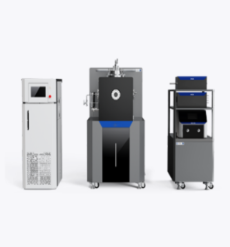
Definition and Nature of the Explosion Temperature Apparatus
The “Explosion Temperature Apparatus” is designed to determine the temperature at which a material undergoes ignition or explosion (more precisely, self-ignition or rapid decomposition) when heated. The explosion temperature can be understood as the lowest temperature at which a material experiences self-accelerating decomposition or explosive reaction under controlled thermal loading.
Unlike flash point or autoignition temperature testing, the goal here is not to detect flammable vapor ignition, but to quantitatively evaluate when substances with explosive potential, exothermic decomposition characteristics, or self-initiating reactions begin to undergo self-heating or explosive decomposition during heating.
This apparatus is referenced in international standards and is primarily applied to explosives, pyrotechnics, propellants, and hazardous chemicals to assess thermal sensitivity, stability, and storage/transportation risk. Test results are typically reported as explosion (ignition) temperature or time-to-explosion data, providing a key indicator of extreme behavior under thermal stress.
Distinction from Other Thermal Measurements
In thermal safety testing, several temperature concepts exist:
Flash Point: The minimum temperature at which a liquid produces ignitable vapors when heated.
Autoignition Temperature: The lowest temperature at which a substance ignites without an external flame or spark.
Explosion/Ignition Temperature: The temperature at which a material undergoes self-initiated decomposition or explosive reaction under heating—a higher-risk, more severe reaction metric.
The explosion temperature apparatus complements these measurements by providing more comprehensive data for chemical classification, hazard evaluation, hazardous material logistics, and material handling strategies.
Working Principle
The core function of the explosion temperature apparatus is to apply a controlled thermal load to a sample while monitoring its behavior in real time. Automatic sensors and recording systems detect self-initiated decomposition or explosive effects, enabling determination of the explosion temperature under specified conditions.
Basic workflow:
Controlled Heating
The sample is placed in a test chamber or standard test tube and subjected to either a constant heating rate or isothermal condition in a furnace or thermal device:
Constant heating rate: Temperature gradually increases at a set rate until the material reacts.
Isothermal mode: The sample is held at a fixed temperature, and reaction time is monitored. This mode accommodates materials with different thermal reaction kinetics.
Sensing and Detection
The apparatus is equipped with explosion/ignition sensors, temperature sensors, and optionally pressure sensors to detect thermal release, visual or acoustic signals, sudden pressure changes, or other reaction indicators. Advanced systems can detect decomposition or ignition even when no obvious visual or acoustic signals occur, while automated data acquisition units record temperature versus reaction time.
Automatic Recording and Analysis
The device monitors temperature and reaction signals in real time, automatically logging explosion or decomposition events. After the test, data can be analyzed to determine explosion temperature, decomposition curves, and reaction delay times. Modern instruments often include software for automatic data analysis, graphing, and report generation, reducing the need for manual observation.
Structure and Key Components
A professional explosion temperature apparatus typically includes the following components:
Heating System
Provides controlled heating via an electric furnace, thermal block, or enclosed heating chamber, with adjustable heating rates and stable temperature modes for reproducible and precise testing conditions.
Sample Chamber/Test Container
Holds the sample in a standard configuration that ensures accurate heat transfer and reliable reaction data.
Explosion/Ignition Sensors
Capture instantaneous signals of decomposition or explosion, including acoustic, optical, pressure, or thermal signals.
Temperature Sensing System
High-precision thermocouples or other sensors measure sample and chamber temperatures in real time.
Data Acquisition and Control Software
Manages automated control, real-time data collection, and analysis, generating reports while minimizing human error.
Testing Methods
There are two primary testing methods:
Constant Heating Rate Test
The sample is heated at a predetermined rate (e.g., degrees per minute) until explosive reaction or decomposition occurs. This method determines the explosion temperature threshold and evaluates thermal stability in research and quality control.
Isothermal Test
The sample is held at a fixed temperature, and the time until explosive reaction occurs is recorded. This time-to-explosion relationship is valuable for assessing risk under specific thermal conditions.
Data Output and Evaluation Metrics
Key outputs from the explosion temperature apparatus include:
Explosion Temperature: Temperature at which the sample decomposes or explodes.
Explosion Delay Time: Time elapsed until reaction under isothermal conditions.
Temperature-Time Curves: Complete thermal response profile.
These data are essential for evaluating material thermal sensitivity, determining safe storage and transport temperature limits, and managing chemical reaction hazards.
Applications and Industry Value
The explosion temperature apparatus is mainly applied in:
Pyrotechnics Research and Production: For explosives, propellants, igniters, and pyrotechnic compounds, explosion temperature is a critical parameter for safe production and quality control.
Hazardous Chemical Classification and Packaging: Accurate explosion temperature data supports transport temperature limits, safety labeling, and packaging strategies.
Safety Supervision and Storage Management: Identifies the maximum dangerous temperatures under different storage conditions, informing warehouse temperature control standards.
Academic and Research Use: Utilized in laboratory experiments, thermal sensitivity studies, and model validation in higher education and scientific research.
International Standards and Regulations
Although the term “explosion temperature apparatus” is not widely used in most hazardous chemical classification regulations, such instruments generally comply with or reference international standards (e.g., NATO STANAG, UN Recommendations on the Transport of Dangerous Goods) for thermal sensitivity or ignition behavior of energetic materials. Standardized testing ensures comparability across laboratories and provides essential data for classification, labeling, and emergency planning.
Comparison with Other Safety Testing Devices
While related to “explosion,” different instruments focus on distinct aspects:
Explosion Limit Tester: Determines the upper and lower explosive limits of combustible gas mixtures.
Dust Explosion Tester: Measures pressure and explosion index of solid dust clouds in air.
Explosion Temperature Apparatus: Focuses on when individual compounds undergo ignition or explosive decomposition under heating.
Together, these tests form a comprehensive chemical safety performance evaluation system.
Interpretation of Results and Risk Applications
Assessing explosion temperature informs both thermal stability and safety management:
Materials with high explosion temperatures are harder to trigger thermally, offering greater safety margins.
Materials with low explosion temperatures are more prone to uncontrolled reactions under normal thermal fluctuations, environmental heat, or equipment malfunctions. Comparing explosion temperature data across samples can guide formulation, safe storage, and emergency response strategies.
The explosion temperature apparatus is a specialized instrument for measuring self-initiated decomposition or explosive behavior of materials under heating. It provides critical explosion temperature and time data, making it essential for pyrotechnics research, hazardous chemical classification, storage and transport safety, and scientific education and research. With advances in automation, sensor precision, and data analysis software, these instruments are evolving toward greater reliability, automation, and standardization.
Previous: High - speed Pellet Impact Testing Machine for Helmet Goggles,EN 166
N e x t : Minimum Ignition Energy Tester for Dust Clouds,ASTM E2019
