





Minimum Ignition Energy Tester for Dust Clouds,ASTM E2019
2026/02/11
Share:

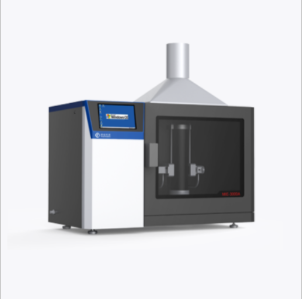
This instrument can simulate conditions in which a dust cloud encounters sparks, electrostatic discharges, or other energy sources, accurately measuring the minimum energy required to cause ignition. It provides scientific data for explosion-proof design, hazard identification, and risk management. This article provides a systematic overview of the test principle, domestic and international standards, equipment composition, test methods, data interpretation, and industrial applications of the instrument.
Definition and Significance of Minimum Ignition Energy
The minimum ignition energy of a dust cloud is the lowest external energy capable of igniting or causing an explosion of a dust cloud suspended in air. This energy is typically simulated by an electric spark generated from a high-voltage capacitor discharge.
The MIE value reflects not only the sensitivity of the dust to ignition sources but also depends on factors such as particle size, moisture content, electrical conductivity, and dispersion. Statistical data indicate that different dusts have widely varying MIE values; for example, some common dusts can ignite with energies ranging from tens to hundreds of millijoules, while certain metal dusts may ignite under even lower energy conditions.
The significance of MIE includes:
Risk Assessment: Lower MIE values indicate higher ignition sensitivity and greater explosion risk.
Explosion-Proof Design: Understanding dust ignition sensitivity informs the selection of anti-static equipment, explosion-proof measures, and safety system design.
Operational Safety: Environments containing low-MIE dust require stricter control of static electricity, sparks, and other potential ignition sources.
Standards Compliance: MIE is a key parameter in hazardous materials classification and explosion-proof design regulations.
Overview of International and Domestic Standards
To standardize testing methods and result interpretation, there are clear global standards for determining the MIE of dust clouds.
International Standards
ASTM E2019 is an international standard specifying the procedure and data handling for MIE testing of dust clouds in air. The standard defines how a high-voltage spark ignites the dust cloud, how the minimum energy is determined, and emphasizes that MIE depends on the testing method and equipment conditions rather than being an inherent material constant.
The standard is widely used in industry, such as for comparing the relative ignition sensitivity of different dusts or determining the required explosion-proof classification of dust-handling areas. It also describes the use of reference dusts to calibrate test equipment, ensuring consistency and comparability of results.
Domestic Standards
China’s national standard GB/T 16428-1996 specifies the methods for determining the minimum ignition energy of dust clouds, including the test apparatus, measurement procedures, and reporting requirements. It applies to combustible dusts supported by oxygen in air and excludes explosive materials such as explosives. The standard defines the structure of the spark system, Hartmann tube, and explosion test device, as well as the sequence of operations and precautions, ensuring accuracy and repeatability.
Additionally, a 2024 national standard project further regulates MIE testing methods, developed collaboratively by domestic safety research institutions and universities, enhancing the standardization of dust explosion hazard assessments locally.
Other Reference Standards
Other international organizations, including IEC and ISO/IEC, have technical specifications related to dust MIE testing (e.g., IEC 61241-2-3 and ISO/IEC 80079-20-2), which provide guidance for testing and certification practices worldwide and promote international consistency.
Basic Principle of the Dust Cloud Minimum Ignition Energy Tester
The core function of the tester is to disperse dust under controlled conditions to form a uniform dust cloud, and then ignite the cloud using a spark source with adjustable energy, recording the minimum energy required to achieve ignition.
Dust Cloud Formation and Dispersion
The dust sample is first atomized and dispersed into the test chamber using compressed air, simulating the suspended state of dust clouds in production environments. Common devices use a Hartmann tube structure to evenly distribute dust along a narrow, transparent tube for observation and testing.
Spark Ignition and Energy Measurement
The tester typically uses a high-voltage capacitor discharge system, releasing stored energy as an electric spark. By adjusting the capacitor energy, the test energy is gradually lowered. Each test observes whether the dust cloud ignites. If combustion or explosion occurs, that energy is recorded as a potential ignition energy. Repeating multiple tests determines the minimum energy required to ignite the dust cloud, which is the MIE.
Calibration and Reference Dusts
To ensure data reliability, the tester is calibrated using reference dusts with known MIE ranges. Testing reference dusts first allows calibration of the instrument’s response, enabling accurate determination of other samples’ ignition sensitivity. This ensures comparability of results.
Structure and Functional Modules of the Tester
The dust cloud MIE tester integrates several key modules:
Dust Dispersion System
Typically consists of a compressed air source, dust spraying mechanism, and distribution tubing to rapidly and uniformly introduce dust into the test chamber. Dispersion efficiency and uniformity directly affect accuracy, so the system ensures stable dust cloud formation.
Test Chamber
Commonly a Hartmann tube, transparent explosion container, or spherical explosion vessel, designed to hold the dust cloud and withstand short-duration combustion or localized explosions. Typical volumes include a 1.2 L Hartmann tube and larger spherical explosion vessels.
Spark Source and Energy Control
Ignition sparks are generated via high-voltage capacitor discharge. The energy can be adjusted stepwise from low to high, generally ranging from 1 mJ to 3000 mJ or higher, accommodating different dust types.
Control and Data Acquisition System
Modern testers feature a human-machine interface, touchscreen control, and data recording capabilities, automatically controlling the test, recording each ignition attempt, and generating analysis reports, greatly improving efficiency and consistency.
Safety Protection
Due to potential local combustion or minor explosions, the equipment includes protective shields, ventilation, and emergency cut-off systems to ensure operator safety.
Test Procedure and Operation
Sample Preparation
Dust samples are dried and sieved to meet particle size specifications (e.g., ASTM requires at least 95% of particles <75 μm). Moisture content affects MIE, so samples are typically dehumidified.
Dust Cloud Formation
The sample is evenly dispersed into the test chamber to form a dust cloud. Concentration is set to the most easily ignitable state without exceeding safety thresholds.
Spark Ignition Test
The device releases electric sparks at preset energies in sequence, observing whether the dust cloud ignites. Energy is gradually reduced in repeated tests to identify the minimum energy that causes ignition—the MIE.
Data Recording and Analysis
Each spark energy and ignition outcome is recorded, and the final MIE value is determined. Modern instruments automatically generate curves and reports, assisting engineers in assessing dust safety characteristics.
Interpretation of Results and Safety Significance
MIE test results are vital for industrial safety management:
Risk Classification and Explosion-Proof Measures
Dusts with low MIE values are highly sensitive to ignition by static discharge or mechanical sparks, requiring anti-static, explosion-proof equipment, and isolation measures.
Design and Equipment Maintenance
MIE data guides the selection of appropriate explosion-proof equipment, facility layout, static discharge strategies, and automatic suppression or extinguishing systems.
Training and Emergency Planning
Knowledge of dust ignition characteristics enhances employee awareness, informs on-site training regarding ignition hazards, and supports accident prevention and emergency response plans.
Typical Minimum Ignition Energy Values
MIE values vary significantly by dust type and particle characteristics:
Sugar dust: ~30 mJ
Wheat flour dust: ~50 mJ
Aluminum dust: ~10 mJ
Epoxy resin dust: ~9 mJ
Some pharmaceutical intermediate dusts: ~1 mJ
These values indicate that certain dust clouds can ignite under very low-energy conditions, emphasizing the need for strict control of static electricity, grounding, and dust handling measures.
Industrial Applications
The dust cloud MIE tester is widely used in:
Powder Production and Processing: Food, pharmaceutical, chemical, and wood processing industries, where dust is prevalent, use MIE testing to assess explosion risks.
Storage and Transportation: Grain, starch, and sugar dusts can form suspended clouds during handling; MIE testing informs ventilation and dust collection design.
New Materials and Metal Powder Manufacturing: MIE testing helps determine static control requirements for metal and plastic powders.
Safety Certification and Testing Laboratories: Provides dust explosion hazard assessment reports for clients, supporting explosion-proof engineering design.
The dust cloud minimum ignition energy tester is a critical tool for evaluating dust explosion hazards. By determining the minimum energy required to ignite a dust cloud in air, it provides scientific data for explosion-proof design, safety assessment, and risk control. This article summarizes its test principle, standards, equipment composition, test procedures, data analysis, and industrial applications, highlighting the value of this testing technology in industrial safety management.
Previous: What is the explosion temperature apparatus?
N e x t : How to test burning rate?
