





How to test burning rate?
2026/02/11
Share:

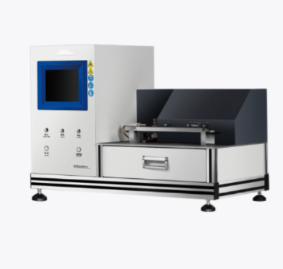
In general, burning rate can be understood from two perspectives:
Linear speed of the combustion front—such as flame spread rate along a material surface.
Rate of material consumption—the reduction of material mass or length over time during combustion.
Different testing methods and standards focus on different measurement indicators depending on the purpose of the test.
This article systematically explains methods for testing burning rate, including common standards, testing equipment and procedures, data analysis, and practical applications.
Physical Mechanism and Significance of Burning Rate
Nature of Burning Rate
Combustion is the oxidation of a fuel in the presence of oxygen, accompanied by heat release, flame propagation, and material consumption. The burning rate reflects the speed of the reaction system from ignition to complete combustion and is influenced by:
Intrinsic material properties: Chemical composition, pyrolysis temperature, density, thermal conductivity, and calorific value all affect burning rate. High-calorific materials tend to release heat more intensely, potentially increasing the burning rate.
Environmental conditions: Oxygen concentration, ventilation, heat source intensity, and external heat feedback affect flame propagation and heat transfer speed. Higher oxygen concentration generally promotes faster combustion.
Physical form and size: Material forms such as powders, sheets, foams, etc., influence surface area and combustion contact area, affecting the burning process. Thinner materials or larger surface areas typically burn faster.
Importance of Burning Rate
Burning rate directly determines fire spread, heat release intensity, and fire dynamics. For example, in building fire protection design, materials with high burning rates produce heat and smoke more quickly, challenging evacuation and firefighting efforts.
Basic Approach to Burning Rate Testing
Burning rate is generally measured in two ways:
Flame-front propagation measurement: Observing flame movement along the material surface under controlled conditions, recording distance versus time to calculate linear burning rate.
Heat release or mass loss rate measurement: Measuring the rate of heat release or mass loss over time during combustion, reflecting the overall “rate” of burning. This often requires more sophisticated thermal analysis equipment.
The method chosen depends on whether the goal is to evaluate flame spread, heat release characteristics, or simply compare the combustion performance of different materials.
Common Burning Rate Test Standards
To ensure comparability and repeatability, standardized organizations have developed burning rate testing methods for plastics, building materials, powders, and other solids.
Horizontal Burning Rate Test (ASTM D635)
ASTM D635 is an international standard for determining the burning rate or burning extent of plastic materials in a horizontal orientation. The sample is placed horizontally, one end exposed to a heat source, and flame propagation is recorded.
In the test, the flame is applied to one end of the sample for a specified time and then removed. The time it takes for the flame to reach a marked point along the sample is measured, and burning rate (mm/min) and burn length are calculated. If the flame stops before reaching the second mark, the burning spread class is determined according to the standard.
This method is widely used to compare similar materials’ combustion performance and for preliminary fire classification.
UN and Globally Harmonized System (UN Test N.1 / GHS)
For transportation classification of solids, the UN Manual of Tests and Criteria (also adopted by GHS) specifies burning rate testing to determine if a solid is a flammable solid.
Powdered or granular materials are pressed into strips of specified cross-section, placed on a non-combustible base, and ignited at one end. The time taken for the flame to traverse a set length (typically 100 mm or 200 mm) is recorded. If the burning rate exceeds the threshold, the material is classified as “flammable solid” for further categorization.
This test assists in hazard identification for transport and dangerous goods classification.
Heat Release Rate Test (ISO 5660-1 / GB/T 16172)
Although not measuring linear burning rate directly, the heat release rate (HRR) is a key parameter for evaluating material combustion performance. ISO 5660-1 and the corresponding domestic standard GB/T 16172 use a cone calorimeter method, exposing the sample to controlled radiant heat and recording HRR, mass loss rate, and surface combustion behavior.
HRR results provide insights into fire growth potential and relative hazard of different materials under similar fire conditions.
Burning Rate Test Equipment and Apparatus
Different standards and objectives require different types of equipment:
Basic Strip Test Apparatus
For UN GHS tests, apparatus typically includes a heat-resistant baseplate, calibrated markings, ignition device (e.g., Bunsen burner), and timer. Samples are prepared as strips of specified cross-section, ignited at one end, and distance/time is recorded according to the standard.
Such setups are simple but require strict control of airflow, temperature, and sample consistency to ensure comparability.
Thermal Exposure and Thermal Analysis Equipment
Cone calorimeters combine radiant heat sources, oxygen analyzers, gas analysis modules, and data acquisition systems to test HRR, mass loss, and surface burning behavior under controlled heat flux. Unlike linear burning rate tests, HRR reflects the overall thermal energy release and is a key metric for fire hazard assessment.
Specialized Burning Rate Testers
In material development, pyrotechnics, and research, precise instruments like the Crawford Burner are used for measuring linear burning rates of solid fuels (e.g., rocket propellants). Embedded measurement wires record the time for flame to reach different positions, allowing accurate determination of burning speed.
Burning Rate Test Procedure
Typical steps for solid material burning rate tests:
Sample Preparation
Samples are prepared according to standard-specified shapes and dimensions, such as plates, strips, or blocks. Powdered fuels may be compressed into strips. Thickness uniformity, moisture content, and pre-treatment must be consistent.
Apparatus Setup and Environmental Control
Tests are conducted in controlled laboratory environments with stable airflow, minimal external heat, and regulated initial temperature. Flame spread tests require horizontal placement and wind-free conditions.
Ignition and Timing
One end of the sample is ignited, and a timer is started. Time is recorded as the flame reaches specified marks. Multiple stages may be recorded (e.g., at 100 mm and 200 mm).
Data Calculation and Reporting
Burning rate is calculated as distance divided by time. For multi-stage tests, average burning speed is computed. Repeating tests ensures data consistency.
Data Processing and Interpretation
Linear Burning Rate
Expressed as distance/time (e.g., mm/s, mm/min). In UN GHS tests, if the flame burns 100 mm in less than the threshold time, the material may be classified as a flammable solid.
Heat Release Rate
HRR is the rate of energy release over time, usually in kW/m². Peak HRR and the shape of the HRR curve are key indicators of fire growth potential.
Multivariable Influence Analysis
Burning rate data are influenced by multiple factors. Analysis must consider test conditions, sample status, and applicable standards. Averages from repeated tests better reflect general combustion behavior.
Factors Affecting Burning Rate
Oxygen concentration and ventilation: Higher oxygen levels accelerate combustion.
Moisture content: High humidity or water content reduces burning rate due to heat absorbed for evaporation.
External heat feedback and radiation: Higher external radiant heat generally increases burning rate.
Material form: Powdered materials ignite more easily and burn faster; solid plates have slower flame spread.
Industrial Applications of Burning Rate Testing
Building Material Fire Evaluation
Tests on walls, floors, and panels provide data for fire classification and safety design.
Fire Safety Certification
Burning rate data are essential for obtaining fire safety certification for interior materials, electronics, and other products.
Hazardous Material Transport Classification
UN GHS tests help distinguish flammable solids for safe transport and regulatory compliance.
Pyrotechnics and Energetic Material R&D
Burning rate data for solid propellants guide design of energy release profiles and predict propulsion behavior in rockets.
Common Issues and Considerations
Sample consistency: Uniform shape and size are essential for valid comparisons.
Environmental control: Wind, oxygen levels, and temperature must be strictly controlled.
Repetition: Multiple tests improve reliability due to inherent variability in combustion.
Burning rate testing, encompassing linear burning rate and heat release rate, is an essential method for evaluating material combustion behavior. Standardized methods provide comparable data for fire performance assessment, safety regulation, hazard classification, and risk management. Understanding burning rate testing methods and principles supports safer material design and effective fire risk control.
Previous: Minimum Ignition Energy Tester for Dust Clouds,ASTM E2019
N e x t : Solid Auto - ignition Point Tester
