





What is Spontaneously Igniting Solids Tester?
2026/02/12
Share:

This article begins with the definition and hazards of spontaneously igniting solids, and then provides a detailed introduction to the equipment, test methods, and international and national standards used for testing such materials. It also analyzes the relationships among different standards and their application background.
Concept and Hazards of Spontaneously Igniting Solids
Spontaneously igniting solids generally refer to certain solid substances that can ignite or undergo spontaneous combustion upon contact with air without the need for an external ignition source. These materials are often accompanied by significant heat release or rapid flame propagation. If not controlled or suppressed in time, they can easily lead to fire accidents.
Within hazardous chemical classification systems, this spontaneous combustion characteristic is often associated with terms such as flammable solids and pyrophoric solids. According to the United Nations Recommendations on the Transport of Dangerous Goods: Manual of Tests and Criteria, flammable solids are solids that are readily combustible or may contribute to fire through friction, while pyrophoric solids emphasize substances that can spontaneously ignite in air within a specified period.
The testing of such characteristics is not only relevant to dangerous goods transport classification but also involves hazard statements in chemical safety labels and Safety Data Sheets (SDS). Therefore, to accurately evaluate the spontaneous combustion behavior of solids, scientific and standardized test methods and equipment must be used.
Purpose and Application Fields of Spontaneously Igniting Solid Testing
The primary purposes of spontaneous ignition testing of solids include:
Classification and grading
Through testing, it is determined whether a solid substance meets the criteria of a specific hazard category (such as flammable solid, spontaneously combustible solid, or pyrophoric solid), so that it can be correctly classified in international transport and product safety supervision.
Safety assessment
Testing helps identify solid substances with potential spontaneous combustion risks, providing a basis for establishing appropriate safety measures during storage, transportation, and use.
Regulatory compliance
Ensuring that related products comply with domestic and international regulations on hazardous substance classification, such as the UN Manual of Tests and Criteria and European dangerous goods regulations, when exported or marketed.
Development of control measures
Based on test results, control strategies such as storage segregation, ventilation, and prohibition of ignition sources can be formulated to reduce accident risks.
Therefore, spontaneously igniting solid testing has a wide range of application scenarios, covering not only dangerous goods management but also the chemical industry and material safety evaluation.
Testing Equipment: Spontaneously Igniting Solids Tester
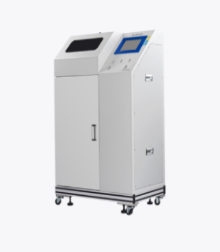
To conduct spontaneous ignition testing of solids, specialized instruments are required. A Spontaneously Igniting Solids Tester is a device used to evaluate whether a solid substance will spontaneously ignite or burn upon exposure to air.
Existing testing instruments of this type typically have the following basic functions and features:
The ability to test samples under specified environmental conditions, such as defined temperature and humidity ranges.
Built-in automated control systems capable of automatically detecting and recording whether combustion or spontaneous ignition occurs, as well as recording the test duration.
Components including an ignition detection device, sample chamber, timing system, and alarm functions.
In some models, data interfaces for transferring test data to a computer for analysis.
For example, certain spontaneously igniting solids testers are designed to determine whether a solid sample ignites upon exposure to air in accordance with the test method for spontaneously combustible solids (Test N.2) specified in the UN Manual of Tests and Criteria. Such equipment may feature automatic combustion detection, automatic timing, and data recording functions.
These instruments are generally intended for laboratory environments. Their design balances test stability and safety, and the testing process is controlled according to standard procedures. Environmental control (such as temperature and humidity), sample placement, and triggering mechanisms must all comply with standard requirements to ensure the accuracy and repeatability of results.
International and National Standards System
The testing of spontaneously igniting solids involves multiple standards that specify test methods, equipment requirements, and data evaluation criteria from different perspectives, forming a comprehensive technical framework.
United Nations Manual of Tests and Criteria
The United Nations Recommendations on the Transport of Dangerous Goods: Manual of Tests and Criteria is a key global reference document for dangerous goods classification, test methods, and decision criteria. Part III of the manual includes various hazardous substance test methods, including those for spontaneous combustion of solids (Test N.2) and flammable solids (Test N.1).
Test N.1 — Flammable solids test method, mainly used to determine whether powders or granular solids exhibit rapid combustion characteristics.
Test N.2 — Pyrophoric solids test method, used to assess whether a solid spontaneously ignites upon contact with air.
These test methods define operational procedures and also provide specific requirements for sample preparation, evaluation criteria, and data recording. They serve as the fundamental basis for international dangerous goods classification.
National Standards
GB/T 21611 — Test Method for Spontaneous Ignition of Flammable Solids (Dangerous Goods)
The Chinese national standard GB/T 21611-2008 specifies the equipment, test procedures, and report format for spontaneous ignition testing of flammable solids classified as dangerous goods.
As a recommended national standard, it provides guidance for laboratories in conducting spontaneous ignition tests on hazardous solid materials. The standard covers:
Basic requirements for test equipment
Sample preparation and placement methods
Specific test procedures and precautions
Methods for evaluating test results
By implementing this standard, the spontaneous combustion risk of solid substances under natural conditions can be scientifically evaluated.
Similarly, industry standards such as SN/T 2172-2008 also describe test methods for assessing the spontaneous ignition characteristics of powdered hazardous materials, indicating long-standing attention to this type of testing within the industry.
Related Standards and Test Methods
In addition to spontaneous ignition tests, hazardous property testing also includes:
GB/T 21612-2008 — Test method for self-heating of flammable solids, used to evaluate whether a solid substance may ignite due to internal self-heating.
GB/T 21618-2008 — Test method for burning rate of flammable solids, used to determine combustion rate, which is an important indicator for flammability classification.
GB/T 21850-2008 — Determination of spontaneous ignition for solids and liquids, providing general provisions for spontaneous ignition testing of both solid and liquid chemicals.
These standards collectively form a relatively complete testing system, analyzing solid combustion characteristics, spontaneous ignition tendencies, and thermal hazards from different perspectives, and providing technical support for classification and risk assessment.
European Standard EN 15188 — Determination of the Spontaneous Ignition Behaviour of Dust Accumulations
In addition to UN and national standards, some regional international standards focus specifically on the spontaneous ignition characteristics of solids and dusts. For example, the European standard EN 15188:2020 addresses the determination of spontaneous ignition behavior of dust accumulations.
This standard is primarily used to evaluate the spontaneous ignition temperature (TSI) of dust or granular solids under specified volume conditions. Through thermal storage experiments conducted at constant temperature, the spontaneous ignition behavior of solids is analyzed. The standard emphasizes analytical and evaluation procedures to ensure safe operating environments and risk control.
Although mainly intended for dust accumulation systems, its analytical methods and concepts regarding spontaneous ignition behavior are valuable for understanding thermal self-ignition of solid materials under specific conditions.
Test Methods and Procedures
In practical testing, spontaneous ignition testing of solids generally follows several key steps:
Sample Preparation
The sample form—such as powder, granule, or solid block—is determined according to the relevant standard. The sample is weighed and prepared according to specified size and mass requirements. This step is crucial to ensuring test accuracy.
Environmental Setup
Test environments usually require control of temperature, humidity, and other conditions to avoid external influences on the results. For example, some instruments specify operating temperature ranges between 5°C and 30°C and limit relative humidity.
Equipment Operation and Monitoring
The sample is placed into the test apparatus and the procedure is initiated. Sensors monitor any combustion or heat release after exposure to air. If spontaneous ignition is detected or if the specified test duration is exceeded, the result is determined accordingly.
Modern instruments often feature automatic data acquisition, alarm systems, and display interfaces, improving both testing efficiency and laboratory safety.
Result Evaluation and Reporting
Test results are analyzed and documented according to standard requirements. Common evaluation criteria include:
Whether spontaneous combustion occurred
Whether the test duration exceeded specified limits
Whether the combustion rate or flame propagation characteristics meet standard definitions
These data are used for hazard classification and safety assessment.
Practical Applications and Safety Management
In practical chemical production, dangerous goods transportation, and product safety supervision, spontaneous ignition testing of solids has wide applications. For example:
Serving as a basis for classification during import and export supervision of hazardous chemicals
Acting as a safety evaluation item for raw materials or intermediates in manufacturing
Guiding packaging design and fire protection measures for dangerous goods
Supporting the development of warehouse fire prevention specifications, including considerations of spontaneous ignition characteristics and safety distances
In addition, test results are often used in internal corporate risk assessments and emergency response planning, providing quantitative data to support accident prevention.
Spontaneously igniting solid testing is an important component of hazardous material safety assessment, encompassing testing equipment, standard specifications, experimental procedures, and result evaluation. Through scientific and standardized methods, it is possible to accurately determine whether a solid substance presents a spontaneous combustion risk, thereby enabling appropriate classification, storage, and safety measures.
Whether in the implementation of international transport regulations or within domestic hazardous goods classification systems, spontaneous ignition testing of solids plays an irreplaceable role. With the continuous improvement of standards and advancements in testing technology, related testing systems will become increasingly mature, providing stronger technical support for chemical safety management.
Previous: Solid Auto - ignition Point Tester
N e x t : What is the purpose of the combustion test?
