





Solid Auto - ignition Point Tester
2026/02/11
Share:

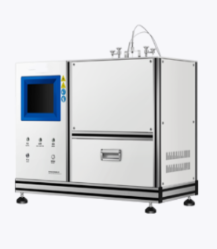
A solid auto-ignition point tester is a specialized instrument used to determine this critical temperature. By heating solid samples under controlled conditions and observing whether spontaneous ignition occurs, the tester provides auto-ignition temperature data that serve as a scientific basis for safety assessment, classification, and prevention.
Scientific Meaning and Physical Basis of Auto-Ignition
Definition of Auto-Ignition and Its Relation to Combustion
The auto-ignition point is the minimum temperature at which a combustible substance can spontaneously ignite in the presence of oxygen without any external ignition source, such as a flame or spark. While auto-ignition can be defined for solids, liquids, and gases, testing solids is more challenging because they are less volatile and have complex heat transfer characteristics.
From a thermodynamic perspective, auto-ignition involves heat transfer, chemical reaction kinetics, and exothermic oxidation. As a material is heated, slow oxidation occurs at the surface in contact with oxygen, releasing heat. If the heat generated exceeds the material’s and environment’s ability to dissipate it, the sample temperature rises rapidly. When a critical temperature is reached, the rate of heat generation surpasses heat loss, and the material undergoes spontaneous combustion. This critical temperature is the auto-ignition point.
Difference Between Auto-Ignition and Other Flammability Properties
Other important temperature indicators in fire safety evaluation include:
Flash Point: Usually applied to liquids, it is the minimum temperature at which vapor-air mixtures can ignite in the presence of an external flame.
Fire Point: The minimum temperature at which sustained burning occurs after ignition.
Auto-Ignition Point: The minimum temperature at which a material can spontaneously ignite due to its own heating, without any external ignition source.
Unlike flash point and fire point tests, auto-ignition testing emphasizes spontaneity, reflecting a material’s inherent risk of thermal runaway in high-temperature environments.
Testing Standards and Specifications
To ensure comparability and reliability, international and domestic standards specify sample preparation, testing conditions, heating rates, observation methods, and data interpretation criteria.
International Standards
Several international standards reference solid auto-ignition testing, including:
NF T20‑036: A European standard for determining the relative auto-ignition temperature of solid materials. Testers are typically designed according to this standard or equivalent procedures.
EC Test A16: Specifies methods for measuring auto-ignition characteristics of solid chemical products.
Other international flammability and hazardous material testing regulations also provide guidance on determining solid auto-ignition points, forming a reference framework for industrial applications. These standards inform instrument design and testing procedures, ensuring results are comparable across laboratories.
Domestic Standards (China)
In China, national standards also specify methods for determining solid materials’ auto-ignition temperatures, such as:
GB/T 21756‑2008: Defines procedures for measuring relative auto-ignition temperatures of industrial solids, including sample preparation, testing conditions, and result interpretation. It is widely applied in chemical product safety assessment.
Other national or industry standards, such as fire protection codes and hazardous chemical classification standards, provide specific requirements for measuring fire and auto-ignition points and use these data for fire hazard classification and preventive design.
The existence of standards makes auto-ignition testing not only a laboratory technique but also a legally recognized metric and safety certification requirement.
Principle and Construction of the Tester
A solid auto-ignition point tester is designed to gradually heat a solid sample in a controlled environment and observe the temperature at which spontaneous ignition occurs. Key components include:
Temperature-Controlled Heating Device
The core structure consists of a temperature-controlled furnace or heating chamber that heats the sample in a controlled manner. The instrument raises the chamber temperature gradually and uniformly, approaching the sample’s potential auto-ignition region. Adjustable heating rates, such as 0.1–3 °C per minute, allow compliance with various standards and material requirements.
Sample Holder Structure
To ensure realistic heating and proper air exposure, the tester provides a fixed sample position, often a small tray or steel mesh container. Some devices use steel mesh cubes approximately 20 mm in size, allowing full air contact and uniform heat application.
Temperature Detection and Control System
High-precision temperature sensors, such as K-type thermocouples, monitor the heating chamber and sample temperature in real time. PID or computer-controlled algorithms ensure the set heating rate is maintained and can precisely alert or record the moment the sample reaches auto-ignition.
User Interface and Data Recording
Modern testers feature touch-screen displays showing real-time temperature, heating curves, and test status. Automatic recording functions store, export, or print complete test data for analysis and documentation.
Detailed Testing Process
Strict adherence to standard procedures is critical for reliable auto-ignition testing.
Sample Preparation
Samples must be uniform in shape, size, dry, and free of contamination to ensure consistent heat transfer and reaction behavior. Placement on a 20 mm steel mesh cube allows uniform heating and sufficient air exposure.
Temperature Setting and Heating Process
Operators set the initial temperature and heating rate according to the standard. The instrument gradually raises the chamber temperature while monitoring for spontaneous ignition.
Observation and Ignition Determination
Auto-ignition is typically confirmed through visual observation of flames or sensor-based flame detection. When a sample ignites at a specific temperature, that value is recorded as its auto-ignition point.
Data Recording and Result Output
The tester outputs temperature-time curves and ignition points, generating reports for risk assessment, material classification, or safety design purposes.
Importance and Industrial Applications
Fire Hazard Assessment
Auto-ignition point data enable early assessment of fire risk for building materials, packaging, chemical intermediates, and solid fuels exposed to elevated temperatures, helping prevent serious fire incidents.
Hazardous Material Classification and Management
In hazardous material classification, auto-ignition data are critical for assigning fire hazard levels. Lower fire and auto-ignition points correspond to higher hazard categories, requiring stricter storage, transport, and handling protocols.
Industrial Design and Production Safety
For processes involving high temperatures, auto-ignition testing informs equipment design and workflow planning to avoid spontaneous ignition hazards.
Scientific Research and Standards Development
Auto-ignition testing provides precise data for studying thermal reaction mechanisms, combustion kinetics, and developing fire-retardant materials. It also supports the formulation of technical standards.
Factors Affecting Auto-Ignition
Material composition and structure: Chemical makeup, density, surface area, and thermal conductivity influence ignition behavior; high-calorific, easily oxidizable materials tend to have lower auto-ignition points.
Environmental conditions: Oxygen concentration and ambient temperature significantly affect the auto-ignition point; higher oxygen levels facilitate oxidation and can lower ignition temperature.
Heating rate and sample size: Different heating rates affect results; slow, uniform heating is standard. Sample size and heat capacity also influence heat accumulation and dissipation.
Strict control of experimental conditions is essential for consistent results.
Solid auto-ignition point testers are critical tools for assessing the fire risk of solid materials. By heating materials under controlled conditions and recording the minimum temperature at which spontaneous combustion occurs, these tests provide scientific data for material safety. As industrial practices and safety standards evolve, auto-ignition testing has broad and profound applications in fire protection design, hazardous material classification, production safety, and scientific research.
Previous: How to test burning rate?
N e x t : What is Spontaneously Igniting Solids Tester?
