





What is Flammability Tester for Aerosol Foams?
2026/02/12
Share:

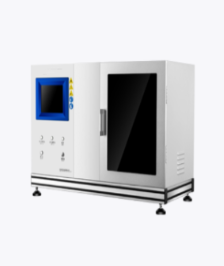
Aerosol foam products include sprays that are discharged in the form of foam, mousse, gel, or paste. These products are widely used in daily life and industrial production, such as household care products, cleaning agents, cosmetics, protective products, and even certain hazardous chemicals. Due to their complex compositions, which may contain flammable substances and volatile gases, aerosol foams can ignite or even explode when exposed to open flames or high-temperature environments. Therefore, their flammability must be evaluated, and appropriate safety measures must be implemented.
Background and Development
Spray products became widely adopted with the advancement of compressed gas technology. Since the mid-20th century, they have gradually become an integral part of everyday consumer goods. However, as the market expanded and product diversity increased, potential safety concerns have drawn increasing attention from regulatory authorities, manufacturers, and consumers. Following several incidents involving combustion or explosions caused by aerosol products, the international community began developing standardized test methods to incorporate aerosol foam flammability into hazardous goods classification, transport regulations, and product safety standards.
The United Nations Recommendations on the Transport of Dangerous Goods: Manual of Tests and Criteria introduced a standardized method to determine whether aerosol foam ignites when exposed to an ignition source, as well as to measure important parameters such as flame duration and flame height. This method, known as the Aerosol Foam Flammability Test, has been widely referenced in flammability assessment standards and has become an essential component of aerosol foam safety evaluation.
In China, the national standard GB/T 21632-2008 “Test Method for Flammability of Aerosol Foam (Dangerous Goods)” specifies the equipment requirements, test procedures, and evaluation criteria for aerosol foam flammability testing. It applies to spray products discharged in foam, mousse, gel, or paste form and is used to determine whether such products are likely to ignite when exposed to a fire source under normal conditions.
Definition and Basic Components
An Aerosol Foam Flammability Tester is an instrument used to perform standardized aerosol foam flammability tests. It simulates the combustion behavior of aerosol foam after discharge, reproducing possible real-world ignition scenarios. The instrument records key data such as flame duration and flame height through automated measurement systems. According to standard requirements, the tester typically consists of the following main components:
Control and Display System
Modern testers are usually equipped with a control system and display interface. An embedded processor or computer controls the entire testing process, while the display system shows real-time test status and combustion parameters for observation and recording.
Ignition Device and Detection Sensors
The instrument includes an ignition device, such as a flame igniter or ignition needle, to provide a defined heat source or open flame condition. Detection sensors, including photoelectric sensors or video recording systems, measure parameters such as flame duration and flame height during the test.
Data Recording and Analysis Module
Through software or embedded systems, the instrument automatically records combustion data, including ignition start time, flame duration, and maximum flame height, and generates test report data. These measurements serve as the basis for determining aerosol foam flammability in accordance with relevant standards.
Purpose and Significance of Aerosol Foam Flammability Testing
Aerosol foam flammability testing serves multiple purposes. It is not merely a technical method for analyzing material properties but also a critical tool for safety management, regulatory compliance, product design, and consumer protection.
Safety Risk Assessment
Aerosol foam products may encounter potential ignition sources such as high temperatures, electrostatic discharge, or open flames during production, storage, transportation, and use. Flammability testing scientifically evaluates these risks by simulating ignition under specified conditions. It determines whether the product presents significant combustion hazards in realistic scenarios, helping to prevent fire risks and injuries caused by misuse or accidental incidents.
Product Classification and Labeling Requirements
Different countries and regions have clear regulations regarding the classification of aerosol foam products. Based on flammability performance, products may be categorized as “extremely flammable,” “flammable,” or “non-flammable.” According to test results, appropriate warning labels must be applied so that users and regulatory authorities can quickly identify potential hazards.
Quality Control and Product Consistency
Manufacturers use flammability testing during product development and mass production to ensure consistency in combustion behavior across batches. If a batch deviates significantly from standard flammability requirements, adjustments to formulation or manufacturing processes can be made promptly to eliminate safety risks at the source and ensure consumer safety.
Compliance with Regulations and Transport Standards
If aerosol foam products are classified as dangerous goods, they must comply with relevant transport regulations. Conducting flammability testing prior to shipment helps determine the correct hazard classification, select appropriate packaging, and adopt suitable transport methods, thereby reducing safety risks during logistics.
Promotion of Technological Improvement and Innovative Design
Based on flammability test data, researchers and engineers can optimize product formulations and spray designs to reduce flammability. This may involve lowering the proportion of flammable components, using flame-retardant additives, or improving spray structure to enhance self-extinguishing performance and overall safety. The parameterized data provided by the tester form a critical foundation for design improvements.
Standard Methods and Evaluation Criteria
Aerosol foam flammability testing must be conducted in accordance with established standards to ensure scientific validity and international consistency.
United Nations Test Method
The UN Aerosol Foam Flammability Test specifies the basic procedures and evaluation criteria for assessing aerosol foam flammability. The method requires discharging the aerosol into foam form and placing an ignition source nearby. Observations focus on:
Whether sustained combustion occurs (defined as flame duration exceeding a specified time, such as 2 seconds);
The maximum flame height;
Whether combustion self-extinguishes or continues for an extended period.
Based on these indicators, the product is classified according to its flammability characteristics.
National Standard GB/T 21632-2008
The Chinese national standard GB/T 21632-2008 clearly defines the equipment, test conditions, procedures, evaluation criteria, and reporting requirements for aerosol foam flammability testing. It applies to spray products discharged in foam, mousse, gel, or paste form and ensures controlled testing conditions and repeatable data, enabling scientific determination of flame behavior characteristics.
General Testing Procedure Overview
Although specific details vary among standards, the basic testing process is generally similar and includes the following steps:
Sample Preparation
The aerosol product is preconditioned as required, such as shaking uniformly and maintaining specified temperature and humidity conditions, to ensure uniform foam discharge.
Foam Discharge
A specified mass of foam (commonly around 5 grams) is discharged onto a fire-resistant surface at a designated location within the test apparatus.
Ignition and Observation
An ignition source, such as a candle or match, is placed adjacent to the foam. Observations are made regarding flame occurrence, flame duration, and flame height.
Data Collection and Evaluation
The tester’s automatic detection system measures flame height, combustion duration, and other parameters. The product’s flammability classification is determined according to standard criteria.
Practical Applications and Significance
Aerosol foam flammability testing is not merely a laboratory procedure; it has broad practical implications.
Consumer Product Safety Compliance
For household spray cleaners, cosmetic sprays, and other consumer products, flammability testing ensures that usage risks remain within acceptable limits and helps prevent accidents caused by improper use.
Industrial Hazardous Goods Transport
Certain aerosol products containing propellants or chemical components may fall into hazardous goods categories. Such products must undergo flammability testing to determine their hazard level and be labeled and transported accordingly.
Regulatory Approval and Market Access
Regulatory authorities often require flammability test reports before products are placed on the market. These reports serve as essential documentation for compliance and commercial distribution.
Accident Prevention and Risk Management
By conducting regular flammability testing on production batches, companies can identify potential safety hazards in advance and take corrective measures to prevent accidents.
Challenges and Future Trends
As aerosol product formulations and functions become increasingly complex, flammability testing faces higher demands. For example, products containing new types of propellants may exhibit higher combustion energy, requiring updates to traditional standards to meet evolving safety needs. At the same time, testing equipment is developing toward greater automation, intelligence, and data traceability, ensuring more accurate results and more objective evaluations. By integrating video image analysis and photoelectric sensing technologies, modern instruments can assess flame behavior and combustion processes in greater detail, providing more comprehensive data for safety evaluation.
Aerosol foam flammability testing and its dedicated testing instruments are essential safety evaluation tools. Through scientific procedures and standardized evaluation methods, they provide reliable data for safety assessment, classification management, and regulatory compliance of aerosol foam products. Whether in product development, quality control, market supervision, or hazardous goods transportation, flammability testing plays a central role in ensuring safety and reducing risk.
As society continues to raise standards for consumer product safety and hazardous goods risk management, the importance of flammability testing will become even more pronounced. The proper use of flammability testers will encourage companies to prioritize safety-oriented product design, ultimately minimizing risks for end users, transport operators, and all parties involved.
Previous: What is the purpose of the combustion test?
N e x t : What is a Gas Hazardous Characteristics Tester?
