





Mask Particle Filtration Efficiency (PFE) Tester,EN 143
2026/02/24
Share:

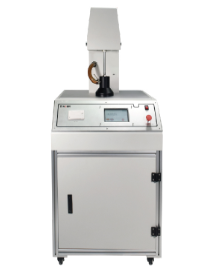
Unlike Bacterial Filtration Efficiency (BFE) and Viral Filtration Efficiency (VFE), PFE testing focuses on non-biological particles. It typically uses non-biological aerosols such as polystyrene latex (PSL) spheres or atomized saline particles as challenge media. PFE is a physical performance test, whereas BFE and VFE involve biological entities and biosafety testing systems. The particle size ranges, test equipment, and environmental conditions differ fundamentally between these methods.
Specifically, PFE testing often uses 0.1 µm latex particles as the challenge size, which is significantly smaller than the 3 µm bacterial aerosol commonly used in BFE testing. Therefore, PFE places greater emphasis on evaluating filtration performance against ultrafine particles.
For medical masks and high-protection respirators such as N95 or FFP2 types, standards usually require the PFE to reach a specified percentage to meet certification requirements. For example, some standards mandate PFE ≥ 95%, meaning that at least 95% of challenge particles must be blocked under defined test conditions. The PFE value directly affects whether the final product can effectively filter airborne suspended particles, playing a critical role in protecting wearers in polluted environments or high-risk viral transmission scenarios.
Basic Structure and Working Principle
Core Components
A complete PFE testing system typically consists of the following physical modules:
An aerosol generator produces standardized challenge particles. Commonly used media include salt aerosols (such as NaCl) or polystyrene latex (PSL) solutions, which are atomized into stable aerosols. These aerosols have controlled particle size and stable concentration to ensure standardized testing.
A charge neutralizer is used after aerosol generation to neutralize particle charges, eliminating the influence of electrostatic effects on particle transport and counting.
A particle counter or light-scattering detector measures particle concentrations upstream (before the aerosol passes through the filter material) and downstream (after penetrating the filter). Filtration efficiency is calculated based on the difference between upstream and downstream concentrations. Modern instruments can simultaneously detect multiple particle size channels (for example, 0.1 µm and 0.3 µm), providing size-resolved efficiency data.
An airflow and flow-control system ensures stable airflow and adjustable flow rates during testing, typically within a range of 10–100 L/min depending on standard requirements.
A data acquisition and processing system controls test parameters, stores results, outputs reports, and may provide touchscreen interfaces, USB data export, and automated reporting functions.
Working Principle
The core principle of a PFE test is to compare particle concentrations upstream and downstream of the filter material under standardized conditions. The general procedure includes:
Generation of standard challenge aerosol using an aerosol generator;
Charge neutralization to bring particles closer to a neutral state;
Upstream sampling to measure particle concentration before filtration;
Downstream measurement after airflow passes through the test sample;
Efficiency calculation using the formula:
Filtration Efficiency = (Upstream concentration − Downstream concentration) / Upstream concentration × 100%.
This process can provide not only an overall PFE value but also size-specific efficiency distribution when advanced systems are used.
Theoretical Basis and Filtration Mechanisms
Fundamentals of Particle Filtration
Particle filtration involves several physical mechanisms, including inertial impaction, interception, Brownian diffusion, and electrostatic attraction.
Interception occurs when particles following airflow trajectories come into contact with filter fibers and are retained.
Inertial impaction occurs when larger particles deviate from airflow streamlines due to inertia and collide with fibers.
Brownian diffusion affects very small particles whose motion is influenced by collisions with gas molecules, increasing the probability of contacting fibers.
Electrostatic attraction occurs when charged or polarized particles are attracted to oppositely charged filter media.
The combined effects of these mechanisms produce a characteristic U-shaped filtration efficiency curve versus particle size. There is typically a most penetrating particle size (MPPS) range where filtration efficiency is lowest. The commonly tested range of 0.1–0.3 µm lies within this critical region.
Influence of Particle Charge
Aerosol generation methods often produce charged particles, which can affect filtration performance results. Therefore, certain test protocols require charge neutralization to eliminate electrostatic influences. Differences in particle charge states alter particle–fiber interaction probabilities and may impact the comparability of results.
Major International and National Standards
PFE testing is governed by multiple standards, each specifying different requirements for aerosol type, particle size, airflow velocity, test area, and statistical methods.
ASTM Standards
ASTM F2299 focuses specifically on particle filtration efficiency testing using latex sphere aerosols, typically covering particle sizes from 0.1 to 5.0 µm. Filtration efficiency is determined by comparing upstream and downstream particle counts measured by optical particle counters.
ASTM F2100 includes requirements for both PFE and BFE. The PFE test specifies 0.1 µm challenge particles and sets minimum efficiency levels such as ≥95% or ≥98% depending on mask classification.
National and Regional Standards
Different countries and regions define varying requirements. For example, certain Chinese medical mask standards specify particle size criteria and pass thresholds for PFE testing, while European standards may differ in face velocity and environmental control conditions. Some standards also include combined evaluation of differential pressure (breathing resistance) and other performance metrics.
Differences in Standard Conditions
Some standards require NaCl aerosols, while others specify latex spheres. Particle size requirements may vary (such as 0.075 µm or 0.1 µm). Therefore, even when using the same instrument model, test conditions and results may differ under different standard protocols.
Test Environment and Error Control
PFE testing is highly dependent on environmental stability, including temperature, humidity, and airflow control.
Temperature and humidity fluctuations can influence aerosol stability and optical detector response.
Airflow control must remain precise, often within ±5% of specified values.
Background particle interference should be minimized using pre-filtration or cleanroom environments.
High-quality PFE instruments typically incorporate real-time temperature and humidity monitoring, feedback-controlled flow systems, and environmental noise compensation algorithms to improve accuracy and repeatability.
Types and Performance Parameters of PFE Testers
Basic PFE Testers
Basic systems include aerosol generation, particle counting, and efficiency calculation functions sufficient to meet fundamental standard requirements. Typical parameters include:
Flow range of approximately 10–100 L/min;
Test area around 100 cm²;
Particle size coverage from approximately 0.1–5.0 µm;
Differential pressure measurement and multi-channel counting capability.
Advanced Full-Spectrum Systems
Designed for research and development applications, advanced systems can test a wider particle size range (for example, from 100 nm to 40 µm) and provide detailed efficiency distribution analysis. These systems incorporate high-precision particle spectrometers and multi-channel detection capabilities.
Advanced systems can generate penetration and efficiency curves in a single test, supporting in-depth analysis of filter performance across particle sizes.
Interpretation of Results and Application Scenarios
Test Reports
A typical PFE test report includes:
Overall filtration efficiency percentage;
Efficiency by particle size segment;
Differential pressure (breathing resistance) data;
Flow rate and environmental condition records.
These data collectively reflect the real-world performance characteristics of filter materials or finished masks.
Application Fields
PFE testers are widely used in:
Manufacturing quality control to ensure products meet design and standard requirements;
Third-party certification testing to provide official compliance reports;
Research and development for new materials, nanostructured filters, and composite media;
Standards development and regulatory support through experimental data.
Future Trends and Technical Challenges
With increasing awareness of micro- and nano-scale air pollution and respiratory infectious disease protection, higher demands are placed on PFE testing technology.
There is a need for higher-resolution particle size analysis extending into finer nano-scale ranges.
Automation and intelligent data processing, including AI-assisted control and analysis, can improve reliability and interpretability of results.
Multi-standard compatibility and rapid switching capabilities are increasingly important in a globalized regulatory environment.
As a core physical performance evaluation tool within mask testing systems, the PFE tester integrates aerosol physics, particle counting technology, precision airflow control, and advanced data processing. Understanding its principles, standard variations, instrumentation structure, and environmental control requirements is essential for research, manufacturing, testing, and certification. With technological advancement, PFE testing systems are evolving toward higher precision, greater intelligence, and improved standardization, providing more reliable data support for the performance evaluation of masks and respiratory protective products.
Previous: What is Carpet Static Electricity Tester?
N e x t : What are the 4 types of filtering?
