





What are the 4 types of filtering?
2026/02/24
Share:

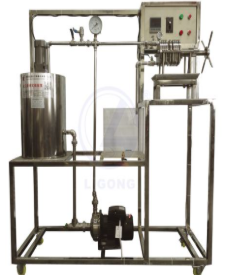
In practical applications, filtration can be classified in different ways depending on the objective and technical foundation. In material filtration, types are often defined by particle size or membrane pore size. In signal and data processing, filters are typically categorized according to frequency response characteristics.
This article provides a systematic technical explanation of four widely recognized types of filtration, covering principles and typical applications from both material filtration and signal filtering perspectives.
Membrane Filtration Technology
In liquid and gas purification, membrane filtration is one of the most common filtration methods. Membrane filtration uses a semi-permeable membrane structure to separate particles of different sizes or properties under pressure-driven conditions. It is widely used in drinking water treatment, wastewater purification, biopharmaceutical production, and food processing. According to the size of substances being removed, membrane filtration can be divided into four main types: microfiltration, ultrafiltration, nanofiltration, and reverse osmosis.
Microfiltration (MF)
Microfiltration uses membranes with relatively large pore sizes, typically ranging from approximately 0.1 to 10 micrometers. These membranes can retain larger suspended particles, bacteria, and impurities, while allowing smaller dissolved substances to pass through.
Microfiltration is commonly used in water treatment systems to remove sediment, suspended solids, and certain microorganisms. It is also applied in the food and beverage industry for liquid clarification, such as beer clarification and dairy purification. Due to its relatively large pore size, microfiltration operates at lower pressures and consumes less energy, but its ability to capture very fine particles is limited.
Ultrafiltration (UF)
Compared with microfiltration, ultrafiltration uses membranes with much finer pore sizes, typically in the range of approximately 1 to 100 nanometers. It can retain smaller particles such as proteins, macromolecular organic compounds, and some viruses.
Ultrafiltration membranes are widely used in biopharmaceutical production, drinking water pretreatment, and wastewater treatment. For example, in the pharmaceutical industry, ultrafiltration is used to remove cells and large molecular impurities from fermentation broths while allowing water and small molecules to pass through. Its key advantage is high selectivity for macromolecular retention.
Nanofiltration (NF)
Nanofiltration is positioned between ultrafiltration and reverse osmosis in terms of membrane pore size. With pore sizes typically around 1 to 10 nanometers, nanofiltration can remove smaller organic molecules, dissolved salts, and even certain ions.
Nanofiltration is commonly applied in drinking water softening, wastewater reuse, and chemical separation processes. Because it can effectively remove hardness components and color, it plays an important role in improving water quality in treatment systems.
Reverse Osmosis (RO)
Reverse osmosis is the most precise and finest filtration process among the four membrane technologies. Its membrane pore size is small enough to block most dissolved salts and micropollutants, allowing only water molecules to pass through. The principle involves applying external pressure greater than the solution’s osmotic pressure, forcing water molecules to move through the membrane in the opposite direction of natural osmosis while retaining other substances on the feed side.
Reverse osmosis is indispensable in seawater desalination, pure water production, pharmaceutical manufacturing, and food processing. It can remove nearly all ions, dissolved organic substances, and particulates.
In summary, microfiltration, ultrafiltration, nanofiltration, and reverse osmosis represent progressively finer levels of membrane filtration, corresponding to separation requirements ranging from larger particles to extremely small molecular substances.
Four Types of Filters in Signal Processing
In electronic engineering, digital signal processing, and communication technology, “filtering” refers to selectively retaining or removing signal components in the frequency domain. A filter in signal processing is a circuit or algorithm that allows certain frequency components to pass while attenuating or blocking others. Filtering directly influences signal quality, noise reduction, and spectral analysis.
The four fundamental types of filters based on frequency characteristics are:
Low-Pass Filter
A low-pass filter allows low-frequency signal components to pass while attenuating frequencies above a specified cutoff frequency.
This type of filter is widely used in noise reduction, curve smoothing, control systems, and audio processing. It preserves long-term signal trends while removing rapid fluctuations and high-frequency noise.
High-Pass Filter
A high-pass filter performs the opposite function of a low-pass filter. It allows frequencies above a defined cutoff frequency to pass while suppressing low-frequency components.
High-pass filtering is commonly used in edge detection, vibration analysis, and removal of DC offset. It preserves rapid changes in a signal while filtering out slowly varying or constant components.
Band-Pass Filter
A band-pass filter allows frequencies within a specific range (between two cutoff frequencies) to pass while suppressing frequencies outside that band.
This filter type is widely used in radio communications to select desired frequency bands and eliminate unwanted interference. A band-pass filter can be considered a combination of low-pass and high-pass filters operating together within a defined frequency range.
Band-Stop (Notch) Filter
A band-stop filter blocks a specific frequency band while allowing frequencies below and above that band to pass.
This type of filtering is commonly used to remove specific frequency noise, such as power line interference (e.g., 50 Hz) or mechanical vibration harmonics. A notch filter is a typical example of a band-stop design.
These four filter types form the basic classification of frequency-domain filtering and are extensively used in analog circuits, digital signal processing systems, and modern communication technologies.
Data Filtering
In computer science and data analysis, “filtering” generally refers to selecting data subsets based on rules or statistical characteristics. This may involve simple conditional selection or more complex smoothing and trend extraction techniques. Data filtering is a fundamental tool in data cleaning, database querying, and machine learning preprocessing.
Rule-Based Filtering
This method uses logical conditions (such as greater than, less than, or equal to) to select data that meet specified criteria. In SQL queries or programming languages, rule-based filtering is the most straightforward form of data selection.
Smoothing and Trend Filtering
In time-series analysis, techniques such as moving averages and exponential smoothing are used to reduce short-term fluctuations and reveal long-term trends. These methods are widely applied in financial analysis and climate data evaluation.
Frequency-Domain Filtering
Similar to signal processing, frequency-domain filtering in time-series data reduces random noise to better reveal periodic or structural patterns.
Model-Based Filtering
In machine learning and statistical analysis, filtering may be performed through model predictions, residual analysis, or anomaly detection. Methods such as Kalman filtering dynamically adjust outputs to reduce noise and improve estimation accuracy.
Although these data filtering methods differ from traditional material filtration, they share a core concept: removing irrelevant or noisy data while preserving meaningful information.
Practical Applications of Filtration Types
The four categories of filtration—membrane filtration, frequency-domain filtering, data filtering, and conditional selection—have broad and far-reaching applications in real-world scenarios.
Environmental and Water Treatment
Membrane filtration technologies are central to drinking water treatment, wastewater purification, and seawater desalination. By selecting the appropriate membrane type, physical impurities, microorganisms, dissolved salts, and micropollutants can be efficiently removed. For example, municipal water pretreatment often uses microfiltration or ultrafiltration, while seawater desalination relies primarily on reverse osmosis.
Noise Control and Signal Processing
In audio engineering, communication systems, and medical signal analysis, frequency-domain filters remove noise and enhance signal clarity. Low-pass filters eliminate high-frequency noise, high-pass filters remove DC offset, and band-pass filters isolate specific signal bands.
Software and Data Analysis
In computer programs and database systems, filtering extracts data that meet defined criteria, such as selecting individuals above a certain age or excluding abnormal values. In big data analytics, smoothing and noise removal are essential for improving model accuracy and reliability.
Biology and Medicine
In biopharmaceutical production and genomics research, filtration technologies are used to separate macromolecules and purify proteins from complex samples. Frequency-domain filtering is also applied in processing physiological signals such as electrocardiograms and electroencephalograms.
Filtration is a core concept spanning natural sciences, engineering, and information processing. This article has systematically introduced four major types of filtration:
Membrane filtration technologies, including microfiltration, ultrafiltration, nanofiltration, and reverse osmosis, categorized by membrane pore size and separation scale.
Signal processing filters, including low-pass, high-pass, band-pass, and band-stop filters in the frequency domain.
Data filtering methods, including rule-based selection, trend smoothing, and frequency-domain approaches.
Practical applications across water treatment, communication systems, data analysis, and biopharmaceutical industries.
Understanding these four types of filtration helps in selecting appropriate technical tools to address real-world challenges in purification, separation, selection, and noise suppression, ultimately enabling more efficient engineering design and analytical optimization.
Previous: Mask Particle Filtration Efficiency (PFE) Tester,EN 143
N e x t : What is Filter Media Tester G500?
