





General Ventilation And Air Filter Test System
2026/02/24
Share:

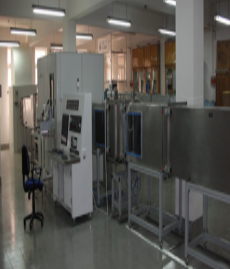
This article begins with the background of ventilation and air filtration, then provides an in-depth analysis of the working principles, key performance indicators, testing standards and technical specifications, structural composition, practical applications, and future trends of such systems, helping to build a comprehensive understanding of their significance.
Background and Importance of General Ventilation and Air Filtration
Ventilation systems are core installations in buildings, industrial facilities, and public spaces for air exchange. By introducing fresh air, exhausting contaminated air, and controlling temperature and humidity, they improve Indoor Air Quality (IAQ). Air filters, as essential components of ventilation systems, are responsible for capturing airborne particles such as dust, pollen, and other contaminants, thereby ensuring the cleanliness of air entering indoor environments.
With growing awareness of environmental health and increasing concerns about indoor air pollution, performance requirements and standard systems for air filters have developed rapidly. Air filters are no longer merely media for blocking dust; they now play a vital role in safeguarding air quality, protecting human health, and improving energy efficiency within ventilation systems. As a result, quantitative performance testing has become essential.
What Is a General Ventilation and Air Filter Test System
A General Ventilation and Air Filter Test System is a professional experimental platform specifically designed to test the performance of air filters used in general ventilation applications. The system simulates airflow and contaminant loading conditions under standardized ventilation environments and measures key performance parameters of filters in accordance with established test methods and specifications.
The primary objectives of such a test system include:
Evaluating filtration efficiency for particles of different sizes;
Measuring airflow resistance (pressure drop) and changes in flow resistance characteristics;
Assessing performance variations and durability during particle loading;
Generating test data for filter classification and quality certification.
These systems are generally designed to comply with international standards such as EN 779 (now replaced by ISO 16890), ASHRAE 52.2. and ISO 16890 for general ventilation filters. Although specific test parameters and procedures vary among standards, evaluation typically focuses on filtration efficiency and airflow resistance.
Core Functions and Key Performance Indicators
A general air filter performance test system is primarily used to assess key performance characteristics of filters under standardized ventilation conditions. Its core functions typically include:
Filtration Efficiency Measurement
Filtration efficiency is the most fundamental parameter for evaluating filter performance. It represents the filter’s ability to remove particles within specific size ranges. The test system generates standardized particle aerosols and uses particle detection equipment to measure upstream and downstream particle concentrations. Filtration efficiency is then calculated based on the difference between these concentrations.
Efficiency can be reported for multiple particle size intervals (such as PM1. PM2.5. PM10) or specific size ranges, allowing graded performance analysis.
Pressure Drop and Airflow Resistance Testing
When air passes through a filter, resistance is generated, which appears as a pressure difference (pressure drop) across the filter. The test system precisely measures the relationship between pressure drop and airflow rate to evaluate the filter’s impact on ventilation system energy consumption and service life. Resistance data are critical for ventilation system design and proper filter selection.
Dust Loading and Dust Holding Capacity Testing
Dust loading tests involve introducing standardized test dust to the filter and gradually increasing the particle load. During this process, changes in filtration efficiency and pressure drop are recorded. This evaluation reflects performance degradation trends under real operating conditions and determines the dust holding capacity, which is directly related to filter service life and maintenance intervals.
Initial and Conditioned Efficiency Comparison
Modern systems support measurement of both initial efficiency and efficiency after electrostatic discharge treatment, which simulates the loss of electrostatic charge during actual use. This comprehensive evaluation is particularly important for classification under standards such as ISO 16890. where long-term performance stability is considered.
Testing Standards and Evaluation Methods
The evaluation of general ventilation air filters must follow standardized procedures. These standards define test conditions, parameters, classification systems, and performance requirements. The most widely recognized international standards include:
ISO 16890 Series
ISO 16890 is an international standard for testing and classifying air filters used in general ventilation. It evaluates filter performance based on efficiency for particulate matter fractions such as PM1. PM2.5. and PM10. and classifies filters accordingly. The standard includes methods for efficiency measurement, airflow resistance determination, and electrostatic discharge conditioning.
Compared with earlier standards, ISO 16890 better reflects real-world air pollution conditions and emphasizes filtration effectiveness for particulate matter relevant to human health.
EN 779
Before ISO 16890. EN 779 was a primary European standard for general ventilation air filter testing and classification. It defined testing methods and filter grades ranging from coarse to fine filtration levels. Although it has been replaced, EN 779 remains relevant for historical data comparison.
ASHRAE 52.2
ASHRAE 52.2 is a widely used American standard for testing general ventilation air-cleaning devices. It introduced the MERV (Minimum Efficiency Reporting Value) rating system, which classifies filters based on efficiency across specific particle size ranges. It remains extensively used in the North American market.
All these standards require standardized airflow configurations, stable aerosol sources, particle detection instruments, and precise pressure drop measurement devices. Test systems must be capable of generating data according to specified procedures and producing standardized results.
System Composition and Key Technologies
A complete General Ventilation and Air Filter Test System typically consists of the following major components:
Aerosol Generation Module
This module produces standardized challenge particles. In ISO 16890 or ASHRAE testing, the type and generation method of aerosols (such as salt aerosol or test dust) must comply with standard requirements to ensure repeatability and consistency.
Particle Detection Module
Particle detection equipment, often high-precision optical particle counters, measures particle concentrations across various size ranges in real time. It is the core component for calculating filtration efficiency.
Pressure and Airflow Control Module
This module includes pressure sensors, flow meters, and air pump systems. It ensures precise control and measurement of airflow rates and pressure differences across the filter during testing.
Data Acquisition and Control Software
Modern systems are equipped with automated control software that executes testing procedures, collects data, calculates performance indicators, and generates standardized reports. This ensures digitalization, consistency, and traceability throughout the testing process.
Detailed Testing Procedure
The general testing process for ventilation air filters typically includes the following steps:
Sample Preparation and Installation
The filter sample is installed in the test duct or fixture according to standard specifications, ensuring proper sealing and alignment.
Airflow Setting and Particle Generation
The standard test airflow rate and inlet conditions are set. The aerosol generator produces standardized particles with specified size distribution and concentration.
Upstream and Downstream Measurement
The particle detection system measures particle concentrations upstream and downstream of the filter. Simultaneously, pressure drop and airflow data are recorded.
Efficiency Calculation and Data Analysis
Filtration efficiency is calculated for various particle size ranges. Average efficiency and corresponding pressure drop values are determined, and classification is performed according to the relevant standard.
Test Report Generation
Automated software compiles the results and generates standardized test reports, providing data support for product development, certification, and quality control.
Practical Importance of the Test System
Product Development and Optimization
Filter manufacturers use test systems to evaluate different materials and structural designs, supporting optimization of filter media and development of new products.
Quality Control and Production Monitoring
Performance testing of random production samples ensures consistent product quality and compliance with standards and customer requirements.
Certification and Regulatory Compliance
Authoritative data generated by standardized test systems are used for product certification, performance grading, and regulatory verification.
Improvement of Indoor Air Quality
In HVAC system design for buildings and public spaces, accurate filter performance testing is fundamental to achieving indoor air quality and energy efficiency objectives.
Future Development Trends and Challenges
As global attention to air pollution intensifies and indoor air quality standards become stricter, future directions for general air filter test systems include:
Higher Precision and Multi-Channel Particle Analysis
Future systems will integrate higher-resolution particle size channels and more refined control technologies to produce more accurate filtration performance curves.
Integration of Intelligent and Automated Technologies
The incorporation of artificial intelligence and big data analysis will enable faster testing processes, smarter performance assessment, and predictive maintenance capabilities.
Standard Harmonization and Global Consistency
With the increasing global adoption of standards such as ISO 16890. test systems must support multi-standard compatibility and facilitate international recognition of results.
The General Ventilation and Air Filter Test System is a technical platform designed to evaluate air filter performance. By simulating standardized ventilation conditions and implementing rigorous testing procedures, it quantitatively assesses core parameters such as filtration efficiency and pressure drop. It provides reliable data support for filter development, production, and certification. As standards evolve and technologies advance, these testing systems play an increasingly important role in air purification, building ventilation design, environmental compliance, and indoor air quality management.
Previous: What is Filter Media Tester G500?
N e x t : Filter Media Tester G508
