





Diesel Water Ash Sulfur Mixing Tester,ISO 16332:2018
2026/02/27
Share:

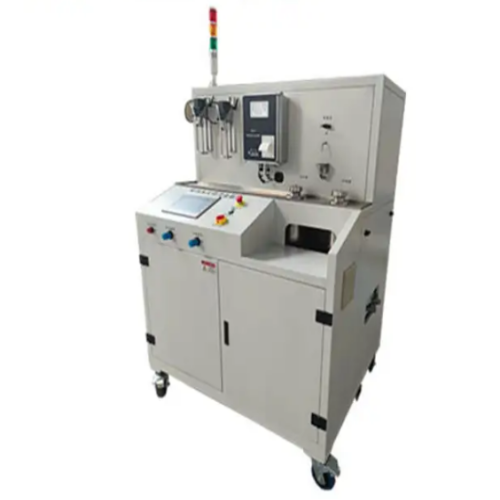
This equipment can add water, dust (ash), sulfur, and other contaminants into diesel at specified proportions and ensure their uniform distribution, thereby simulating diesel performance under different contamination conditions. It enables comprehensive evaluation of fuel adaptability, filtration and separation performance, and injection system compatibility.
This article explores in depth the working principles, implementation methods, national and international standards, practical testing procedures, and engineering and research applications of this testing equipment.
Basic Physicochemical Properties and Testing Significance
Before discussing the equipment itself, it is necessary to understand the significance of water, ash, and sulfur in diesel quality assessment.
Water in Diesel
Water in diesel originates from production, transportation, and storage processes, including moisture absorption, condensation, and external contamination. The hazards of water in diesel include:
Reduced combustion efficiency;
Corrosion and wear in fuel systems;
Combustion instability and blockage of fuel supply systems.
Therefore, water content detection is one of the core indicators in diesel quality evaluation.
Ash in Diesel
Ash refers to non-volatile residues remaining after diesel combustion, typically derived from mineral impurities, additives, or external contaminants. Excessive ash content may result in:
Increased carbon deposits in the combustion chamber;
Injector clogging;
Accelerated internal engine wear;
Increased emissions.
Ash content measurement is commonly combined with combustion residue analysis to assess fuel cleanliness.
Sulfur Content in Diesel
Sulfur in diesel exists in both organic sulfur compounds and inorganic sulfides. Sulfur content is a key indicator of diesel quality and environmental performance:
Sulfur combustion generates sulfur oxides (SOx), which are major pollutants contributing to acid rain and health risks;
Sulfur levels in marine and heavy-duty vehicle fuels are strictly regulated;
High-sulfur fuels require special engine designs and exhaust after-treatment technologies to reduce emissions.
Therefore, comprehensive diesel quality assessment must consider sulfur limits and actual mixing uniformity.
Overview of the Diesel Water, Ash, and Sulfur Mixing Test Equipment
The Diesel Water, Ash, and Sulfur Mixing Tester is an experimental system capable of adding controlled quantities of dust particles, water, and sulfur contaminants into diesel and ensuring their uniform mixing. This equipment is commonly used in fuel system adaptability testing, fuel supply system development, and filter efficiency evaluation, serving as an important tool for extended fuel adaptability testing.
The core functions of the system include:
Dust Injection System: Precisely controls and quantitatively adds solid particulate contaminants into diesel;
Water Injection System: Accurately adds specified amounts of water;
Sulfur Injection System: Introduces sulfur contaminants into the fuel;
Mixing System: Ensures uniform distribution of contaminants within the diesel;
Monitoring System: Observes key parameters such as water content, contamination level, and sulfur concentration during testing.
The equipment is typically designed to support a wide range of test scenarios and allows adjustment of mixing ratios and conditions according to different standards and experimental requirements.
Scientific Principles of Diesel Water, Ash, and Sulfur Mixing Tests
The core principle of this type of testing is to artificially simulate water, impurity, and sulfur contamination conditions that may occur during actual use, and then observe the physicochemical and rheological properties of diesel under these controlled conditions.
Controllability of Operating Conditions
In real environments, diesel may contain impurities or water that disturb its:
Viscosity and surface tension;
Phase separation stability;
Filter efficiency;
Injection system durability.
By precisely controlling contaminant addition, the equipment ensures reproducibility and quantifiability of test conditions, meeting the needs of research and development.
Physical Effects of Internal Mixing
After adding different components to diesel, changes in physical properties must be evaluated based on fluid mixing theory and compatibility studies. For example:
Dispersed water may form emulsified states at the oil-water interface;
Dust particle distribution affects filter blockage and medium wear;
Uniformity of sulfur influences combustion performance and emission characteristics.
Therefore, the mixing system must ensure that these three substances form a stable dispersion within the oil phase to facilitate subsequent physicochemical testing.
International and National Standards
The testing procedures and parameters involved in this equipment typically reference the following standards:
International Standards
ISO 16332: Used to evaluate the water separation efficiency of diesel engine fuel filters. This standard requires adding controlled amounts of water into diesel samples to test filter performance.
ISO 4406: Specifies the coding method for solid contaminant concentration in hydraulic fluids, providing reference for diesel contamination level grading during ash addition tests.
National Standards
GB 19147: The standard for automotive diesel, which specifies limit values for sulfur content and other key indicators.
These standards define parameter ranges and limit values, ensuring that test results are comparable and compliant with regulatory requirements.
Standard Testing Procedure
Although procedures may vary depending on the testing objective, a standardized workflow generally includes the following steps:
Sampling and Initial Analysis
Before testing, the original diesel sample must be comprehensively analyzed for density, viscosity, water content, sulfur content, and contamination level. These data establish baseline conditions for subsequent comparison.
Setting Mixing Targets
Based on the testing objective, target ranges for water, ash, and sulfur content are defined. For example:
Dust contamination level set according to ISO 4406 coding;
Water content defined within a specific ppm range;
Sulfur content adjusted to a designated ppm level.
Precise Contaminant Addition
Using the injection systems, water, dust, and sulfur are added into the diesel according to specified proportions. The addition process is conducted gradually with continuous stirring or circulation to ensure uniform distribution. All measurement values and timing must be recorded to ensure controllability.
Data Collection and Monitoring
Samples are taken at different time intervals to evaluate separation performance, filtration efficiency, and other indicators. All raw data are recorded for analysis.
Result Analysis and Reporting
Based on the collected data, comprehensive performance evaluation is conducted, including:
Filter separation efficiency under different contamination conditions;
Impact of water, ash, and sulfur on injection system performance;
Combustion performance and pollution risk assessment.
A final report is prepared to determine compliance with relevant standards and propose improvement measures.
Engineering and Research Applications
The Diesel Water, Ash, and Sulfur Mixing Test System has significant applications in multiple fields:
Fuel System Development and Validation
During engine and fuel filter development, testing diesel under various contamination conditions helps design more reliable fuel supply systems and improve durability.
Market Fuel Quality Assessment
Diesel sold in different regions may vary in water, impurity, and sulfur content due to production and storage conditions. Mixing tests help assess compliance and guide supply chain management.
Maintenance and Fault Diagnosis
Test results serve as references for engine maintenance and troubleshooting when fuel quality issues are suspected.
Scientific Research Data Support
In fuel science research, extensive experimental data on impurity effects on combustion and emissions are required. This testing method provides stable and controllable data sources.
Technical Key Points and Challenges
Despite precise control capabilities, several technical challenges remain:
Precision Control Capability
Accurate addition of water, dust, and sulfur—especially at ppm-level precision—requires highly reliable control and feedback systems.
Mixing Uniformity
Maintaining uniform dispersion is technically challenging because dust may settle and water may form interface layers. Proper mixing mechanism design is critical.
Data Analysis Complexity
Extracting meaningful conclusions requires statistical analysis combined with fuel physicochemical knowledge, considering multi-factor interactions.
Future Development Trends
With advances in engine technology and stricter fuel quality requirements, this testing technology continues to evolve. Future trends may include:
Online testing and automation for real-time monitoring;
Intelligent data modeling using big data and machine learning;
More refined standardization;
Integration with emission models for comprehensive environmental impact evaluation.
The Diesel Water, Ash, and Sulfur Mixing Test Equipment is a professional experimental system designed to simulate the effects of water, ash, sulfur, and other contaminants in diesel on fuel performance and supply systems. By integrating quantitative injection, dynamic mixing, real-time monitoring, and standardized testing procedures, it provides reliable data support for fuel system development, fuel quality evaluation, equipment maintenance, and scientific research.
By strictly adhering to international and national standards in parameter setting and process control, the testing results maintain comparability and engineering relevance. As petroleum fuel technology and testing methods continue to advance, diesel water, ash, and sulfur mixing testing will remain an essential tool in both practical applications and scientific exploration.
Previous: What is the kinematic viscosity test of oil?
N e x t : What is the standard for control valve testing?
