





What is the standard for control valve testing?
2026/02/27
Share:

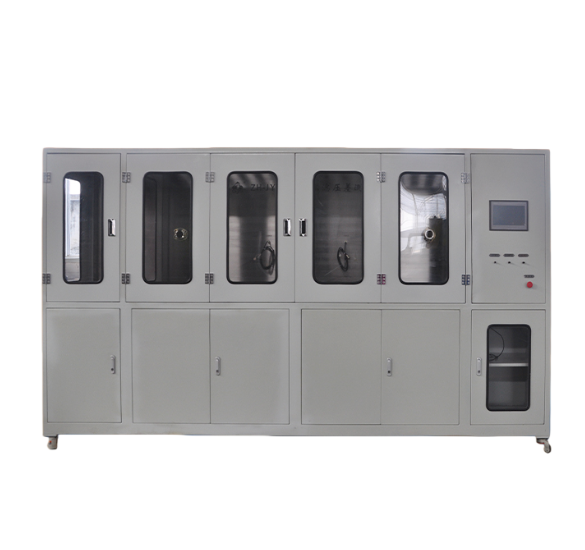
Overview of the Control Valve Testing Standards System
Definition and Purpose
Control valve testing standards are technical requirements and procedural documents that regulate the testing of control valves from manufacturing through operation. They provide unified guidance on testing objectives, instruments and equipment, testing steps, and evaluation criteria. The significance of these standards includes:
Ensuring that valve design and manufacturing meet performance requirements;
Ensuring safe and reliable valve operation under specified conditions;
Providing a basis for comparative testing across different manufacturers;
Serving as a reference for acceptance testing and field maintenance.
Control valve testing standards typically cover pressure tests, leakage performance tests, dynamic response tests, and travel tests, making them essential tools for evaluating valve performance.
International Standards for Control Valve Testing
IEC/EN IEC 60534 Series
The IEC 60534 series (Industrial Process Control Valves) is the most widely recognized international standard system for control valve testing. It clearly specifies inspection and routine testing procedures. The latest part of this series focuses on inspection and routine testing requirements and serves as a primary reference for current control valve testing practices. Key aspects include:
Inspection Organization and Scope: Specifies pre-shipment inspection items, including visual and structural integrity checks.
Hydrostatic Testing: Defines procedures for testing the pressure-bearing capability of valve bodies and components, including test pressure, duration, and leakage criteria.
Seat Leakage Testing: Provides methods to evaluate valve seat sealing performance and allowable maximum leakage under various conditions, such as low temperature or partial pressure differential.
Packing Test: Evaluates whether the valve stem packing leaks and defines acceptable leakage limits.
Rated Travel, Dead Band, and Hysteresis Tests: Assess the actual valve travel, dead band, hysteresis, and actuator/positioner performance.
Dynamic Response Testing (Stroking Time): Evaluates valve response speed and dynamic performance when control signals change.
Instrumentation Requirements: Specifies accuracy requirements for pressure, flow, and displacement instruments to ensure data reliability.
This standard applies to industrial process control valves up to certain pressure classes and provides specific requirements for pneumatic actuators. It excludes certain hazardous services (e.g., radioactive or fire-safe systems), in which case specialized standards take precedence.
ISA-75 Series Standards
The International Society of Automation (ISA) has established the ISA-75 series to provide detailed guidance on control valve testing and performance evaluation. Some notable standards include:
ANSI/ISA-75.19.01: Hydrostatic test methods for manufacturing stage valves, specifying pressure levels, duration, and operational procedures.
ANSI/ISA-75.25.01: Response measurement testing, evaluating dynamic characteristics under simulated step inputs, including dead band, hysteresis, and response time.
ANSI/ISA-75.27.01: Low-temperature seat leakage testing for extreme service conditions.
ANSI/ISA-75.11.01: Inherent flow characteristic and turndown testing, measuring valve flow characteristics at various openings.
Together with IEC standards, ISA standards form a comprehensive framework for control valve performance evaluation applicable in international engineering projects across design, procurement, and acceptance phases.
National Control Valve Testing Standards
In many countries, national standards are derived from international norms to guide local engineering practices.
China GB/T 17213 Series
The GB/T 17213 series is the domestic standard for control valve inspection and routine testing. Part 4 specifies inspection and routine testing requirements, largely aligned with IEC 60534. while formatting it as a national standard. Key provisions include:
Test items and methods;
Sealing performance tests, including seat leakage and packing leakage;
Dynamic tests such as actuator response and damping performance;
Recording and evaluation criteria for test results.
These standards apply to industrial control valves with pressure classes up to PN420 (approximately Class 2500) and specify pneumatic actuator testing. For hazardous services, corresponding safety standards take priority.
Supplementary International Standards
In addition to the direct control valve testing standards, several general valve testing standards are also relevant:
ISO 5208: Valve pressure testing methods applicable to shell and seat tests, often used to assess overall pressure resistance and leakage.
ISO 12101 Series: Primarily for valve stem sealing and volatile emission testing, serving as a reference for evaluating valve sealing performance.
Key Testing Items and Technical Requirements
Control valve performance testing involves several critical items, each with explicit standards and evaluation criteria:
Hydrostatic Test
Evaluates structural integrity and allowable pressure limits, ensuring that the valve body and sealing components do not deform, rupture, or leak under high pressure. Subtests include:
Shell Test: Entire valve filled with water or suitable medium, pressurized to the specified level for a set duration, checking for leakage or damage.
Seat Test: Assesses valve seat sealing to prevent leakage outside the valve body.
Seat Leakage Test
Measures leakage when the valve is closed. Standards define:
Leakage classes for different valve types and applications;
Test medium (water, air, or other);
Test conditions (temperature, pressure differential).
Packing Test
Assesses sealing of the valve stem packing, defining acceptable leakage limits and test methods.
Travel and Dynamic Response Tests
Evaluate response performance, including:
Rated travel verification;
Dead band and hysteresis testing;
Stroking time measurement.
These parameters are critical for ensuring valves respond accurately and promptly to control signals.
Documentation and Result Recording
Standards require detailed recording of testing procedures, calibration records, and results to ensure traceability and facilitate inspection and quality audits.
Practical Testing Scenarios
Control valve testing standards are applied in several key scenarios:
Factory Inspection and Quality Control: Ensures product compliance before shipment, reducing field failures.
Factory Acceptance Test (FAT) and Site Acceptance Test (SAT): Conducted during procurement and post-installation to verify conformance to standards and site conditions.
Maintenance and Performance Verification: Periodic testing detects wear, contamination, or actuator faults, enabling timely maintenance planning.
Significance and Challenges
Significance
Enhances safety and reliability by detecting defects early;
Ensures control accuracy and process efficiency through dynamic response verification;
Supports standardized procurement and interchangeability across manufacturers;
Complies with regulatory and industry requirements in sectors such as petroleum, chemical, and power.
Challenges
High cost of full-scale testing, including equipment, test media, and time;
Complex and variable field conditions affecting reproducibility;
Standards must evolve to accommodate new technologies, such as digital positioners and smart diagnostics.
Conclusion and Outlook
Control valve testing standards are an indispensable component throughout a valve’s lifecycle. Centered on international standards such as IEC 60534 and ISA-75. combined with national and industry norms, they form a systematic testing framework. These standards define methods, equipment requirements, and performance thresholds, enabling objective evaluation during production, installation, and maintenance.
With advancements in industrial control, increased automation, and the introduction of intelligent control elements, future control valve testing standards are expected to evolve toward automated monitoring, online calibration, and smart diagnostics to meet increasingly complex operational conditions and higher performance demands.
Previous: Diesel Water Ash Sulfur Mixing Tester,ISO 16332:2018
N e x t : What is a fabric cooling sensation tester?
