





What is the IEC standard for damp heat test?
2026/02/28
Share:

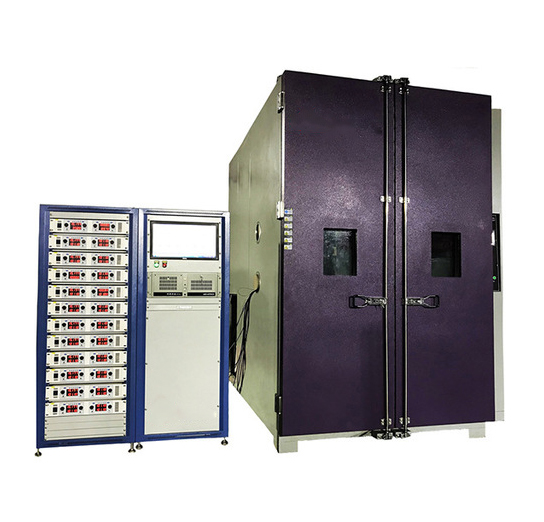
Damp heat testing is primarily used to simulate real working, transportation, or storage conditions in environments characterized by elevated temperature and high humidity. It evaluates a product’s resistance to humid heat, moisture absorption behavior, insulation degradation, corrosion risk, and long-term reliability. Within the IEC system, damp heat testing standards mainly include steady-state damp heat tests and cyclic damp heat tests, which are specified in different parts of the IEC 60068 series.
Basic Concepts and Objectives of Damp Heat Testing
Damp heat testing refers to exposing a test specimen or component to controlled temperature and relative humidity conditions in order to assess its adaptability and long-term reliability in high-humidity environments. The test conditions typically involve either a constant high-temperature, high-humidity environment or a cyclic temperature environment that may lead to surface condensation.
The main objectives of damp heat testing include:
-
Evaluating changes in physical, chemical, and electrical properties of materials and components under high humidity and heat conditions;
-
Assessing the impact of humid environments on insulation performance, contact reliability, and protective characteristics;
-
Simulating service life risks in tropical, marine, or other high-humidity environments;
-
Providing a basis for design optimization, material selection, and reliability enhancement.
IEC standards define test conditions, environmental parameter control, procedures, and reporting requirements in detail to ensure repeatable, comparable, and universally applicable results.
Overview of the IEC Damp Heat Test Standard System
Within the IEC framework, environmental testing is generally covered under the IEC 60068 series, which includes standards for temperature, humidity, vibration, shock, and other environmental stresses. The core standards specifically addressing damp heat testing are:
-
IEC 60068-2-78: Damp heat, steady state
-
IEC 60068-2-30: Damp heat, cyclic (12 h + 12 h cycle)
In addition, other standards such as IEC 60068-2-67 address similar accelerated damp heat tests, primarily for component-level accelerated environmental evaluation, with a slightly different focus compared to general damp heat testing. The following sections focus on the two principal standards mentioned above.
Steady-State Damp Heat Test Standard
Standard Title and Basic Content
IEC 60068-2-78 specifies the steady-state damp heat test, formally titled “Environmental testing – Part 2-78: Damp heat, steady state.” This standard defines the method for conducting damp heat tests under constant temperature and high humidity conditions to evaluate the long-term resistance of products exposed to such environments. It aims to simulate prolonged exposure to tropical or consistently humid conditions without introducing temperature cycling or deliberate condensation. Instead, it analyzes the effects of sustained high humidity under stable conditions.
The standard clearly specifies temperature and humidity settings, exposure duration, environmental control requirements, specimen installation, pre- and post-test measurements, and reporting content. It has undergone multiple revisions to reflect evolving environmental testing technologies, with the latest edition published in 2025, replacing previous versions.
Technical Requirements of the Steady-State Damp Heat Test
Temperature and Humidity Parameters
The standard defines several typical combinations of temperature and relative humidity, such as:
-
30°C ± 2 K, 85% ± 3% RH
-
30°C ± 2 K, 93% ± 3% RH
-
40°C ± 2 K, 85% ± 3% RH
-
40°C ± 2 K, 93% ± 3% RH
These combinations are selected based on product type and expected environmental conditions. The standard also incorporates dew point considerations to quantify the severity of humidity conditions more scientifically.
Environmental chambers must strictly control temperature and humidity fluctuations to ensure stable and compliant test conditions.
Exposure Duration Under Constant Conditions
Specimens are exposed for specified durations under constant conditions. Common durations include:
-
12 hours or 24 hours
-
2, 4, 10, or 21 days
-
Extended durations such as 56 days
The selection of duration depends on product application and expected service life. Longer exposure times help reveal potential latent failure modes caused by prolonged humidity.
Specimen Installation and Preconditioning
Specimens are typically tested unpackaged and either powered off or configured according to relevant specifications. If the specimen temperature is significantly lower than the chamber temperature, preheating is required to prevent unintended condensation upon insertion.
Preconditioning ensures that specimens reach a stable state before exposure, contributing to repeatable and reliable results.
Process Monitoring and Data Recording
Throughout the test, temperature, humidity, and exposure time must be accurately monitored and recorded. The standard specifies measurement locations, frequency, and documentation requirements to ensure traceability and data integrity.
After completion, specimens are inspected and tested for performance changes, including visual condition, insulation resistance, and contact performance.
In summary, the steady-state damp heat test strictly controls environmental conditions and duration to evaluate product performance under sustained high-humidity stress.
Cyclic Damp Heat Test Standard
Standard Title and Purpose
Unlike the steady-state test, IEC 60068-2-30 specifies the cyclic damp heat test, formally titled “Environmental testing – Part 2-30: Damp heat, cyclic (12 h + 12 h cycle).” This method alternates between high-temperature/high-humidity and lower-temperature phases to simulate real-world environmental stresses, particularly condensation resulting from temperature changes.
This test is essential for evaluating products used in outdoor, transportation, or climate-variable environments, where temperature fluctuations and moisture interact.
It addresses:
-
Material expansion and contraction due to temperature cycling;
-
Surface and internal condensation during temperature transitions;
-
Moisture-induced electrical failures and accelerated corrosion;
-
Overall resistance to combined thermal and humidity fatigue.
Core Content of the Cyclic Damp Heat Test
24-Hour Cycle Structure
The standard defines a typical 24-hour cycle consisting of:
-
12 hours at elevated temperature and high humidity;
-
12 hours at lower temperature under controlled humidity conditions.
Variants within the standard specify cooling rates and condensation control methods.
Temperature, Humidity, and Condensation Control
During the high-temperature phase, temperatures typically range from 38–42°C with relative humidity levels often reaching 95% or higher. During cooling, humidity may remain sufficiently high to induce condensation on specimen surfaces.
This cyclic stress is generally more severe than steady-state exposure because it more realistically simulates field conditions involving moisture condensation and thermal cycling.
Test Variables and Method Classification
The standard allows adjustments based on product requirements:
-
Different upper temperature and humidity limits;
-
Variants controlling cooling rates;
-
Different numbers of cycles (e.g., 2, 6, 12, or more).
These variables enable tailoring of test severity to reliability objectives.
Monitoring and Evaluation
Strict monitoring and documentation of temperature, humidity, cycle count, and condensation are required. Functional and performance tests are conducted before, during, and after exposure to assess degradation.
Role of Damp Heat Testing in Certification and Quality Assurance
IEC damp heat standards are widely used in product development, type testing, certification, and supplier quality control. Their significance includes:
-
Identifying potential failure modes under humid conditions;
-
Supporting design optimization and material selection;
-
Demonstrating compliance with industry requirements;
-
Ensuring global harmonization through adoption in regional standards.
For products such as control units, sensors, automotive components, and power modules, damp heat testing is indispensable in environmental reliability evaluation.
Key Considerations for Implementation
Test Equipment Requirements
Environmental chambers must precisely control temperature and humidity and perform cyclic programming when required.
Specimen Preparation
Specimen configuration, including whether powered or unpowered, must comply with applicable specifications. Installation methods can influence moisture transfer and test results.
Data Collection and Evaluation Criteria
Accurate sensors and recording systems are essential. Evaluation must be based on performance metrics such as insulation resistance, functional stability, and physical integrity.
Test Report Standardization
Reports must include initial conditions, test parameters, measured data, and final assessments to ensure auditability and quality traceability.
IEC damp heat test standards form a critical part of the international environmental testing system. Through steady-state damp heat testing defined in IEC 60068-2-78 and cyclic damp heat testing defined in IEC 60068-2-30, they establish standardized methods for evaluating product reliability under humid heat conditions.
The steady-state method emphasizes long-term exposure under constant high humidity, while the cyclic method simulates real-world condensation and thermal expansion effects through temperature cycling. Together, they constitute a comprehensive damp heat evaluation framework.
Understanding and correctly implementing IEC damp heat test standards is fundamental not only for product reliability design but also for accessing global markets. For manufacturers, testing laboratories, certification bodies, and design engineers, these standards serve as indispensable tools for practical engineering application and reliability verification.
Previous: What is a fabric cooling sensation tester?
N e x t : How to calculate flow rate through a filter?
