





How to calculate flow rate through a filter?
2026/02/28
Share:

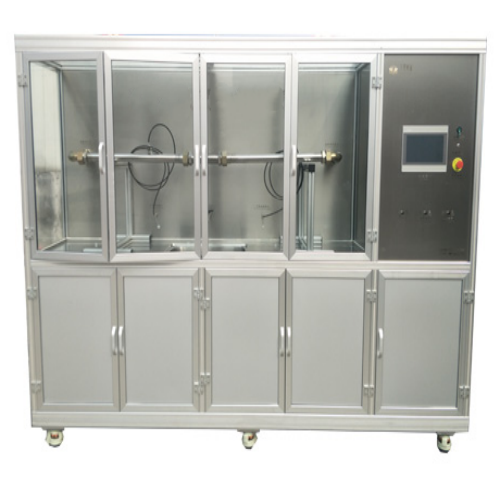
This article systematically explains the definition and physical meaning of “filter flow rate,” common calculation formulas, the relationship between flow rate and pressure drop, correction methods under different operating conditions, and key considerations in practical engineering design.
What Is Filter Flow Rate
Flow rate refers to the volume or mass of fluid passing through a filter cross-section per unit time. It is one of the core parameters describing filtration system performance. In most filtration and environmental engineering calculations, volumetric flow rate is used, typically expressed in cubic meters per second (m³/s), liters per minute (L/min), or gallons per minute (gpm).
Flow rate can be understood from several perspectives:
The volume passing through the filter per unit time, such as the amount of water or air passing through a filter element per minute;
The product of flow velocity and effective cross-sectional area under ideal flow conditions;
A parameter closely related to pressure, fluid properties, and filter media characteristics.
For filters, the flow rate is not only determined by the inlet supply but is also influenced by media resistance, pore structure, and fluid properties.
Basic Formula for Calculating Filter Flow Rate
In basic engineering calculations, when the filter cross-sectional area and flow velocity are known, the volumetric flow rate can be calculated using:
Q = A × v
Where:
Q is the volumetric flow rate (m³/s);
A is the effective cross-sectional area of the filter (m²);
v is the average fluid velocity at the filter cross-section (m/s).
This formula is widely used in gas and water flow measurements to quickly estimate the actual volume of fluid passing through a filter medium.
For example, in ventilation systems or air filter design, the flow rate can be obtained by measuring the average air velocity through the filter and multiplying it by the effective area. In laboratories, anemometers or flow meters are commonly used to measure average velocity for such calculations.
Darcy’s Law and Filter Flow Rate
The theoretical foundation of filter flow calculation comes from porous media flow theory, with Darcy’s Law being the most classical description. Originally developed to describe slow fluid flow (such as water) through sand beds or porous materials, its mathematical model is widely applied to filter media flow analysis.
Darcy’s Law is expressed as:
Q = (k A / μ L) × Δp
Where:
Q is the volumetric flow rate (m³/s);
k is the permeability coefficient of the medium (m²);
A is the effective cross-sectional area (m²);
μ is the dynamic viscosity of the fluid (Pa·s);
L is the flow path length or filter thickness (m);
Δp is the pressure difference across the filter (Pa).
This formula indicates that:
Flow rate is directly proportional to pressure difference;
Flow rate is inversely proportional to fluid viscosity;
Flow rate is inversely proportional to filter thickness;
Flow rate is positively correlated with medium permeability, which depends on porosity and pore structure.
Therefore, in filter design and performance evaluation, Darcy’s Law quantitatively describes fluid transport behavior and forms the theoretical basis for filter flow calculations.
Relationship Between Flow Rate, Time, and Volume
In practical field or laboratory measurements, instantaneous velocity or pressure difference may not be directly available. However, if the total volume filtered during a known time interval is known, the average flow rate can be calculated as:
Q = V / t
Where:
Q is the average volumetric flow rate;
V is the total fluid volume passing through the filter during time t.
This approach is particularly common in water treatment systems. For example, given the total volume of water filtered during a specific operating cycle, the average instantaneous flow rate can be calculated using this relationship.
Pressure Difference, Resistance, and Flow Rate
During operation, filters generate pressure drop due to the material structure and pore characteristics of the medium. This pressure loss affects the flow rate.
Under relatively simple conditions, pressure drop effects can be estimated using methods similar to pipe resistance analysis. However, for internal porous media flow, Darcy’s Law provides a more accurate quantitative description.
When flow velocity becomes high or the system enters a nonlinear regime—such as high-speed flow, non-Newtonian fluids, or large-pore nonlinear flow—Darcy’s Law may no longer be sufficient. In such cases, more advanced engineering models are required to describe the complex flow behavior.
Flow Unit Conversion in Engineering Applications
In practical engineering, flow rate units often require conversion. For example, in water treatment, common units include million gallons per day (MGD) and gallons per minute (gpm). Conversion can be based on the number of minutes per day:
Q (gpm) = V (gpd) / 1440
Where 1440 represents the number of minutes in one day.
Such conversions are widely used in environmental engineering calculations and water treatment plant design.
Relationship Between Filter Area and Flow Rate
In filter system design, it is often necessary to determine the required effective filtration area to meet a target flow rate. Using the allowable surface velocity specified in design guidelines, the required area can be estimated as:
A = Q / v
Where:
A is the filtration area (m²);
Q is the flow rate (m³/s);
v is the allowable face velocity (m/s).
This method is commonly used in filter selection and sizing processes.
Practical Calculation Methods Under Different Flow Conditions
1. Steady-State Flow
Under steady-state conditions—where the fluid state on both sides of the filter remains stable and the flow rate is constant—Darcy’s Law or the velocity-area method can be directly applied.
2. Pulsating or Unsteady Flow
In some systems, due to pump characteristics or periodic load changes, the flow through the filter may fluctuate rather than remain constant. In such cases, it is necessary to measure instantaneous flow rates using specialized sensors and compute average flow by integration over time.
This type of analysis is common in complex systems such as wastewater treatment facilities and circulating cooling systems.
Impact of Flow Rate on Filtration Performance
Although this article focuses on flow rate calculation, it is important to emphasize that higher flow rate is not always better. Flow rate directly influences filtration performance:
Excessive flow reduces fluid residence time within the filter, lowering adsorption and particle capture efficiency;
Higher flow increases pressure drop, leading to greater energy consumption;
For solid loading processes, excessive flow may accelerate clogging of the filter medium.
Therefore, in system design, engineers must balance flow rate, filtration efficiency, and pressure drop.
Summary and Engineering Design Recommendations
This article has systematically summarized filter flow rate calculation methods and theoretical foundations, including basic definitions, relationships between flow rate and pressure, cross-sectional area relationships, Darcy’s Law, time-volume methods, unit conversions, and practical design considerations.
Key conclusions include:
Flow rate is a core performance parameter of filters and can be calculated using the product of velocity and area or the volume-time relationship.
Darcy’s Law provides the fundamental theoretical basis for porous media flow, linking flow rate to pressure difference, permeability, viscosity, and path length.
Practical engineering must consider pressure drop and clogging effects rather than relying solely on ideal formulas.
Unit conversion is essential in engineering practice, especially when different industries use different flow rate expressions.
A thorough understanding and correct application of these formulas and theories are essential for accurate filter flow rate calculation and form the foundation for filter system design, selection, evaluation, and optimization.
Previous: What is the IEC standard for damp heat test?
N e x t : Filter cartridge pore size tester,ISO 2942:2004
