





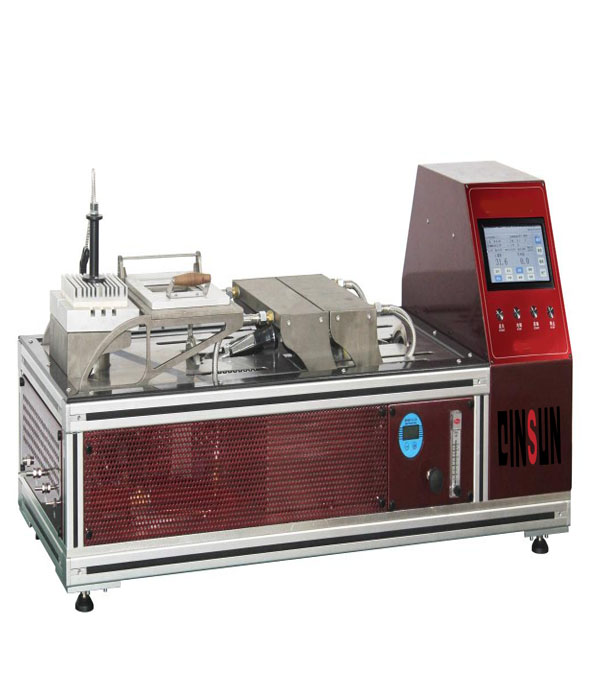
Thermal Protective Performance Tester (TPP), ISO 11612
2026/03/03
Share:

Testing Principle
TPP Thermal Protective Performance refers to the heat energy value transmitted through the fabric that causes second-degree burns to the human body, measured in kilowatt-seconds per square meter (kW·s/m²). The higher the value, the stronger the thermal protective performance of the fabric. During testing, if a gap is left between the test sample and the heat sensor, the fabric's ability to block heat between the heat source and the human skin can be tested (gap heat protection). If the fabric is in direct contact with the heat sensor, the fabric’s thermal insulation performance can be tested (contact heat protection).
Product Features
High Precision and Stability: The TPP tester accurately measures the material's heat transfer properties and evaluates its protective effect. The test data is precise, with good stability and reproducibility. For example, the new generation TPP tester from Huajian Technology uses advanced foreign core technology, with imported core components carefully calibrated to ensure accurate testing results.
Intelligent Automation: It features intelligent automation functions that can automatically complete certain testing procedures, improving testing efficiency. For instance, it can automatically generate test reports, reducing human operation and errors.
Good Safety Features: The instrument uses a safe gas circuit design, with multiple sensors for real-time monitoring. It also includes a gas emergency shutoff system, a backfire prevention system, and a closed-loop water circulation monitoring system, ensuring the safety of both the instrument and the operator.
User-Friendly Operation: The instrument is equipped with a visual software control interface, making operation intuitive. It also comes with standard testing software that can output process monitoring curves and reports.
Operating Process
The TPP Thermal Protective Performance Tester is a key device for evaluating the thermal protection capability of protective clothing. Mastering its proper use and operating skills is crucial for ensuring the accuracy and reliability of test results.
1. Preparation Before Testing
Before starting the test, thorough preparation is required:
Check that all components, including the heating system, sensors, and data acquisition devices, are in good condition to ensure the equipment is functioning correctly.
Prepare the protective clothing samples according to the test standards, ensuring that the sample dimensions and conditions meet the specified requirements.
Properly install the sample in the designated position, simulating the contact between the human body and the heat source.
Adjust the positions of the heat source, sensors, and other initial settings to ensure a consistent testing environment.
Familiarize yourself with the test procedure and safety precautions, particularly those related to high-temperature operations.
2. Standardized Operating Procedure
The operation of the TPP tester must follow a strict procedure:
After starting the device, gradually increase the heat source temperature according to the pre-set program to simulate potential heat radiation or contact heat source situations.
During the heating process, closely monitor the instrument’s operation and data changes to ensure the stability of the testing process.
Use sensors to monitor the sample’s surface temperature in real time and record key data points.
Maintain a stable environment during testing and avoid interference from airflow or other external factors.
Once the preset test conditions are met or the sample shows significant changes, stop heating and save the test data.
If multiple tests are required, ensure that each test is conducted under consistent conditions for comparison purposes.
3. Operating Tips and Precautions
To obtain accurate test results, pay attention to the following tips:
The installation position of the sample must be precise, ensuring that its relative position and angle to the heat source meet the required standards. This directly impacts the representativeness of the test results.
Adjust the sample's condition before testing to avoid influencing the thermal protective performance.
Observe any anomalies during the test process and analyze the causes to take appropriate corrective measures.
After the test is completed, follow the prescribed procedure to shut down the equipment and cool down the system, which helps extend the equipment's lifespan.
Maintain detailed test records, including sample information, test conditions, and raw data, which provide a complete basis for data analysis.
4. Result Analysis and Maintenance
Once the test data is collected, use professional knowledge to analyze and assess:
Evaluate the protective effectiveness of the protective clothing under different heat source conditions, determining whether it meets safety standards.
Compare the test results of different samples to provide data for selecting and improving protective clothing.
Regularly calibrate and maintain the tester to ensure measurement accuracy and equipment reliability.
Inspect the performance of the heating system and sensors, and replace any aging or damaged components.
Operators should receive professional training to become familiar with the equipment's features and testing standards, improving the accuracy and standardization of the tests.
Role and Benefits
Ensuring Personnel Safety
The TPP tester precisely measures the thermal protection performance of protective clothing, helping determine its effectiveness in high-temperature or fire-risk scenarios. This is critical for workers such as firefighters, electrical maintenance workers, and petrochemical workers. By testing the thermal protection capability of clothing materials, it ensures effective protection for personnel from burns or thermal injuries in a short amount of time, safeguarding their lives.
Improving Product Quality and Reliability
Manufacturers can use the TPP tester to verify the thermal protection performance of protective clothing during the design and production stages, ensuring the products meet industry standards and user needs. This not only improves the quality and reliability of the clothing but also enhances its competitiveness in the market. Continuous testing and improvement help produce more efficient and durable protective clothing, boosting brand image and market share.
Compliance with Safety Standards
The TPP tester complies with multiple international and domestic standards, such as the National Fire Protection Association (NFPA) standards and European EN standards. These standards define the basic performance requirements for protective clothing, and the data provided by the TPP test helps manufacturers and certifying bodies verify that the products meet these regulatory requirements, ensuring compliance and certification.
Driving Technological Innovation and R&D
The TPP tester assists R&D teams by evaluating the performance of various protective materials in high-temperature environments. By testing different materials and designs for protective clothing, R&D teams can identify material strengths and weaknesses, fostering the application and innovation of new materials and technologies. This supports the development of more lightweight, comfortable, and highly protective clothing, enhancing the overall performance of the product.
Reducing Occupational Injuries and Accident Risks
The TPP tester accurately assesses the thermal protection ability of clothing, reducing the risk of accidents caused by the use of substandard protective clothing. In hazardous environments, wearing inadequate protective clothing can lead to severe heat injuries or even fatalities. Regular TPP testing ensures that protective clothing provides sufficient protection under high-temperature conditions, thereby reducing the occurrence of occupational injuries and accidents due to poor protective performance.
Improving Testing Efficiency and Accuracy
The TPP tester provides a quick and accurate testing method, generating detailed thermal protection performance data in a short time. Compared to traditional manual testing methods, the TPP tester offers higher precision and reliability, ensuring objective and unbiased results. The automated testing process improves efficiency, reduces human errors, and ensures consistent and reliable results.
In conclusion, the TPP Thermal Protective Performance Tester plays a crucial role in evaluating and ensuring the thermal protection capabilities of protective clothing. It not only ensures the safety of personnel in high-temperature environments but also improves the quality and technological level of protective clothing products, promoting industry compliance and innovation. With precise testing data, the TPP tester provides strong support for the design, production, research, and certification of protective clothing, ultimately enhancing worker safety and reducing accidents caused by fire or heat exposure.
Previous: What is a textile far-infrared radiation temperature rise tester?
N e x t : What is a Thermal Radiation Performance Tester (RPP)?
