





Which test is used for testing the fabric?
2026/03/06
Share:

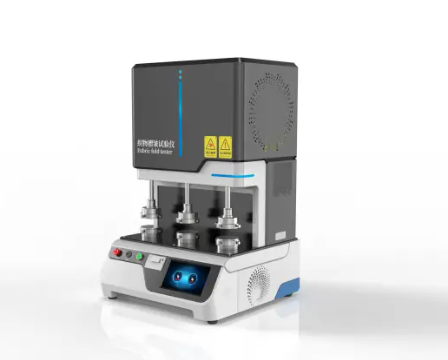
Background
In the mid-to-late 20th century, as lifestyles became faster-paced, consumer demand for “non-iron” and “easy-care” garments increased significantly. This trend drove the need for quantitative evaluation of fabric wrinkle resistance.
To standardize testing methods, international organizations such as the American Association of Textile Chemists and Colorists (AATCC) and the International Organization for Standardization (ISO) developed relevant standards, including AATCC 128 – Wrinkle Recovery of Fabrics and ISO 9867 – Determination of Crease Recovery Angle of Woven Fabrics. These standards promoted the development of dedicated testing instruments.
Early testing relied on visual inspection or simple mechanical devices, but later evolved into precision instruments equipped with angle dial indicators, loading systems, and controlled temperature and humidity environments, such as the well-known Shirley Crease Recovery Tester.
With the widespread adoption of resin finishing and wrinkle-resistant finishing technologies, professional testing equipment became necessary to verify treatment effectiveness. As a result, the tester evolved from an auxiliary tool into a core quality control instrument.
Core Principle
The working principle of the Fabric Wrinkle Bending Tester is based on the recovery behavior of fabrics under controlled bending conditions, which allows quantitative evaluation of wrinkle recovery performance. The basic workflow is as follows:
Specimen Preparation and Crease Formation
Standard-size fabric specimens (e.g., 5 inches × 3 inches) are clamped and folded. A specified pressure (such as a 500 g weight) is applied for 1 minute to form a controlled crease.
Free Recovery Measurement
The creased specimen is then hung on the edge of the test device (such as a knife edge), allowing it to recover freely without external force. The crease recovery angle formed during recovery is measured using a circular dial scale or angle sensor.
Result Evaluation
0° indicates no recovery at all
180° indicates complete recovery to a flat state
The total crease recovery angle (CRA) is typically the sum of the warp and weft recovery angles. Untreated fabrics generally have a CRA of around 150°, while fabrics treated with resin finishing may reach 300°.
This principle is widely used in international standards such as AATCC 128 and ISO 9867.
Standard Operating Procedure for Fabric Wrinkle Bending Tester
1. Sample Preparation
According to the testing standard, use a professional cutting tool to prepare fabric specimens with dimensions of 150 mm × 150 mm (some international standards allow an alternative size of 6 inches × 6 inches).
Place the specimens in a constant temperature and humidity environment and condition them under standard atmospheric conditions (21 ± 1°C temperature and 65 ± 2% relative humidity) for at least 4 hours, ensuring the samples reach moisture equilibrium.
2. Crease Formation and Setting
Fold the conditioned specimen along the warp or weft direction (or according to the specific testing standard). Place a standard load device (e.g., a 2.27 kg weight) precisely at the fold.
Place the loaded specimen on a temperature-controlled hot plate (e.g., 150°C) and heat it for 10 minutes to set the crease.
After heating:
Remove the load weight
Turn off the heat source
Allow the specimen to rest at room temperature for 10 minutes to release internal stress.
3. Recovery Stage and Evaluation
Unfold the specimen and place it on a standard horizontal surface. Allow it to recover freely for 30 minutes without disturbance (some standards require up to 1 hour).
Evaluate the result using international wrinkle recovery rating replicas (grade 1–5):
Grade 5: Almost no residual wrinkles; excellent recovery
Grade 3: Visible wrinkles with partial recovery
Grade 1: Severe wrinkles with little or no recovery
The final rating is determined by comparing the specimen with the closest standard replica.
Maintenance Guidelines
The Fabric Wrinkle Bending Tester is a textile performance testing instrument. Maintenance should follow both general equipment maintenance principles and the specific structure of the device.
1. Daily Cleaning and Inspection
After each use:
Clean fibers, dust, or residue from clamps and guide rails using a soft cloth to prevent interference with test accuracy.
Routine inspection:
Check weekly for loose or worn clamps.
Ensure gears, lead screws, and transmission parts operate smoothly.
2. Key Component Maintenance
Clamp Maintenance
If clamp surfaces show wear or burrs, lightly polish them with fine sandpaper or an oil stone. If wear is severe, replace them with original parts. Avoid clamping hard or rough samples to reduce damage.
Transmission and Guide System
Apply special lubricating grease regularly to gears and lead screws to prevent dry friction and maintain measurement accuracy. If scratches or jamming occur in guide rails or sliders, clean and service them promptly.
Sensor Calibration
Force sensors and displacement sensors should be regularly calibrated using standard weights or calibration blocks. If deviations are detected, repair or recalibrate the instrument immediately.
3. Environmental and Storage Requirements
Installation Environment
Keep the instrument dry and dust-free, avoiding direct sunlight and high humidity (relative humidity above 80%) to prevent corrosion and electronic component aging.
Long-Term Storage
Cover the instrument with a dust cover and power it on once per month for 10–15 minutes without load to prevent moisture damage to electrical circuits.
4. Preventive Maintenance Plan
Annual Professional Maintenance
It is recommended that the manufacturer or authorized service provider conduct a comprehensive inspection once a year, including accuracy calibration and replacement of key components (such as belts or bearings).
Maintenance Records
Record the date and details of each cleaning, lubrication, or calibration operation to track equipment condition and ensure reliable performance.
Core Advantages
The Fabric Wrinkle Bending Tester is a specialized device for evaluating the recovery ability of fabrics after bending, folding, or compression. Its main advantages include:
Improved Quality Control
By quantifying wrinkle resistance (e.g., crease recovery angle CRA), manufacturers can ensure product consistency and reduce defect rates.
Optimization of Fabric Development and Finishing Processes
The instrument objectively compares the effects of fiber types, fabric structures, and chemical treatments (such as resin finishing) on crease recovery, supporting new fabric development.
Compliance with International Standards
The tester complies with widely recognized standards such as AATCC 128 and ISO 9867. facilitating product export and industry certification.
Increased Testing Efficiency
Modern automated testers can complete measurements quickly and provide automatic alerts, reducing manual intervention and accelerating quality inspection.
Simulation of Real Wearing Conditions
Some advanced systems simulate actual garment wrinkling during wear, making test results closer to real consumer usage scenarios.
In addition, the tester is widely used in garments, protective clothing, and home textiles, providing reliable data support for properties such as non-iron performance and durable press finishing.
In the future, the development of fabric wrinkle bending testers will show three major trends: intelligent technology, standardization, and industry customization.
First, automation of testing processes and intelligent data acquisition will become the core direction. By integrating sensors and machine vision technologies, the instrument will enable real-time and high-precision analysis of wrinkle morphology while reducing human error.
Second, testing standards will become more unified and refined, enabling more scientific evaluation of wrinkle resistance and bending stiffness for different fabrics such as cotton, linen, and blended textiles, providing more accurate data for fabric development and production.
Finally, instruments will evolve toward multi-functional integration. They will not only simulate long-term sitting pressure and dynamic movement conditions, but also integrate with nonwoven production lines and textile manufacturing processes. Through real-time data feedback, process parameters can be optimized to support the development of high-performance fabrics that combine comfort and durability.
Previous: What is a Simulated Human Body Underwear Tester?
N e x t : Which kind of suit is required for protection against acid and alkali?
