





FAQs About Hydraulic Pump Contamination Resistance Tester
2026/04/08
Share:

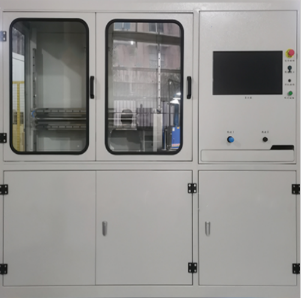
What is the purpose of a Hydraulic Pump Contamination Resistance Tester?
The Hydraulic Pump Contamination Resistance Tester is primarily used to evaluate the performance stability and durability of hydraulic pumps under contaminated working fluid conditions. Its core applications include:
Simulating real contamination environments: By introducing controlled amounts of particles, water, or chemical contaminants into the hydraulic system, it tests the pump’s performance under non-ideal fluid conditions.
Verifying anti-contamination design effectiveness: It assesses the resistance of critical internal components of the pump—such as plungers, distributor plates, and bearings—against wear, corrosion, or jamming.
Supporting life and reliability assessment: Combined with accelerated aging tests, it predicts the expected service life of hydraulic pumps in actual industrial applications.
Compliance with industry standards: Provides test data for product conformity according to fluid cleanliness standards such as ISO 4406 and NAS 1638.
These tests are usually integrated with hydraulic test benches, enabling synchronous monitoring of parameters such as flow rate, pressure, temperature rise, and leakage rate, thereby quantifying the impact of contamination on pump efficiency and reliability.
What are the features of the Hydraulic Pump Contamination Resistance Tester?
The Hydraulic Pump Contamination Resistance Tester is a key testing device for evaluating the reliability and service life of hydraulic pumps under contaminated fluid conditions. Its main features include:
Simulation of real contamination environments: During testing, solid particles (such as dust or metal shavings), water, or gas are introduced into the hydraulic oil to simulate common industrial contamination scenarios, allowing assessment of the pump’s performance under non-ideal conditions.
Focus on wear resistance and sealing performance: By operating the pump for extended periods in contaminated fluid, the tester evaluates the wear rate of critical internal components (such as plungers, cylinders, distributor plates, and gears), changes in leakage, and friction characteristics, verifying the effectiveness of anti-contamination designs.
Programmable control of test parameters: The advanced test bench allows precise programming of contamination concentration, oil temperature (up to 120°C), pressure (up to 40 MPa), flow rate, and load, enabling multi-condition accelerated aging tests.
Integrated real-time multi-parameter monitoring: Equipped with high-precision sensors, the tester continuously monitors flow, pressure, temperature, leakage, and friction, generating performance degradation curves for quantitative analysis of contamination effects on pump life.
Compliance with industry standards: Test procedures are typically conducted according to national standards such as JB/T 7039-2006 and JB/T 7041-2006. ensuring comparable and authoritative results.
Focus on critical failure modes: The tester emphasizes typical failures caused by contamination, such as jamming, cavitation, seal extrusion, and early wear, providing a basis for pump design improvement and selection.
Which industries is the Hydraulic Pump Contamination Resistance Tester suitable for?
The Hydraulic Pump Contamination Resistance Tester is widely used in industries that require high hydraulic system cleanliness, ensuring that equipment can withstand wear, clogging, or failure caused by contamination during actual operation. The main applicable industries include:
Construction machinery: Excavators, loaders, cranes, etc., often operate in dusty environments where hydraulic oil is easily contaminated. Contamination resistance testing is used to verify pump durability.
Agricultural machinery: Tractors, harvesters, and other equipment frequently work in dusty outdoor conditions, making hydraulic systems susceptible to particle intrusion.
Industrial automation: High-precision hydraulic systems (e.g., injection molding machines, presses) require extremely clean oil. Contamination can cause valve sticking or pump wear.
Aerospace: Flight control hydraulic systems demand very high reliability, necessitating rigorous contamination resistance testing to ensure safety.
Marine and port machinery: Humid and salty environments can introduce water and corrosive products into hydraulic oil, affecting pump life.
Oil and gas: Drilling rigs and offshore platform hydraulic systems need to operate reliably under harsh conditions with contaminated media.
Power and energy: Systems such as wind turbine pitch control and hydroelectric control valves rely on clean hydraulic oil for precise control.
Additionally, this testing is a critical step for hydraulic pump manufacturers in R&D validation, quality control, and certification (e.g., ISO 4406. NAS 1638).
How do you use a hydraulic pump contamination resistance tester?
The core purpose of the Hydraulic Pump Contamination Resistance Tester is to verify whether a hydraulic pump can maintain normal operational performance in fluid environments containing contaminants such as particles, water, or air.
Test Purpose and Principle
Simulate contaminated environment: Introduce standard particles (e.g., ISO 4406 contamination level), water, or air into hydraulic oil to replicate real working conditions.
Monitor performance parameters: Record the pump’s pressure fluctuations, flow stability, temperature rise, noise, and efficiency changes under contaminated conditions.
Evaluate durability: By running the pump over extended periods, observe for accelerated wear, seal failures, or output reduction.
Testing Steps
Prepare contaminated hydraulic oil: Configure hydraulic oil with different contamination levels according to ISO 4406 standards (e.g., NAS 1638 Class 8). Optionally add a controlled amount of water (e.g., 0.5%–2%) or degassed oil to simulate aerated conditions.
Connect the test system: Install the hydraulic pump on a hydraulic test bench, which should include:
Adjustable load (e.g., hydraulic motor or loading valve)
Pressure sensors
Flow meters
Temperature sensors
Oil contamination monitoring modules (e.g., particle counter, moisture activity meter)
Run baseline test: Using clean oil, record pump performance at rated speed and pressure (e.g., volumetric efficiency, overall efficiency).
Introduce contamination and continue testing: Switch to the contaminated oil and gradually increase load or runtime (e.g., 2–8 hours). Continuously monitor indicators such as pressure pulsation, flow decay, and temperature rise.
Analyze results: If the pump maintains performance fluctuations within ±5% under contaminated conditions, it is considered to have passed the contamination resistance test. Compare pre- and post-test data to evaluate the impact of contamination on wear rate.
What consequences arise if air becomes trapped in a hydraulic system?
If air is present in a hydraulic system, it can cause a series of serious operational problems. Specifically, air in the system (often associated with cavitation) can make actuators, such as cylinders or hydraulic motors, operate weakly, respond sluggishly, or behave abnormally. These symptoms are often accompanied by sharp whining or screeching noises.
The presence of air accelerates wear on system components, leading to premature failure or damage. Because air is compressible, it interferes with the stability of system pressure, causing significant pressure fluctuations and shocks. These unstable pressures can lead to localized or overall overheating, promote foaming and oxidation of the hydraulic fluid, and cause cavitation damage to critical components like hydraulic pumps.
Over time, these cumulative effects can severely reduce the efficiency and reliability of the hydraulic system, potentially causing a significant drop in performance or complete system failure.
How to effectively detect whether a hydraulic pump has failed?
A common method is to install a flow meter on the hydraulic pump’s case drain line and continuously monitor the flow. Under normal operation, most variable pumps bypass (leak) about 1%–3% of their maximum displacement through the case drain, which is considered normal internal leakage.
If the flow meter detects a significant increase in actual flow—for example, reaching 10% or more of the maximum displacement—this clearly indicates potential internal wear or seal failure in the pump. In such cases, to ensure reliable operation of the hydraulic system and prevent further damage, it is recommended to replace the hydraulic pump promptly.
Why is a Hydraulic Pump Contamination Resistance Tester So Important?
The importance of a hydraulic pump contamination resistance tester lies primarily in its role in ensuring the reliability, lifespan, and safety of hydraulic systems. Key reasons include:
Contaminants are a major cause of hydraulic system failure: Approximately 70%–80% of hydraulic system failures are due to fluid contamination, such as solid particles, water, or air. Contamination accelerates wear on critical pump components (such as plungers, distribution plates, and bearings), leading to reduced efficiency, leakage, or sudden failure.
Ensuring reliable operation of critical equipment in harsh environments: Hydraulic pumps are widely used in construction machinery (e.g., excavators), aerospace, marine equipment, and heavy industries, where dust, sediment, or chemical impurities are common. Contamination resistance testing verifies the pump’s performance stability under real-world polluted conditions.
Compliance with international standards and industry regulations: Modern hydraulic equipment must meet standards such as ISO 4406 (solid particle contamination levels) and ISO 11171 (hydraulic oil cleanliness calibration). Contamination testing is a core step in certification, ensuring compliance and reducing legal and safety risks.
Reducing lifecycle costs: By identifying contamination-sensitive points early, manufacturers can optimize seal design, filtration systems, and material selection, thereby lowering on-site failure rates, downtime, and maintenance expenses.
Supporting high-reliability applications: In critical systems such as wind turbine pitch control, nuclear power plant valves, or deep-sea drilling equipment, hydraulic pump failure can trigger cascading accidents. Contamination resistance testing is a key method for validating “fail-safe” performance.
In summary, the hydraulic pump contamination resistance tester is not only a rigorous quality control tool but also a core technology for ensuring industrial safety and overall system reliability. It plays an indispensable role in modern industrial applications by precisely testing and evaluating pumps, effectively preventing potential risks, and ensuring long-term stable operation of equipment.We sincerely invite you to visit our official website for detailed technical specifications, application examples, and additional information about this equipment, and we look forward to further communication and collaboration.
Previous: What is a hydraulic oil purification and filtration tester?
N e x t : What is an Infrared and Microwave Sensing Test Dummy?
