





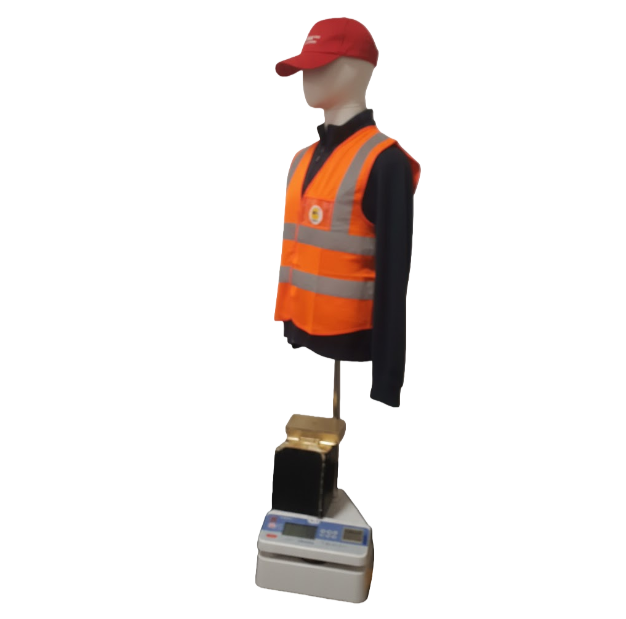
What is an Infrared and Microwave Sensing Test Dummy?
2026/04/09
Share:

What is the difference between microwave sensors and infrared sensors?
Microwave sensors and infrared sensors differ significantly in both their working principles and application scenarios.
Microwave sensors primarily rely on Doppler radar technology. They emit and receive electromagnetic waves, analyzing frequency changes caused by moving objects to accurately detect the position and speed of the target. This technology offers strong penetration capabilities and can operate reliably under harsh weather conditions, making it suitable for indoor and outdoor security monitoring, automatic door control, and similar applications.
In contrast, infrared sensors detect objects by sensing changes in infrared radiation. When an object emits or reflects infrared energy, the sensor captures these thermal variations to identify moving objects or heat sources. Infrared sensors are more sensitive to changes in ambient temperature and are commonly used in human presence detection, temperature monitoring, and energy-saving lighting systems.
The core difference between the two lies in their detection mechanisms: microwave sensors detect based on variations in electromagnetic wave frequencies, while infrared sensors rely on sensing infrared radiation.
Which Industries are Suitable for the Infrared and Microwave Sensing Test Dummy?
The Infrared and Microwave Sensing Test Dummy is primarily used to simulate the response of humans or objects in electromagnetic fields, enabling calibration, validation, or performance testing of infrared and microwave sensing systems. This equipment is widely applied in the following industries:
Automotive Industry
Used for testing Advanced Driver Assistance Systems (ADAS) and autonomous driving systems, including occupant detection, vital sign monitoring (e.g., heart rate and respiration), and the accuracy of in-vehicle infrared/microwave sensors.
Defense and Security
Simulates human features under infrared thermal imaging or microwave radar detection, supporting applications such as training, counter-terrorism, and border surveillance.
Healthcare and Medical Devices
Serves as a standard test object in the development and calibration of non-contact vital sign monitoring devices, such as respiration and heartbeat detection systems.
Industrial Automation
Used to validate the reliability of infrared thermal imaging systems for high-temperature equipment monitoring, fire detection, or human presence sensing.
Consumer Electronics
Supports the development and testing of devices based on infrared or microwave sensing technologies, including facial recognition, gesture control, and AR/VR applications.
These test dummies are typically embedded with materials that mimic the electromagnetic properties of human tissue, ensuring reproducible responses in specific spectral bands, such as near-infrared (NIR), short-wave infrared (SWIR), or microwave frequency ranges.
What is the purpose of the Infrared and Microwave Sensing Test Dummy?
The Infrared and Microwave Sensing Test Dummy is primarily used for testing and validating Advanced Driver Assistance Systems (ADAS) and autonomous driving systems, playing a crucial role in simulating realistic human responses to sensors.
Its core purposes include:
Simulating human signal characteristics under millimeter-wave radar and infrared sensors to evaluate ADAS functions—such as Automatic Emergency Braking (AEB) and collision warning—in detecting pedestrians or obstacles.
Replacing real people in high-risk road tests, effectively reducing experimental costs and safety risks.
Validating sensor algorithms under varying angles, distances, and environmental conditions by collecting and statistically analyzing echo data, including Doppler effect signals.
Additionally, these test dummies can be used for:
Electromagnetic characterization and calibration in microwave anechoic chambers.
Calibration and performance evaluation of infrared thermal imaging systems, simulating human thermal radiation characteristics.
In short, the Infrared and Microwave Sensing Test Dummy is a bionic testing tool specifically designed for intelligent vehicle perception systems, ensuring that ADAS can accurately detect pedestrians or obstacles in complex real-world environments.
What are the functions of the Infrared and Microwave Sensing Test Dummy?
The Infrared and Microwave Sensing Test Dummy is widely used in the development and validation of Advanced Driver Assistance Systems (ADAS), autonomous driving, security, military, and industrial sensing systems. Its main functions can be summarized as follows:
Simulating realistic target electromagnetic scattering characteristics
The test dummy can mimic the reflection, absorption, and scattering behaviors of humans or objects in both the infrared (e.g., thermal radiation) and microwave/millimeter-wave (e.g., radar echoes) frequency bands. This allows sensors to be calibrated and validated for their perception capabilities in real-world scenarios.
Supporting ADAS and autonomous driving system testing
In road tests, the dummy can replace real people in high-risk scenarios, reducing experimental costs and safety risks. For example, millimeter-wave radar can collect multi-angle echo data to evaluate whether the dummy’s radar response closely matches that of a real human.
Providing repeatable and controllable testing environments
Standardized materials and structures are used in the dummy to ensure consistent electromagnetic characteristics in each test. This facilitates comparisons between different sensors or the validation of algorithm robustness.
Enabling multi-band perception verification
Infrared band: Simulates human thermal radiation characteristics for testing thermal cameras and infrared night vision systems.
Microwave/millimeter-wave band: Simulates radar cross-section (RCS) for calibrating 77 GHz automotive radar, security radars, and similar systems.
Supporting multi-sensor fusion testing
The dummy can be used in combination with cameras, LiDAR, and other sensors to validate the performance of multi-modal perception systems and fusion algorithms in complex environments.
How to Use the Infrared and Microwave Sensing Test Dummy?
The use of the Infrared and Microwave Sensing Test Dummy mainly revolves around calibration, testing, and validation of sensing systems.
Operating Steps
Place the dummy in the test area
In security scenarios, position the dummy within the sensor’s coverage area (e.g., warehouse, corridor), ensuring it is within the sensor’s field of view.
In remote sensing or laboratory setups, fix the dummy’s position and posture according to experimental requirements, avoiding interference from nearby metal objects.
Activate the sensor system
Turn on the infrared (PIR) or microwave radar sensor and switch it to monitoring mode.
For dual-technology detectors (e.g., infrared + microwave), ensure both sensors are simultaneously triggered to register a valid event.
Record sensor responses
Observe outputs such as alarm triggers, signal strength, or Doppler frequency shifts.
Use oscilloscopes or dedicated software to record microwave reflection coefficients, infrared radiation intensity, and other relevant parameters.
Compare with standard values for calibration
Compare measured data with the dummy’s preset electromagnetic characteristics (e.g., emissivity, dielectric constant) to adjust sensor gain or thresholds.
In remote sensing, the dummy can serve as a “known target” for calibrating atmospheric or surface effects.
Repeat tests under different conditions
Vary distance, angle, background temperature (for infrared), or environmental humidity (for microwave) to assess sensor robustness.
For microwave sensors, avoid facing metallic objects, fans, or fluorescent lights to reduce interference.
Precautions
Infrared dummy: Typically simulates human skin temperature (approximately 33–37°C). Avoid strong direct light or cold drafts that could affect radiation balance.
Microwave dummy: Should have human-like dielectric properties (high water content). Microwaves can penetrate non-metallic materials but are reflected by metals.
Dual-technology systems: Alarms are triggered only when both infrared and microwave sensors detect a target simultaneously, effectively filtering out interference from pets, leaves, or other non-human objects.
Why the Infrared and Microwave Sensing Test Dummy is So Important?
The Infrared and Microwave Sensing Test Dummy is crucial because it plays an irreplaceable role in multiple key fields, particularly in simulating human thermal responses, electromagnetic safety evaluation, and the development of intelligent systems. Its core importance can be summarized as follows:
Accurate simulation of human thermal radiation characteristics
Infrared test dummies can precisely mimic the infrared radiation distribution of the human body surface, enabling calibration and validation of infrared detection devices such as night vision goggles, thermal cameras, and UAV infrared sensors. For example, in military or security scenarios, these dummies help verify whether devices can effectively distinguish humans from background heat sources.
Evaluation of microwave radiation protection performance
Microwave test dummies simulate human absorption characteristics in microwave electromagnetic fields and serve as a core tool for assessing the shielding effectiveness (SE) of products such as microwave protective clothing and radar shielding materials. According to standards like GB/T 23463-2025. protection performance can be quantified by comparing the electric field intensity received by antennas before and after wearing protective equipment.
Supporting automotive thermal comfort and safety R&D
In the field of new energy vehicles, infrared and microwave dummy systems can accurately measure cabin temperature, humidity, airflow, and thermal radiation distribution, optimizing HVAC systems for enhanced thermal comfort and reduced energy consumption. These dummies are also used in crash tests to collect force data on various body parts, guiding the design of safety structures.
Advancing human detection sensors and AI algorithms
Anthropomorphic sensing dummies provide standardized testing platforms for infrared (PIR), millimeter-wave radar, and other presence sensors, improving the detection accuracy of stationary and moving humans. They are widely applied in smart homes, elderly care monitoring, and intelligent security systems.
Filling the gap in domestic high-end testing equipment
Currently, high-precision human test dummies are mostly imported. Developing domestically not only helps overcome critical technological bottlenecks but also establishes evaluation systems tailored to Chinese human characteristics, such as the Berkeley-Zhang thermal comfort model based on local body data.
In summary, the Infrared and Microwave Sensing Test Dummy serves as a cutting-edge technical tool that bridges human physiological characteristics and engineering applications. Its value lies not only in ensuring product safety, improving user comfort, and validating sensor technologies with high accuracy, but also in promoting domestic standardization, reducing reliance on foreign technology, and enhancing industrial competitiveness.We sincerely invite you to visit our official website for more comprehensive and up-to-date information about this advanced technology.
Previous: FAQs About Hydraulic Pump Contamination Resistance Tester
N e x t : What is a Filter Dynamic Cycling Tester?
