





What is a Pump and Valve Contamination Tolerance Tester?
2026/04/13
Share:

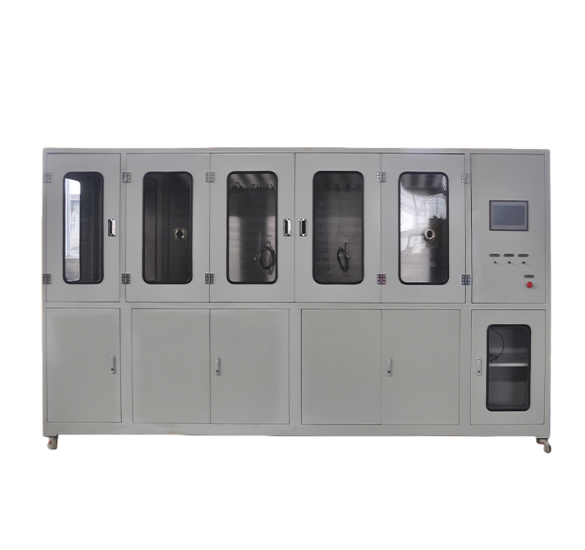
What is the Testing Principle of a Pump and Valve Contamination Tolerance Tester?
The Pump and Valve Contamination Tolerance Tester is not a standardized or universally defined equipment name. However, based on publicly available information and common industry applications, its core purpose can be inferred as evaluating the functional reliability and sealing integrity of fluid system components—such as pumps and valves—under contamination conditions (e.g., particles, ions, microorganisms, oil contaminants, etc.).
According to current available data, the testing principles of such systems mainly rely on the following methods, depending on the type of contamination and application scenario:
Testing Principles by Contamination Type
1. Particle / Solid Contamination Tolerance Testing
Principle:
Standard particles with known concentrations (e.g., ISO 12103-1 A4 Fine Test Dust) are introduced into the fluid system to simulate contamination conditions encountered in real operation.
Monitoring Parameters:
The performance of pumps/valves is observed during operation to determine whether particle-induced blockage or wear leads to flow reduction, pressure fluctuations, or sealing failure.
Related Equipment Reference:
Fluid contamination analyzers typically use laser sensors to detect particle count and classification levels (NAS/ISO codes).
2. Ionic / Chemical Contamination Tolerance Testing
Principle:
Electrolytic conductivity or ion chromatography methods are used to detect residual ionic contaminants (such as Cl⁻ and Na⁺), assessing their corrosion risk to metal components or their swelling effects on sealing materials.
Typical Method:
The ROSE method (Resistivity of Solvent Extract) is used to measure the equivalent sodium chloride contamination level.
3. Microbial Contamination Tolerance Testing
Principle:
Pumps/valves are exposed to aerosols or suspensions containing challenge microorganisms (e.g., Bacillus subtilis). Culture-based methods are then used to determine whether microorganisms penetrate the sealing structure.
4. Fluid Contamination Effects on Sealing Performance
(e.g., oil, drilling fluids)
Principle:
Contaminated media are introduced into the valve chamber or pump cavity. After pressurization, pressure decay or leakage is monitored to evaluate the contamination resistance of sealing pairs (e.g., diaphragm–seat interfaces).
General Testing Techniques
1. Pressure–Flow Response Method
Flow variation is monitored under a constant pressure differential. Internal or external leakage caused by contamination will significantly alter the flow curve.
2. Bubble Point Pressure Test
(applicable to membrane or microporous components)
After wetting the membrane, pressure is gradually increased. The “bubble point pressure” is recorded when gas first breaks through the liquid film, indicating whether the maximum pore size exceeds specification limits.
3. Optical / Spectroscopic Detection Methods
For example, mid-infrared (MID-IR) spectroscopy can directly detect synthetic additives in drilling fluid filtrates, avoiding errors associated with traditional trend-fitting methods.
4. Airtightness and Differential Pressure Method
Differential pressure sealing tests are conducted on valve bodies or pump housings. Micro-leakage can be detected using high-precision mass flow meters.
What Are the Applications of a Pump and Valve Contamination Tolerance Tester?
The primary purpose of a Pump and Valve Contamination Tolerance Tester is to simulate the stresses imposed on equipment by fluid contamination under real operating conditions, thereby verifying product reliability. Its key applications include:
Contamination Level Assessment in Hydraulic and Lubrication Systems:
Detects solid particle contamination levels in oils and evaluates the wear effects of contaminants on precision internal components of pumps and valves, such as bearings, seals, and valve spools.
Contamination Resistance Validation:
Verifies the operational tolerance of pump and valve assemblies when exposed to water-contaminated, dust-laden, or chemically contaminated media. This is particularly critical for industries with stringent cleanliness requirements, such as aerospace, power generation, petrochemical processing, and semiconductor manufacturing.
Extreme Condition Simulation:
Simulates harsh operating conditions—including pressure cycling, pulsation, and temperature variation—combined with contamination environments to evaluate fatigue strength and failure thresholds of pumps and valves.
Contamination Control Verification in Sterile or High-Purity Environments:
Supports validation of contamination control in sterile or ultra-clean applications. For example, in the pharmaceutical industry, it ensures that sterile testing pumps do not introduce microbial or particulate contamination during operation.
Design Optimization and Reliability Engineering Support:
Provides critical data for pump and valve design optimization, quality certification, and service life prediction. It is commonly used in integrated test benches to analyze rotor system dynamics and the coupled effects of contamination.
What Standards Does a Pump and Valve Contamination Tolerance Tester Comply With?
Applicable Standards and References
UNHCR WASH Equipment Specifications:
For humanitarian applications involving water pumps (such as centrifugal pumps and submersible sewage pumps), the United Nations High Commissioner for Refugees (UNHCR) defines operational requirements for equipment used in contaminated water sources in its WASH Equipment Specifications. These include anti-clogging impeller designs and sealing durability, indirectly reflecting contamination tolerance capabilities.
API 610 – Centrifugal Pumps for Petroleum, Petrochemical and Natural Gas Industries:
Applicable to industrial pumps, this standard requires pressure-containing components to undergo hydrostatic testing at 1.5 times the Maximum Allowable Working Pressure (MAWP), ensuring structural integrity under conditions involving solid particles or corrosive media.
GB/T 12242-2005 and GB/T 12243-2005:
Chinese standards for safety valve performance testing, covering aspects such as sealing surface contamination resistance and discharge capacity. These are relevant for evaluating contamination tolerance in valve-type equipment.
Contamination Control Guidelines for Pressure Calibration Systems (Fluke):
Although not a formal product standard, these guidelines emphasize preventing contaminants such as moisture and oil from entering the system during calibration or testing. The use of dirt/moisture traps or fluid separators is recommended to ensure test accuracy.
What Industries Are Pump and Valve Contamination Tolerance Testers Used In?
A Pump and Valve Contamination Tolerance Tester is primarily used to evaluate the performance stability and durability of pumps, valves, and other fluid control components under conditions involving particulate contamination or impurities. This type of equipment is widely applied in the following industries:
Electronics and Semiconductor Industry:
Used to detect contamination by solid particles or insoluble particulates in cleaning agents, ultrapure water, silicon wafers, mobile phone glass, and electronic components, ensuring compliance with high-cleanliness manufacturing requirements.
Oil, Chemical, and Energy Industries:
Applied to test the reliability of hydraulic systems, pipelines, valves, and pumps operating in oils or chemical media containing contaminants. It is widely used in petroleum and petrochemical sectors, including offshore oil applications.
Aerospace and Defense:
Used to verify the contamination tolerance of critical fluid systems under extreme operating conditions, ensuring the safety and reliability of aircraft, missiles, and naval equipment.
Pharmaceutical and Sterile Manufacturing:
Monitors process water, pharmaceutical fluids, and culture media to ensure compliance with sterility and particulate control standards, including regulatory requirements such as FDA 21 CFR Part 11.
Automotive and Rail Transportation:
Applied in contamination tolerance testing of brake fluid circuits, fuel systems, and hydraulic brake valves to enhance operational safety.
Fire Protection and Pressure Vessel Systems:
Used to evaluate the durability and sealing performance of fire hose couplings, safety valves, and storage tanks under high-pressure fluid conditions containing impurities.
Food and Beverage Industry:
Ensures that pumps and valves in production lines can operate reliably in particle-containing fluids (such as juices and dairy products) without causing contamination or failure over long-term use.
Such testing is typically conducted in conjunction with oil contamination analyzers or cleanliness measurement systems, which quantify the size and concentration of contaminant particles and evaluate their impact on equipment lifespan and operational safety.
What Is the Function of a Pump and Valve Contamination Tolerance Tester?
The main functions of a Pump and Valve Contamination Tolerance Tester can be summarized as follows:
Simulation of Real Operating Conditions:
Introduces controlled contaminants such as sand particles, oil residues, and salt spray into a controlled environment to observe the operating behavior of pumps and valves.
Evaluation of Contamination Effects:
Measures parameter changes caused by contamination, including wear, leakage, sticking, and efficiency degradation.
Verification of Design Robustness:
Used in product development, quality certification, and acceptance testing to ensure that pumps and valves can operate reliably under harsh or non-clean media conditions.
Why Is a Pump and Valve Contamination Tolerance Tester So Important?
A Pump and Valve Contamination Tolerance Tester is critically important because it directly impacts the reliability, accuracy, and service life of key components in fluid systems. This is especially significant in industrial applications requiring high cleanliness or safety standards. Its importance is reflected in the following key aspects:
Prevention of Contamination Spread and Ensuring System Safety:
If pumps and valves are exposed to contaminants such as water, oil, or particulate matter, it may result in seal damage, valve spool sticking, and sensor drift. In industries such as aerospace, pharmaceuticals, and semiconductors, even trace contamination can lead to major failures. For example, a pressure gauge contaminated with moisture during calibration may introduce water into an otherwise clean system, causing cascading damage.
Ensuring Calibration and Measurement Accuracy:
Contaminants entering pressure standards (e.g., piston gauges) can alter their mechanical characteristics and lead to inaccurate calibration results. If contaminated reference equipment is used to calibrate other instruments, errors can propagate and amplify throughout the entire quality control chain.
Reducing Maintenance Costs and Downtime Risks:
Components such as hoses, seals, and valves can experience accelerated wear due to contamination, increasing replacement frequency and maintenance costs. A severe contamination event may even force a complete shutdown for system cleaning—for instance, a calibration laboratory in the aerospace sector was once shut down for several days due to contamination.
Supporting Compliance and Standardized Operations:
In humanitarian applications (e.g., water treatment projects by the United Nations High Commissioner for Refugees), pumps and valves must meet strict specifications, where contamination tolerance is a key selection criterion. This tester enables verification of equipment performance under realistic contamination conditions, ensuring compliance with ISO, ASTM, or industry-specific standards.
Validation of Protective Measures:
The tester can be used to evaluate the effectiveness of contamination control devices such as liquid traps, separators, and self-cleaning filters. It also helps optimize operational procedures—for example, verifying whether a vacuum pump is equipped with an automatic pressure relief valve to prevent oil backflow.
In summary, the Pump and Valve Contamination Tolerance Tester is not only an efficient fault diagnosis tool, but also a core component of a preventive quality assurance system. By accurately detecting and analyzing contamination levels within pump and valve systems, it enables the effective identification of potential risks and supports the implementation of targeted measures before failures occur. This significantly enhances operational stability and extends equipment service life.
In high-precision and high-reliability industries—such as aerospace, precision manufacturing, medical devices, and energy and chemical processing—the application of this tester has become an essential element in ensuring system safety, optimizing maintenance strategies, and reducing operational and maintenance costs. Its importance is therefore indispensable.
We sincerely invite you to visit our official website for more detailed product information, technical specifications, application cases, and the latest industry insights. We look forward to providing you with professional solutions and comprehensive technical support.
Previous: What is a Filter Dynamic Cycling Tester?
N e x t : What is a Diesel Water, Ash, and Sulfur Mixing Tester?
