





FAQs About 6 Station Pilling Tester
2026/04/23
Share:

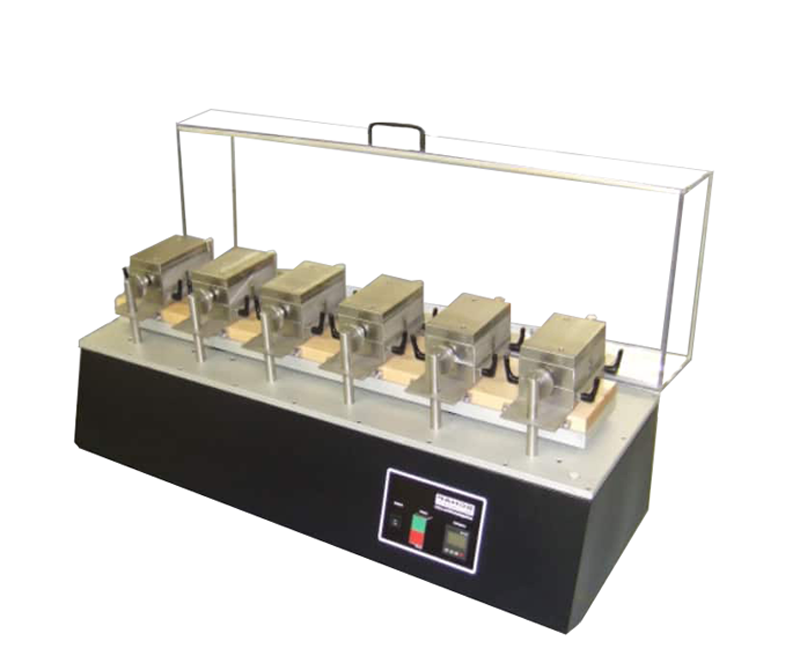
What are the functions and applications of the 6-Station Pilling Tester?
The 6 Station Pilling Tester is a professional testing instrument used to evaluate the pilling resistance and abrasion performance of textiles. It is widely applied in textile quality control, research, and product development.
Main Functions
Multi-Station Simultaneous Testing:
Equipped with six independent testing stations, it allows multiple samples to be tested at the same time, significantly improving testing efficiency.
Simulation of Daily Friction:
The instrument simulates friction behavior under real-life conditions such as wearing and washing through a Lissajous motion trajectory under controlled pressure.
Dual Evaluation of Pilling and Abrasion Resistance:
It evaluates both the degree of fuzzing or pilling on fabric surfaces after friction and the abrasion resistance of textiles.
Adjustable and Controllable Parameters:
Friction cycles range: 0 to 99.999 cycles (some models up to 999.999 cycles)
Pressure weights: 260 g, 395 g, 594 g, etc., selectable according to fabric type
Lissajous motion paths: standard sizes such as 24 mm × 24 mm and 60 mm
Control system: typically equipped with a color touchscreen supporting multilingual (Chinese/English) operation
Main Applications
Quality Testing:
Suitable for evaluating the pilling grade of cotton, wool, silk, linen, synthetic fibers, blended woven fabrics, knitted fabrics, and nonwoven materials.
Research and Production Control:
Widely used by manufacturers, quality inspection institutions, and university laboratories for fabric performance comparison, new material development, and export compliance verification.
Which industries is the 6-Station Pilling Tester suitable for?
The 6 Station Pilling Tester is primarily used to evaluate the pilling performance of textile materials under friction. It has a wide range of applications across multiple industries, mainly including the following:
1. Textile and Apparel Industry
Used to test the pilling resistance of everyday garments such as sweaters, T-shirts, sportswear, jackets, and trousers. It is especially suitable for fiber products prone to pilling, including cotton, wool, polyester, and nylon.
2. Home Textile Industry
Applied to evaluate the durability of household textile products such as bed sheets, duvet covers, pillowcases, curtains, and sofa fabrics during long-term use and repeated washing processes.
3. Technical Textiles Industry
Used for automotive upholstery fabrics, luggage materials, outdoor tents, filter fabrics, and other industrial textiles to ensure product functionality and service life under specific usage conditions.
4. Knitted and Woven Fabric R&D
Provides anti-pilling performance data for different weaving structures, supporting material selection and process optimization in fabric development.
5. Nonwoven and Composite Materials Industry
Used to test the surface durability of nonwoven fabrics, coated textiles, and other specialized composite materials.
6. Third-Party Testing Institutions and Research Organizations
Applied in standardized pilling rating tests in accordance with international standards such as GB/T, ISO, and ASTM, ensuring accuracy, reliability, and inter-laboratory comparability of test results.
Thanks to its multi-station parallel testing capability, the 6 Station Pilling Tester significantly improves testing efficiency. It is especially suitable for environments requiring high throughput and standardized quality evaluation.
What is the testing principle of the 6-Station Pilling Tester?
The core testing principle of the 6 Station Pilling Tester is based on simulating the abrasion process that textiles experience during daily use. Through standardized friction action, pilling is generated on the fabric surface, and the degree of pilling is then evaluated by comparison with standard reference images.
Key Points of the Testing Principle
Multi-Station Simultaneous Testing
The equipment is equipped with six independent test stations, allowing multiple samples to be tested simultaneously, significantly improving testing efficiency.
Friction Method
The tester uses a Lissajous motion trajectory, where the friction head applies constant pressure and moves in a defined elliptical path. This creates multi-directional friction on the fabric surface, more realistically simulating the complex rubbing conditions experienced during actual wearing.
Test Standards
The testing method complies with major international standards, such as GB/T, ISO, and ASTM, ensuring consistency and comparability of results across laboratories.
Evaluation Method
After testing, the samples are compared with standard pilling reference grades (1–5 scale):
Grade 5: Almost no pilling
Grade 1: Severe pilling
This grading system provides a clear and standardized evaluation of fabric appearance durability.
Control System
The equipment is typically equipped with a digital timer (0–9999 minutes) and a touchscreen or LCD control panel, allowing precise setting of test duration and rotational parameters.
The 6 Station Pilling Tester evaluates fabric pilling resistance by reproducing real-world friction conditions through controlled Lissajous motion. Combined with standardized grading methods and multi-station efficiency, it provides a reliable and repeatable solution for textile performance assessment.
What is the operating procedure for the 6-Station Pilling Tester?
The 6 Station Pilling Tester is equipped with six independent testing stations, allowing multiple groups of samples to be tested simultaneously, significantly improving testing efficiency.
A typical operating procedure is as follows:
1. Pre-Test Preparation
Sample Preparation
Cut samples at a position no less than 1/10 of the fabric width from the selvedge, avoiding wrinkled or defective areas.
Prepare specimens in either 320 mm × 320 mm square shape or Φ175 mm circular shape.
Prepare six specimens per test group (two from left, middle, and right positions), and clearly mark warp and weft directions.
Instrument Calibration
Verify the instrument condition weekly using standard reference fabrics.
Clean nylon brushes with acetone and polish them using 320-grit sandpaper to remove residual fibers and ensure consistency.
2. Test Procedure
Brushing Stage (for brush-type pilling tester)
Install the brushing plate on the rotating platform with bristles facing upward.
Fix all specimens on the fixture with the face side outward, each mounted with a 660 ± 5 g weight and a 3 mm soft rubber pad.
Run the tester for 4 minutes ± 10 seconds.
Pilling Formation Stage
Fix specimens on the rotating platform with the face side upward.
(For certain standards, Series A and Series B samples may be stacked face-to-face.)
Run the tester for 2 minutes ± 10 seconds.
3. Result Evaluation
Compare the tested samples with standard reference images (e.g., ASTM D3512 5-grade photo standards).
Pilling grades are evaluated on a 1–5 scale, with 0.5 increments allowed (e.g., 3.5 grade):
Grade 5: No pilling
Grade 4: Slight pilling
Grade 3: Moderate pilling
Grade 2: Severe pilling
Grade 1: Very severe pilling
4. Precautions
Different standards (ASTM, ISO, GB) may vary in sample size, test duration, brush type, and other parameters. The appropriate method should be selected according to product specifications or customer requirements.
Although the six-station design allows parallel testing, results from each station must be recorded independently to ensure accuracy and traceability.
The 6 Station Pilling Tester evaluates fabric pilling performance through standardized brushing and friction processes. Its multi-station design ensures high efficiency, while strict procedural control guarantees reliable and repeatable test results for textile quality assessment.
How to Maintain a Six-Station Pilling Tester?
To ensure long-term stable operation, measurement accuracy, and service life of the 6 Station Pilling Tester, a systematic maintenance procedure should be followed.
1. Cleaning and Maintenance
After each test, use a soft brush or lint-free cloth to remove fiber debris and dust from the worktable, fixtures, abrasives, and sample holders.
Avoid using corrosive or strong solvent-based cleaning agents, as they may damage metal or plastic components.
If the equipment is equipped with a touchscreen or LCD control panel, clean it with a slightly damp soft cloth. Direct water spraying is strictly prohibited.
2. Lubrication and Mechanical Inspection
Regularly check whether key moving components—such as the drive mechanism, guide rails, and rotating shafts—operate smoothly.
If necessary, apply a small amount of dedicated lubricant according to the instruction manual. Avoid excessive lubrication, which may attract dust accumulation.
Ensure that the six independent stations, counters, and positioning systems operate properly without jamming or deviation.
3. Calibration and Accuracy Verification
At least once a year, perform full calibration, including:
Pressure loading system calibration (e.g., using standard weights such as 9 kPa / 12 kPa)
Verification of rotational trajectory accuracy (Lissajous motion pattern)
Synchronization check of counting systems
Standard fabric samples should be used periodically to verify performance consistency, and pilling grade results should be recorded for comparison.
4. Environmental Control
The equipment should be placed in a clean, stable environment with:
Temperature: 15–30°C
Relative Humidity: 30%–60%
Avoid direct sunlight, strong vibration, and high-humidity conditions to prevent sensor drift and mechanical deformation.
5. Troubleshooting
If issues such as single-station failure, counting errors, or pressure instability occur, check the following first:
Whether the fixture is properly installed
Whether the drive belt or gear system is loose or worn
Whether the sensor is blocked or entangled with fibers
Proper maintenance of the 6 Station Pilling Tester is essential to ensure accurate and repeatable test results. Regular cleaning, lubrication, calibration, and environmental control can significantly improve equipment reliability and extend its service life.
Why Is the 6 Station Pilling Tester So Important?
The importance of the 6 Station Pilling Tester is mainly reflected in its efficiency, standardization, and practical value in textile quality control. The key reasons are as follows:
1. Improved Testing Efficiency
With six independent testing stations, the instrument can test multiple samples simultaneously for pilling or abrasion resistance. This significantly shortens testing cycles and greatly improves the efficiency of laboratories and quality inspection departments.
2. Compliance with International Standards
The equipment supports multiple international testing standards, ensuring that results are comparable, consistent, and internationally recognized.
3. Simulation of Real-Life Wear Conditions
By using the Lissajous motion trajectory, the tester simulates the friction and wear that fabrics experience during daily wearing and use, providing a more realistic evaluation of fabric performance.
4. Wide Range of Material Applications
In addition to various textiles (woven, knitted, and nonwoven fabrics), it can also be used for materials such as leather, carpets, and upholstery fabrics, making it highly versatile across different industries.
5. Convenient Operation and Reliable Data
Equipped with independent counters, touchscreen or LCD control systems, and automatic stopping functions, the instrument reduces human error and improves repeatability and accuracy of test results.
6. High Cost-Effectiveness
Compared with single-station equipment, the 6-station model offers lower testing cost per sample, making it especially suitable for high-throughput quality inspection environments.
In summary, the 6 Station Pilling Tester is a highly standardized and precise testing instrument that plays a critical role in textile, apparel, and home furnishing industries. It not only supports quality control in production processes but also serves as an essential tool for product development and material improvement.By providing stable and reliable test data, this equipment helps companies enhance product quality and strengthen market competitiveness. We sincerely welcome industry professionals, partners, and potential customers to contact us for further consultation and detailed information on technical specifications, application cases, and procurement solutions.
Previous: How do you operate a Hydrostatic Pressure Tester?
N e x t : What is a Zipper Slippage Tester?
