





What is the Blanket Flammability Test Machine?
2026/04/28
Share:

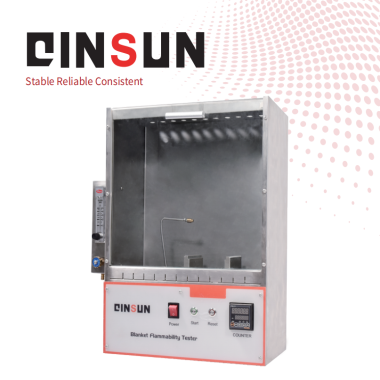
Functions and Applications of the Blanket Flammability Test Machine
The Blanket Flammability Test Machine is a specialized testing instrument designed to evaluate the flame-retardant performance and flame spread characteristics of blanket-type textiles under controlled ignition conditions.
Main Functions
1. Flame-Retardant Performance Determination
Using a standard ignition source such as a propane or butane flame, the horizontally placed blanket specimen is exposed to ignition. The test evaluates whether ignition occurs, as well as afterflame time, afterglow time, and the extent of damage.
2. Flame Spread Behavior Evaluation
Records the rate of flame propagation across the fabric surface, along with the charred area or burned region.
3. Automated Testing Process
Most systems support automatic ignition, timing, data recording, and storage. Some advanced models are equipped with high-definition video systems for test process review and analysis.
4. Compliance with International Standards
Designed in accordance with authoritative standards such as ASTM, ensuring that test results are reliable, comparable, and compliant.
Typical Applications
1. Product Quality Control
Used by manufacturers to conduct fire safety testing of blankets and similar textile products prior to market release.
2. Certification and Compliance
Meets mandatory flame-retardant requirements for industries such as aviation, hospitality, healthcare, and military applications.
3. Research and Development
Supports the development of new materials and optimization of flame-retardant formulations or fabric structures.
Applicable Industries of the Blanket Flammability Test Machine
The Blanket Flammability Test Machine is primarily used to evaluate the flame-retardant performance and flame spread characteristics of blanket-type textiles under controlled conditions. Based on standards such as ASTM and its practical applications, it is widely used in the following industries:
Textile and Home Furnishing Manufacturing
Manufacturers of blankets, throws, and bedding textiles use this equipment to ensure their products meet fire safety and flame-retardant standards before entering the market.
Children’s Clothing and Bedding Industry
Although some regulations (such as 16 CFR) may not directly cover blankets, infant and children’s products often follow similar flame-retardant requirements for safety design and testing.
Personal Protective Equipment (PPE) and Safety Products
Producers of flame-retardant workwear, protective blankets, and other specialized textiles rely on this equipment to verify fire resistance performance.
Third-Party Testing and Certification Bodies
Testing laboratories and certification agencies use the system to provide compliant flammability testing services according to international and national standards such as ASTM, ISO, and GB.
Research Institutes and Universities
Applied in research on combustion behavior of materials, development of new flame-retardant agents, and validation of standardized testing methods.
Overall, the instrument plays a crucial role in ensuring fire safety compliance and supporting innovation across multiple textile-related industries.
Technical Features of the Blanket Flammability Test Machine
The Blanket Flammability Test Machine is specifically designed to evaluate the flame-retardant performance of blanket-type textiles. Its technical features are primarily based on ASTM standards and are characterized by a simple yet highly repeatable testing methodology.
Core Working Principle
The prepared specimen is placed horizontally in a designated test chamber.
A sheet of paper with a circular hole in the center is positioned over the specimen surface.
A standard ignition source (n-heptane) is applied at the center of the hole to ignite the blanket surface.
The result is determined by observing whether charring, carbonization, or discoloration occurs at the edge of the hole, indicating flame spread and ignition behavior.
Key Technical Features
1. Standards Compliance
Designed in strict accordance with ASTM standards, specifically for evaluating the flame-retardant performance and surface flame spread characteristics of blanket textiles.
2. Standardized Ignition Method
Uses n-heptane as the ignition fuel to ensure consistent flame energy and high repeatability of test results.
3. Visual Evaluation Method
Relies on visible indicators such as charring or discoloration of the paper template as a clear and intuitive criterion for determining flame propagation.
4. Application-Specific Design
Specifically tailored for flexible textile materials such as blankets and bedspreads. It differs from vertical or 45-degree flammability test methods typically used for apparel or decorative fabrics.
Overall, the instrument provides a reliable, standardized, and easy-to-operate solution for assessing the fire safety performance of blanket-type textile products.
Operating Procedure of the Blanket Flammability Test Machine
The Blanket Flammability Test Machine is used to evaluate the flammability of fabrics or other materials under specified conditions, typically in accordance with ASTM or ISO standards. The following outlines the basic operating steps and precautions to ensure safe and effective use:
1. Preparation
Equipment Inspection
Ensure the tester is in good condition. Check that the power supply, controller, sensors, and all components are functioning properly.
Workspace Cleaning
Keep the test area clean, free of debris, and well-ventilated.
Sample Preparation
Prepare specimens according to the selected standard, ensuring correct size, quantity, and thickness.
2. Sample Installation
Fix the Sample
Secure the specimen firmly on the test holder to prevent movement during testing.
Alignment
Ensure precise alignment between the specimen and the burner or heating source.
3. Test Parameter Setup
Select Test Standard
Choose the appropriate standard (e.g., ASTM or ISO) based on testing requirements.
Set Temperature and Time
Adjust temperature and exposure time according to the selected standard, as these parameters directly affect results.
Adjust Speed (if applicable)
Some models allow adjustment of flame spread or heating rate.
4. Start the Test
Initiate Testing
Start the test according to the operating instructions (via a start button or automatic function).
Monitor the Process
Observe flame spread and combustion behavior during the test. Maintain a safe distance and avoid direct exposure to flames.
5. Record Results
Observation and Recording
Record key data such as flame spread time, rate, and combustion characteristics.
Result Evaluation
Assess whether the sample meets the required standards based on the recorded data.
6. Cleaning and Maintenance
Clean Residues
After testing, remove all residues from the test chamber and surrounding area.
Routine Maintenance
Regularly inspect and maintain the equipment, including replacing worn components and calibrating sensors to ensure optimal performance.
7. Safety Precautions
Fire Safety
Ensure fire extinguishing equipment (e.g., fire extinguishers) is available in the testing area.
Personal Protection
Operators should wear appropriate PPE such as flame-resistant clothing, gloves, and safety goggles.
Follow Operating Guidelines
Strictly adhere to the equipment manual and safety instructions.
By following these procedures and precautions, users can safely and accurately perform flammability testing on blankets and other textile materials, ensuring reliable results and safe operation.
Maintenance Recommendations for the Blanket Flammability Test Machine
Proper maintenance of the Blanket Flammability Test Machine is essential to ensure accurate test results, safe operation, and long-term reliability. The following recommendations cover routine maintenance and periodic calibration:
Routine Maintenance
Clean the Combustion Chamber
After each test, remove residual ash and paper debris to prevent carbon buildup that may affect subsequent test results.
Inspect the Ignition Source (e.g., Propane Nozzle)
Ensure that fuel lines are leak-free, the nozzle is unobstructed, and ignition is stable. Regularly verify and adjust the flame height (typically required to meet the ASTM standard of approximately 15 mm).
Calibrate Paper Positioning Device
Confirm that the perforated paper is accurately positioned, and that the hole size and its distance from the specimen surface comply with standard requirements.
Check Sample Holder
Ensure the horizontal platform is stable, without deformation or looseness, to prevent sample misalignment that could affect flame spread behavior.
Maintain Ventilation System
Regularly clean exhaust ducts to ensure proper airflow and maintain a safe testing environment.
Periodic Calibration and Servicing
Quarterly or Every 50 Tests
Have qualified personnel perform a comprehensive calibration, including verification of flame temperature sensor accuracy and timer precision.
Annual Calibration
Send the equipment to an accredited metrology institution for full system calibration at least once per year. Retain calibration certificates to meet ASTM or industry compliance requirements.
Maintenance Log Records
Keep detailed records of equipment usage, faults, maintenance activities, and replaced components to support traceability and quality management.
By following these maintenance practices, users can ensure consistent performance, reliable test data, and compliance with relevant standards.
Importance of the Blanket Flammability Test Machine
The importance of the Blanket Flammability Test Machine is primarily reflected in safeguarding public safety, ensuring regulatory compliance, and promoting product innovation. Its key significance can be summarized as follows:
1. Protecting Consumer Life and Property Safety
Blankets are widely used household items, and if made from flammable materials, they may ignite easily and allow flames to spread rapidly when exposed to a fire source, posing serious fire hazards. This testing machine evaluates the ease of ignition and surface flame spread characteristics of blanket fabrics using standardized methods (such as ASTM D4151), helping identify high-risk products and reduce fire hazards at the source.
2. Meeting Mandatory and Voluntary Regulatory Requirements
In the United States, the Consumer Product Safety Commission (CPSC) enforces strict regulations on textiles, including blankets, under the Flammable Fabrics Act (FFA). Test results directly determine whether products meet market access requirements.
ASTM standards are widely adopted as industry acceptance criteria, and manufacturers must pass these tests to ensure compliance, thereby avoiding product recalls and legal risks.
3. Supporting Quality Control and Building Market Trust
Manufacturers can use this equipment for factory inspection and R&D validation to ensure consistency across product batches, enhancing brand reputation.
Third-party testing organizations provide professional flammability testing services, offering authoritative data support for trade, procurement, and regulatory oversight.
4. Promoting Innovation in Flame-Retardant Materials
Test data drives the development of new materials. For example, applications such as oxidized PAN fibers in automotive thermal insulation blankets rely on flammability testing to validate performance.
This promotes industry advancement toward safer, more environmentally friendly, and high-performance materials, such as low-smoke, non-toxic, and high Limiting Oxygen Index (LOI) textiles.
5. Supporting Diverse Application Scenarios
Beyond household blankets, this equipment is also applicable to specialized fields such as aviation comfort blankets, automotive interiors, and medical textiles, demonstrating its cross-industry importance.
In transportation systems and public spaces with high occupancy, flame-retardant blankets are often an important component of fire safety regulations.
In summary, the Blanket Flammability Test Machine is not only a compliance tool for manufacturers but also a critical component in fire prevention systems. It plays an irreplaceable role in enhancing overall fire safety and supporting the sustainable development of the textile industry.We sincerely welcome any inquiries regarding technical specifications, testing standards, operating procedures, or related questions. You are also encouraged to contact us directly for detailed product information, demonstration videos, or customized solutions tailored to your needs.
Previous: What is a Cleanable Filter Media Test System?
N e x t : How are HEPA filters tested?
