





What is Ross Flexing Fatigue Tester?
2026/04/29
Share:

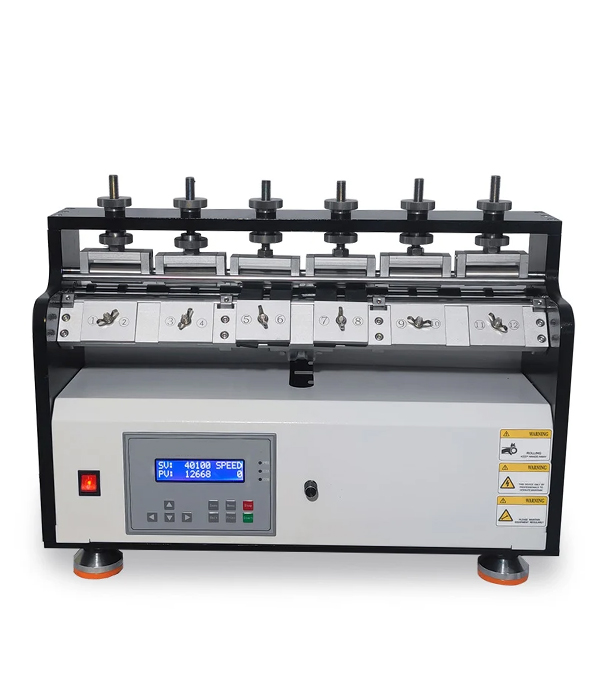
Functions and Applications of the Ross Flexing Fatigue Tester
The Ross Flexing Fatigue Tester is a specialized instrument used to evaluate the durability of materials under repeated bending stress. It is widely applied in the research, development, and quality control of flexible materials such as rubber, plastics, and composites.
Main Functions
Simulation of Repeated Bending Stress in Real Use
The tester applies controlled cyclic flexing to specimens, accurately reproducing the fatigue process materials experience in real working conditions.
Measurement of Flex Fatigue Life
It records the number of bending cycles a material can withstand before fracture or significant performance degradation occurs, providing a quantitative measure of fatigue resistance.
Adjustable Test Parameters
Key parameters such as bending angle, frequency, and load can be adjusted to meet different testing standards and material requirements.
Typical Applications
Rubber Product Development
Used for evaluating flex fatigue performance of products such as tires, hoses, and sealing components.
Quality Control
Applied in production lines to verify batch consistency of raw materials and finished products.
Compliance with International Standards
Testing methods are typically conducted in accordance with standards such as ASTM and ISO, ensuring reliable and comparable results.
The Ross Flexing Fatigue Tester plays a vital role in industries such as material science, automotive components, and industrial rubber products. For detailed technical specifications or operating procedures of specific models, it is recommended to consult the manufacturer’s official documentation or contact the supplier for the latest information.
Applicable Industries of the Ross Flexing Fatigue Tester
The Ross Flexing Fatigue Tester is primarily used to evaluate the durability of footwear materials and finished products under repeated flexing conditions. Its applications span a wide range of industries, including:
Footwear Industry
Used to test the fatigue resistance, crack resistance, and bonding performance of shoe soles, uppers, and adhesive joints during repeated flexing. It complies with international standards such as ASTM, ISO, and SATRA.
Leather and Material R&D
Suitable for testing the flex durability of materials such as leather, rubber, and PU. It is commonly used by material suppliers and laboratories for quality control and product development.
Apparel and Luggage Manufacturing
Some models can test the durability of fabrics and leather under repeated folding, making them applicable to clothing, handbags, and luggage development and quality inspection.
Third-Party Testing Institutions
Provides standardized testing services for product inspection, arbitration, and technical supervision, ensuring compliance with international standards.
Research Institutes and Universities
Widely used in material science and light industry engineering for durability research and educational experiments.
The Ross Flexing Fatigue Tester is widely used in global markets, particularly in regions with strong footwear manufacturing industries such as China, North America, Europe, and Southeast Asia.
Applicable Industries of the Ross Flexing Fatigue Tester
The Ross Flexing Fatigue Tester is primarily used to evaluate the durability of footwear materials and finished products under repeated flexing conditions. It is widely applied across the following industries:
Footwear Industry
Used to test the fatigue resistance, crack resistance, and bonding performance of shoe soles, uppers, and adhesive joints during repeated flexing.
Leather and Material R&D
Suitable for evaluating the flex durability of materials such as leather, rubber, and PU. It is commonly used by material suppliers and laboratories for quality control and product development.
Apparel and Luggage Manufacturing
Some models can test the durability of textiles and leather under repeated folding, making them applicable to clothing, handbags, and luggage development and quality inspection.
Third-Party Testing Institutions
Provides professional testing services for product inspection, arbitration, and technical supervision, ensuring compliance with international standards.
Research Institutes and Universities
Widely used in material science and light industry engineering for durability research and teaching purposes.
Technical Features of the Ross Flexing Fatigue Tester
The Ross Flexing Fatigue Tester is a key instrument in the footwear and leather industries for evaluating the durability of materials such as shoe soles and leather under repeated flexing conditions. Its core technical features include the following:
Core Technical Features
Compliance with International and National Standards
Designed in accordance with major testing standards such as ASTM, SATRA, ISO, and Chinese GB/T standards, ensuring reliable and comparable test results.
High-Precision Dynamic Control
Flexing angle adjustable within 0°–55° (up to 80° in some models)
Frequency typically ranges from 100 to 300 cycles per minute, with high-precision control in advanced models
These parameters enable accurate simulation of real-life flexing conditions.
Automation and Intelligent Operation
Equipped with PLC control system and a 7-inch color touchscreen
Supports bilingual interface (Chinese/English)
Features automatic stop function when preset cycle count is reached
Multi-station capability (e.g., up to 6 test stations simultaneously) to improve testing efficiency
Robust Structural and Material Design
Fixtures made of stainless steel or aluminum alloy for durability and corrosion resistance
Specimen mounting includes a 5.5 mm × 40 mm steel shaft, simulating the stress conditions at the metatarsophalangeal joint during real walking motion
Environmental Adaptability and Additional Functions
Some advanced models include forced-air systems to simulate elevated temperature conditions and study material aging
Suitable for testing a wide range of materials, including rubber, leather, plastics, EVA, and other sole materials
Data Recording and Report Generation
Built-in electronic counter with power-off memory function
Optional data analysis software for real-time curve display and automated report generation
Overall, the Ross Flexing Fatigue Tester combines precision control, intelligent automation, and robust design, making it an essential tool for durability testing and quality assurance in footwear and material industries.
Operating Procedure of the Ross Flexing Fatigue Tester
The Ross Flexing Fatigue Tester is designed to evaluate the fatigue resistance of materials such as rubber, leather, shoe soles, and composites under repeated bending conditions. Its operation generally includes the following steps:
1. Pre-Test Preparation
Specimen Preparation
Cut specimens according to relevant standards (e.g., GB/T, ASTM), ensuring consistent dimensions and surface conditions without burrs or defects.
Environmental Conditioning
Rubber or plastic specimens should be conditioned in a standard environment (23°C ±2°C, 50% ±5% RH) for at least 24 hours to eliminate internal stress.
Equipment Inspection
Check that fixtures, eccentric wheels, and drive mechanisms are functioning properly.
Verify sensors, emergency stop devices, and safety guards are in good condition.
For models with temperature control, preheat and stabilize the chamber before testing.
2. Parameter Settings
Flexing Angle
Typically adjustable from 0° to 55° (up to 80° for some models).
Flexing Frequency
Common range: 100–300 cycles per minute.
Target Cycle Count
Set according to testing standards or experimental requirements. The system usually supports automatic stop upon reaching the preset value.
Station Selection
Multi-station models (e.g., 6 or 12 stations) allow simultaneous testing of multiple specimens.
3. Installation and Test Operation
Specimen Mounting
Fix one end of the specimen in the clamp, with the other end either hanging freely or guided over a roller. Ensure no initial twisting or uneven loading.
No-Load Trial Run
Run the machine idle for 1–2 cycles to confirm smooth operation and absence of abnormal noise.
Start Testing
Begin the test and monitor parameters such as load and displacement curves (if equipped with a data acquisition system).
If abnormalities occur (e.g., sudden load changes or unusual noise), stop the machine immediately.
Process Monitoring
Periodically inspect the specimen for cracks, crazing, or delamination. Record the number of cycles at which the first crack appears.
4. Post-Test Handling
Automatic Stop
The machine stops automatically once the preset cycle count is reached.
Unloading and Cleaning
Remove the specimen and evaluate damage (e.g., crack length and depth).
Clean fixtures and the test chamber to remove debris.
Data Recording
Save test parameters, specimen conditions, and environmental data. Generate a test report if required.
5. Precautions
Safety
Do not touch moving parts during operation. Always wear protective goggles.
Calibration and Maintenance
Force and displacement sensors should be calibrated annually.
Regularly lubricate screws and guide rails to maintain smooth operation.
Standard Compliance
Requirements for flexing angle and frequency may vary across standards (GB, ASTM, ISO). Adjust parameters accordingly to meet specific testing requirements.
Proper operation and maintenance of the Ross Flexing Fatigue Tester are essential to ensure accurate, repeatable results and to extend the service life of the equipment.
Importance of the Ross Flexing Fatigue Tester
The Ross Flexing Fatigue Tester plays a critical role in evaluating the durability of footwear materials and related flexible materials, providing essential technical support and scientific data for product development and quality assurance. Its importance can be summarized in the following key aspects:
1. Realistic Simulation of End-Use Conditions
The equipment accurately simulates the repetitive flexing action experienced during walking or sports activities by applying controlled cyclic bending to shoe soles or material specimens. This allows it to reproduce the fatigue stresses that occur in real-life usage.
Through this simulation, the tester helps reveal long-term performance degradation patterns in advance, enabling manufacturers to predict product service life and durability with scientific accuracy, which in turn supports more informed design decisions.
2. Improvement of Product Quality and Consumer Safety
By systematically identifying common fatigue failure modes such as cracking, delamination, and material degradation, the tester helps manufacturers detect design flaws, material weaknesses, or process deficiencies at an early stage.
Based on these results, companies can optimize product design, improve material formulations, and refine manufacturing processes. This significantly reduces early-stage product failures in the market, lowers after-sales risks, and enhances consumer trust in product durability and safety.
3. Support for R&D Innovation and Regulatory Compliance
During new product development, fatigue performance data provided by the tester serves as a critical reference for evaluating design feasibility and accelerating R&D cycles.
In addition, many global markets enforce strict standards for footwear mechanical performance, particularly flexing resistance. Using the Ross Flexing Fatigue Tester helps ensure compliance with relevant regulations and facilitates smooth market entry, especially for export certification requirements.
4. Wide Applicability Across Materials and Industries
The tester is not limited to finished footwear; it is also widely used to evaluate the flex fatigue performance of various materials, including natural leather, synthetic leather, rubber, PU, and thermoplastic elastomers (TPE/TPU).
Its applications span footwear manufacturers, third-party testing laboratories, universities, and research institutions, covering the entire value chain from material development to final product quality control.
In summary, the Ross Flexing Fatigue Tester is a precision instrument designed to simulate long-term repeated flexing conditions in footwear products. It provides scientifically reliable evaluation of fatigue resistance and mechanical durability, ensuring product longevity, user safety, and compliance with international standards.It has become an indispensable testing tool in modern footwear manufacturing, playing a vital role in improving product quality, enhancing brand reputation, and strengthening market competitiveness.We welcome any inquiries regarding technical specifications, testing standards, operating procedures, or customized solutions. Please feel free to contact us for detailed product documentation, demonstration videos, or tailored recommendations to better understand the full capabilities of this equipment.
Previous: What is the Fire-Resistance Cable Burning Test Apparatus?
N e x t : What is an Automotive Bed Liner Strength Tester?
