





What is the Comprehensive Engine Oil Filter Test Bench?
2026/05/07
Share:

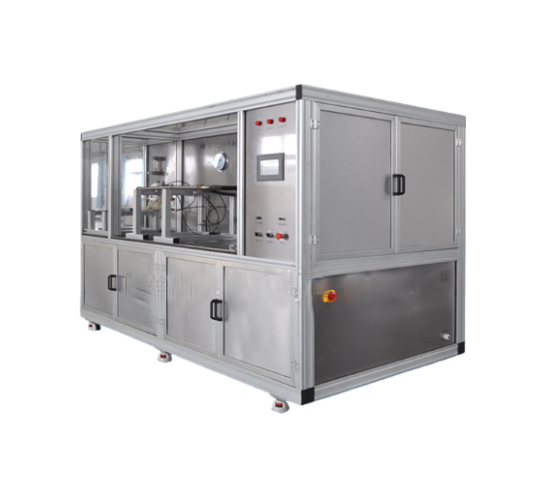
Functions and Applications of the Comprehensive Engine Oil Filter Test Bench
The Comprehensive Engine Oil Filter Test Bench is a specialized system designed to test and evaluate the multi-condition performance of engine oil filters. Its core function is to simulate real engine operating environments and quantitatively analyze key performance parameters such as filtration efficiency, differential pressure characteristics, durability, and flow response.
Main Functions
Filtration Efficiency Testing
Evaluates the filter’s ability to capture contaminants of different particle sizes, such as metal debris and dust. The testing is typically conducted in accordance with standards such as ISO and SAE.
Differential Pressure–Flow Characteristics Testing
Measures the pressure drop across the filter under varying oil flow rates, verifying its flow performance under high-load operating conditions.
Durability and Service Life Testing
Simulates the operational lifecycle of the filter through cyclic loading or continuous operation, assessing structural integrity and performance degradation over time.
Cold Start and High-Temperature Performance Verification
Tests the filter under extreme temperature conditions ranging from -40°C to 150°C to evaluate sealing performance, filter media stability, and flow characteristics.
Bypass and Pressure Relief Valve Function Testing
Verifies whether the bypass valve opens appropriately when pressure differential limits are exceeded, preventing engine damage caused by oil starvation.
Pulse and Vibration Simulation
Some advanced test benches can simulate engine vibration and pressure pulses to assess the filter’s fatigue resistance under dynamic operating conditions.
Typical Applications
Product R&D Validation
Provides essential data for new filter designs, helping optimize filter media structures and sealing configurations.
Quality Control and Factory Inspection
Ensures that each production batch complies with industry standards such as API, ACEA, or specific OEM requirements.
Benchmarking and Competitive Analysis
Compares performance against competing products to identify technological gaps and improvement opportunities.
Standard Compliance Certification
Supports certification testing in accordance with international and national standards such as ISO, SAE, and GB.
Failure Analysis
Reproduces real-world failure scenarios of oil filters to determine root causes and improve product reliability.
In summary, the Comprehensive Engine Oil Filter Test Bench plays a vital role in both product development and quality assurance. It serves as a key tool for ensuring the reliability, safety, and performance of engine lubrication systems across automotive and industrial applications.
Applicable Industries of the Comprehensive Engine Oil Filter Test Bench
The Comprehensive Engine Oil Filter Test Bench is primarily used in the following industries:
Automotive Manufacturing Industry
Used for the development and validation of engine oil filters under real operating conditions, evaluating key performance indicators such as filtration efficiency, differential pressure characteristics, and service life.
Engine and Powertrain R&D
Supports compatibility evaluation between engine oil and engine systems, helping optimize lubrication system design and overall engine performance.
Oil Filter Manufacturing Industry
Applied in product quality control, factory inspection, and third-party certification testing to ensure consistent product performance and compliance.
Automotive Aftermarket and Maintenance Services
Used to compare and evaluate the performance and reliability of aftermarket oil filter products in service applications.
Research Institutes and Universities
Employed in fundamental research on oil filtration technology, fluid dynamics, and filtration material performance.
Third-Party Testing and Certification Organizations
Conducts impartial testing and certification services in accordance with international and national standards such as ISO and SAE.
In summary, the Comprehensive Engine Oil Filter Test Bench plays a critical role across the entire industry chain—from research and development to production, quality assurance, and certification—ensuring the performance, reliability, and standard compliance of engine oil filtration systems.
Technical Features of the Comprehensive Engine Oil Filter Test Bench
Multi-Parameter Synchronous Data Acquisition Capability
The system integrates high-precision sensors to monitor key parameters such as pressure, flow rate, temperature, differential pressure, and cleanliness in real time. The sampling frequency can reach the millisecond level, ensuring high-resolution data acquisition.
Wide Operating Condition Simulation Range
The equipment supports simulation of real operating environments, including oil temperatures from -40°C to +150°C, oil pressures up to several MPa, and a wide range of flow conditions.
Automated Control and Human–Machine Interface
Test parameters, procedures, and data visualization are managed via a touchscreen interface or PC-based control software. Some systems also support virtual keyboard input, as well as data storage and printout of test results.
Dynamic Performance Testing Functions
The test bench enables dynamic testing such as differential pressure–flow characteristic curve analysis, filter element life evaluation, and pulsating pressure durability testing.
Intelligent Diagnostics and Data Management
Advanced systems integrate condition-based monitoring (CbM) and predictive maintenance capabilities. They also support Industrial Internet of Things (IIoT) connectivity for remote monitoring and digital twin applications, enabling intelligent data management and system optimization.
In summary, the Comprehensive Engine Oil Filter Test Bench combines high-precision measurement, advanced environmental simulation, and intelligent automation technologies, making it a critical platform for modern engine filtration performance evaluation and system optimization.
Operating Procedure of the Comprehensive Engine Oil Filter Test Bench
Basic Operating Workflow
1. System Preparation
Inspect the hydraulic/lubrication circuits to ensure they are clean and free of leakage.
Confirm that sensors for oil temperature, oil pressure, and flow rate are properly calibrated and in working condition.
Install the oil filter to be tested, ensuring correct positioning and reliable sealing.
2. Parameter Setting
According to relevant testing standards (e.g., ISO, SAE) or internal company specifications, set the following parameters:
Test oil temperature (e.g., ambient temperature, 80°C, 120°C, etc.)
Flow range (e.g., 10 L/min, 20 L/min, etc.)
Differential pressure limits (initial pressure drop, maximum allowable pressure drop)
Test duration or cycle count
3. Test Start-Up
Start the oil pump and gradually build up system pressure.
Switch to automatic test mode (if available), allowing the system to execute preset cycles simulating operating conditions such as cold start, high load, and idle operation.
Monitor key parameters in real time, including differential pressure, flow rate, temperature, and leakage conditions.
4. Data Recording and Analysis
The system automatically records data such as differential pressure–time curves, filtration efficiency, and contaminant holding capacity.
After completion, a test report is generated to determine whether performance requirements are met (e.g., initial pressure drop ≤ 0.05 MPa, dirt-holding capacity ≥ 15 g, etc.).
5. Shutdown and Cleaning
Shut down the oil pump and release system pressure before removing the filter.
Clean the oil circuit of the test bench to prevent residual contaminants from affecting subsequent tests.
Key Precautions
Safety Protection
High-pressure oil circuits may cause spray hazards. Operators must wear protective goggles and avoid contacting high-pressure pipelines during operation.
Calibration and Maintenance
Regularly calibrate pressure sensors and flow meters to ensure measurement accuracy and data reliability.
Test Condition Matching
Test cycles should closely simulate real engine operating conditions (such as high-speed full load, medium torque, and idle states) to improve the relevance and accuracy of test results.
In summary, strict adherence to standardized operating procedures not only ensures accurate and reliable test results but also enhances equipment safety and long-term operational stability.
Significance of the Comprehensive Engine Oil Filter Test Bench
The significance of the Comprehensive Engine Oil Filter Test Bench is mainly reflected in three aspects: ensuring engine safety and performance, improving product R&D and validation efficiency, and promoting industry standards and technological advancement.
Ensuring Engine Safety and Performance — A Critical Safeguard for Reliable Operation
The engine oil filter is a key component of the lubrication system, and its performance directly affects engine service life and operational safety. The comprehensive test bench evaluates filters under real and extreme working conditions, providing essential technical assurance for preventing engine failures.
Prevention of critical component failure: When an oil filter becomes clogged, the bypass valve must open at a preset pressure to ensure continuous oil supply. The test bench accurately measures static opening pressure and dynamic sealing performance, preventing oil starvation or leakage caused by pressure deviation or poor sealing. Data shows that approximately 15% of engine damage is related to lubrication system failures, with nearly 40% caused by filter clogging.
Evaluation of extreme and durability performance: Through pressure retention tests, fatigue durability tests, and simulated environmental conditions (e.g., constant-temperature oil bath systems), the bench comprehensively assesses long-term reliability of filters and bypass valves, preventing failures under specific conditions such as low temperatures.
Verification of oil–engine compatibility: The test bench can simulate various operating cycles, including full-speed full-load, medium-speed high-torque, and auxiliary conditions, to evaluate compatibility between oil formulations and engines. The results show high correlation with real vehicle road testing while being more stringent, allowing partial replacement or pre-validation of road tests.
Improving R&D and Validation Efficiency — A Key Accelerator for Engineering Innovation
In component design, lubricant development, and vehicle validation stages, the test bench provides an efficient, controllable, and repeatable evaluation platform.
Shortening product development cycles: Compared with time-consuming road testing, bench testing enables rapid acquisition of reliable performance data in a laboratory environment, significantly reducing development cycles for filter optimization and lubricant formulation improvement.
Efficient durability validation: Modern integrated testing systems support end-to-end processes including data acquisition, load analysis, and fatigue life prediction. Engineers can synthesize equivalent damage curves to simulate lifecycle wear events, enabling rapid durability validation on the bench and greatly improving testing efficiency.
Improved data management and collaboration: With computer-based control software and integrated platforms, test data can be automatically collected, analyzed, and reported. This ensures objectivity and traceability while facilitating cross-departmental collaboration and data-driven engineering decisions.
Driving Industry Standards and Technological Development — A Foundation for Quality Advancement
The evolution and application of test bench technology continuously drive quality improvement and standardization across the industry chain.
Supporting standard system development: Accurate and reliable bench testing methods form the technical foundation for establishing and improving industry standards such as filter performance specifications and oil certification requirements. Modular fixture design also extends testing compatibility across passenger cars and heavy-duty vehicles.
Adapting to technological evolution: As automotive components become increasingly electromechanical, testing objects are becoming more diverse. Flexible and integrated test platforms help engineering teams adapt to validation requirements ranging from traditional mechanical parts to emerging electronic systems.
Bridging testing and simulation: Data generated from bench testing provides critical input and validation for simulation models, promoting the integration of virtual simulation and physical testing and supporting the development of advanced digital R&D systems.
In summary, the Comprehensive Engine Oil Filter Test Bench is not only a quality inspection tool for product compliance but also a core engineering platform throughout design, R&D, and system validation processes. It plays an irreplaceable strategic role in ensuring vehicle safety, improving industrial efficiency, and enhancing technological competitiveness.We sincerely welcome inquiries and messages so that we can provide more detailed product information and technical support tailored to your specific needs.
Previous: What is the flooring radiant panel test?
N e x t : What is the down proof test method?
