





How to calculate tensile strength of fabric?
2026/05/09
Share:

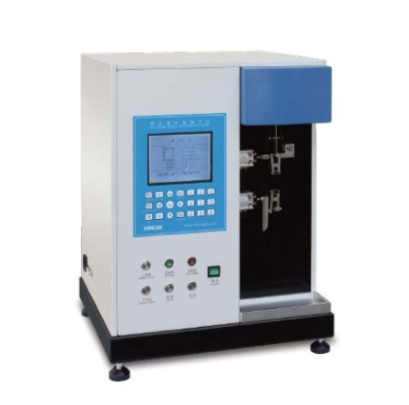
Functions and Applications of Electronic Single Fiber Strength Testers
An Electronic Single Fiber Strength Tester is a professional testing instrument used to evaluate the mechanical properties of individual fibers. It is widely applied in textiles, material science, quality inspection, and scientific research fields.
Core Functions
Single Tensile Test
The instrument measures fundamental parameters during the fiber breaking process, including breaking strength and elongation at break.
Elasticity and Deformation Testing
The tester supports multiple elasticity and deformation evaluations, including:
Elastic recovery at constant elongation
Elastic recovery at constant load
Cyclic constant elongation / constant load repeated tensile tests
Time-Dependent Performance Testing
The equipment can perform:
Relaxation tests (stress decreases over time)
Creep tests (strain increases over time)
High-Precision Measurement
Force resolution can reach as high as 0.01 cN, while elongation resolution can reach 0.01 mm, with an accuracy range of approximately ±0.5% to ±1%.
Online Data Analysis
The tester can be connected to a computer for real-time display of tensile curves. Test data can also be exported to formats such as Excel and Word for further analysis and reporting.
Multiple Clamping Modes
The system supports both manual and pneumatic clamping. Some models also provide six selectable levels of pre-tension ranging from 0.1–0.5 cN.
Specific Strength Calculation
When used together with a fineness tester, the equipment can calculate the specific strength (strength-to-fineness ratio) and breaking work ratio of single fibers.
Main Applications
Fiber Quality Control
The instrument is widely used for evaluating the mechanical performance of individual fibers such as cotton, wool, chemical fibers, spandex, carbon fibers, and metal wires.
Scientific Research and Education
It is commonly used by universities and research institutes for studying the relationship between fiber material structure and mechanical properties.
Industries Applicable to Electronic Single Fiber Strength Testers
An Electronic Single Fiber Strength Tester is a professional instrument designed to measure the tensile mechanical properties of individual fibers. It is suitable for the following industries:
Textile Industry
The equipment is widely used for testing various types of fibers and yarns, including cotton, wool, hemp, chemical fibers, pure spun yarns, and blended yarns. Key testing parameters include breaking strength, elongation at break, and initial modulus.
Material Science Research
It is suitable for mechanical property research on natural fibers, chemical fibers, synthetic fibers, specialty fibers, glass fibers, and ultra-fine metal wires.
Metallurgy and Chemical Industry
The instrument is used to analyze the strength and elasticity of fine-diameter materials such as metal wires and composite monofilaments.
Light Industry and Electronics Industry
It is applied in the quality control of high-precision fiber products, including fine wires for electronic components and medical textiles.
Third-Party Testing and Quality Inspection Institutions
The equipment supports fiber performance certification and arbitration testing in accordance with standards such as GB/T, ISO, and ASTM.
Universities and Research Institutes
It supports teaching experiments and advanced research in fields such as material science and textile engineering.
The instrument complies with multiple international standards including GB/T, ISO, and ASTM. It supports various testing modes such as dry and wet tensile testing, constant elongation testing, constant load testing, and cyclic loading tests, making it widely used in research and development, manufacturing, and quality control applications.
Working Principle of Electronic Single Fiber Strength Testers
The working principle of an Electronic Single Fiber Strength Tester is based on fundamental mechanical testing theory. It achieves quantitative analysis of the mechanical properties of a single fiber through precise control of tensile loading, displacement measurement, and data acquisition. The core principle can be explained from three aspects: mechanical structure, sensor technology, and data processing.
Mechanical Structure and Load Application Principle
1. Clamping System
Function:
The clamping system is used to fix both ends of a single fiber to ensure uniform stress distribution during testing.
Structure:
Upper grip: Connected to the force sensor and capable of moving vertically with the transmission system.
Lower grip: Fixed on the base, and some systems allow adjustable pre-tensioning using weights or springs.
Key Design Feature:
The clamping surfaces typically use textured or soft materials such as rubber or soft metal to prevent slippage or premature breakage caused by stress concentration rather than true tensile failure.
2. Transmission and Loading System
Power Source:
The system is driven by a servo motor or stepper motor. Through mechanisms such as a lead screw or gear system, rotational motion is converted into linear displacement.
Loading Modes:
Constant Rate of Extension (CRE):
The most commonly used mode, where the fiber is stretched at a constant speed (e.g., 10 mm/min) until fracture.
Alternative Loading Modes (CRE/CRL):
Depending on different testing standards, the system can switch between constant rate of extension and constant rate of loading to ensure compliance with standardized testing procedures.
Sensor and Data Acquisition Principle
1. Load Cell (Force Sensor)
Working Principle:
Based on strain gauge electrical measurement technology. When the fiber is subjected to tension, the elastic element of the load cell deforms, causing a change in resistance of the strain gauges. This change is converted into a voltage signal via a Wheatstone bridge circuit, which is then amplified and filtered to obtain accurate force data.
Accuracy Requirement:
The resolution can reach 0.1 cN (centi-Newton), making it suitable for micro-force measurement of single fibers, including nanofibers with diameters of only a few microns.
2. Displacement Sensor
Function:
Used to record the real-time movement of the grips and calculate fiber elongation.
Types:
Optical Encoder (Grating Ruler):
Based on optical interference principles, offering high precision up to ±0.01 mm, suitable for high-accuracy displacement measurement.
Rotary Encoder:
Connected to the motor shaft and converts pulse signals into displacement values. It is more cost-effective but slightly less precise.
3. Data Acquisition and Processing
Sampling Frequency:
Typically ≥100 Hz, ensuring accurate capture of sudden force changes during fiber fracture, such as yield points and peak breaking force.
Signal Processing:
Analog signals are converted into digital signals via A/D conversion. A microcontroller or dedicated computer software processes the data in real time, displaying force–elongation curves and calculating key parameters such as:
Breaking strength
Elongation at break
Elastic modulus
Fracture behavior characteristics
Technical Features of Electronic Single Fiber Strength Testers
An Electronic Single Fiber Strength Tester is a specialized instrument used to measure the tensile mechanical properties of single fibers or fine filaments. It is widely applied in textiles, material science, quality inspection, and research fields. Its main technical features are as follows:
High-Precision Force Measurement System
The typical force measurement range is 0.15 cN to 500 cN (some models can reach up to 1000 cN), with a resolution of up to 0.01 cN and an accuracy of ≤ ±0.5%. High-end models such as the YG(B)001A can achieve an error as low as ±0.02% F.S.
High-Resolution Elongation Measurement
The elongation measurement range is typically 100 mm to 150 mm, with a resolution of 0.01 mm to 0.1 mm and an accuracy of ≤ ±0.05 mm, ensuring precise detection of small deformation in single fibers.
Multiple Clamping Methods
The system supports both manual and pneumatic clamping. Some models, such as XQ-1 and XQ-2. use pneumatic clamping to reduce human-induced errors and improve testing repeatability.
Flexible Speed Control
The tensile speed range is generally 1–200 mm/min, with a control accuracy of ≤ ±1%, allowing flexible adjustment to meet different testing standards.
Intelligent Control and Data Processing
The tester is equipped with a 5.7-inch touchscreen interface and supports both Chinese and English operation. It enables dual control via the main unit and computer.
The system can display force–elongation curves in real time and export data to formats such as Excel and Word. It also automatically calculates statistical parameters such as:
Average value
Coefficient of variation (CV%)
Maximum and minimum values
Multi-Functional Testing Modes
The equipment supports multiple test modes, including:
Single tensile test
Constant elongation elasticity test
Constant load elasticity test
Cyclic tensile test
Creep test
Stress relaxation test
Safety and Stability Design
The system includes overload protection, limit protection, and zero drift correction (≤ 0.2% F.S.), ensuring long-term operational stability and measurement reliability.
System Integration Capability
The instrument can be integrated with fiber fineness testers to directly calculate derived parameters such as:
Specific strength
Initial modulus
Breaking work ratio
With high precision, intelligent control, multiple testing modes, and strong system integration capability, the Electronic Single Fiber Strength Tester provides a reliable solution for evaluating the mechanical performance of individual fibers, making it an essential tool for both research and industrial quality control.
Importance of Electronic Single Fiber Strength Testers
An Electronic Single Fiber Strength Tester is a core instrument for evaluating the mechanical properties of fiber materials. Its importance is reflected in the following aspects:
1. Precise Quantification of Fiber Mechanical Properties
The instrument can accurately measure key parameters of single fibers, including breaking strength, elongation at break, initial modulus, elastic recovery rate, and plastic deformation rate. Its high resolution ensures reliable and repeatable data, making it suitable for both scientific research and industrial quality control.
2. Supporting New Material Development and Process Optimization
In the development of new fiber materials such as naturally colored cotton, high-performance synthetic fibers, and nanofiber-reinforced composites, the tester is used to evaluate how modification methods (e.g., alkali treatment) affect fiber structure and performance.
It also provides essential experimental data for optimizing spinning and post-treatment processes.
3. Ensuring Textile Product Quality and Standardization
The instrument is widely used in inspection agencies, quality supervision institutions, universities, and research institutes. It complies with major international standards such as GB/T, ISO, and JIS, supporting full-chain quality control from raw materials to finished products, thereby improving product consistency and reliability.
4. Advancing Smart Textiles and Wearable Electronics
In the development of advanced fiber-based devices such as helical structured fiber nanogenerators, the tester evaluates mechanical–electrical coupling behavior under various mechanical stimuli such as stretching, bending, and torsion.
This provides critical material performance data for self-powered wearable electronic systems.
5. Meeting Diverse Testing Requirements
Advanced multifunctional models can perform tests such as constant elongation elasticity, cyclic loading, creep, and stress relaxation. This allows them to meet specialized testing needs for materials such as spandex, pre-oriented yarns, and high-strength, high-modulus fibers.
In summary, the Electronic Single Fiber Strength Tester is not only a cornerstone of traditional textile quality assurance but also an essential tool for innovation in advanced fiber materials and smart textile technologies.We sincerely welcome your inquiries or feedback so that we can provide more detailed product information and technical support tailored to your needs.
Previous: What is a Bus Seat Tester?
N e x t : What is a Safety Footwear Compression Puncture Tester?
