





What is a Safety Footwear Compression Puncture Tester?
2026/05/09
Share:

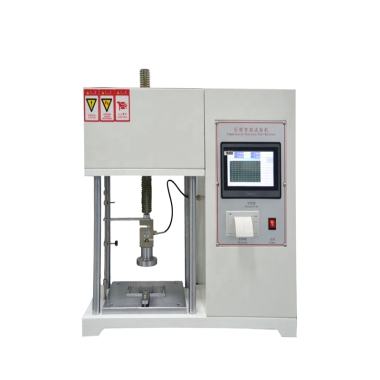
Functions and Applications of Safety Footwear Compression Puncture Tester
The Safety Footwear Compression Puncture Tester is a professional instrument used to evaluate the static compression resistance and puncture resistance of safety shoes, such as protective footwear and occupational safety boots. It is widely applied in quality control and compliance verification of personal protective equipment.
Main Functions
Compression Resistance Testing
The tester simulates real-world scenarios where heavy objects crush the toe area of safety footwear. It evaluates the deformation resistance of steel toe caps or composite toe materials under compressive force, ensuring adequate protection for the wearer’s toes.
Puncture Resistance Testing
The equipment simulates sharp objects penetrating the sole of the shoe. It measures the puncture resistance of anti-penetration inserts, which may be made of metal or non-metal materials, to determine their ability to prevent sharp object intrusion.
Multi-Unit Conversion
The system supports flexible unit conversion of force values, including N (Newton), kgf (kilogram-force), and lbf (pound-force), making it suitable for international testing requirements.
Automatic Control and Safety Protection
The tester allows users to set compression or puncture speed parameters. It automatically stops when reaching preset force or displacement values. It also includes safety functions such as upper limit protection, peak value retention, and automatic data printing.
High-Precision Measurement
The force measurement resolution can reach 1/100.000 or 1/200.000. with typical accuracy ranging from ±0.5% to ±1%, ensuring highly reliable test results.
Main Applications
Toe Cap Compression Evaluation
The equipment simulates heavy impact scenarios to assess the compression resistance of steel toe caps or composite toe structures, ensuring effective protection of the toes under impact loads.
Sole Puncture Resistance Testing
It is used to evaluate the puncture resistance of safety shoe soles, including those with steel midsoles or non-metallic anti-penetration layers, verifying their ability to prevent sharp objects from penetrating the sole.
Compliance with International Standards
The tester ensures that safety footwear complies with various national and international standards, including GB, EN, ANSI, and ISO, which are widely recognized in occupational safety regulations.
The Safety Footwear Compression Puncture Tester plays a vital role in ensuring the protective performance of safety shoes. It provides reliable data for product development, quality inspection, and regulatory certification, ultimately helping to safeguard workers’ foot safety in industrial environments.
Industries Applicable to Safety Footwear Compression Puncture Testers
The Safety Footwear Compression Puncture Tester is a specialized device used to evaluate the compression resistance and puncture resistance of safety shoes. It is widely applied across various high-risk industries where foot protection is critical.
Construction Industry
Workers in construction environments are frequently exposed to hazards such as falling heavy objects and sharp materials like nails or reinforcing steel bars. Safety footwear must provide effective protection against both compression and puncture risks.
Manufacturing and Mechanical Processing Industry
Factory workshops often contain heavy machinery and metal debris, creating potential hazards for foot injuries. Safety shoes used in these environments must demonstrate strong resistance to both crushing forces and sharp object penetration.
Mining and Petrochemical Industry
Operating conditions in mining and petrochemical sectors are complex and hazardous, involving falling rocks, oil contamination, chemical exposure, and sharp geological materials. Safety footwear must meet strict protection standards to ensure worker safety.
Power and Utilities Industry
Although some safety footwear in this sector is designed with electrical insulation features, compression and puncture resistance testing is still essential to ensure basic mechanical protection performance.
Logistics and Warehousing Industry
During handling and transportation operations, workers may suffer foot injuries caused by heavy loads or sharp objects such as packaging materials and pallet nails. Certified protective footwear is therefore essential.
Firefighting and Emergency Rescue Services
Firefighter boots and other specialized protective footwear must undergo rigorous testing to ensure foot safety in extreme environments such as fire scenes and disaster zones.
Aerospace and High-End Manufacturing Industry
Industries with stringent personal protective equipment (PPE) requirements use such testing equipment for both research and quality control to ensure compliance with high safety standards.
The Safety Footwear Compression Puncture Tester plays a vital role in ensuring the reliability and safety performance of protective footwear across multiple high-risk industries. It provides essential technical support for product development, quality assurance, and compliance certification.
Technical Features of Safety Footwear Compression Puncture Tester
The Safety Footwear Compression Puncture Tester is a specialized instrument designed to evaluate the compression resistance of toe caps and the puncture resistance of shoe soles. Its technical features can be summarized as follows:
Core Functions and Testing Capabilities
Dual Testing Modes
Compression Test:
Evaluates the deformation resistance of steel toe caps under static load. Typical standards include applying 15 kN (EN standard) or 10 kN (ANSI standard) force to assess toe protection performance.
Puncture Test:
A standardized steel nail is driven into the sole at a constant speed to measure the maximum penetration force. For example, GB standards typically require a puncture resistance of ≥1100 N.
Multi-Point Testing
Each shoe sole must be tested at multiple locations (at least four points), including at least one point in the heel area. The spacing between test points should be ≥30 mm, and the distance from the inner edge should be >10 mm, ensuring uniform evaluation of sole protection performance.
Key Hardware and Structural Features
High-Precision Force Measurement System
Measurement range: 0–20000 N
Accuracy: ±0.5% to ±1%
Resolution: up to 1/100.000 or higher (depending on model)
Puncture Components
Steel nail diameter: (4.5 ± 0.05) mm
Tip structure: flat-ended design
Hardness: ≥60 HRC
Compression Plate System
Plate hardness: ≥60 HRC
Standard diameter: typically Φ80 mm
Displacement Control System
Stroke range: 0–300 mm
Display resolution: 0.01 mm
Speed Control
Compression speed: (5 ± 2) mm/min (EN standard) or 50 lbs/sec (ANSI standard)
Puncture speed: (10 ± 3) mm/min
Intelligent and Automated Features
Control System
The instrument is controlled by PLC or microcontroller systems and equipped with a touchscreen or LCD display for user-friendly operation.
Data Acquisition
It can synchronously record force–displacement curves in real time and automatically identify the peak puncture force.
Safety Protection Functions
Automatic overload shutdown
Peak value retention
Upper and lower limit protection
Data Output
Built-in micro printer
Supports storage of up to 12 test groups
Environmental and Operational Adaptability
Power Supply
AC 220 V, 50/60 Hz
Environmental Conditioning
Before testing, samples must be conditioned for at least 24 hours at 22°C ± 2°C under controlled humidity conditions to eliminate material sensitivity variations caused by temperature and moisture.
Unit Conversion
The system supports flexible switching between N, kgf, and lbf, making it suitable for international standards and multi-region applications.
With high precision, intelligent control, and standardized testing capabilities, the Safety Footwear Compression Puncture Tester ensures accurate evaluation of protective footwear performance. It plays a critical role in product development, quality assurance, and international compliance certification.
Operating Procedure of Safety Footwear Compression Puncture Tester
The Safety Footwear Compression Puncture Tester is a precision instrument used to evaluate the compression resistance and puncture resistance of safety footwear. The complete operation process can be divided into preparation, compression test, puncture test, and post-test handling as follows:
Pre-Test Preparation
1. Environment and Equipment Check
Ensure the testing machine is placed on a stable and level surface, free from strong vibration or electromagnetic interference.
Check that the power supply (AC 220V, 50Hz) is properly connected and all components—including the compression plate, puncture needle, sensors, and display—are securely installed and in good condition.
2. Specimen Preparation
Compression Test Specimen:
Cut the toe section of the safety shoe, including the steel toe cap and sole.
The cutting position is typically about 25 mm (1 inch) from the edge of the steel toe cap.
Alternatively, a standalone steel toe cap may be used.
Puncture Test Specimen:
Use the shoe sole or steel midsole directly.
If required by standards, the specimen should be conditioned (e.g., soaked in deionized water at 20°C ± 2°C for 16 ± 1 hours) before testing.
3. System Initialization
Turn on the main power and control system (touchscreen or computer interface). After self-check, select the appropriate force unit (N, kgf, or lbf) and reset all values (force and displacement) to zero.
Compression Test Procedure
1. Specimen Installation
Place the prepared toe cap specimen centrally on the lower compression plate.
According to standards, insert a cylindrical clay block inside the toe cap, typically with aluminum foil covering it. Align the center of the clay with the designated impact position inside the toe area.
2. Parameter Setup
Select the compression test mode and set parameters according to relevant standards:
Force value: e.g., EN standard 15 kN ± 0.1 kN, ANSI standard as specified
Test speed: typically 5 mm/min ± 2 mm/min (EN standard)
Limit settings: upper and lower travel limits for safety protection
3. Alignment and Fixing
Ensure the center of the compression plate is aligned with the axis of the clay block inside the toe cap. Secure the specimen to prevent movement during testing.
4. Start Testing
Start the test. The upper plate descends at a constant speed, applying force to the specimen. Force values are displayed in real time.
5. Test Completion and Data Recording
When the preset force is reached, the machine automatically stops (and may hold the load if required by the standard). The plate then returns to its original position.
Remove the specimen carefully and measure the deformation of the clay block to determine the minimum clearance inside the toe cap.
Record the maximum force and deformation data.
Puncture Test Procedure
1. Specimen and Needle Installation
Place the sole or midsole flat on the test platform.
Install the standardized steel puncture needle:
Diameter: (4.5 ± 0.05) mm
Hardness: ≥ 60 HRC
Tip: flattened design
2. Test Point Selection
Select at least four test points, including at least one in the heel area.
Distance between points: ≥ 30 mm
Distance from edge: > 10 mm
Avoid raised patterns (test between tread blocks)
3. Parameter Setup
Select puncture test mode and set:
Test speed: typically 10 mm/min ± 3 mm/min (EN standard)
Force or displacement limits if required
4. Alignment and Testing
Align the puncture needle with the selected test point. Start the test, and the needle penetrates the specimen vertically at a constant speed.
5. Data Recording
Once penetration occurs, the system automatically stops or is stopped manually after full penetration.
The system records the maximum puncture force (peak force) and retains the value.
Repeat for all test points.
Post-Test Procedures
1. Data Storage and Reporting
Print or export test results via built-in printer or software system. Save all data for analysis and reporting.
2. Cleaning and Maintenance
Clean all residues such as clay or debris from the compression plate, puncture needle, and work area immediately after testing.
Store accessories properly after cleaning.
3. Equipment Maintenance
Regularly inspect mechanical components and lubricate moving parts as needed.
Keep the equipment clean, dry, and protected from dust and corrosion.
4. Power Off
Turn off the main power supply after completing all tests.
Safety Precautions
Operators must be properly trained before use.
Do not place hands or objects between moving parts during operation.
Ensure specimens are securely fixed to prevent ejection.
Do not change direction (up/down) during operation until the motor stops completely.
Do not adjust overload protection settings without authorization.
Use a stable power supply and consider a voltage stabilizer for precision equipment.
Proper operation of the Safety Footwear Compression Puncture Tester ensures accurate evaluation of protective footwear performance while maintaining equipment safety and long-term reliability.
Importance of Safety Footwear Compression Puncture Testing Machines
A Safety Footwear Compression Puncture Tester is a key piece of equipment used to evaluate the protective performance of personal protective equipment (PPE), especially safety footwear. Its importance is reflected in the following aspects:
Ensuring Foot Safety for Workers
Simulation of Real Hazard Scenarios
The equipment can simulate two typical workplace injury risks: heavy object impact (compression test) and sharp object penetration (puncture test). This helps verify whether safety footwear can effectively protect the toes and soles under real working conditions.
Dual Protection Verification
By evaluating both toe cap compression resistance and sole puncture resistance (steel midsole or anti-penetration layer), the tester ensures that safety footwear provides a dual protection system in hazardous environments such as construction, metallurgy, and mining industries.
Ensuring Compliance with National and International Standards
Mandatory Testing Basis
The equipment is used to verify whether safety footwear complies with standards such as GB/T, EN ISO, ASTM, and ANSI, which are widely recognized safety regulations worldwide.
Certification and Regulatory Support
It provides reliable and traceable test data for product factory inspection, market supervision sampling, and third-party certification processes.
Improving Quality Control and Market Competitiveness
Product Design Optimization
Accurate test data helps manufacturers identify weaknesses in design or materials, promoting the development of safer, lighter, and higher-performance protective footwear.
Reducing Accident and Legal Risks
Using compliant safety footwear significantly reduces workplace injuries, helping companies avoid compensation claims, production downtime, and legal liabilities caused by substandard products.
Supporting Full Industry Chain Quality Management
Wide Application Coverage
The equipment is used across multiple sectors, including:
Manufacturers (incoming material and finished product inspection)
Third-party testing laboratories (commissioned and government inspections)
Market regulatory authorities (market surveillance and compliance checks)
Research institutions (new material development and testing)
Digital and Traceability Management
Advanced models support automatic data storage, generation of QR-code-based test reports, and integration with LIMS laboratory management systems, enabling full-process traceability.
In summary, the Safety Footwear Compression Puncture Tester plays a vital role in ensuring the protective performance of safety shoes and safeguarding worker safety. With continuous technological advancement and industrial development, this equipment is expected to evolve toward greater intelligence, automation, versatility, and environmental friendliness, providing stronger support for industrial safety.We sincerely welcome your inquiries or messages so that we can provide more detailed product information and technical support.
Previous: How to calculate tensile strength of fabric?
N e x t : What is a Wire Swing Bending Tester?
