





How to use Rubber Rebound Elasticity Tester?
2026/05/18
Share:

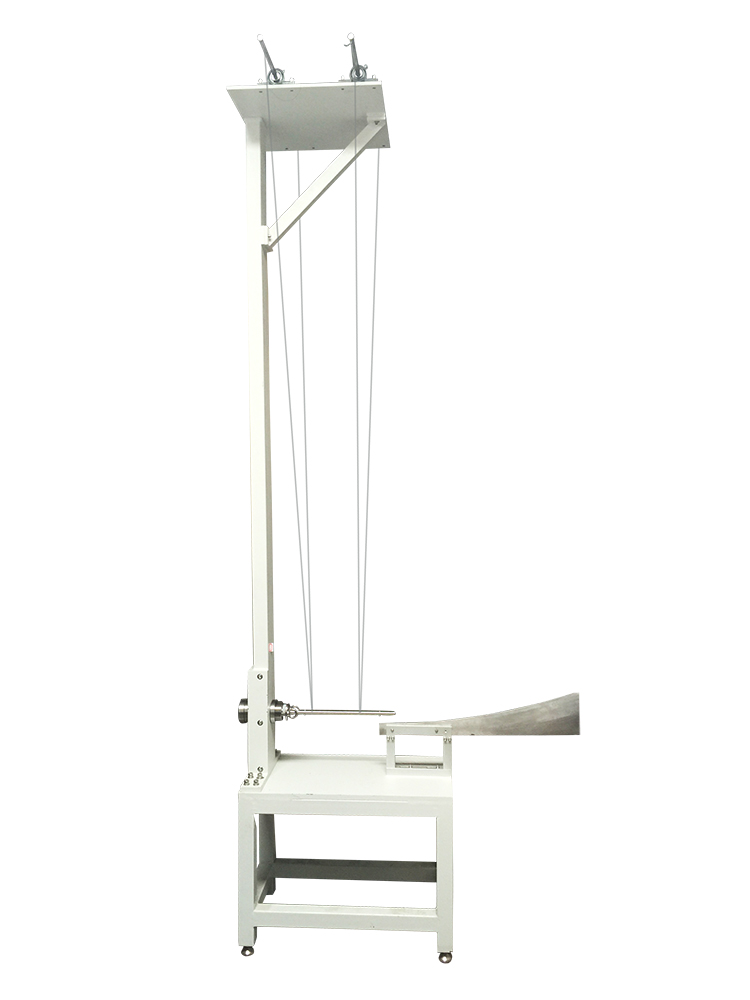
Functions and Applications of the Rubber Rebound Elasticity Tester
The Rubber Rebound Elasticity Tester is a specialized device used to evaluate the ability of vulcanized rubber and other elastic materials to recover their original shape under impact loading. It is widely used in material quality control and research & development fields.
Main Functions
Rebound Value Measurement
By using a pendulum to impact the specimen, the tester measures the rebound height or rebound rate of the rubber, thereby reflecting its elastic performance.
Compliance with International Standards
The equipment performs tests in accordance with standards such as GB/T, ISO, ASTM, and DIN, ensuring the comparability and reliability of test results.
Automatic Data Processing
Most modern testers are equipped with functions for automatic storage, display, and even printing of test results. Some models can directly output parameters such as rebound rate and hysteresis loss.
Safety Protection Mechanism
The tester is equipped with emergency stop buttons, safety guards, and other protective devices to prevent injuries caused by improper operation.
Intelligent Sensing System
Fully automatic models can detect whether the specimen is correctly installed. If the specimen is not properly positioned, the test will not start, helping to prevent equipment damage.
Temperature Control (available on some high-end models)
Certain advanced models support testing within a temperature range from room temperature up to 100°C, allowing simulation of material performance under different environmental conditions.
Core Applications
Quality Control of Rubber Products
Widely used for testing the elastic properties of products such as tires, shock absorbers, and sealing rings to ensure batch consistency and product quality.
Research, Development, and Formula Comparison
By analyzing indicators such as rebound rate and hysteresis loss, researchers can evaluate the elastic performance of different rubber formulations.
Compliance Certification
Provides testing data that comply with national and international standards, supporting type testing and export certification requirements.
Applicable Materials
Vulcanized rubber
Soft foam materials (such as polyether foam and elastic foam)
Industries Applicable to the Rubber Rebound Elasticity Tester
Rubber and Tire Manufacturing
Widely used in quality inspection and research & development to ensure that products such as tires and sealing components possess excellent rebound performance.
Automotive Industry
Used for testing the dynamic elastic properties of rubber components such as shock-absorbing parts, rubber hoses, and conveyor belts.
Plastics and Elastomer Industry
Suitable for evaluating the rebound behavior of materials such as thermoplastic elastomers (TPEs) and other elastic materials.
Research Institutes and Universities
Commonly applied in material mechanical property research, standards verification, and teaching experiments.
Quality Inspection and Certification Organizations
Used for compliance testing according to national standards such as GB/T standards and international standards such as ISO standards.
Sporting Goods Manufacturing
Applied in testing the performance of high-rebound materials used in sports shoe soles, balls, and other sporting products requiring excellent elasticity.
Rubber Rebound Elasticity Tester Operation Procedure
Rubber is a highly elastic material widely used in various industries, and its rebound performance is one of the key indicators for evaluating its quality and suitability. In simple terms, rebound performance refers to the ability of a rubber product to recover its original shape and dimensions after being compressed or impacted by an external force. This property directly affects the cushioning effect, energy absorption efficiency, and durability of rubber products during use. For example, excellent rebound performance is essential for products such as sports shoe soles, shock-absorbing pads, and sealing components. This article systematically introduces the standard operating procedure for rubber rebound performance testing, aiming to provide a clear and professional practical guide for industry professionals and interested readers.
Testing Principle
The rebound performance of rubber is usually quantified by the “rebound value” or “rebound resilience.” The basic principle is as follows:
An impact body with a specified mass and shape (usually a pendulum or falling hammer) is allowed to fall freely from a certain height and strike a rubber specimen placed on a rigid platform. Part of the kinetic energy is absorbed by the specimen, while the remaining energy causes the impact body to rebound. By measuring the ratio between the rebound height and the initial drop height, the rebound value can be calculated.
A higher rebound value indicates better elasticity of the rubber material, meaning that a larger proportion of the stored deformation energy is used for shape recovery, while less energy is lost (usually converted into heat). Conversely, rubber with a lower rebound value tends to absorb more energy and exhibits better damping properties.
Testing is generally carried out under standardized environmental conditions because temperature significantly affects the movement of rubber molecular chains and therefore greatly influences rebound behavior.
Preparations Before Testing
Adequate preparation is essential to ensure accurate and reliable test results. This stage mainly includes environmental conditioning, specimen preparation, and equipment calibration.
1. Standardization of Environmental Conditions
Place the rubber specimens, testing equipment, and related tools in a standard laboratory environment for conditioning. Normally, the standard environmental temperature is room temperature, with specified relative humidity requirements. The conditioning time should not be less than the specified number of hours to ensure that the internal temperature of the specimens fully balances with the environment. This is a critical step in eliminating environmental interference.
2. Specimen Preparation and Requirements
Material
The specimen should be taken from a representative part of the rubber material or finished product to be tested.
Dimensions and Shape
Specimens are usually circular or square sheets, and their thickness and diameter (or side length) must comply with the relevant testing standards. For example, common specimen thicknesses are several millimeters, with diameters not less than specified values.
Surface Treatment
The specimen surface should be flat, smooth, clean, and free from defects or impurities. If necessary, specialized tools may be used for cutting and polishing, but overheating during processing must be avoided to prevent alteration of material properties.
Quantity
At least three valid specimens should be prepared for each group of tests to ensure statistical reliability of the results.
3. Equipment Inspection and Calibration
Testing Machine
Check whether all mechanical parts of the rebound tester (such as a pendulum rebound tester) operate smoothly without looseness or corrosion. The pendulum rotating shaft should have minimal friction.
Impact Head and Specimen Platform
Confirm that the curvature radius of the impact head and the flatness of the specimen platform comply with standard requirements. Both surfaces should be clean and free of contamination.
Height Indication Device
Calibrate the scale or digital display used to indicate rebound height to ensure accurate zero positioning and clear readings.
Horizontal Adjustment
Use the leveling adjustment device and spirit level to ensure that the tester is perfectly horizontal. This is the basis for guaranteeing accurate pendulum movement and measurement.
Detailed Testing Procedure
The following procedure uses a common pendulum-type rebound tester as an example.
1. Final Environmental Equilibrium
After conditioning, leave the specimens in the testing environment for the final specified period, then begin testing immediately.
2. Install the Specimen
Place a single-layer specimen flat on the rigid specimen platform of the tester, ensuring that its center aligns with the expected impact point of the impact head. There should be no air bubbles or slipping between the specimen and the platform. For thin specimens, special fixtures or adhesives may sometimes be used for slight fixation, provided they do not affect the free deformation area.
3. Release the Pendulum
Slowly and steadily raise the pendulum using the lifting mechanism until it is locked at the initial position (horizontal or specified angle) by the release mechanism. At this point, the impact head should just make vertical contact with the specimen surface without applying preload.
Carefully verify the starting height of the pendulum and ensure that the pointer or position sensor is reset to zero.
4. Perform the Impact and Record Data
Operate the release mechanism so that the pendulum falls freely, strikes the specimen, and rebounds.
When the pendulum reaches the highest rebound point and begins to swing back, immediately stop the pendulum (or allow the automatic capture device to record the value) and read the scale corresponding to the rebound height. Modern instruments may directly display the rebound value digitally.
Important Notes
The impact point on the same specimen should be a specified minimum distance away from the edge.
Consecutive impact points must not overlap.
Usually, only one valid impact test is performed on each specimen to avoid data distortion caused by material fatigue.
5. Replace Specimens and Repeat the Test
Remove the tested specimen and replace it with a new one. Repeat Steps 2–4 until all required specimens in the group have been tested.
Data Processing and Result Analysis
The raw data must be calculated and analyzed to obtain meaningful conclusions.
1. Calculate Individual Rebound Values
Depending on the instrument type, calculate the rebound value of each specimen according to the relevant formula. For a pendulum-type tester, the rebound value (R) is generally calculated as:
[R = \left( \frac{\text{Rebound Height}}{\text{Initial Drop Height}} \right) \times 100%]
The result is expressed as a percentage.
2. Calculate Average Value and Dispersion
Calculate the arithmetic mean of all valid rebound values as the representative rebound performance of the material batch.
Standard deviation or range should also be calculated to evaluate data dispersion and reflect material uniformity or testing consistency.
3. Test Report
The test report should clearly include the following information:
Standard number used for testing
Specimen description (material type, source, thickness, etc.)
Detailed environmental conditions (temperature and humidity)
Individual rebound values, arithmetic mean, and dispersion data
Test date and operator information
Any deviations from the standard procedure
Precautions and Common Issues
Careful operation requires attention to detail and anticipation of abnormal situations.
1. Temperature Sensitivity
Rubber is highly temperature-sensitive. If evaluating performance under different environmental conditions, testing should be conducted in high- or low-temperature chambers, while strictly controlling specimen equilibrium time at the test temperature.
2. Influence of Specimen Thickness
Specimen thickness must comply with standard requirements. Specimens that are too thin may allow impact energy to penetrate, causing excessive influence from the rigid base, while overly thick specimens may alter the rebound mechanism.
3. Equipment Maintenance
Regularly clean and lubricate the pendulum bearings and release mechanism to prevent additional friction, which may cause energy loss and lower readings.
4. Operational Consistency
Ensure that the pendulum is released in a true free-fall condition without initial pushing force or resistance. Reading timing should be accurate to avoid premature or delayed measurement.
5. Handling Abnormal Results
If one specimen’s rebound value deviates significantly from the others, inspect the specimen for defects such as bubbles or impurities, or check whether the impact point was too close to the edge. Additional testing may be conducted if necessary, and the reason for excluding abnormal data should be documented.
In conclusion, the Rubber Rebound Elasticity Tester is not only a fundamental testing instrument in material science but also an important device for ensuring the performance consistency and market competitiveness of rubber products. We sincerely welcome you to leave a message or contact us directly so that we can provide you with more detailed product information.
Previous: What is a Bally type flexometer?
N e x t : What is the Leather Shoe Hook Core Longitudinal Bending Stiffness Tester?
