





What is a Metal Corrosivity Tester?
2026/05/20
Share:

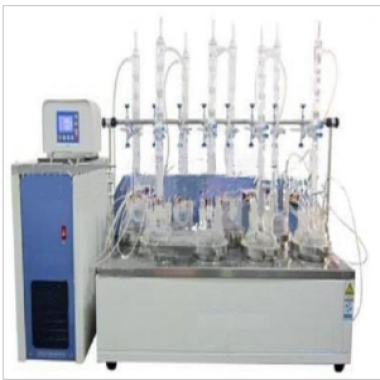
Functional Features of the Metal Corrosivity Tester
First, the instrument is equipped with an inner spiral condenser. This condenser is connected to a reserve water tank, enabling automatic circulation of cooling water and ensuring stable and continuous cooling throughout the testing process.
Second, the constant-temperature water bath is the core component of the tester. It features an automatic temperature control function capable of precisely maintaining the internal temperature, ensuring stable experimental conditions. Its temperature control accuracy reaches an impressive ±0.5°C, which is critical for scientific research.
To eliminate the impact of ambient temperature fluctuations on test results, the instrument adopts advanced environmental temperature compensation technology. It can adjust in real time to ensure that the experiment is not affected by external temperature changes, thereby guaranteeing data accuracy.
In addition, the Metal Corrosivity Tester is equipped with a built-in liquid level detector that continuously monitors the water level in the tank. When the water level falls below a preset threshold, the system automatically activates a water replenishment mechanism, ensuring sufficient water supply during the experiment and preventing interruptions due to water shortage.
Application Industries of the Metal Corrosivity Tester
1. Automotive Industry:
Automotive components are often exposed to harsh operating environments such as high temperature, humidity, and salt spray during service. Therefore, high requirements are placed on the corrosion resistance of automotive parts. The Metal Corrosivity Tester can simulate these environmental conditions and evaluate the corrosion resistance of different materials, providing better material selection guidance for automotive manufacturers.
2. Aerospace Industry:
Aircraft and spacecraft operate under extreme conditions such as high-altitude low pressure, high temperature and humidity, and strong ultraviolet radiation. As a result, materials must exhibit excellent corrosion resistance. The Metal Corrosivity Tester can simulate these environments and assess the corrosion performance of materials under such conditions.
3. Electronics Industry:
With the widespread use of electronic products, electronic components are increasingly exposed to various corrosion risks during operation. The Metal Corrosivity Tester can simulate environments such as humidity, oxidation, and acid rain to evaluate the corrosion resistance of different materials under these conditions.
4. Petrochemical Industry:
Petrochemical equipment typically operates under high temperature, high pressure, and acidic or alkaline conditions, placing stringent requirements on material corrosion resistance. The Metal Corrosivity Tester can simulate these environments and test material performance under such conditions, helping petrochemical enterprises make more reliable material selections.
Metal Materials Applicable to the Metal Corrosivity Tester
The Metal Corrosivity Tester is mainly used to evaluate the corrosion resistance of various metallic materials. The following are some common metal materials suitable for testing with this instrument:
Stainless Steel:
Stainless steel is an alloy steel with excellent corrosion resistance, mainly composed of iron, chromium, nickel, and other elements. Its superior corrosion resistance makes it a preferred material in many fields such as chemical engineering, petroleum, power generation, and marine engineering. The Metal Corrosivity Tester can evaluate the corrosion resistance of stainless steel under different corrosive environments, ensuring its reliability and durability in practical applications.
Aluminum Alloys:
Aluminum alloys are composed of aluminum combined with other metallic elements such as copper, magnesium, and zinc. They offer advantages such as low density, high strength, and good corrosion resistance, and are widely used in aerospace, automotive, and construction industries. The Metal Corrosivity Tester can simulate various corrosive environments to assess the corrosion resistance of aluminum alloys, providing strong support for their application in these fields.
Carbon Steel:
Carbon steel is an iron alloy with a relatively high carbon content, offering good strength and hardness. Although its corrosion resistance is relatively poor, it can be improved through surface treatments such as galvanizing and painting. The Metal Corrosivity Tester can be used to evaluate the corrosion resistance of carbon steel and its surface-treated variants, ensuring service life under harsh conditions.
In addition, the Metal Corrosivity Tester is also suitable for many other metallic materials, including non-ferrous metals such as copper, silver, nickel, and chromium, as well as their alloys. These materials are widely used in fields such as electronics, communications, and medical industries. Through testing with the Metal Corrosivity Tester, their corrosion resistance under different environments can be evaluated, providing reliable data support for material selection, design, and manufacturing.
In summary, the Metal Corrosivity Tester is a versatile testing instrument suitable for corrosion resistance evaluation of a wide range of metallic materials. When selecting it, appropriate model configurations and test parameters should be chosen according to specific testing requirements and material types.
Operating Procedures and Precautions of the Metal Corrosivity Tester
The Metal Corrosivity Tester is an instrument used to evaluate the corrosion performance of metallic materials under specific environmental conditions. It can simulate various corrosive environments to assess the corrosion resistance and service life of metals. The operating procedures and precautions are detailed as follows:
1. Pre-Test Preparation
Inspect the instrument to ensure it is in good condition, all components are securely connected, and there are no leakage issues. At the same time, verify that the power supply is safe and reliable.
Select an appropriate corrosive medium according to the testing requirements of the metal material. Ensure that parameters such as concentration and temperature comply with relevant standards.
Pre-treat the surface of the metal sample by cleaning and polishing to remove contaminants and oxide layers, ensuring accurate test results.
Place the prepared metal samples into the tester according to the specified method, ensuring full contact between the samples and the corrosive medium.
2. Operational Precautions During Testing
Before starting the test, ensure all safety protection measures are properly implemented, such as wearing protective goggles and gloves.
Operate the instrument strictly according to the operating procedures for start-up, operation, and shutdown to avoid equipment damage or personal injury caused by improper handling.
Closely monitor the operating status of the tester during the experiment. If any abnormal conditions are detected, stop the machine immediately for inspection and troubleshooting.
Record test data regularly, including corrosion rate and corrosion morphology of the metal samples, for subsequent analysis and evaluation.
Maintain a clean and orderly testing environment to avoid external interference with the results. Regular maintenance of the instrument should also be carried out to ensure stable long-term operation.
3. Post-Test Procedures and Summary
After completing the test, turn off the instrument promptly and disconnect the power supply to ensure safe shutdown.
Remove the metal samples and clean and dry them for observation and analysis of corrosion conditions. Care should be taken to avoid secondary damage during cleaning.
Analyze the corrosion performance and resistance of the metal materials based on recorded data. If necessary, combine with other testing methods for further investigation.
Compile the test results into a formal report for reference and use by relevant departments. The report should include detailed procedures, data analysis, and conclusions.
Finally, thoroughly clean and maintain the instrument to prepare it for the next test. Lessons learned should be summarized to continuously improve operational skills and efficiency.
Scientific Exploration Functions of the Metal Corrosivity Tester
The Metal Corrosivity Tester is an essential tool for studying material corrosion mechanisms and evaluating corrosion resistance performance. Its scientific exploration capability goes far beyond simple “testing.” By simulating real environments, analyzing corrosion processes, and revealing failure mechanisms, it provides theoretical support for material design, process optimization, and anti-corrosion strategies.
From the perspective of in-depth corrosion mechanism analysis, the scientific exploration functions of the Metal Corrosivity Tester can be summarized as follows:
1. Precise Simulation and Controllability of Corrosive Environments
Function:
The testing system can simulate various corrosive environments such as humidity, salt spray, acidic/alkaline conditions, high temperature and pressure, and microbial corrosion. It allows precise control of parameters including temperature, humidity, pH, ion concentration, and flow rate to reproduce real-world corrosion scenarios.
Scientific significance:
Decoupling environmental factors: By controlling single variables, the influence of individual factors (e.g., Cl⁻ concentration, oxygen content) can be isolated to reveal dominant corrosion mechanisms.
Accelerated corrosion testing: Extreme conditions shorten experimental cycles while preserving essential corrosion characteristics for rapid material evaluation.
Example:
Salt spray testing simulates marine atmospheric conditions to study electrochemical corrosion behavior of metals under high salinity and humidity.
2. Corrosion Kinetics and Process Monitoring
Function:
Real-time monitoring techniques such as electrochemical workstations, optical microscopy, gravimetric analysis, and impedance spectroscopy are used to dynamically track corrosion processes and obtain data such as corrosion rate, morphology evolution, and passive film stability.
Scientific significance:
Corrosion kinetics analysis: Current–time curves and weight-loss curves reveal stage-based corrosion behavior, including induction periods, steady corrosion, and localized acceleration.
Morphological characterization: Techniques such as SEM and 3D profilometry distinguish uniform corrosion, pitting corrosion, intergranular corrosion, and stress corrosion, revealing initiation and propagation paths.
Example:
Electrochemical Impedance Spectroscopy (EIS) quantitatively evaluates changes in charge transfer resistance during corrosion, helping to infer the breakdown and repair mechanisms of passive films.
3. Multi-Scale Study of Corrosion Mechanisms
Function:
Combining macro- and micro-scale analytical methods such as X-ray diffraction (XRD), Raman spectroscopy, energy dispersive spectroscopy (EDS), and in-situ observation, the instrument helps analyze corrosion product composition, structure, and interfacial reactions.
Scientific significance:
Microscopic mechanism analysis: Reveals oxide film formation and rupture, ion diffusion pathways, and crystallization behavior of corrosion products.
Multi-physics coupling analysis: Studies the interaction between corrosion and mechanical stress, electrochemical potential differences, and chemical reactions.
Example:
In-situ Atomic Force Microscopy (AFM) enables real-time observation of corrosion pit initiation and growth at the nanoscale, revealing the origins of pitting corrosion.
4. Relationship Between Material Composition, Structure, and Corrosion Resistance
Function:
By comparing corrosion behaviors of samples with different alloy compositions, surface treatments (e.g., coating, passivation, heat treatment), or microstructures (e.g., grain size, phase distribution), the relationship between material properties and corrosion resistance can be established.
Scientific significance:
Alloying effect study: Reveals how trace elements such as Mo, N, and Cr influence passive film stability, guiding corrosion-resistant alloy design.
Surface/interface engineering validation: Evaluates anti-corrosion performance of coatings, plating layers, and surface modification techniques (e.g., shot peening, laser hardening), and explores interfacial reaction mechanisms.
Example:
Comparing pitting potentials of different stainless steels using polarization curves provides guidance for designing pitting-resistant alloys.
5. Corrosion Prediction and Service Life Evaluation
Function:
Based on long-term corrosion data, models for corrosion rate prediction and service life estimation can be established. Combined with machine learning and finite element simulation, corrosion behavior under different environments can be predicted.
Scientific significance:
Reliability assessment: Supports material selection and maintenance scheduling for critical equipment such as nuclear power systems and offshore structures.
Early failure warning: Detects potential failure risks through early corrosion signals such as noise and micro-current fluctuations.
In summary, the Metal Corrosivity Tester plays an important role not only in experimental evaluation but also in advancing scientific understanding of corrosion mechanisms and material behavior. We sincerely welcome your inquiries or direct contact, and we are pleased to provide more detailed product information tailored to your needs.
Previous: What is the purpose of the Hail Impact Test Machine?
N e x t : What is an Intelligent Sample Cutting Machine?
