





What is an Intelligent Sample Cutting Machine?
2026/05/21
Share:

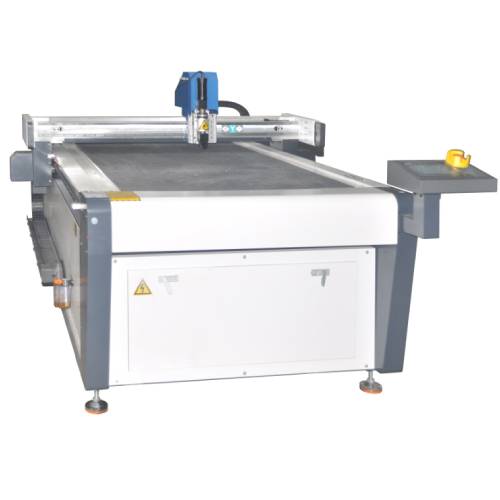
Functions and Applications of Intelligent Sample Cutting Machines
An intelligent sample cutting machine is a computer-controlled non-metal material processing device equipped with high-precision automatic cutting and intelligent nesting capabilities. It is mainly used for rapid and standardized sampling or small-batch cutting. Its core functions can be summarized as “precise sample cutting” and “loss reduction with efficiency improvement.”
High-Precision Cutting:
It adopts a servo drive system combined with laser or vision positioning technology, achieving a repeat positioning accuracy of ±0.05–0.1 mm. It supports multiple processes such as full cutting, half cutting, creasing, and punching, and is suitable for flexible and semi-rigid materials including fabrics, leather, cardboard, composite materials, foam, and films.
Intelligent Nesting Optimization:
Built-in nesting algorithms automatically optimize sample layout, improving material utilization by 10%–30% while reducing edge waste. It also supports file imports in formats such as DXF, AI, and CDR.
Standardized Sampling:
Samples are precisely cut in accordance with testing standards such as GB, ISO, ASTM, and FZ/T (e.g., textile shrinkage and tensile strength test specimens), ensuring data comparability and compliance. It is widely used in quality inspection laboratories.
Flexible Production Adaptability:
No cutting dies are required, allowing rapid switching between sample types. It is suitable for small-batch, multi-variety prototyping (such as garment patterns, shoe samples, automotive interior parts, and packaging prototypes), reducing sampling time from hours to minutes.
Automated Integration:
Some models support automatic feeding and unloading, multi-layer cutting (1–20 layers), and vacuum adsorption fixation. They can also connect with ERP/LIMS systems to enable data traceability and digital management.
Industries of Application for Intelligent Sample Cutting Machines
Intelligent sample cutting machines are mainly applied in the following industries:
Textiles and Apparel:
Used for pattern making, fabric sampling, and small-batch customized cutting. Suitable for flexible materials such as fabrics, leather, and knitted textiles.
Packaging and Printing:
Precisely cuts cardboard, corrugated board, adhesive labels, PVC boxes, and other materials. It is widely used for proofing and die-cutting auxiliary processing.
Automotive and Rail Transportation:
Used for cutting interior materials such as seat fabrics, headliners, carpets, sound insulation materials, and lightweight composite materials.
Footwear, Hats, and Luggage:
Efficiently processes leather, synthetic leather, canvas, and multi-layer materials, supporting irregular-shaped pattern cutting and sample prototyping.
Composites and New Energy:
Used for cutting carbon fiber, glass fiber, foam materials, and battery separators (requiring specialized tools and parameter settings).
Testing and Quality Inspection Laboratories:
Cuts standardized test specimens in accordance with GB/T, ISO, and other standards, ensuring consistency in tests such as tensile strength and flammability testing.
Advertising and Display:
Cuts KT boards, PVC foam boards, EPE foam, and laminated photo materials, achieving dust-free and non-burning cold cutting results.
Aerospace and Defense:
High-precision cutting of honeycomb cores, aramid paper, stealth materials, and other advanced composite materials (for high-end machine configurations).
Technical Features of Intelligent Sample Cutting Machines
An intelligent sample cutting machine (also known as an intelligent CNC sample cutter or automatic sample cutting machine) is a non-metal material processing device designed for high-precision sample cutting. Its core technical features focus on automation, high precision, and flexible adaptability:
High-Precision Positioning and Cutting:
It adopts servo motor drive systems and linear guide/ball screw motion structures, combined with laser/vision positioning and photoelectric encoder feedback. The repeat positioning accuracy can reach ±0.05–0.1 mm, and the cutting error is typically within ≤0.5 mm, meeting GB/ISO standard requirements for test specimens.
Multi-Process Integration Capability:
Supports multiple tool configurations such as oscillating knives, pneumatic circular knives, creasing tools, milling cutters, and even drawing pens. It can complete combined processes including full cutting, half cutting, engraving, punching, creasing, and contour recognition in a single operation. It is suitable for flexible and semi-rigid materials such as fabrics, leather, foam, composite materials, and cardboard (typically 0.1–7 mm in thickness).
Intelligent Nesting and Material Optimization:
Equipped with AI or algorithm-driven automatic nesting software (supporting formats such as DXF, AI, and GERBER), it optimizes layout dynamically to improve material utilization by 10%–30%, significantly reducing edge waste.
Multi-Layer and Batch Processing:
Some models support stacking and fixing 1–20 layers of materials (via vacuum adsorption or pin tables), enabling simultaneous batch sample cutting and significantly improving testing or prototyping efficiency. Cutting speed can reach 800–1500 mm/s.
Digitalization and Flexible Manufacturing:
Compatible with CAD/CAM systems, supporting offline programming, cloud-based nesting, and integration with ERP/LIMS systems. It meets the requirements of small-batch, multi-variety rapid production change. High-end models feature “intelligent knife control” and “cut-on-the-fly” functions to reduce blade deviation and sticking issues.
Cold Cutting and Environmental Performance:
Mainstream systems use high-frequency oscillating knife cold-cutting technology, avoiding burning, deformation, or smoke generation caused by laser cutting. The cutting edges are smooth and clean, meeting cleanroom requirements, with low operating noise (<75 dB).
Safety and Ease of Use:
Equipped with emergency stop buttons, light curtain protection, automatic dust extraction systems, touchscreen HMI, and one-key calibration functions. Operator training time is typically less than 30 minutes, with support for multilingual interfaces and remote diagnostics.
Operating Procedure of Intelligent Sample Cutting Machine
1. Power-on Self-check and Preparation:
Turn on the main power and air supply (if applicable). Start the control computer and cutting software, and confirm that the vacuum adsorption/negative pressure platform is functioning normally, the cutting tool is properly installed, and no alarm messages are displayed.
2. Material Loading and Positioning:
Place the fabric/material flat on the working platform and activate the vacuum adsorption system to secure it. Perform mechanical or optical origin calibration to ensure alignment between the material edges and the machine coordinate system. Some models support projection-assisted positioning.
3. Import or Select Cutting Task:
Automatically retrieve standard cutting files by scanning a test sheet or order barcode, or manually select the corresponding standard (e.g., GB/T, ISO, etc.) in the software. The system will automatically generate nesting paths and project them onto the material surface.
4. Parameter Verification and Simulation:
Check specimen dimensions, tool type, cutting speed, and pressure settings. Run a simulation to verify that the cutting path is free of interference. If necessary, manually adjust the cutting sequence or set avoidance areas for material defects.
5. Cutting Start and Monitoring:
Ensure no personnel are within the safety zone, then press the “Start” button. The machine will automatically perform cutting operations (including multi-layer simultaneous cutting if supported). It is strictly prohibited to touch the cutting area during operation.
6. Material Removal and Shutdown:
After cutting is completed, the machine will stop automatically. Turn off the vacuum system and remove both samples and waste materials. Clean the working platform, save the operation log as prompted by the software, and finally shut down the software and main power supply.
Importance of Intelligent Sample Cutting Machines
The importance of intelligent sample cutting machines lies in their ability to achieve high-precision, high-efficiency, and low-waste sample production for small-batch and multi-variety applications. They serve as a core piece of equipment in flexible manufacturing and rapid product development.
Millimeter-Level Precision with Direct CAD Integration:
They support direct import of digital patterns from industries such as apparel, footwear, and packaging, ensuring one-time forming of samples with an error of ≤0.1 mm. This significantly reduces manual pattern correction and rework processes.
Material Utilization Improved to Over 95%:
Through intelligent nesting and automatic defect avoidance functions (especially for materials such as leather and fabrics), material waste is greatly reduced, aligning with the trend of sustainable manufacturing.
Support for Small-Batch Flexible Production:
Specifically designed for prototyping, made-to-measure (MTM), and pilot production scenarios. No stacking or cutting dies are required, and style switching can be completed within minutes, meeting the fast-response demand of “multi-variety, small-batch” production.
Automation and Intelligent Integration:
By integrating vision recognition, automatic alignment, and adaptive control technologies for oscillating knives/laser knives, dependence on skilled operators is reduced. One operator can manage multiple machines, improving overall workshop productivity.
Cross-Industry Versatility:
In addition to the textile and apparel industry, it is also widely used in footwear materials, composite materials, packaging cardboard, leather, industrial gaskets, and other sectors. It serves as a universal “digital prototyping machine” for R&D, quality inspection, and small- to medium-batch production.
In the context of accelerating fast fashion, customized manufacturing, and innovation-driven R&D, intelligent sample cutting machines have evolved from auxiliary tools into strategic equipment for shortening product development cycles, controlling production costs, and ensuring consistent quality.
In summary, the value of intelligent sample cutting machines has evolved from “replacing manual cutting” to becoming a cornerstone of quality control, a central node in cost management, and a gateway to digital transformation. They are indispensable in high-end manufacturing and standardized testing environments.We sincerely welcome your comments or direct contact so that we can provide you with more detailed product information.
Previous: What is a Metal Corrosivity Tester?
N e x t : How to measure smoke density?
