





What is the purpose of the Hail Impact Test Machine?
2026/05/20
Share:

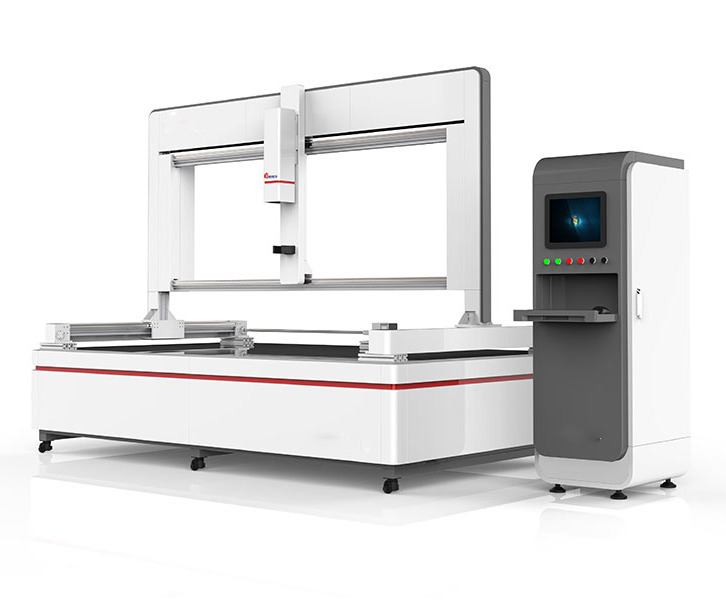
Technical Principle and System Architecture of Hail Impact Test Machine
The core design concept of the hail impact test machine is to faithfully reproduce the dynamic characteristics of natural hailstones. The system adopts a compressed-air launching mechanism, where high-pressure gas (typically nitrogen) stored in a pressure tank is precisely regulated and accelerated through a pressure control unit to propel specially designed ice projectiles along a guide barrel at a predetermined velocity.
The velocity measurement subsystem consists of a laser velocimetry device and a high-speed camera system, which captures the initial velocity of the projectile in real time and ensures that the measurement error is controlled within ±1%. Modern advanced models can achieve a velocity range of 30–150 m/s, enabling simulation of impact conditions from ordinary hailstorms to supercell storm events.
The test chamber adopts a modular design, with energy-absorbing materials lined on the inner walls to prevent secondary rebound of projectiles. A three-dimensional adjustable specimen mounting system allows incident angle adjustment from 0° to 90°, enabling simulation of various impact orientations under real-world conditions.
The environmental simulation unit can control temperature and humidity inside the chamber within a range of -20°C to 40°C, reproducing realistic meteorological environments. The safety protection system includes dual pressure relief valves, explosion-proof observation windows, and an interlocked emergency stop mechanism, ensuring safe operation during high-speed impact testing.
The intelligent control center integrates a PLC system and an industrial computer, allowing users to preset hundreds of test parameter combinations and automatically generate standardized impact test reports.
Functions and Applications of the Hail Impact Test Machine
The hail impact test machine is a specialized mechanical testing device used to simulate natural hail impact conditions and evaluate the impact resistance of materials or products. Its core principle is to use a pneumatic launching system to propel standardized artificial ice spheres (typically frozen water balls with a diameter of 25 mm and a mass of approximately 7.53 g) at controlled speeds (e.g., around 23 m/s) and adjustable angles onto test specimens. This process verifies structural integrity and functional safety under extreme weather conditions.
Main Functions
1. Precise simulation of natural hail impact
The system simulates real hailstorm conditions in accordance with international standards such as IEC, UL, and GB/T. It allows precise control of ice ball size (commonly ranging from 10 mm to 75 mm), impact velocity (typically 10–30 m/s, and up to 100 m/s or higher for aerospace applications), and impact angle (adjustable from 0° to 90°). Low-temperature conditions are also maintained during ice ball storage and formation (typically -10°C to -20°C). This ensures repeatable and high-precision impact testing, with positioning accuracy typically within ±1 mm.
The system is equipped with velocity measurement units (photoelectric sensors or high-speed cameras), specimen mounting platforms, protective chambers, and automated control systems, enabling multi-point continuous impact testing as well as post-impact electrical and visual inspections.
Core Applications
1. Evaluation of product resistance to hail damage
The equipment is widely used to verify the reliability of products under hailstorm conditions. Applications include:
Photovoltaic modules: assessing glass cracking, encapsulation delamination, and power degradation
Rail transit components: such as high-speed train radar domes and windshield systems
Aerospace composite materials: wing leading edges and structural components tested under standards such as 25 mm ice balls at 130 m/s
Building envelope materials: including polycarbonate sheets, resin tiles, and curtain wall glazing systems
Outdoor electrical equipment: such as lighting fixtures and communication enclosures
In addition to compliance testing, the system is also used for material comparison, structural optimization, and extreme-condition lifespan evaluation during R&D, production quality control, and certification testing processes.
Functions of a Photovoltaic Module Hail Impact Test Machine
The photovoltaic (PV) module hail impact test machine is designed to simulate natural hailstorm conditions by pneumatically launching standardized ice balls. It accurately replicates the mechanical impact experienced by solar modules under real outdoor hail events, reproducing damage scenarios caused by severe weather conditions.
1. Simulation of natural hail impact conditions
The system uses a pneumatic launching mechanism to fire standardized ice balls, faithfully reproducing the force and impact behavior of natural hail striking photovoltaic modules. This allows realistic simulation of harsh outdoor storm conditions and their effects on PV systems.
2. Evaluation of structural impact resistance
The machine is used to test the mechanical durability of key PV components such as glass, aluminum frames, back sheets, and encapsulation layers. After impact, it evaluates whether defects such as cracks, microcracks, deformation, or delamination occur, thereby assessing the overall structural strength and anti-impact capability of the module.
3. Verification of electrical safety and insulation performance
After hail impact testing, the system is used to measure insulation resistance, power degradation, and circuit integrity. It determines whether the impact has caused safety issues such as leakage current, circuit failure, or significant power loss, ensuring electrical safety under extreme conditions.
4. Support for R&D and process optimization
The equipment enables manufacturers to compare different types of glass, encapsulation materials, and frame structures in terms of hail resistance. It provides critical data for optimizing material selection, encapsulation processes, and structural design, ultimately improving the outdoor reliability and durability of PV products.
5. Batch quality inspection and production control
It is widely used in production lines for routine quality testing. The machine helps identify non-conforming products, ensuring consistent product quality and reducing risks of field failure, power degradation, and safety incidents during long-term outdoor operation.
6. Extreme-condition reliability evaluation
By precisely controlling ice ball size, impact velocity, impact location, and low-temperature conditions, the system can simulate hailstorms of varying severity. This enables accurate assessment of the long-term service reliability and safety lifespan of photovoltaic modules under extreme environmental conditions.
Operating Procedure of the Hail Impact Test Machine
1. Equipment Preparation: “Warm-up” the System
Before operation, ensure the equipment is in proper working condition:
Check projectile storage (ice ball hopper): Confirm that the simulated hail storage bin is sufficiently filled (typically 200–500 ice balls) to avoid interruption during testing.
Clean the launching track: Use a soft brush to remove dust or residual ice particles to prevent interference with launch accuracy.
Sensor calibration: Run the system self-check program to verify that pressure sensors and velocity sensors are stable. If deviation exceeds 5%, recalibration is required.
2. Parameter Setting: Defining the Test Conditions
Use the control interface to configure test parameters, effectively “programming” the hailstorm simulation:
Ice ball size: Select diameters such as 5 mm, 10 mm, or 15 mm. Larger sizes are typically used for automotive glass testing, while smaller sizes are suitable for photovoltaic modules.
Impact velocity: Adjust air pressure to control launch speed, typically ranging from 20–80 m/s (approximately 72–288 km/h). Higher speeds generate stronger impact forces.
Firing frequency: Set the number of ice balls per second (1–10 pcs/s) to simulate either continuous hailstorms or sudden hail bursts.
Impact angle: Adjust the specimen stage from 0° to 90° to simulate different installation conditions such as rooftops or vertical façades.
3. Test Operation Procedure: From Setup to Completion
Fix the specimen: Secure the test sample (e.g., automotive windshield, building material, or PV module) onto the mounting platform using dedicated clamps to ensure stability.
Pre-test firing: Launch 3–5 ice balls to verify trajectory alignment and ensure accurate targeting. If deviation exceeds 10 cm, adjust the firing angle accordingly.
Formal testing: Start the automatic test sequence. The system will continuously launch ice balls according to preset parameters. No manual intervention is required during operation (typical duration: 1–10 minutes).
Result recording: After testing, use high-speed cameras and sensor data to analyze impact distribution and deformation. Photograph and document all damaged areas.
Cleaning and maintenance: Remove residual ice balls using a vacuum cleaner, inspect the launching track for wear, and ensure the air pressure is fully released before shutting down the system.
Tip
For first-time users, it is recommended to start with lower velocity and lower frequency settings to become familiar with system response. Gradually increase test intensity to avoid potential damage to either the specimen or the equipment.
Technological Innovation and Development Trends of Hail Impact Test Machines
Advances in materials science are driving continuous innovation in hail testing technology. For adaptive cushioning materials, modern test systems must be capable of recording cumulative damage effects under repeated impacts. In the evaluation of self-healing coatings, the equipment requires high-precision repeated impact capability, with positional accuracy reaching up to 0.1 mm. Some research institutions have developed integrated hail impact–electrochemical corrosion testing systems, which can simultaneously assess changes in coating durability after mechanical damage, providing a more comprehensive evaluation of weather resistance performance.
Intelligentization as a Core Development Direction
Artificial intelligence and machine learning have become defining features of next-generation systems. Machine learning algorithms analyze historical test data to automatically optimize impact parameter combinations, improving testing efficiency and accuracy. Digital twin technology enables the construction of virtual test environments, allowing over 95% of testing scenarios to be simulated digitally before physical testing.
Some advanced manufacturers have introduced fully automated test systems in which robotic arms handle specimen loading, impact positioning, and post-impact damage inspection, increasing overall testing efficiency by up to 300%.
Green and Energy-Efficient Design Trends
Sustainability concepts are also reshaping equipment design. New energy-recovery launching systems can reclaim braking energy, reducing overall energy consumption by approximately 40%. In addition, biodegradable ice projectiles are being explored as replacements for traditional frozen water spheres, helping to reduce water usage and cooling energy requirements.
Future Development Directions
With increasingly stringent international hail resistance standards, future test machines are evolving toward:
Higher impact velocities (exceeding 200 m/s)
More complex environmental simulation (combined rain–hail conditions)
Higher-resolution observation systems (microsecond-level damage evolution tracking)
Conclusion
The hail impact test machine serves as a technological bridge between natural disasters and engineering protection. Its testing capability directly determines the reliability of products under extreme weather conditions. From aviation safety to renewable energy applications, from intelligent transportation to future urban infrastructure, hail resistance has become a critical engineering performance indicator.
With the continued advancement of intelligent and standardized testing technologies, hail impact test systems will evolve from passive verification tools into active drivers of material innovation and structural optimization. They will provide strong experimental and scientific support for addressing challenges brought by climate change.
Investing in advanced hail impact testing capabilities is not only a requirement for product compliance, but also a key reflection of technological leadership and competitiveness. We sincerely welcome your inquiries or direct contact for more detailed product information.
Previous: What is an Automatic pH Tester?
N e x t : What is a Metal Corrosivity Tester?
