





How to measure smoke density?
2026/05/21
Share:

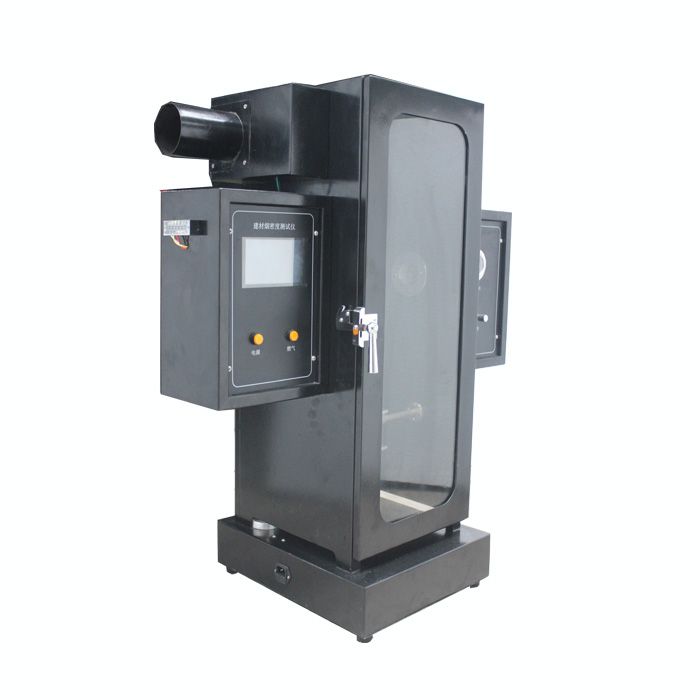
Principle and Composition of the Smoke Density Tester
The Smoke Density Tester is based on optical measurement technology. It determines smoke density by emitting a directed light beam and measuring the attenuation of the light after it passes through the test specimen. Specifically, the instrument utilizes the refraction and scattering properties of light in matter to evaluate the scattering or absorption ratio of different wavelengths. To achieve this principle, the equipment is equipped with high-precision optical components and advanced data processing algorithms.
The core structure of the system includes a control unit, combustion chamber, smoke chamber, exhaust and purification system, specimen holder, ignition system, photoelectric system, as well as a PLC-based programming and touchscreen control system. All components work together to complete the smoke density measurement process.
Functions and Applications of the Smoke Density Tester
A Smoke Density Tester is a laboratory instrument used for the quantitative evaluation of smoke concentration (smoke density) generated by materials under controlled combustion or pyrolysis conditions. Its core function is based on the light attenuation method (such as the Beer–Lambert law), which measures the degree of light obstruction caused by smoke and outputs key indicators such as Maximum Smoke Density (MSD) and Smoke Density Rating (SDR).
Function:
Under standardized combustion conditions, the specimen is ignited using a Bunsen burner or a radiant heat source. A built-in light source (typically an incandescent lamp) and a photoelectric sensor (such as a silicon photocell) are used to monitor real-time changes in light transmittance through the smoke. The system automatically calculates the smoke density rating and generates test curves and reports.
Application:
It is mainly used for evaluating the fire safety performance of solid materials such as building materials, plastics, automotive interior components, rail transit materials, and wires and cables. It provides key smoke toxicity and density data for combustion classification, supporting building design, fire certification, and product compliance testing. It should be noted that this device is not used for environmental smoke monitoring or fire alarm systems, which are instead handled by smoke detectors or smoke opacity meters.
Industries of Application for the Smoke Density Tester
Building Materials and Construction Products:
In accordance with standards such as GB/T and ASTM, it is used to evaluate the smoke generation characteristics of wall materials, thermal insulation materials, decorative panels, PVC pipes, and similar products during fire conditions, providing essential data for building fire classification.
Transportation Industry:
It is widely applied to automotive and rail transit materials (such as metro, high-speed rail), as well as aircraft interior components including seats, carpets, ceilings, and dashboards. Compliance with standards such as ASTM, ISO, and NES is required to control visibility risks during fire scenarios.
Plastics and Polymer Materials:
Used for smoke density testing of plastics, rubber, foams, and composite materials, supporting flame-retardant rating certification and product development processes.
Electrical Wires and Cables / Insulating Materials:
Used to test the smoke generation of cable sheaths and insulation layers, ensuring compliance with safety regulations in the power, telecommunications, and rail transit industries.
Textiles and Soft Furnishing Materials:
Applied to materials such as carpets, curtains, and protective clothing. Smoke density is evaluated according to ASTM or internal industry methods to ensure fire safety compliance in public spaces such as hotels, cinemas, and theaters.
Fire Safety Products and Certification Bodies:
Used for testing material performance related to fire suppression systems and smoke detectors, or as part of CNAS-accredited third-party laboratories providing combustion safety testing services.
Research Institutions and Universities:
Supports fire dynamics research, material combustion toxicity studies, and contributes to the development of new flame-retardant materials and related testing standards.
Technical Features of the Smoke Density Tester
Measurement Principle:
The system adopts a parallel light beam transmission method. A silicon photocell or photodiode is used to detect the attenuation of luminous flux from a light source (typically a 6V/15W incandescent lamp) caused by smoke. The results are converted into transmittance (%), specific optical density (Ds), maximum smoke density (MSD), and smoke density rating (SDR). The measurement range is 0–100%, with an accuracy of ±3%.
Core Structure:
The system consists of a sealed 304 stainless steel smoke chamber (approximately 300 × 300 × 790 mm, with a blackened inner wall and a white “EXIT” sign on a red background at the rear), a Bunsen burner combustion system (nozzle diameter φ0.13 mm, 45° angle, operating under 276 kPa pressure for a 4-minute flame exposure), a photoelectric measurement system (light source and silicon photodetector with a human-eye response filter), an automatic exhaust system (airflow ≥1700 L/min), and a PLC/touchscreen dual-control system supporting automatic ignition, timing, smoke extraction, data acquisition, and report generation.
Standards Compliance:
The system strictly complies with standards such as GB/T, ASTM, and ISO. Test conditions are controlled (no forced airflow, ambient temperature 0–40°C, relative humidity ≤85%), and the test gas is propane with a purity of ≥95%.
Automation and Intelligence:
Modern systems support automatic calibration using 25%/50%/75% standard filters, data logging every 15 seconds, real-time smoke density–time curve plotting, and automatic calculation of MSD/SDR with standardized report generation. High-end models may also integrate radiation cones, weighing modules, or IoT connectivity.
Output Parameters:
Key outputs include Maximum Smoke Density (MSD, %), Smoke Density Rating (SDR, dimensionless), and transmittance–time curves. These results are used for fire performance classification (e.g., GB 8624) and safety evaluation. However, the system does not simulate real fire dynamics or smoke toxicity conditions.
Operating Procedure of the Smoke Density Tester
Specimen Preparation:
Cut the specimen according to the specified dimensions and shape, and mount it onto the specimen holder.
Specimen Installation:
Install the specimen holder with the mounted sample into the testing chamber of the instrument.
Ignition Operation:
Start the ignition system and ignite the burner.
Data Recording:
During the test, the control system automatically records the luminous flux transmitted through the smoke, as well as parameters such as pressure and temperature inside the combustion chamber.
Test Completion:
After the specified test duration is completed, extinguish the flame and remove the specimen holder.
Data Analysis:
Analyze the test results to evaluate the material’s combustion performance and smoke density characteristics.
By using a building material smoke density tester, the combustion performance of construction materials can be more accurately evaluated, providing important reference data for building design and material selection.
Calibration Method for a Building Material Smoke Density Tester
Before calibration, the following tools and materials should be prepared:
Calibration Standard: A high-transparency silicone tube with an inner diameter consistent with the test duct, and a length of at least 100 mm.
Calibration Light Source: A standardized calibration light source equipped with a set of standard lamps to ensure that the test illumination conditions meet the required specifications.
Observation Equipment: A display device with sufficient resolution for capturing images of smoke density during the test process.
Calibration Procedure:
Connect one end of the silicone tube to the air inlet of the tester and the other end to the air outlet, ensuring that all connections are airtight with no leakage.
Align the calibration light source with the center of the silicone tube and adjust the light intensity to meet the required testing conditions.
Place the building material sample on the test platform and set the required test conditions (such as temperature, humidity, and light intensity) according to the standard.
Start the test program and record smoke density images during the process, observing whether the image clarity and contrast meet the standard requirements.
After the test is completed, compare the results with standard reference values. If deviations are found, the instrument must be recalibrated by qualified technicians to ensure accuracy and validity.
After adjustment, recalibrate the instrument again to confirm that its performance meets testing standards.
Perform regular calibration to maintain measurement accuracy and reliability.
By following the above steps, the calibration of the building material smoke density tester can be effectively completed, ensuring accurate and reliable test results. This plays an important role in evaluating the performance and safety of building materials.
Future Development Trends of Building Material Smoke Density Testers
With continuous technological progress and the increasing awareness of fire safety, smoke density testing technology is also evolving. In the future, it is expected to develop in the following directions:
1. Automation and Intelligence
Driven by the rapid development of the Internet of Things (IoT) and artificial intelligence (AI), smoke density testing will gradually become more automated and intelligent. By introducing advanced sensors and data processing technologies, real-time monitoring and automatic analysis of smoke generation can be achieved, improving both accuracy and efficiency. In addition, intelligent systems will enable remote monitoring and management of the testing process, reducing manual intervention, operational risks, and costs.
2. Diversification and Customization
With increasingly diverse fire safety requirements, smoke density testing will move toward greater diversification and customization. Different testing methods and equipment can be developed for various industries and application scenarios to meet specific user needs. Customized testing solutions will further improve relevance, flexibility, and practical applicability.
3. Internationalization and Standardization
As globalization accelerates and international trade continues to expand, smoke density testing technology will become more internationalized and standardized. Strengthened international cooperation and exchange will promote technological innovation and development. Meanwhile, the establishment and improvement of unified international standards will facilitate wider adoption of smoke density testing and enhance global fire safety levels.
In summary, smoke density testing is an important technology in the field of fire safety, with broad application prospects and strong development potential. With continued technological advancement and growing safety awareness, this technology will be further optimized and improved, providing more scientific, accurate, and effective support for fire safety applications.Overall, the Smoke Density Tester is a powerful and widely used testing instrument. By gaining a deeper understanding of its principles, structure, applications, and operating procedures, users can better utilize this equipment and contribute to the advancement of fire safety technology. We sincerely welcome your comments or direct inquiries so that we can provide more detailed product information.
Previous: What is an Intelligent Sample Cutting Machine?
N e x t : What is the fire-resistant paint for structural steel?
