





What is a Masks Bacterial Filtration Efficiency Tester?
2026/05/22
Share:

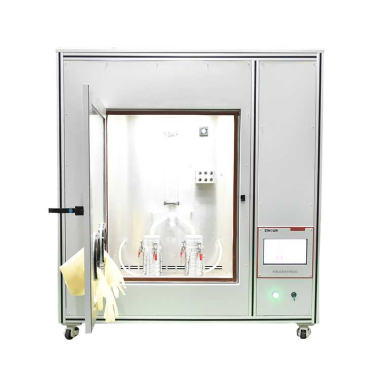
Working Principle of Masks Bacterial Filtration Efficiency Tester
The Masks Bacterial Filtration Efficiency Tester is a professional instrument used to evaluate the filtration performance of face masks. Its core working principle is to simulate a controlled bacterial particle aerosol and measure the number of particles penetrating through the mask, thereby calculating the filtration efficiency.
The system is typically equipped with a high-precision airflow measurement unit, combined with temperature and humidity control functions, to ensure stable and accurate test conditions.
During the testing process, the device generates a bacterial aerosol at a specified concentration, which passes through the mask filtration layer. Sensors then detect the concentration of bacteria in the airflow after filtration. By comparing the upstream and downstream concentrations, the bacterial filtration efficiency (BFE) can be calculated and expressed as a percentage.
High-quality masks should demonstrate a high BFE value, indicating stronger and more reliable protective performance.
Functions and Applications of Masks Bacterial Filtration Efficiency Tester
The core function of the Masks Bacterial Filtration Efficiency (BFE) Tester is to accurately measure the ability of medical masks or filtration materials to block bacterial aerosols (such as Staphylococcus aureus). Its purpose is to ensure that products meet the mandatory BFE performance requirements (typically BFE ≥ 95%) specified in standards such as YY, ASTM, and EN.
Core Functions
Under a standard airflow rate (typically 28.3 L/min), the system uses a bacterial aerosol with an average particle size of 3.0 ± 0.3 μm to test mask samples.
The device collects upstream and downstream samples through a dual-airway system, cultivates and counts bacterial colonies (CFU), and calculates filtration efficiency using the formula:
BFE = (C − T) / C × 100%
Main Applications
The tester is widely used for:
Factory quality inspection of medical surgical masks
Performance testing of disposable medical masks
Product registration and regulatory compliance testing
Research and development of filtration materials
Third-party testing laboratories and regulatory inspection agencies
Key Features
The system is equipped with a negative-pressure biosafety cabinet to ensure operational safety. It uses a microbial aerosol generator rather than salt or oil-based particle systems, specifically targeting biological aerosols for testing.
This distinguishes it from particle filtration efficiency (PFE) testers, which are used for non-biological particulate matter.
Applicable Industries of Masks Bacterial Filtration Efficiency Tester
The Masks Bacterial Filtration Efficiency Tester is widely used in the following industries:
1. Medical Device and Protective Equipment Industry
It is used for testing the bacterial filtration performance of medical surgical masks and medical protective masks. It is an essential device for manufacturers, hospitals, and testing institutions to ensure product compliance and safety.
2. Pharmaceutical and Biopharmaceutical Industry
In sterile production environments such as pharmaceutical workshops and biosafety laboratories, the equipment is used to verify the bacterial barrier performance of protective masks worn by personnel and filtration materials used in cleanrooms, ensuring product safety.
3. Food and Beverage Industry
It is applied to evaluate the BFE performance of masks worn by personnel in clean production areas, as well as air filtration systems, to prevent microbial contamination that may affect food safety.
4. Third-Party Testing and Research Institutions
This includes Centers for Disease Control and Prevention (CDC), medical device inspection institutes, drug testing laboratories, and textile testing centers. These organizations use the equipment for compliance testing and standard verification.
5. Occupational Protection and Industrial Safety
It is used to evaluate the bacterial filtration performance of industrial protective masks, especially in environments such as chemical and electronics industries where microbial control is required in clean or biosafety conditions.
6. Mask and Filtration Material Manufacturers
The equipment is used for raw material inspection, in-process quality control, and finished product testing, ensuring that products meet domestic and international BFE standards.
Technical Details and Features of Masks Bacterial Filtration Efficiency Tester
The Masks Bacterial Filtration Efficiency Tester offers multiple technical advantages and performance features, as follows:
1. High-Precision Measurement
The equipment adopts advanced sensor technology capable of accurately detecting minute changes in bacterial particle concentration, ensuring high accuracy and reliability of test results.
2. Fast Testing Speed
The system is designed for high efficiency, enabling rapid completion of multiple test cycles. This allows manufacturers to perform quick screening and improves overall quality control efficiency.
3. Multi-Functional Design
In addition to face masks, the device can also be used for testing other protective equipment and filtration materials, significantly expanding its application range.
4. User-Friendly Interface
The operation panel is simple and intuitive, typically equipped with an LCD display. Users can easily monitor data and operate the system in real time, reducing operational complexity and training requirements.
5. Stable Performance
Even under strict laboratory conditions, the system maintains stable operation and consistent output. It effectively minimizes interference from external environmental factors, ensuring reliable and repeatable measurement results.
Operating Procedure of Masks Bacterial Filtration Efficiency Tester
The standard operating procedure of the Masks Bacterial Filtration Efficiency Tester generally follows ASTM or YY standards. The core steps are as follows:
1. Preparation Stage
Operators must wear appropriate protective equipment. Ensure that the environmental conditions are within specification (typically 25°C ± 5°C, relative humidity 30% ± 10%).
Prepare a Staphylococcus aureus suspension after sterilization and load it into the peristaltic pump reservoir. Preheat the equipment for at least 30 minutes before testing.
2. Sample Installation
Secure the mask sample flatly at the inlet of the six-stage Andersen sampler (test group). The control group is set without a sample.
Ensure proper sealing of the aerosol chamber and both sampling sides, and close the biosafety cabinet door.
3. Parameter Setting
Set the following parameters via the touchscreen interface:
Aerosol spray flow rate: 8–10 L/min
Peristaltic pump flow rate: 0.006–0.01 mL/min
Test duration: typically 1–2 minutes
Confirm that both A and B sampling flow rates are stable at 28.3 L/min, in compliance with standard requirements.
4. Test Start
Activate the fan and negative pressure system. Once pressure stabilizes (approximately –50 to –200 Pa inside the cabinet), start the operation program.
The peristaltic pump atomizes the bacterial suspension into the aerosol chamber. The airflow carries the particles through the mask (test group) or directly into the control group.
5. Sampling and Completion
After the test, the system automatically stops the pump and airflow. Immediately remove all Petri dishes from the Andersen sampler (6-stage + control group) and the mask samples to avoid cross-contamination.
Transfer the culture media to an incubator at 37°C for 24–48 hours.
6. Calculation and Cleaning
Count the colony-forming units (CFU) on each plate and calculate filtration efficiency using the formula:
BFE (%) = [1 – (CFU_test / CFU_control)] × 100%
Activate the UV sterilization and automatic cleaning system to disinfect the chamber interior.
Important Notes
The entire operation must be conducted under Biosafety Level 2 (BSL-2) conditions.
Opening the system under pressure is strictly prohibited.
Although interfaces vary by manufacturer (e.g., Qinsun), constant airflow control, dual-channel comparison, and biosafety protection are universal requirements.
Equipment calibration must follow JJF specifications, performed at least once per year using a standard flow meter and biological aerosol reference materials.
Importance of Masks Bacterial Filtration Efficiency Tester
The Bacterial Filtration Efficiency (BFE) test for masks is critically important because it quantitatively evaluates the ability of a mask to block bacteria contained in respiratory droplets, such as Staphylococcus aureus. It is a core parameter for ensuring the effectiveness of medical and daily protective masks, directly impacting infection risk control for both users and surrounding populations.
1. Mandatory Standard Requirement
A BFE ≥ 95% is a mandatory minimum requirement for medical surgical masks and disposable medical masks under both Chinese and international standards. Products that fail to meet this threshold cannot be certified as qualified protective equipment.
2. Realistic Simulation of Respiratory Exposure
The test simulates breathing airflow conditions (typically 28.3 L/min) and evaluates filtration of bacterial aerosols with a particle size of approximately 3 μm.
This directly reflects a mask’s ability to block bacterial transmission in real-world scenarios such as surgical procedures, coughing, and droplet exposure in public environments.
3. Direct Impact on Infection Control
Non-compliant BFE performance means the mask cannot effectively block pathogen-carrying droplets, increasing risks such as:
Surgical site contamination
Iatrogenic infection
Community transmission of respiratory diseases
Even if particulate filtration efficiency (PFE) meets standards, BFE may still fail due to differences in test media and mechanisms.
4. Regulatory and Quality Control Function
BFE testing is a mandatory step in:
Production quality control
Market surveillance and sampling inspection
Product registration and certification
It ensures that only compliant products enter the market, preventing ineffective or misleading protective equipment and providing reliable protection for healthcare workers and consumers.
5. Indicator of Comprehensive Protective Performance
Although BFE focuses on bacteria rather than viruses, viruses often attach to droplet nuclei of similar sizes. Therefore, a high BFE value generally indicates good blocking performance against virus-laden aerosols as well.
In essence, BFE testing is not an optional parameter but a fundamental technical threshold ensuring the “anti-droplet and antibacterial” performance of masks. It is directly linked to public health safety and medical protection effectiveness.With growing demand, the market for BFE testing equipment continues to expand and is moving toward higher standards and more advanced testing capabilities. We sincerely welcome inquiries and communication to provide more detailed product information and professional technical support.
Previous: How can I test my touch screen?
N e x t : What is molten metal splash and what causes it?
