





What is the Automotive Wire Repeated Bending Tester?
2026/05/26
Share:

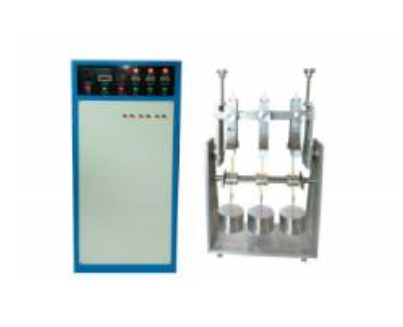
Core Working Principle of the Automotive Wire Repeated Bending Tester
During vehicle operation, automotive wires are frequently subjected to repeated bending stress caused by door opening and closing, chassis vibration, and component movement. Over long-term use, this repeated stress can lead to conductor breakage, insulation damage, and other failures, which may further cause serious issues such as malfunctioning power windows, door lock failures, or even abnormalities in the vehicle power system.
The Automotive Wire Repeated Bending Tester was developed to address this challenge. By accurately simulating the bending conditions experienced by automotive wires in real applications, the equipment rigorously evaluates their bending durability. It has become an indispensable reliability testing device in automotive R&D, manufacturing, and quality inspection processes, serving as a critical first line of defense for vehicle safety.
The core working principle of the Automotive Wire Repeated Bending Tester is based on the coordinated operation of a mechanical structure and an electrical monitoring system. It reproduces the repeated bending stress experienced by automotive wires in real-world use while continuously monitoring performance changes in the wire during testing. Ultimately, it determines the wire’s bending fatigue life, safety, and reliability.
In essence, the system operates through a closed-loop testing logic of:
“reproducing real operating stress conditions + real-time monitoring of failure thresholds.”
I. Mechanical Drive Module
1. Power and Motion Simulation
The mechanical drive module is the power core of the tester. It typically uses a stepper motor or servo motor as the driving source. Through transmission mechanisms such as belts, cams, or gears, the rotational motion of the motor is converted into reciprocating swing or torsional movement of the test fixture.
This module can precisely set key parameters such as:
bending angle,
bending speed,
and motion frequency,
thereby simulating wire bending conditions under different automotive application scenarios.
2. Simulation of Real Vehicle Conditions
For door wiring harnesses, symmetrical left-right bending angles of 0°–90° can be configured to simulate the movement trajectory during repeated door opening and closing.
For chassis wiring harnesses, the bending speed can be adjusted to match the vibration frequency experienced during vehicle driving.
II. Sample Fixing and Stress Control Module
1. Precision Fixture Design
To ensure that bending stress is concentrated on the designated test section of the wire, the sample fixing and stress control module adopts a profiled fixture design.
The fixed-end fixture clamps the connector, terminal, or non-test area of the wire.
The movable-end fixture clamps the testing section and moves synchronously with the drive mechanism.
2. Simulation of Real Mechanical Loads
In some tests, specific loads (such as 5 N or 10 N weights) are applied to the movable end to simulate tensile forces encountered during actual use.
Alternatively, rated current may be applied through the fixed end so that the wire is tested under energized and heat-generating conditions, thereby reproducing real load-bearing operating environments.
3. Realistic Wiring Layout Reproduction
During testing, the wire is installed strictly according to actual vehicle wiring diagrams and fixed onto the fixtures using clips, cable ties, and similar methods. This ensures that:
bending radius,
stress concentration points,
and routing conditions
are fully consistent with real vehicle installation conditions.
III. Electrical Monitoring Module
1. Real-Time Electrical Failure Detection
Mechanical bending represents the testing process, while electrical failure serves as the ultimate evaluation criterion.
The integrated online electrical monitoring system continuously applies current to the wire during testing and monitors three critical parameters in real time.
2. Conduction Resistance
Sudden fluctuations or continuous increases in resistance are considered early indicators of conductor strand breakage inside the wire.
3. Instantaneous Open Circuit / Short Circuit
The system can capture transient faults at the microsecond level, enabling precise identification of the exact failure moment.
4. Insulation Resistance
The tester monitors whether the insulation layer has cracked or degraded due to wear.
Once any monitored value exceeds the preset threshold, the system immediately determines that the sample has failed, and the equipment automatically stops the test.
IV. Control and Feedback System
1. Intelligent Parameter Control
The control and feedback system generally consists of a Programmable Logic Controller (PLC) and a touchscreen Human-Machine Interface (HMI).
Operators can preset parameters such as:
bending angle,
bending speed,
bending cycles,
and applied load
through the touchscreen interface.
2. Automated Testing and Data Collection
After the test begins, the PLC precisely controls the drive module while simultaneously triggering the electrical monitoring system to collect data synchronously.
The system displays real-time information such as:
current bending cycles,
electrical parameters,
and equipment operating status.
3. Automatic Stop and Alarm Function
When the test is completed or the sample fails, the equipment automatically stops operation, records the final data, and activates audible and visual alarms.
The entire process achieves:
intelligent control,
automated operation,
and digitalized data management.
With the continuous development of vehicle electrification and intelligent automotive technologies, performance requirements for automotive wiring systems are becoming increasingly demanding.As a result, the Automotive Wire Repeated Bending Tester will continue to evolve and optimize, playing an increasingly important role across broader application fields and providing strong support for automotive safety and quality assurance.
Four Key Technologies for Accurately Simulating Real Operating Conditions
To achieve effective simulation, the tester must reproduce real-world conditions with high accuracy in four aspects: mechanical motion, installation environment, electrical monitoring, and environmental conditions.
1. Motion Simulation: Reproducing Vehicle Door Opening and Closing Trajectories
The tester uses a servo motor-driven precision swing arm to clamp one end of the wiring harness, simulating the movement of the vehicle door side.
Rather than performing simple reciprocating motion, the system can precisely reproduce:
the maximum door opening angle,
motion speed curves,
and intermediate pause points
through programmable control.
This enables accurate simulation of various real-world scenarios, ranging from gentle door closing to forceful slamming.
2. Installation Fixation: Recreating Real Wiring Stress Conditions
The stress concentration points of a wiring harness inside the vehicle door mainly depend on its routing path and fixation method.
The tester adopts profiled fixtures designed to simulate the sheet metal structures of the vehicle body and door assembly.
During testing, the wiring harness is installed strictly according to actual vehicle design drawings and fixed using clips, cable ties, and related fastening methods.
This ensures that:
bending radius,
stress concentration locations,
and overall force distribution
remain fully consistent with real vehicle conditions, especially at the repeatedly flexed “critical throat section” of the harness.
3. Electrical Monitoring: Capturing Failure Moments in Real Time
Mechanical bending represents the testing process, while electrical failure represents the final evaluation result.
The tester integrates an online electrical monitoring system that continuously applies current to the wiring harness during testing while monitoring the following parameters in real time:
• Circuit Resistance
Sudden resistance fluctuations or continuous resistance increases are early indicators of internal conductor strand breakage.
• Instantaneous Open Circuit / Short Circuit
The system can capture transient faults at the microsecond level, enabling precise identification of the exact failure moment.
• Insulation Resistance
The tester monitors whether the insulation layer has cracked or degraded due to wear.
Once the system detects that any electrical parameter exceeds the preset threshold, the test is immediately stopped and the cycle count is recorded, thereby accurately determining the service life of the wiring harness.
4. Environmental Simulation: Intensifying Harsh Testing Conditions
To simulate extreme climates around the world, the tester is often used together with high-low temperature environmental chambers.
Under extremely cold conditions of -40°C, wiring harness materials become brittle and lose flexibility.
Under high-temperature conditions of +85°C or higher, materials accelerate aging and soften more rapidly.
The combination of environmental stress and repeated mechanical bending significantly increases both the severity and realism of the test conditions.
Functions and Applications of the Automotive Wire Repeated Bending Tester
The Automotive Wire Repeated Bending Tester is a specialized testing device designed to simulate the repeated bending fatigue behavior of automotive wiring harnesses under dynamic operating conditions, such as vehicle door opening and closing, engine vibration, and wiring harness flexing. It is used to evaluate:
conductor fracture resistance,
insulation crack resistance,
and electrical connection reliability.
Core Functions
The tester performs reciprocating bending tests on terminated wires or complete wiring harness assemblies according to preset parameters, including:
bending angle (such as 90° or 180°),
bending frequency (5–100 cycles per minute),
and bending cycles (up to 100.000 cycles or more).
During the test, the system simultaneously monitors:
electrical continuity,
circuit resistance,
and insulation resistance in real time.
Once an open circuit or short circuit occurs, the equipment automatically stops the test and records the failure cycle count.
Key Applications
The equipment is mainly used to verify the durability of wiring harnesses installed in dynamic automotive areas such as:
vehicle doors,
engine compartments,
and seat systems.
It helps ensure compliance with automotive standards such as:
GB/T 33594-2017.
QC/T 1037-2016.
and related industry specifications.
The tester can be widely applied in:
research and development verification,
incoming material inspection,
production quality control,
and certification testing.
Advanced Capabilities
Some advanced models can integrate high-low temperature environmental chambers with temperature ranges from -40°C to +150°C, enabling simulation of bending fatigue under extreme climate conditions.
Certain systems also support combined bending and torsional loading, allowing more realistic reproduction of complex stress scenarios such as repeated vehicle door operation.
Industry Value
The equipment can expose failure modes in advance, including:
conductor strand breakage,
loose crimping connections,
and sheath tearing,
thereby reducing vehicle electrical failure rates and minimizing product recall risks.
It is a core reliability verification tool for:
low-voltage wiring harnesses in new energy vehicles,
and high-voltage charging harness systems.
Unlike static strength testing equipment, this tester specifically focuses on:
metal fatigue caused by dynamic bending,
and insulation wear resulting from repeated flexing.
It plays an essential role throughout the entire automotive wiring harness lifecycle, including:
supplier incoming inspection,
OEM factory acceptance testing,
and forward-looking product development and validation.
Importance of the Automotive Wire Repeated Bending Tester
The core value of the Automotive Wire Repeated Bending Tester lies in its ability to simulate the long-term mechanical fatigue conditions experienced by wiring harnesses located in dynamic vehicle areas such as doors and engine compartments. It enables early identification of risks including insulation damage, conductor breakage, and connection failure, thereby ensuring the electrical safety and reliability of wiring harnesses throughout the entire vehicle lifecycle.
Verification of Durability
Automotive wiring harnesses—especially door harnesses—undergo repeated bending every day due to door opening and closing operations.
Through standardized repeated bending tests specified by standards such as ISO and GB/T, typically involving 90° reciprocating bending, the equipment accelerates the simulation of tens of thousands of operating cycles, effectively detecting:
metal fatigue,
insulation cracking,
and structural degradation issues.
Ensuring Functional Safety
The tester helps prevent hidden wire breakage or high-resistance connections that may lead to:
malfunctioning power windows,
unintended airbag activation,
sensor signal interruption,
and other critical safety hazards.
As a result, it is directly related to:
functional safety assurance,
and vehicle recall risk control.
Supporting Material and Process Selection
By comparing the bending resistance performance of different:
conductor materials (such as copper or tin-plated copper),
insulation materials (such as PVC, TPE, or XLPE),
and shielding structures,
the equipment assists manufacturers in optimizing wiring harness designs and improving supplier quality standards.
Front-End Cost Control
The tester enables failure modes to be identified during the design or pilot production stage, where corrective actions are significantly less costly than after-sales repairs or product recalls.
In fact, the average cost of a single wiring harness-related vehicle recall can exceed tens of millions of U.S. dollars.
Although this equipment does not directly test electrical performance itself, it serves as a failure-triggering tool under mechanical stress conditions and is therefore an irreplaceable part of automotive electronic system reliability verification.Especially for wiring harnesses used in highly dynamic areas, the test results directly influence:vehicle durability ratings,product quality evaluation and market reputation.We sincerely welcome you to leave a message or contact us directly for more detailed product information.
Previous: What is molten metal splash and what causes it?
N e x t : Is an oil extractor worth it?
