





Is an oil extractor worth it?
2026/05/27
Share:

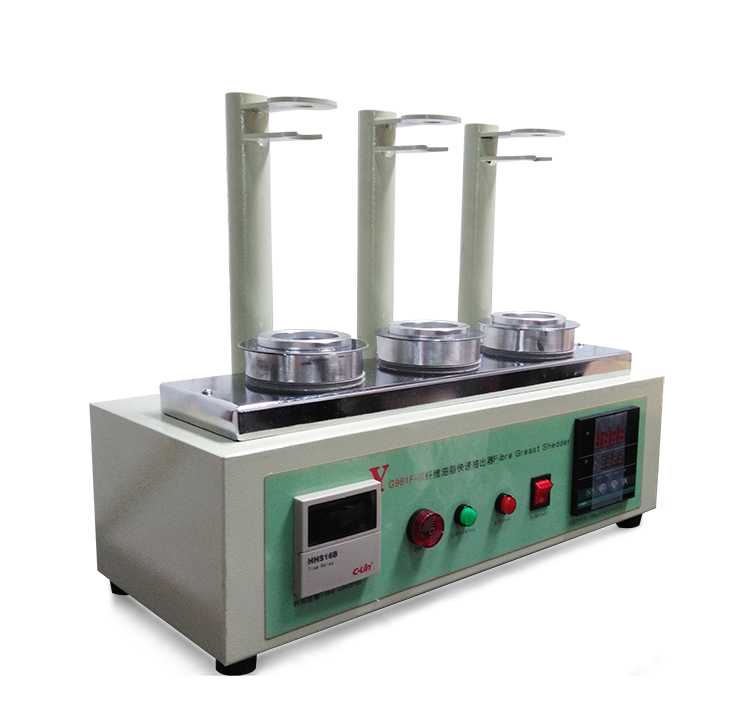
Functions and Applications of the Fiber Oil Rapid Extractor
The Fiber Oil Rapid Extractor is a laboratory instrument used for the rapid determination of oil (or oiling agent) content in fibers such as wool and chemical fibers. Based on the principle of solvent extraction combined with pressurized heating and evaporation, it enables efficient testing of fiber oil content.
Functions
By using organic solvents such as petroleum ether, ether, or dichloromethane, the instrument penetrates and dissolves the oil contained within the fibers. Under mechanical pressure and constant-temperature heating (typically 60–250°C), the solvent evaporation process is accelerated. The residual oil is then collected and weighed to calculate the oil content. The instrument can process 2–3 samples simultaneously in one test cycle, with each test taking approximately 20–30 minutes.
Applications
The instrument is mainly used for production process control and quality inspection in wool spinning, chemical fiber, and cotton spinning enterprises. Research institutes and testing organizations also use it to rapidly evaluate the oil content of raw materials or semi-finished products according to relevant standards, ensuring the stability of spinning and weaving processes.
It is not suitable for testing whole fabrics directly, as the fabric must first be separated into yarns before testing.
Applicable Industries for the Fiber Oil Rapid Extractor
The Fiber Oil Rapid Extractor is mainly applicable to the wool spinning, chemical fiber (synthetic fiber), and cotton spinning industries, as well as quality inspection organizations and research institutions. It is used for the rapid determination of oil content in fibers such as wool, chemical fibers, silk, and other textile fibers.
Wool Spinning Industry
Used for testing the oil or grease content (such as wool grease/lanolin) in scoured wool, wool tops, combed wool, and related materials, helping to control the wool washing and processing procedures.
Chemical Fiber Industry
Used for determining the spinning oil content in synthetic fibers, monitoring production stability, and evaluating post-processing performance such as weaving and dyeing.
Cotton Spinning and Related Fiber Industries
Some models are also suitable for detecting residual oiling agents in cotton, hemp, and blended fibers.
Third-Party Testing Organizations, Universities, and Research Institutes
Used for standardized analysis and research on oil content in fiber materials.
Technical Features of the Fiber Oil Rapid Extractor
The core technical features of the Fiber Oil Rapid Extractor integrate pressurization, constant-temperature control, and solvent extraction into one system, enabling the rapid determination of oil content in wool and chemical fiber samples within approximately one hour. The instrument can process up to three samples simultaneously (about 2 g each) using organic solvents such as petroleum ether and dichloromethane.
Pressurized Extraction Mechanism
The instrument adopts a mechanical pressurization system using a screw rod or weights to compress fiber samples after solvent penetration, accelerating the extraction of oil and grease. This differs from the traditional Soxhlet extraction method, which relies solely on reflux extraction.
Precise Temperature Control System
The heating temperature range is typically from room temperature up to 220°C (some models can reach 250°C), with a temperature control accuracy of ±1°C. PWM or PID digital control technology is used to prevent excessive solvent volatilization or oil decomposition during testing.
High-Throughput Design
The instrument can process three samples simultaneously, with solvent consumption of approximately 20 mL per sample. Each testing cycle takes about 45–60 minutes, while traditional methods usually require 6–8 hours.
Integrated Structural Design
The system integrates an oil extraction cylinder, pressurizing device, constant-temperature evaporation dish, and intelligent temperature/time controller into one compact structure. It also features automatic power-off and audible/visual alarm functions in case of overtime operation, ensuring easy operation and convenient mobility.
Compliance with National and Industry Standards
Designed according to standards such as GB/T and FZ/T, the instrument is suitable for determining oil and oiling agent content in scoured wool, chemical fiber filaments, yarns, and related materials. It is not suitable for tightly woven fabrics unless they are first separated into fibers or yarns before testing.
Operating Procedure for the Fiber Oil Rapid Extractor
Preparation Stage
First, turn on the laboratory fume hood to ensure good air circulation in the working environment. Operators should properly wear personal protective equipment, including laboratory coats, safety goggles, and protective gloves.
Take a clean evaporation dish and weigh it using an analytical balance with an accuracy of 0.0001 g, then record the initial weight. Place the dish steadily on the heating plate and secure it with the matching retaining ring.
Next, according to the boiling point characteristics of the selected solvent (such as petroleum ether or dichloromethane), set the temperature controller to an appropriate range, usually between 60–110°C. The exact temperature should be selected based on the safe boiling point of the solvent.
Sample Loading Procedure
Using clean tweezers, carefully place a pre-dried fiber sample weighing approximately 2 g (accurately weighed and recorded using an analytical balance) into the oil extraction cylinder. Then gently compact the sample with the matching compression rod to ensure uniform and compact filling.
Special attention should be paid to ensuring that the sample quantity does not exceed the specified capacity and that there are no loose areas or voids, as these may affect the extraction efficiency.
First Extraction Process
Slowly add approximately 10–15 mL of organic solvent into the extraction cylinder containing the sample. Common solvents include petroleum ether, ether, or dichloromethane.
Afterward, tightly close the pressure cover so that the solvent naturally penetrates the sample under gravity and gradually drips into the evaporation dish placed below. This natural dripping process generally lasts about 5–10 minutes, and sufficient time should be allowed for the solvent to drain almost completely.
Pressurized Extraction Operation
After the natural dripping process is nearly completed, carefully insert the pressure rod or screw mechanism into the extraction cylinder. Slowly rotate and apply uniform pressure to gradually squeeze out the remaining solvent droplets retained in the fiber sample.
During operation, the applied force should be carefully controlled to avoid excessive pressure that could cause fiber splashing or sample loss. Continue collecting the extracted liquid until no obvious droplets continue to fall.
Secondary Extraction Procedure
After removing the pressurizing device, add another 10–15 mL of fresh organic solvent into the extraction cylinder. Repeat the complete process of natural dripping followed by gentle pressurized extraction to ensure that the oil content within the fibers is fully extracted, thereby improving extraction efficiency and result accuracy.
Drying and Weighing Procedure
Remove the fiber sample after the two extraction cycles and place it into a drying box. Dry the sample in an oven at 100–110°C until a constant weight is achieved, then record the dried sample weight.
At the same time, place the evaporation dish containing the extracted solvent in a ventilated area and allow the solvent to evaporate completely. After cooling to room temperature, weigh the evaporation dish again using the analytical balance.
The mass of the extracted oil can then be determined by calculating the difference between the initial and final weights of the evaporation dish.
Cleaning and Final Procedures
After the operation is completed, first turn off the power supply. Once all instrument components have completely cooled, remove the fiber residue from the extraction cylinder and thoroughly clean all parts that came into contact with solvents. Particular care should be taken to avoid any organic solvent residue remaining inside the system.
Waste liquids generated during the experiment must be disposed of properly according to laboratory hazardous waste management regulations and must never be discharged arbitrarily.
Precautions and Key Control Points
The total extraction process generally requires approximately 20–60 minutes, depending on the instrument model and the type of solvent used. High-boiling-point or water-soluble solvents must never be used, as they may affect extraction performance or create safety hazards.
Key control points include:
The heating temperature must not exceed the solvent’s boiling point to prevent violent boiling or solvent loss.
Pressure should always be applied slowly and evenly during the pressurization process.
The two-step solvent extraction procedure must not be omitted to ensure complete extraction.
In addition, different equipment models may have slight operational differences. Therefore, the official instruction manual of the actual equipment being used should always be followed.
When working with flammable organic solvents, open flames must be strictly avoided. The equipment must be properly grounded, and the fume hood must remain in operation at all times to ensure laboratory safety.
Importance of the Fiber Oil Rapid Extractor
The Fiber Oil Rapid Extractor plays a vital role in textile quality control, process optimization, and standards compliance, as it enables the rapid and accurate determination of oil or oiling agent content in fibers such as wool and chemical fibers. The oil content directly affects subsequent processing performance and final product quality.
High-Efficiency and Accurate Testing
Compared with the traditional Soxhlet extraction method, which may require several hours or even an entire day, the Fiber Oil Rapid Extractor can complete three groups of parallel sample tests within approximately 20–60 minutes, meeting the demand for real-time oil content monitoring on production lines.
Essential for Process Control
During fiber processing, oiling agents significantly influence spinning, weaving, and dyeing performance. Excessive or insufficient oil content may lead to yarn breakage, static electricity accumulation, uneven dyeing, and other production defects. This instrument ensures that the applied oiling agent quantity remains within the required range.
Basis for Raw Material and Finished Product Quality Inspection
The instrument is widely used for the acceptance inspection and quality grading of scoured wool, chemical fiber yarns, and textile products. The test results are directly related to cost calculation and product grade evaluation.
Low Solvent and Sample Consumption with High Automation
Each test generally requires only about 2 g of sample material and approximately 20 mL of solvent, such as petroleum ether or dichloromethane. Combined with the integrated pressurization and temperature-controlled evaporation system, the instrument improves test repeatability while reducing manual intervention.
Support for Research, Development, and Compliance
Research institutes and third-party laboratories rely on the instrument’s testing results for fiber modification studies, evaluation of new oiling agents, and compliance verification, ensuring that exported or high-end textile products meet international testing standards and quality requirements.
In summary, the Fiber Oil Rapid Extractor, as an efficient and innovative product, demonstrates significant technical advantages and broad application potential in the field of oil extraction and fiber testing. It is truly worthy of greater attention and deeper understanding.We sincerely invite and welcome all interested professionals and partners to share your ideas and questions through comments or by contacting us directly. We will respond with enthusiasm and are pleased to provide more comprehensive product information, detailed technical specifications, and customized application solutions to help you better evaluate and utilize this product.
Previous: What is the Automotive Wire Repeated Bending Tester?
N e x t : What is the temperature humidity environmental test chamber?
