





What is the temperature humidity environmental test chamber?
2026/05/27
Share:

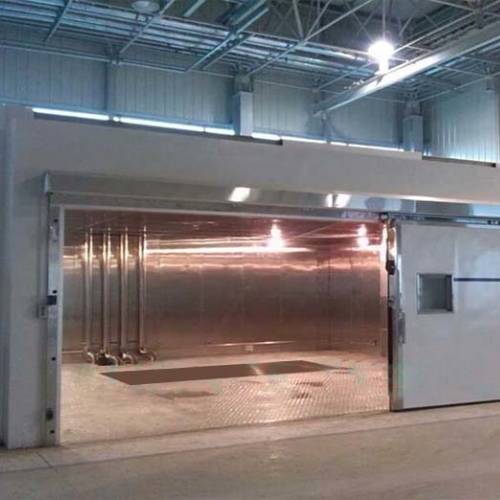
Functions and Applications of the Vehicle-Level High/Low Temperature and Humidity Test Chamber
The Vehicle-Level High/Low Temperature and Humidity Test Chamber is a large-scale environmental simulation testing system capable of reproducing extreme temperature and humidity conditions within a controlled environment. It is used to verify the performance, reliability, and safety of complete vehicles or large automotive assemblies under real-world climatic conditions.
Core Functions
The chamber provides precise control of internal temperature and relative humidity. Some advanced systems also integrate solar radiation simulation, wind speed control, low-pressure (high-altitude) simulation, and chassis dynamometer systems, enabling the simulation of multi-factor coupled environmental conditions.
Main Applications
The chamber is mainly used to test:
Cold and hot start performance of complete vehicles under extreme temperatures
Air conditioning system efficiency
Thermal management performance of the three-electric systems (battery, motor, and electronic control system)
Vehicle sealing performance
Material durability
ECU calibration adaptability
Regulatory compliance, including emissions and energy consumption requirements
It provides essential support for research and development validation, durability testing, and certification procedures.
Typical Applications
Typical vehicle-level testing applications include:
Low-temperature driving range and charging performance tests for new energy vehicles
High-altitude power loss simulation
Defrosting and defogging verification under tropical hot and humid conditions
Stability testing of electronic systems in extremely cold environments
Unlike small environmental chambers designed for component testing, this equipment is large enough to accommodate a complete passenger vehicle and supports dynamic load testing such as chassis dynamometer driving simulations.
Applicable Industries for the Vehicle-Level High/Low Temperature and Humidity Test Chamber
The Vehicle-Level High/Low Temperature and Humidity Test Chamber is mainly applicable to industries that require reliability, environmental adaptability, and performance verification of complete vehicles or large assemblies under real environmental stress conditions. The core application fields include:
Automotive Manufacturing Industry
(Conventional Fuel Vehicles, New Energy Vehicles — BEV/PHEV/HEV)
Used for:
Cold start testing
Battery thermal management evaluation
Air-conditioning thermal balance testing
High- and low-temperature driving range verification
Functional validation of automotive electronic and electrical systems, including ECUs, wiring harnesses, and sensors
The testing process complies with automotive standards such as ISO and GB/T vehicle-grade regulations.
Automotive Parts and Component Suppliers
Used for integrated performance testing of:
In-vehicle display systems
Motor controllers
Charging stations and charging systems
High-voltage distribution boxes
Other automotive assemblies under complete vehicle environmental conditions
Aerospace and Defense Industries
Applied to:
Environmental adaptability testing of military vehicles, armored vehicles, and special-purpose defense vehicles
Extreme climate verification under severe cold, desert, and other harsh environmental conditions
Commercial and Special Vehicle Industries
(Trucks, Buses, Construction Vehicles, Agricultural Vehicles)
Used to verify the stability and reliability of:
Powertrain systems
Braking systems, especially vacuum-assisted braking performance under low-pressure conditions
Electronic control systems operating across different regional climates
Third-Party Testing and Certification Organizations & R&D Laboratories
Supports:
Vehicle-level environmental compliance testing
Regulatory verification under combined temperature and humidity conditions
Emissions, energy consumption, and electromagnetic compatibility (EMC) evaluations under simulated environmental stress conditions.
Technical Features of the Vehicle-Level High/Low Temperature and Humidity Test Chamber
The Vehicle-Level High/Low Temperature and Humidity Test Chamber is a comprehensive environmental testing facility designed to simulate extreme temperature and humidity conditions for complete vehicles. Its core technical features focus on large-capacity design, high-precision environmental control, multi-parameter coordinated regulation, and compatibility with vehicle-level dynamic testing.
Wide Temperature and Humidity Range with High Stability
The typical temperature range is from -40°C to +85°C, while some advanced models can reach up to +100°C. The humidity range is generally 20%–95% RH, although the minimum humidity at low-temperature conditions is usually limited to 30% RH.
The chamber typically provides:
Steady-state temperature control accuracy of ±0.5°C to ±1°C
Humidity deviation of ±2% to ±5% RH
Internal temperature uniformity of ≤ ±2°C
Large Capacity and Full Vehicle Compatibility
The chamber dimensions are typically no smaller than 16 m × 7 m × 6 m, allowing accommodation of complete passenger vehicles or light commercial vehicles.
Optional chassis dynamometer systems can also be integrated to support synchronized “environment + driving condition” testing, including:
Wind speed simulation from 0–200 km/h
Road gradient and climbing simulations
Dynamic vehicle operation under controlled environmental conditions
Multi-Environmental Parameter Integration
In addition to temperature and humidity control, advanced chambers may integrate:
Altitude (air pressure) simulation: 0–5500 m, corresponding to 50–101 kPa
Full-spectrum solar radiation simulation: 0–1200 W/m²
Wind speed simulation: 0–20 m/s
Rainfall and icing systems
These functions enable the reproduction of highly complex combined climate environments.
Intelligent Closed-Loop Control and Dynamic Response
The chamber adopts a centralized control system based on PLC/SCADA architecture combined with PID algorithms. It coordinates multiple subsystems, including:
Refrigeration systems (liquid nitrogen or cascade compressors)
Heating systems (steam or electric heating)
Humidification systems (ultrasonic or steam spray)
Dehumidification systems (condensation or dry-air systems)
The system supports:
Pre-programmed testing cycles such as thermal shock and high-altitude climbing simulations
Real-time data feedback from hundreds of CAN bus and sensor signals
High Sealing Performance and Safety Redundancy
The chamber is equipped with:
Dual-sealing doors combining metal seals and fluororubber seals
Pressure-resistant chamber structures capable of maintaining low-pressure conditions for at least 30 minutes
Additional safety systems include:
Oxygen concentration monitoring
Emergency pressure relief devices
Explosion-proof lighting
Personnel interlock protection systems
These features comply with ISO and related industrial safety standards.
Thermal Inertia Optimization and Airflow Uniformity Design
Through the combination of high-airflow variable-frequency fans and specially designed air-guiding ducts, the chamber ensures uniform airflow distribution around the vehicle body, with turbulence levels below 5%.
This design effectively prevents localized overheating or overcooling, ensuring highly consistent environmental simulation conditions throughout the testing process.
Operating Procedure for the Vehicle-Level High/Low Temperature and Humidity Test Chamber
Vehicle high- and low-temperature testing is a critical part of the automotive manufacturing process. Its purpose is to evaluate vehicle performance and durability under various extreme climatic conditions by simulating different environmental temperatures. Such tests are typically conducted in specialized vehicle-level high/low temperature test chambers equipped with precision temperature control systems and environmental simulators capable of rapidly and accurately creating environments ranging from as high as 150°C to as low as -40°C.
Preparation Stage
Confirm the test requirements, including:
Temperature range (such as -40°C to +85°C)
Humidity range (20%–98% RH)
Test duration
Temperature change rate (typically ≤5°C/min)
Inspect the chamber sealing condition as well as the operational status of the power supply, cooling system, and humidification system. Position the complete vehicle or assembly according to testing specifications, ensuring that sensors and air ducts are not obstructed.
Connect all required data acquisition lines, including:
Power supply lines
CAN communication systems
Temperature sensors
Voltage monitoring systems
Ensure that there are no flammable or explosive materials in the testing area and that no high-temperature exhaust interference is present.
Preconditioning and Environmental Stabilization
If “cold soak” or “heat soak” testing is required, the vehicle should first be placed in an external target environment (such as a -40°C cold storage room) for at least 8 hours to allow core components, including the battery, ECU, and fluids, to reach thermal equilibrium.
Clean the interior of the chamber before testing. The humidification system should use deionized water, and the drainage system must be checked to ensure smooth operation.
Program Setting
Input multi-stage temperature and humidity profiles through the PLC, touchscreen controller, or supervisory computer software. Typical test programs may include:
Low-temperature storage at -40°C for 24 hours
Rapid heating to +85°C within 10 hours
Constant-temperature holding periods
Repeated thermal cycling procedures
Set environmental control parameters, including:
Temperature and humidity control accuracy (±0.5°C / ±2.5% RH)
Wind speed simulation (typically equivalent to 0–120 km/h airflow)
Pressure settings for altitude simulation (for example, 54 kPa corresponding to an altitude of approximately 5000 m)
Start-Up and Monitoring
Close the double-layer sealed chamber door, activate the interlock protection system, and start the programmed testing sequence.
During operation, continuously monitor:
Multi-point temperature and humidity uniformity inside the chamber (≤ ±2°C)
Vehicle operating conditions
Fault codes
Battery temperature rise
Air-conditioning system performance
Chamber pressure
Refrigerant pressure
Personnel are strictly prohibited from entering the chamber during operation.
Test Holding and Functional Verification
Once the specified environmental conditions are reached, begin timing the test according to the test protocol.
Conduct required functional evaluations, such as:
Low-temperature starting tests
High-temperature idling tests
Durability testing of electronic components under hot and humid conditions
Record environmental parameters and vehicle response data, including:
Motor torque reduction
Screen response speed
Windshield fogging conditions
Frequent opening of the chamber door during testing should be avoided. If intervention is necessary, pressure must first be equalized and the chamber restored to normal temperature conditions.
Completion and Recovery
After the testing program is completed:
Stop the heating and humidification systems.
Gradually reduce the chamber temperature to prevent condensation.
Open the chamber door only after the internal temperature falls below 30°C and humidity drops below 60% RH.
Disconnect vehicle power supplies and inspect for:
Condensation water
Insulation abnormalities
Other potential issues
Clean the chamber interior, complete the test log, and export all testing data.
Safety and Maintenance Requirements
Operators must be professionally trained and authorized before operating the equipment. All interlock protection mechanisms for over-temperature, over-pressure, and water shortage conditions must be strictly followed.
Regular maintenance includes:
Calibration of platinum resistance temperature sensors and capacitive humidity sensors
Cleaning of air ducts and humidification tanks
Inspection of sealing systems and safety devices
Vehicles containing volatile fuel leakage or undepleted high-voltage electrical systems must never be tested under any circumstances to ensure operational safety.
Importance of the Vehicle-Level High/Low Temperature and Humidity Test Chamber
The Vehicle-Level High/Low Temperature and Humidity Test Chamber is a core platform for ensuring that automobiles operate safely, reliably, and compliantly under all climatic conditions. Its importance is mainly reflected in four key dimensions: reproducing global extreme climates, accelerating validation cycles, supporting regulatory compliance, and assisting the development of electric powertrain systems.
Global Climate Adaptability Verification
The chamber can accurately simulate temperature ranges from -40°C to +85°C and humidity conditions from 10% to 95% RH, covering global operating environments from Arctic cold regions to tropical deserts.
It is used to verify:
Vehicle cold and hot start performance
Air-conditioning efficiency
Defrosting and defogging capability
Vehicle sealing performance
Thermal management performance of the three-electric systems (battery, motor, and electronic control systems)
Overall durability and environmental adaptability
Improved R&D Efficiency and Testing Consistency
Environmental chambers compress what would traditionally require several months of global road testing into a few weeks of controllable laboratory testing.
The system provides:
High repeatability
Full traceability
Multi-factor coupled testing, including temperature, humidity, solar radiation, airflow, and chassis dynamometer simulation
This significantly shortens vehicle development cycles while reducing the cost of real-world road testing.
Essential Support for Regulatory Compliance and Emissions Certification
Strict global regulations such as China VI-b, Euro 7. and CARB standards require complete vehicle testing under environmental conditions ranging from approximately -30°C to +50°C.
The chamber supports:
Vehicle exhaust emission testing
Evaporative emission (SHED) testing
WLTC and CLTC driving cycle verification
As a result, the environmental chamber has become an indispensable platform for legal certification and compliance approval.
Critical Support for New Energy Vehicle Development
The chamber enables precise evaluation of:
Battery charging and discharging performance under high and low temperatures
Driving range degradation
Thermal runaway risks
Heat pump and PTC heating efficiency
It also verifies:
Electric drive system calibration
Fast-charging compatibility
High-voltage electrical safety
These tests directly determine the global market access capability of new energy vehicle products.
Reliability Screening of Materials and Vehicle Systems
Through temperature-humidity cycling, storage testing, and alternating environmental stress testing, the chamber can identify hidden defects such as:
Interior material aging
Rubber cracking and brittleness
Moisture-sensitive electronic failures
Wiring harness corrosion
This effectively helps prevent after-sales failures and recall risks while improving overall vehicle weather resistance and brand reputation.
Future Development Trends
With the advancement of technology and industrial development, vehicle-level high/low temperature test chambers will continue evolving toward greater intelligence and automation, further improving testing efficiency and accuracy.
In the future, more innovative technologies and advanced systems are expected to be integrated into this field, bringing new momentum to the development of the automotive industry.
Vehicle high- and low-temperature testing is essential for ensuring the safe and reliable operation of automobiles under various climatic conditions worldwide. It not only helps identify design defects and improve product quality but also provides users with a safer and more comfortable driving experience. Through rigorous testing procedures, manufacturers can ensure outstanding product performance even in harsh environments, thereby enhancing market competitiveness and customer satisfaction.
For more detailed information or specific testing case studies, we sincerely welcome you to leave a message or contact us directly. We would be pleased to provide you with more comprehensive product information and technical support.
Previous: Is an oil extractor worth it?
N e x t : What is shear fatigue?
