





What is shear fatigue?
2026/05/27
Share:

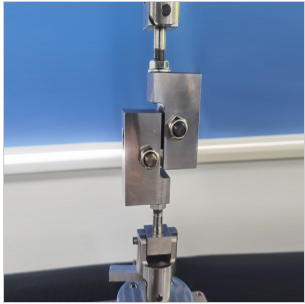
Functions and Applications of the Shear Fatigue Tester for Coatings
The Shear Fatigue Tester for Coatings is mainly used to simulate the durability of coatings under repeated shear loading conditions and to evaluate their resistance to delamination, cracking, and bonding strength degradation. It is widely applied in research, development, and quality control processes within industries such as automotive, aerospace, tool coatings, and protective coating systems.
Functions
The equipment applies cyclic shear stress to the coating-substrate system, which differs from conventional tensile, compression, or scratch testing methods. It is used to measure:
Interfacial bonding retention rate under specified loading cycles
Crack initiation and propagation behavior
Critical shear strain and related fatigue performance parameters
Some advanced systems can also integrate environmental control functions such as:
Temperature and humidity regulation
Corrosive media simulation
Multi-environment fatigue testing conditions
Applications
The tester is used to verify the long-term reliability of various coatings under dynamic mechanical operating conditions, including:
PVD/CVD coatings
Thermal barrier coatings
Anti-corrosion paints
Wear-resistant coatings
Typical application scenarios include:
Rotating component operation
Sliding contact conditions
Vibration environments
Unlike static scratch testers or pull-off adhesion testers, the Shear Fatigue Tester for Coatings provides testing conditions that more closely replicate the actual fatigue failure mechanisms experienced by coatings during real service operation.
Applicable Industries for the Shear Fatigue Tester for Coatings
The Shear Fatigue Tester for Coatings is mainly applicable to industries that require evaluation of coating adhesion, delamination resistance, and durability under repeated shear stress conditions. Typical application industries include:
Automotive Manufacturing Industry
Used for testing the shear fatigue resistance of:
Automotive paint coatings
Functional coatings
under vibration and friction operating conditions.
Aerospace Industry
Used for evaluating the interfacial integrity of:
Thermal barrier coatings
Anti-corrosion coatings
under alternating aerodynamic load conditions.
Rail Transit Industry
Applied to durability verification of:
Brake system coatings
Interior protective coatings
under long-term operational stress conditions.
Industrial Protection and Pipeline Coating Industry
Used for assessing the performance of:
Anti-corrosion coatings
Wear-resistant coatings
under cyclic loading conditions caused by fluid erosion or repeated mechanical contact.
Electronics Packaging and Micro-Coating Industry
Used for testing the shear stability of:
PCB solder mask layers
Thin functional films
under thermo-mechanical cycling conditions.
Medical Devices and Implant Coating Industry
Including applications such as hydroxyapatite coatings, the equipment is used to verify the bonding durability of bioactive coatings under dynamic physiological environments.
Technical Features of the Shear Fatigue Tester for Coatings
The core technical characteristics of the Shear Fatigue Tester for Coatings focus on accurately evaluating the interfacial bonding durability and delamination resistance of coating-substrate systems under cyclic shear loading conditions. The main technical features are as follows:
Dedicated Shear Loading Mode
The equipment applies controlled cyclic shear stress through transverse or torsional loading methods, which differ from conventional tensile or compression loading systems.
Typical testing frequencies range from 0.1–100 Hz, allowing simulation of coating shear failure scenarios caused by:
Vibration
Friction
Thermal cycling
Some advanced systems also support multi-axis coupled loading modes, such as combined shear and normal force loading.
High-Precision Displacement and Force Closed-Loop Control
The system is equipped with optical extensometers or laser interferometers for real-time monitoring of micron-level interfacial slip, with resolutions of ≤1 μm.
Combined with servo motors or piezoelectric actuators, the equipment achieves load control accuracy within ±0.5%, ensuring uniform shear strain distribution throughout the testing process.
Specialized Fixtures and Specimen Geometry Design
The tester adopts specialized specimen configurations, such as:
Scratch-cyclic shear testing structures
Double-lap shear specimens
ASTM-derived shear testing methods
These designs effectively minimize stress concentration effects.
Fixture systems are specifically engineered to ensure pure shear loading without introducing bending or tensile components, commonly using:
Symmetrical loading structures
Roller-slider mechanisms
Environmental Simulation and In-Situ Monitoring Integration
Optional environmental modules include:
Temperature and humidity chambers (-30°C to 150°C)
Corrosive atmosphere simulation systems such as salt spray and humid heat environments
At the same time, the equipment can integrate advanced monitoring technologies including:
Acoustic emission systems
Potential drop monitoring
In-situ microscopy
These technologies enable real-time observation of microcrack initiation and interfacial debonding processes.
High-Cycle Fatigue Testing Capability
To address common high-cycle fatigue conditions for coatings (10⁴–10⁷ cycles), the equipment adopts electromagnetic or piezoelectric drive technologies to achieve high-frequency loading, reaching kilohertz-level operation.
This significantly shortens testing time while maintaining low thermal effects. Some advanced systems are also compatible with ultrasonic shear fatigue testing, such as 20 kHz torsional loading modes, enabling evaluation within the giga-cycle fatigue region.
Flexible and Customizable Testing Parameters
Currently, there is no unified international testing standard specifically dedicated to coating shear fatigue testing. Most testing methods are developed based on:
Enterprise standards
Modified interlaminar shear methods used for composite materials
Key parameters such as:
Shear amplitude
Loading frequency
Waveform type
must be customized according to the coating system characteristics, including:
Metal-based or polymer-based coatings
Brittle or ductile coating materials.
Operating Procedure for the Shear Fatigue Tester for Coatings
Coating shear fatigue testing evaluates the long-term stability and durability of coatings by applying cyclic shear stress to simulate actual service conditions. The test provides important performance evaluation data for engineering applications.
Testing Procedure
Sample Preparation
Prepare coated samples on the substrate according to ASTM and related testing standards. After curing, cut the samples into specified dimensions, commonly circular or square specimens, ensuring that the surface is smooth and free from bubbles or defects.
Attach specialized shear fixtures, such as pull rings or double-shear blocks, to the coating surface using compatible adhesives. Ensure that the adhesive is fully cured before testing.
Equipment Calibration and Fixture Installation
After powering on the equipment, allow the system to warm up and stabilize. Use a standard load sensor to calibrate the testing machine.
Install the dedicated shear testing fixture rather than tensile or bending fixtures, and confirm proper alignment without initial eccentricity. If the equipment includes environmental control functions, set the required temperature and humidity conditions before testing.
Parameter Configuration
Input the required testing parameters into the control software, including:
Shear loading mode (commonly tensile-shear combined mode or pure reciprocating shear mode)
Loading frequency (typically 0.1–10 Hz)
Stress amplitude (commonly preset according to expected coating strength, such as 5–50 MPa)
Maximum number of loading cycles (for example, 10⁴–10⁶ cycles)
Stop criteria, such as sudden displacement changes or load reduction greater than or equal to 20%
Specimen Installation and Preloading
Mount the specimen securely into the shear fixture and apply a light initial preload, typically around 5% of the target load, to ensure proper contact.
Afterward, zero the displacement and load sensors. Care should be taken to avoid excessive preload that could introduce initial damage to the coating system.
Test Operation
Start cyclic loading and continuously monitor the load-displacement curve in real time.
During testing:
Manual intervention is prohibited
Emergency shutdown should be performed immediately if abnormal noise, specimen slippage, or other abnormal conditions occur
Test Completion and Evaluation
The test is terminated when either:
The preset number of cycles is reached
Failure phenomena occur, such as coating delamination, substrate cracking, or sudden load reduction
After testing, remove the specimen and analyze the failure mode using:
Optical microscopy
Scanning Electron Microscopy (SEM)
Record the fatigue life data and compare multiple test groups to determine the average fatigue threshold and coating durability characteristics.
Importance of the Shear Fatigue Tester for Coatings
The importance of the Shear Fatigue Tester for Coatings lies in its ability to realistically simulate the repeated shear stress conditions that coatings experience during actual service operation, enabling precise evaluation of interfacial bonding strength and resistance to cyclic shear failure. This capability cannot be replaced by conventional fatigue testing methods such as tensile or bending tests.
Coating Failures Are Often Dominated by Shear Stress
In industries such as aerospace, automotive, cutting tools, and marine engineering, coatings are frequently subjected to shear stress caused by:
Friction
Thermal cycling
Mechanical vibration
Under these conditions, coatings are prone to:
Delamination
Crack formation
Layer separation
Shear fatigue is therefore one of the core mechanisms responsible for coating failure in real service environments.
Conventional Testing Methods Are Insufficient
Traditional tensile or compression fatigue testing machines are unable to accurately apply pure shear loading conditions and cannot effectively simulate the complex stress states that occur at the coating-substrate interface.
Dedicated shear fatigue testing systems can achieve:
Precisely controlled shear strain and stress amplitudes
High-frequency cyclic loading, including ultrasonic or torsional loading modes
This enables accelerated evaluation of the long-term durability and fatigue resistance of coating systems.
Ensuring the Reliability of Critical Components
Thin yet high-strength coatings such as:
Thermal Barrier Coatings (TBCs)
Hard wear-resistant coatings
may experience rapid failure once shear fatigue damage occurs, leading to severe substrate wear, corrosion, or structural degradation.
The Shear Fatigue Tester provides irreplaceable quantitative data for:
Optimizing coating processes
Validating service life prediction models
Establishing maintenance and inspection standards
Promoting the Development of Advanced Coating Materials
With the rapid development of advanced coatings such as:
High-entropy alloy coatings
Nanolayered thin films
Multifunctional composite coatings
there is an increasing need for reliable shear fatigue performance databases to support material design and engineering applications.
The Shear Fatigue Tester serves as a critical bridge connecting:
Microscopic interfacial behavior
Macroscopic service performance
thereby accelerating the development and industrial application of next-generation coating technologies.
In summary, without a dedicated shear fatigue testing system, coating performance evaluation would remain limited to the basic static question of “whether the coating can adhere firmly.” It would be impossible to scientifically answer the far more critical question of “how long the coating can reliably perform under actual service conditions.”In dynamic and complex operating environments, the absence of such evaluation capability represents a major limitation, leaving material selection and engineering applications without sufficient long-term reliability data support and potentially introducing significant operational risks.We sincerely welcome you to leave a message or contact us directly. We would be pleased to provide more detailed technical information, professional consultation, and customized testing solutions regarding our products and applications.
Previous: What is the temperature humidity environmental test chamber?
N e x t : What is a Shoe Heel Impact Fatigue Tester?
