





What is the Automotive Cargo Cover Screw Inspection Line?
2026/05/29
Share:

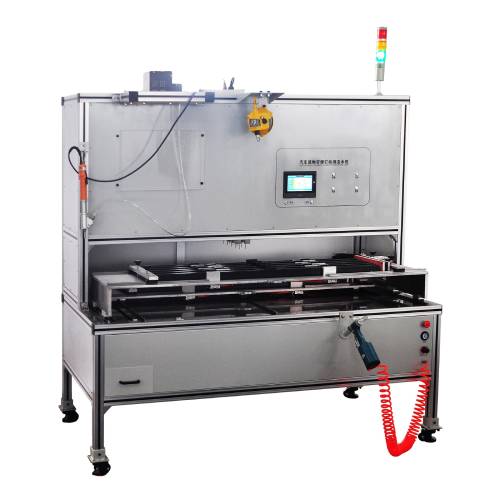
Functions and Applications of the Automotive Cargo Cover Screw Inspection Line
The core function of the Automotive Cargo Cover Screw Inspection Line is to automatically inspect the installation quality of fastening screws in cargo cover assemblies, including whether screws are missing, whether the tightening torque meets specifications, whether thread stripping has occurred, and whether the installation position is correct. This ensures that the product meets OEM assembly and reliability requirements.
Its primary application is to provide online quality inspection for screw fastening processes during the mass production of automotive cargo covers, especially retractable or fixed trunk cargo covers with locking structures, preventing defective products from entering vehicle assembly plants.
Core Functions
Screw installation status inspection:
The system can identify problems such as missing screws, misalignment, or insufficient fastening.
Automated judgment:
Inspection results are output in real time and can be linked with the assembly process to automatically reject unqualified products.
Programmable control:
Integrated with assembly functions, the system combines screw installation and inspection into one automated process, reducing manual intervention.
Application Focus
The system is specifically designed for the final assembly stage of automotive cargo covers, ensuring that the “locking screw – steering component – curtain fabric fixing” structure remains secure during vehicle operation without loosening, abnormal noise, or functional failure, while meeting automotive-grade quality control standards.
Applicable Industries of the Automotive Cargo Cover Screw Inspection Line
The Automotive Cargo Cover Screw Inspection Line is mainly used in the automotive parts manufacturing industry and is specifically designed for the assembly and quality inspection of passenger vehicle and commercial vehicle cargo covers (trunk covers).
Core Applicable Industries
Automobile manufacturers (OEMs) and automotive interior component suppliers, including manufacturers of:
cargo covers,
trunk storage systems,
seat-related components,
and other automotive interior assemblies.
Typical Application Scenarios
Torque inspection of fastening screws on cargo cover roller end caps, brackets, and related components in automated assembly lines.
Presence/absence inspection of screws to detect missing fasteners.
Error-proofing verification to ensure correct screw installation and assembly positioning.
Features of the Automotive Cargo Cover Screw Inspection Line
The Automotive Cargo Cover Screw Inspection Line is a dedicated workstation designed for the automated inspection of screw installation status, torque compliance, and positioning accuracy in cargo cover assemblies. It is typically integrated into the entire cargo cover assembly line, with core features focused on high precision, production takt synchronization, and closed-loop quality control.
Dedicated Screw Inspection Process
The system focuses on post-tightening screw inspection and adopts dual verification through:
machine vision inspection (presence/absence, tilt, corrosion, etc.), and
electronically controlled tightening data (torque, rotation count, seating signal).
This ensures reliable and consistent screw installation quality.
Assembly Line Takt Synchronization
As a parallel or in-line inspection station positioned after the screw fastening area, the system synchronizes with the overall assembly line takt time (e.g., ≤15 seconds per unit), enabling continuous online inspection without interrupting production flow.
High Automation and Reject Function
The system automatically triggers NG (non-conforming product) sorting functions, such as pneumatic pushers or robotic arm rejection, preventing defective products from entering downstream processes.
It also supports rapid model changeover through PLC parameter switching or machine vision templates.
Data Traceability and SPC Monitoring
Inspection data for each screw, including torque values, tightening time, and inspection images, can be stored for:
quality traceability,
statistical process control (SPC),
and process capability analysis,
meeting automotive quality management requirements such as IATF standards.
Modular and Error-Proof Design
The system is commonly integrated with:
servo screwdrivers,
torque sensors,
and industrial cameras.
It incorporates poka-yoke (error-proofing) logic to prevent:
missing screws,
stripped threads,
false tightening,
and other assembly defects,
while being suitable for mixed plastic and metal assembly structures.
Working Principle of the Automotive Cargo Cover Screw Inspection Line
The core principle of the Automotive Cargo Cover Screw Inspection Line is to use automated technologies such as machine vision recognition, torque sensing, and photoelectric detection to determine online whether screws are correctly installed, properly tightened according to specifications, and free from defects such as missing installation or stripped threads.
Positioning and Conveying
Semi-finished cargo cover assemblies are transported to the inspection station via tooling pallets or conveyor belts. Precision fixtures accurately position the product to ensure that the screw locations are aligned with the inspection sensors or cameras.
Screw Presence Detection
An industrial vision system, consisting of high-resolution cameras and AI-based image recognition algorithms, is used to identify whether the screw head is visible and whether its contour is complete, thereby detecting missing or incorrectly installed screws.
Tightening Quality Inspection
The system verifies tightening quality through:
non-contact torque/angle sensing technologies (such as electric cylinder simulation tightening with resistance feedback), or
contact-type torque wrenches combined with angle encoders.
This ensures that the required torque value has been achieved and prevents issues such as loosening or stripped threads.
Auxiliary Sensor Assistance
Some systems are additionally equipped with:
photoelectric or capacitive sensors to confirm whether screws are properly inserted into threaded holes, and
displacement sensors to verify whether the end cap compression displacement falls within the acceptable range after tightening.
Sorting and Control
Inspection results are transmitted to the PLC in real time. Non-conforming products are automatically sorted into the reject channel using pneumatic pushers or robotic manipulators, while qualified products proceed to the next process or final production stage.
Operating Procedure of the Automotive Cargo Cover Screw Inspection Line
The operating procedure of the Automotive Cargo Cover Screw Inspection Line mainly includes five core stages: loading and positioning, visual inspection, data processing, NG product rejection, and output sorting. The system is primarily used to ensure that fasteners on automotive cargo cover assemblies (such as end-cap fixing screws and shaft screws) are free from missing installation, incorrect installation, or loosening defects.
Loading and Positioning
Manual or automatic loading:
Semi-finished automotive cargo cover assemblies, either fully assembled or pre-installed with screws, are placed onto pallets (carriers) on the conveyor line.
Precision positioning:
The carrier enters the inspection station along the conveyor line, where cylinders or locating pins accurately fix the cargo cover in position, ensuring that each product is inspected under a standardized spatial coordinate system.
Visual Inspection
Image acquisition:
Industrial cameras installed above the inspection station—typically combined with multi-angle or ring lighting systems—are triggered to capture images of the screw installation areas.
Feature recognition:
The vision inspection software analyzes the captured images by extracting features such as screw shape, edge contours, presence/absence characteristics (e.g., Phillips or Torx slots), and reflective properties.
Data Evaluation
Pass/fail determination:
The visual system compares the collected features with predefined standard parameters stored in the system. If the screw installation fully matches the standard, the product is judged as OK (qualified).
Alarm and recording:
If defects such as missing screws, stripped threads, tilted screws, or incorrect screw specifications are detected, the product is judged as NG (non-conforming). The system simultaneously records the defect code and sends a signal to the rejection mechanism.
Rejection and Sorting
NG product rejection:
After leaving the vision inspection station, products identified as NG are automatically diverted by pneumatic pushers, robotic manipulators, or sorting gates into a reject area or dedicated repair channel.
OK product transfer:
Qualified products judged as OK continue along the production line to subsequent processes, such as roller curtain heat pressing, end-cap assembly, or packaging.
Data Traceability and Upload
After inspection is completed, the barcode of each product is linked with its inspection result and uploaded to the factory MES (Manufacturing Execution System). This generates quality reports and ensures complete traceability of screw installation information for every shipped product.
Importance of the Automotive Cargo Cover Screw Inspection Line
The Automotive Cargo Cover Screw Inspection Line is critically important because, although cargo cover fastening screws are small components, they are directly related to vehicle safety, sealing performance, and assembly quality. Failure of these screws may lead to abnormal noise, water leakage, or even loosening during vehicle operation. The automated inspection line ensures 100% compliance of key parameters such as screw dimensions, tightening torque, material specifications, and fastening integrity, making it a core element in achieving highly reliable and consistent automotive manufacturing.
Safety and Functional Assurance
If the screws of cargo covers (such as trunk lids or tailgates) become loose, break, or are not properly tightened, they may cause the cover to open unexpectedly during driving, potentially resulting in serious accidents. In addition, improper fastening can negatively affect waterproofing, dustproofing, and NVH (Noise, Vibration, and Harshness) performance.
Quality Consistency and Production Efficiency
Manual sampling inspection cannot cover every product. Automated inspection lines can rapidly and accurately identify defects such as:
missing fasteners,
stripped threads,
insufficient torque,
and thread damage,
thereby preventing defective products from entering vehicle assembly plants or the aftermarket.
Compliance with Strict Automotive Standards
Automotive fasteners must comply with standards such as QC/T, VDA, and OEM quality control specifications. The inspection line ensures conformity with industry regulations and automotive quality management systems, reducing the risks of product recalls and brand reputation damage.
Foundation for Intelligent Manufacturing
Integrated into the vehicle assembly line, the screw inspection station can connect with the MES (Manufacturing Execution System) to achieve:
production data traceability,
real-time process control,
and digital quality management,
supporting lean manufacturing and intelligent factory development.
Overall, this inspection line is not an independent “vehicle inspection system,” but rather a critical component-level workstation deeply integrated into the production process. It specifically focuses on small but high-risk and high-volume fasteners used throughout vehicle assembly, such as screws and bolts.This design philosophy perfectly reflects the concept of “small screws, large systems”—ensuring the absolute reliability of every seemingly minor connection point in order to guarantee the safety, stability, and high quality of the entire complex automotive system.We firmly believe that details determine success. Therefore, we sincerely welcome interested customers to leave a message or contact us directly so that we can provide more comprehensive technical documentation and customized solutions tailored to your specific production requirements.
Previous: How does the Down Feather Filling Power Tester work?
N e x t : What is the air filter in a gas turbine?
