





Is there a solar simulator?
2026/06/01
Share:

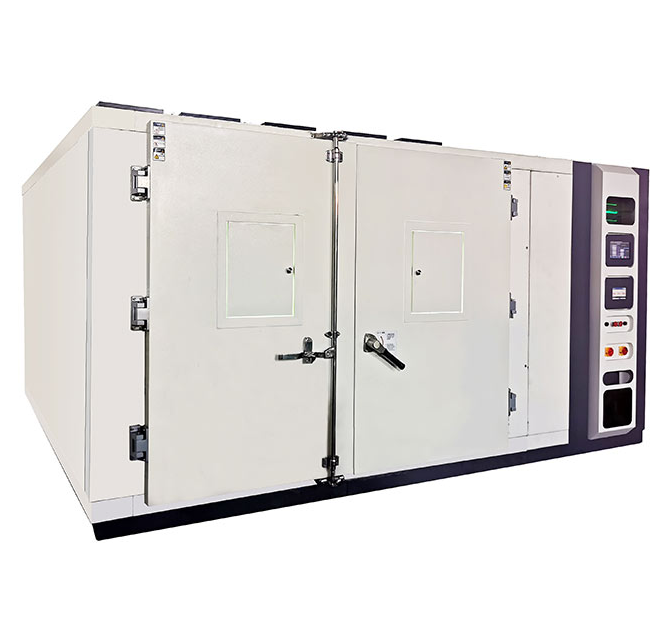
Working Principle of the BBA-Grade Steady-State Solar Simulator
A solar simulator mainly consists of three key components: the optical system, the control system, and the light source.
The optical system typically includes lenses, collimators, reflectors, and other optical components that shape and distribute the light to achieve the required irradiance and uniformity.
The control system is responsible for managing the operation of the light source, including power adjustment, switching functions, temperature regulation, and overall system monitoring.
The light source is the core component of the solar simulator. It generates artificial light with spectral characteristics that closely resemble natural sunlight, enabling accurate laboratory simulation of solar radiation conditions.
Key Features of the BBA-Grade Steady-State Solar Simulator
1. High Precision
The optical collimation system can accurately detect and control light distribution in various directions, with measurement precision reaching up to 0.02 mm/m, ensuring highly reliable test results.
2. Excellent Stability
The simulator can operate stably over a wide temperature range, making it suitable for various testing environments and long-duration experiments.
3. Low Energy Consumption
With an energy utilization efficiency exceeding 90%, the system significantly reduces operational costs while maintaining high-performance output.
4. Long Service Life
Designed for long-term continuous operation, the equipment maintains stable performance over extended periods and can achieve a service life of more than 10 years with proper maintenance.
These features make the BBA-Grade Steady-State Solar Simulator an ideal solution for photovoltaic testing, material durability studies, scientific research, and other applications requiring accurate and stable sunlight simulation.
Application Industries of the BBA-Grade Steady-State Solar Simulator
The BBA-Grade Steady-State Solar Simulator is widely used in scientific research, product development, and quality testing. By providing stable and continuous simulated sunlight, it offers a reliable platform for various experimental and testing applications.
1. Solar Cell Testing
Used to measure key performance parameters of solar cells, including photoelectric conversion efficiency, short-circuit current (Isc), and open-circuit voltage (Voc).
Long-term stable illumination conditions help evaluate the performance and durability of solar cells under real-world operating conditions.
2. Optoelectronic Material Research
Applied in the study of optoelectronic materials, including their light absorption, light emission, and other photoresponsive characteristics.
Stable illumination ensures accurate and repeatable material performance data.
3. Biochemical Research
Used to simulate sunlight conditions for biochemical processes such as photosynthesis, photocatalytic reactions, and other light-driven phenomena.
Consistent light exposure enables researchers to investigate the dynamic behavior of biochemical systems with greater accuracy.
4. Cosmetics and Skincare Industry
Utilized to evaluate the stability and effectiveness of cosmetics and skincare products when exposed to sunlight.
Stable irradiation conditions help assess sun protection performance, product durability, and potential skin reactions.
5. Environmental Research
Applied in studies related to air pollution, climate change, and other environmental issues.
Controlled and stable lighting conditions allow researchers to simulate and analyze environmental reaction processes under different scenarios.
The BBA-Grade Steady-State Solar Simulator is an essential research and testing instrument that provides stable and continuous solar radiation simulation. Its ability to reproduce sunlight under controlled laboratory conditions makes it a valuable tool for photovoltaic testing, optoelectronic material research, biochemical studies, cosmetics evaluation, and environmental science. By delivering reliable and repeatable illumination conditions, it supports accurate testing, scientific innovation, and technological advancement across a wide range of industries.
Advantages of the Steady-State Solar Simulator
A Steady-State Solar Simulator is an artificial light source system designed to replicate solar radiation under controlled laboratory conditions. Compared with non-steady-state simulators or natural sunlight, it offers a range of unique advantages.
1. Stable Illumination Conditions
One of the most significant advantages of a steady-state solar simulator is its ability to provide constant and controllable irradiance. Unlike natural sunlight, which varies due to factors such as the Earth's rotation, seasonal changes, and weather conditions, a steady-state solar simulator can maintain consistent light intensity over extended periods.
This is particularly important for experiments that require precise control of illumination parameters. For example, photovoltaic cell efficiency testing must be conducted under Standard Test Conditions (STC) to ensure the accuracy, consistency, and comparability of test results.
2. Full-Spectrum Coverage
An ideal steady-state solar simulator should closely reproduce the solar spectrum, including ultraviolet (UV), visible, and infrared (IR) wavelengths.
High-quality simulators often utilize multiple light sources or specially designed LED arrays to achieve highly accurate spectral matching across the entire solar spectrum. This full-spectrum capability is essential for studying the effects of different wavelengths on materials and biological systems. For instance, in photosynthesis research, different wavelength ranges can trigger different biological responses in plants.
3. Excellent Spatial Uniformity
A high-performance steady-state solar simulator can maintain uniform light distribution across a large irradiation area. This means that nearly every point within the test area receives the same energy density.
Uniform illumination is highly beneficial for testing large samples or multiple samples simultaneously, reducing measurement errors caused by localized irradiance variations. In applications such as large photovoltaic panel performance evaluation, a uniform lighting environment is critical for obtaining reliable results.
4. Easy Adjustment and High Repeatability
Steady-state solar simulators allow users to flexibly adjust irradiance levels and other testing parameters according to specific experimental requirements.
More importantly, the system can reproduce the same testing conditions consistently across multiple experiments. This improves both testing efficiency and result reliability. In the development of new photovoltaic and optoelectronic materials, researchers often need to evaluate the same sample under different conditions repeatedly, making adjustability and repeatability particularly valuable.
5. Independence from External Environmental Factors
Since all testing is conducted in a controlled laboratory environment, the simulator is unaffected by unpredictable outdoor conditions such as cloud cover, rain, dust, or wind.
It can operate continuously throughout the day and night, providing researchers with a stable and dependable testing platform. In addition, experiments can be started or stopped at any time, greatly enhancing scheduling flexibility and laboratory productivity.
6. Safety and Environmental Benefits
Compared with direct exposure to natural sunlight, using a steady-state solar simulator offers a safer testing environment. For example, it reduces the risk of accidental exposure to intense solar radiation during high-irradiance experiments.
Modern solar simulators are also increasingly designed with energy efficiency and environmental sustainability in mind. Many systems employ low-power, long-life LED light sources, which help reduce operating costs while minimizing energy consumption.
With its stability, precision, flexibility, repeatability, and safety, the Steady-State Solar Simulator has become an indispensable tool for researchers, engineers, and quality-control professionals. As technology continues to advance, these systems are expected to achieve even higher levels of performance and intelligence, providing stronger support for scientific discovery, renewable energy development, materials research, and countless other applications. We sincerely welcome you to leave a message or contact us directly for more detailed product information and technical support.
Operating Procedure of the BBA-Grade Steady-State Solar Simulator
A solar simulator is a device designed to replicate natural sunlight and is widely used in photovoltaic testing, material research, and various scientific applications. The operating procedure is as follows:
1. Pre-Startup Inspection
Before powering on the system, conduct a thorough inspection of the simulator. Check whether the equipment shows any signs of physical damage, verify that all power connections are secure, and ensure that all components are properly installed and firmly fastened.
2. Power-On Procedure
Turn on the main power switch according to the operating instructions provided in the user manual. Allow the system to complete its self-diagnostic process and confirm that all subsystems are functioning normally before proceeding.
3. Parameter Configuration
Set the required test parameters according to the experimental objectives. These parameters may include irradiance intensity, spectral distribution, exposure duration, and other relevant operating conditions.
4. System Warm-Up
After parameter configuration, allow the simulator to warm up for a specified period. This process enables the light source to reach a stable operating condition, ensuring that the emitted irradiance and spectral characteristics meet the required testing standards.
5. Sample Placement
Carefully place the specimen or test sample within the designated testing area. Ensure that the sample is positioned correctly so that it receives uniform illumination throughout the testing process. Proper alignment is essential for obtaining accurate and repeatable results.
6. Test Execution
Start the testing program and begin data acquisition. During the test, monitor the operating status of the simulator and record all relevant measurement data as required by the test protocol.
7. Shutdown Procedure
Once testing is completed, first switch off the light source and allow the system to cool down if necessary. Afterward, turn off the main power supply following the recommended shutdown procedure.
Safety and Data Management
Throughout operation, all safety regulations and laboratory procedures must be strictly observed to prevent accidents or equipment damage. After the test is completed, properly store the specimens and archive all test data for subsequent analysis, comparison, and reporting.
By following these procedures, the BBA-Grade Steady-State Solar Simulator can provide accurate, stable, and repeatable testing conditions, ensuring reliable experimental results across a wide range of applications.
Maintenance of the BBA-Grade Steady-State Solar Simulator
As a precision optical instrument, the solar simulator is widely used in scientific research, education, and industrial testing. The stability and accuracy of its performance are critical to obtaining reliable experimental results. Therefore, proper maintenance is essential for ensuring long-term, efficient operation. The following maintenance guidelines are intended to extend the service life of the equipment and enhance its operational efficiency through comprehensive and systematic care.
1. Environmental Control
Temperature and Humidity Management
The solar simulator should be installed in an environment with appropriate temperature and humidity conditions. It is generally recommended to maintain a room temperature of 20–25°C and a relative humidity below 60%. Excessive temperature fluctuations or high humidity levels may adversely affect electronic and optical components, potentially leading to performance degradation or equipment damage. Air conditioners and dehumidifiers can be used to regulate environmental conditions, and these parameters should be monitored regularly.
Dust and Contamination Prevention
The laboratory should be kept clean to minimize airborne dust particles. When the equipment is not in use, a protective dust cover should be applied to prevent dust accumulation on optical components, which could affect light transmission and measurement accuracy.
Vibration Prevention
The solar simulator should be installed on a stable workbench and located away from vibration sources such as heavy machinery or frequently operated doors. Excessive vibration may cause optical misalignment and affect test results.
2. Optical System Maintenance
Regular Cleaning
Optical lenses and mirrors are among the most critical components of the solar simulator. They should be cleaned periodically using specialized lens tissue or a soft, lint-free cloth to remove fingerprints, dust, and other contaminants. Abrasive materials and organic solvents should never be used, as they may scratch or damage optical surfaces.
Calibration and Adjustment
Over time, the light source intensity and spectral distribution may drift from their original specifications. Regular professional calibration should be performed to ensure compliance with testing standards. The optical path should also be inspected and adjusted as necessary to maintain proper beam collimation and alignment.
Light Source Replacement
If a noticeable decrease in brightness or instability of the light source is observed, the lamp or LED module should be replaced promptly. Only manufacturer-recommended models and specifications should be used to maintain accurate solar spectrum simulation.
3. Electrical System Inspection
Stable Power Supply
A stable and reliable power source is essential for proper operation. Voltage fluctuations should remain within the allowable range specified by the manufacturer. The use of a voltage stabilizer or an uninterruptible power supply (UPS) is recommended to protect the equipment from sudden power interruptions.
Wiring Inspection
Power cables and signal cables should be inspected regularly for signs of aging, wear, or damage. Any defective wiring should be replaced immediately to eliminate potential safety hazards.
Cooling System Maintenance
Cooling fans and air filters should be cleaned periodically to ensure adequate ventilation and heat dissipation. Effective cooling helps prevent overheating, which can accelerate component aging and increase the risk of equipment failure.
4. Software and Data Management
Software Updates
Firmware and software should be checked regularly and updated whenever new versions become available. Updates often include performance improvements, enhanced functionality, and bug fixes.
Data Backup
Important test data should be backed up regularly to external storage devices or secure data management systems to prevent accidental loss.
Operator Training
Operators should receive periodic training to ensure familiarity with equipment functions, operating procedures, and safety requirements. Proper training reduces the likelihood of operational errors and equipment damage.
5. Safety Precautions
Personal Protection
Before performing any maintenance or repair work, the power supply must be disconnected. Appropriate personal protective equipment (PPE), such as anti-static wrist straps and safety glasses, should be worn when necessary.
Emergency Response
Operators should be familiar with the location of emergency stop buttons and understand the procedures for responding to emergencies such as electrical faults, overheating, or fire incidents.
Professional Repair Services
For complex malfunctions or internal component failures, professional service personnel should be contacted. Unauthorized disassembly or repair attempts may result in further damage and void warranty coverage.
The maintenance of a solar simulator is a comprehensive process involving environmental control, optical system care, electrical inspections, software management, and safe operating practices. By implementing these detailed maintenance procedures, users can significantly improve equipment reliability, extend service life, and ensure stable, accurate illumination conditions for research, testing, and production activities.We warmly welcome your inquiries and encourage you to contact us directly. Our team will be pleased to provide detailed product information, technical documentation, and professional support tailored to your specific requirements.
Previous: What is a Tensile and Shear Tester?
N e x t : What are the applications and features of Porton Thermal Manikin Equipment?
