





What is a Medical Face Mask Differential Pressure Tester?
2026/06/03
Share:

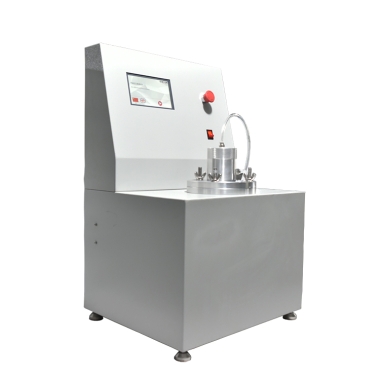
Working Principle of the Medical Face Mask Differential Pressure Tester
The Medical Face Mask Differential Pressure Tester evaluates the breathability of mask materials by simulating the airflow passing through a face mask and accurately measuring a key performance parameter—the differential pressure (Delta P). The operating principle is described as follows:
Airflow Control
The tester utilizes a suction-type air pump to generate a stable airflow. An integrated flowmeter precisely regulates the airflow rate within an adjustable range of 0–10 L/min, ensuring that a constant volume of air passes through the mask specimen during testing.
Sample Fixation
A specially designed specimen holder securely clamps the mask sample using a face-sealing mechanism to ensure airtightness throughout the test. This prevents air leakage that could affect measurement accuracy. The effective test area is typically a circular section with a diameter of 25 mm.
Differential Pressure Measurement
As the controlled airflow passes through the mask material, the material creates resistance to the airflow. A high-resolution differential pressure sensor, typically featuring a measurement range of 0–500 Pa and an accuracy of ±0.5%, detects the pressure difference (Delta P) generated across the specimen due to this airflow resistance.
Data Processing and Display
The measured differential pressure data are displayed in real time through a color touchscreen control system. The tester also supports data storage and thermal printing for record keeping and quality documentation. The resulting differential pressure value is used to assess the breathability of the mask material. Generally, a lower differential pressure indicates better air permeability, resulting in improved breathing comfort and enhanced wearer experience.
In summary, the Medical Face Mask Differential Pressure Tester provides an accurate and reliable method for evaluating the balance between breathability and protective performance, making it an essential instrument for medical mask quality control, product development, and standards compliance testing.
Features of the Medical Face Mask Differential Pressure Tester
1. Advanced Suction-Type Air Pump System
The suction-type air pump adopts advanced airflow control technology, delivering stable and continuous airflow with extremely low operating noise. This not only improves the comfort of the testing environment but also enhances measurement stability and repeatability.
2. High-Precision Imported Flowmeter
Equipped with a high-accuracy imported flowmeter, the system can monitor and precisely regulate the airflow rate in real time. This ensures reliable and consistent test conditions, providing dependable data support for various testing applications.
3. High-Resolution Differential Pressure Sensor
The tester incorporates a high-resolution differential pressure sensor with a clear digital display, allowing users to observe and accurately measure pressure variations in real time. This facilitates efficient data analysis, monitoring, and record keeping.
4. Specially Designed Sample Clamping Fixture
The dedicated specimen holder features a well-engineered structure that securely and evenly clamps the test sample. This prevents specimen movement, loosening, or displacement during testing, thereby ensuring excellent test repeatability and measurement accuracy.
5. Data Storage and Printing Functions
The system supports comprehensive test data storage, retrieval, and thermal printing functions. Users can easily archive test results, trace historical records, and generate formal test reports, significantly improving operational efficiency and data management convenience.
Key Advantages
Stable and low-noise airflow generation
Accurate and real-time flow control
High-precision differential pressure measurement
Reliable specimen sealing and fixation
User-friendly touchscreen operation
Data storage, export, and printing capabilities
High repeatability and testing accuracy
Suitable for quality control, R&D, and standards compliance testing of medical face masks
These features make the Medical Face Mask Differential Pressure Tester an essential instrument for evaluating mask breathability and ensuring compliance with relevant medical mask performance standards.
Five Key Application Scenarios of the Medical Face Mask Differential Pressure Tester
1. Face Mask Manufacturing Facilities: Real-Time Quality Control for Mass Production
In large-scale mask manufacturing environments, production lines can produce thousands of masks per hour. Traditional manual sampling inspections are often inefficient and may fail to identify defective products in time. The Medical Face Mask Differential Pressure Tester can be integrated directly into the production line as an online inspection system.
As masks pass through the testing station on the conveyor belt, the tester automatically secures each sample and introduces a standardized airflow through the mask material. The system continuously measures the differential pressure across the mask and compares the result with predefined acceptance criteria. If the measured value exceeds the allowable limit, the tester immediately triggers an alarm and activates the rejection mechanism to automatically remove the nonconforming product from the production line.
By implementing automated differential pressure testing, manufacturers can significantly reduce defect rates, improve product consistency, minimize production losses, and ensure compliance with regulatory requirements.
2. Third-Party Testing Laboratories: Providing Reliable Compliance Verification
Third-party testing organizations frequently receive testing requests from mask manufacturers, distributors, procurement agencies, and regulatory authorities. These laboratories must evaluate a wide range of products, including medical masks, civilian masks, and industrial respiratory protection products.
To meet diverse testing requirements, the differential pressure tester supports multiple international and regional testing standards. Operators can quickly switch between different test methods according to the target market requirements. The system also provides comprehensive data traceability by automatically recording critical testing parameters, including:
Test date and time
Airflow rate
Differential pressure value
Operator information
Sample identification
These records can be incorporated into formal testing reports, supporting product certification, quality audits, and regulatory compliance verification.
3. Research and Development Laboratories: Optimizing Comfort and Protection
For mask manufacturers developing new products, achieving an optimal balance between filtration efficiency and breathing comfort is a key design challenge. The Medical Face Mask Differential Pressure Tester provides precise performance data that supports product innovation and material selection.
For example, R&D teams can compare the differential pressure performance of various filter material combinations and mask structures. By analyzing airflow resistance data, engineers can identify configurations that reduce breathing resistance while maintaining the required filtration efficiency.
The tester can also evaluate mask performance under different environmental conditions, such as elevated humidity levels or extended wear periods. This enables researchers to identify potential design limitations early in the development process and accelerate product optimization.
4. Regulatory Inspections and Market Surveillance: Protecting Consumer Safety
Government agencies and market surveillance authorities conduct routine inspections to verify that masks sold in retail channels meet applicable quality standards. In these situations, portable differential pressure testers provide an effective solution for rapid field inspections.
Lightweight and battery-powered models allow inspectors to perform on-site testing without requiring a fully equipped laboratory. Samples can be collected directly from retail stores, pharmacies, or distribution centers and evaluated within minutes.
If abnormal differential pressure values are detected, the products can be flagged for further laboratory investigation. This rapid screening capability helps regulators identify noncompliant products quickly and prevent substandard masks from reaching consumers.
5. Cross-Border E-Commerce and Export Compliance: Facilitating International Market Access
When exporting face masks to international markets, manufacturers must comply with the specific performance requirements of the destination country or region. Differential pressure limits may vary depending on local regulations and certification standards.
The Medical Face Mask Differential Pressure Tester serves as a critical pre-shipment verification tool. Before products are exported, manufacturers can perform internal compliance testing according to the destination market's requirements to ensure that the masks meet the applicable breathability specifications.
By identifying potential compliance issues before shipment, companies can reduce the risk of customs delays, product rejections, recalls, and reputational damage while improving overall export success rates.
From manufacturing and product development to regulatory enforcement and international trade, the Medical Face Mask Differential Pressure Tester plays a vital role throughout the entire mask lifecycle. Through application-specific testing capabilities and accurate performance evaluation, it helps ensure that face masks deliver the required balance of protection, comfort, quality, and regulatory compliance in every stage of the supply chain.
Maintenance and Care of the Medical Face Mask Differential Pressure Tester
Proper maintenance of the Medical Face Mask Differential Pressure Tester is essential for ensuring long-term operational stability, extending equipment service life, and maintaining the accuracy and reliability of test results.
Regular Cleaning of the Sample Clamping Device
Routine cleaning of the sample clamping mechanism is one of the most important maintenance procedures. During testing, the fixture comes into direct contact with various mask materials and may gradually accumulate dust, fibers, and other contaminants. If these impurities are not removed promptly, they can affect the positioning and sealing of the test specimen, resulting in inaccurate measurements.
It is recommended to gently remove surface dust using a soft brush and then wipe the fixture with a clean, damp cloth. Keeping the clamping device clean helps ensure consistent sample fixation and reliable test performance.
Inspection and Replacement of Air Supply Filters
The filtration system within the air supply circuit requires special attention. Filters are designed to remove contaminants from the incoming air, ensuring that only clean air enters the testing system. A clogged or contaminated filter can negatively affect airflow stability and quality, leading to inaccurate differential pressure measurements.
Operators should regularly inspect the condition of the filters. When discoloration, excessive contamination, or signs of blockage are observed, the filter should be replaced immediately to maintain optimal system performance and measurement accuracy.
Periodic Performance Verification and Calibration
Routine performance verification is another critical aspect of preventive maintenance. Based on the instrument's operating frequency and usage conditions, comprehensive performance checks should be conducted at regular intervals.
This process typically involves:
Testing with certified reference samples or standard materials.
Comparing measured values against known standard values.
Evaluating the operational condition of key system components.
Verifying the accuracy and repeatability of measurement data.
If significant deviations are detected, the instrument should be recalibrated and adjusted promptly to ensure continued compliance with testing requirements and performance specifications.
Best Practices for Long-Term Reliability
To maximize the service life and testing accuracy of the instrument, users should also:
Store the equipment in a clean, dry environment when not in use.
Avoid exposure to excessive humidity, dust, corrosive gases, or extreme temperatures.
Periodically inspect tubing, seals, sensors, and electrical connections for signs of wear or damage.
Follow the manufacturer's recommended maintenance and calibration schedule.
Maintain detailed records of cleaning, calibration, inspections, and component replacements for traceability and quality management purposes.
Future Outlook
As face mask technologies continue to evolve, higher demands will be placed on testing equipment in terms of accuracy, functionality, automation, and data management capabilities. Future generations of Medical Face Mask Differential Pressure Testers are expected to offer more precise measurements, enhanced testing features, and smarter operational interfaces to meet the changing needs of the mask industry.
These advancements will help manufacturers develop safer, more comfortable, and more reliable mask products while supporting increasingly stringent quality and regulatory requirements. Ultimately, high-quality testing equipment will continue to play a vital role in safeguarding respiratory health and ensuring consumer confidence in protective face masks.We sincerely welcome your inquiries and feedback. Please feel free to leave a message or contact us directly for more detailed product information, technical specifications, and customized testing solutions.
Previous: What is the test for aerosols?
N e x t : What is Spinneret Inspection Microscope?
