





What is the test for aerosols?
2026/06/03
Share:

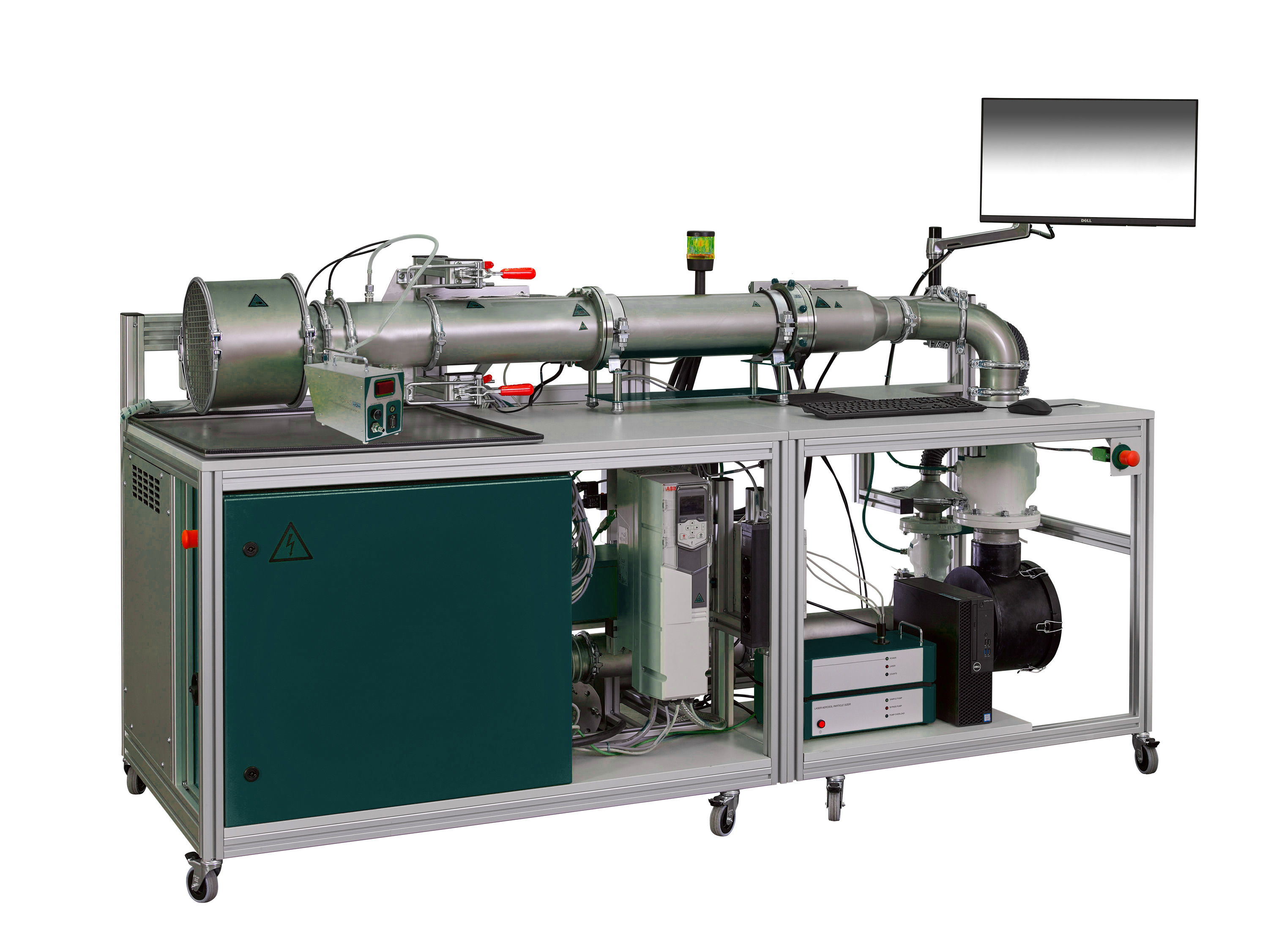
Technical Features of the Aerosol Sensor Test System
The technical features of an Aerosol Sensor Test System vary depending on the specific application, such as environmental monitoring, bioaerosol detection, or industrial dust measurement. However, the system typically incorporates the following key characteristics:
Multi-Modal Sensor Calibration Capability
Supports the simultaneous calibration and cross-validation of various sensing technologies, including light scattering, laser-induced fluorescence (LIF), electrical mobility classification, and mass concentration measurement methods such as Tapered Element Oscillating Microbalance (TEOM).
Enables comprehensive performance evaluation across different sensor principles.
High-Precision Reference Environment Control
Equipped with integrated temperature and humidity regulation, stable airflow control, clean sheath-air isolation, and controllable aerosol generators.
Capable of generating a wide range of test aerosols, including DOP, NaCl, oil mist, PSL particles, and bacterial aerosol simulants, ensuring highly repeatable and reliable testing conditions.
Real-Time Synchronized Data Acquisition
Simultaneously records sensor outputs and reference instrument data at sampling frequencies of 1 Hz or higher.
Measures and analyzes particle size distributions (typically 0.1–20 μm), particle number concentrations, mass concentrations (mg/m³), and other key aerosol parameters.
Supports advanced statistical analysis, including mean value, standard deviation, response time, sensitivity, repeatability, and detection limit evaluation.
Automation and Intelligent Diagnostics
Integrates dedicated software platforms for automated zero-point and span calibration, leak testing, sensor drift compensation, and fault diagnostics.
Provides real-time performance monitoring, alarm functions, and predictive maintenance capabilities.
Supports compliance testing in accordance with relevant international and industry standards.
Modular and Portable Design
Features a scalable architecture that can accommodate single sensors or multi-sensor arrays.
Certain configurations are designed as portable or battery-powered systems, making them suitable for both laboratory-based testing and on-site field verification.
Offers flexible customization to meet the requirements of different testing applications and operating environments.
Functions and Applications of the Aerosol Sensor Test System
The primary function of an Aerosol Sensor Test System is to generate a controlled aerosol environment and simultaneously compare the output of the sensor under test with reference measurements, ensuring its accuracy, response time, and long-term stability.
Functions:
Generates stable and repeatable aerosols, such as standard PSL (Polystyrene Latex) particles, salt aerosols, oil mists, or bioaerosol simulant particles, and exposes the sensor under test to controlled aerosol concentrations, particle size distributions, and airflow conditions.
Simultaneously acquires data from reference instruments for comparison and performance analysis.
Supports automated calibration, sensitivity testing, cross-sensitivity/interference evaluation, and environmental impact testing under varying temperature and humidity conditions.
Applications:
Sensor calibration and performance validation during the research and development stage.
Quality control and factory acceptance testing before product shipment.
On-site verification of environmental monitoring and occupational health monitoring equipment.
Laboratory research, such as validating the effectiveness of bioaerosol detection technologies.
Regulatory compliance and certification testing to ensure aerosol sensors provide reliable and accurate data under real-world operating conditions.
Industries Served by the Aerosol Sensor Test System
Industrial Safety and Occupational Health
Used to monitor dust and hazardous aerosol concentrations in workshops, mines, tunnels, and other industrial environments.
Supports regulatory compliance testing, workplace safety assessments, and alarm system validation.
Environmental Monitoring and Air Quality Management
Applied in urban air monitoring stations, indoor air quality assessments, and pollution source tracking, such as construction sites and waste incineration plants.
Enables calibration and verification of real-time particulate matter sensors used for environmental monitoring.
Cleanrooms, Semiconductor, and Pharmaceutical Industries
Ensures compliance with ISO cleanroom standards and other particle contamination control requirements.
Used for sensor calibration, validation, and failure analysis in highly controlled manufacturing environments.
Automotive and Battery Industries
Evaluates sensors designed to detect aerosols generated during the early stages of thermal runaway events, such as nanoparticles released from lithium-ion battery fires.
Supports the integration of aerosol sensors into Battery Management Systems (BMS) and vehicle safety systems.
Fire Protection and Smoke Detector Manufacturing
Calibrates and validates optical and ionization smoke sensors.
Uses standard test aerosols, such as DOP and DEHS, to simulate the response characteristics of real fire-generated smoke.
Healthcare and Biosafety
Measures bacterial and viral aerosol concentrations in hospitals, laboratories, and other sensitive environments.
Used to verify ventilation system performance and support infection prevention and control programs.
HVAC and Air Purification Industries
Tests the accuracy, sensitivity, and service life of aerosol sensors integrated into residential and commercial air purifiers, ventilation systems, and fresh-air units.
Assesses sensor performance under various operating conditions.
Scientific Research and Metrology
Utilized by universities, research institutes, and third-party testing laboratories for aerosol sensor development and performance evaluation.
Supports comparative testing and compliance verification according to international standards, such as ISO and ASHRAE requirements.
Operating Procedure of the Aerosol Sensor Test System
1. Preparation
Identify the type and specifications of the aerosol sensor to be tested and verify that its calibration certificate is valid.
Connect the system to a stable power supply and data acquisition platform.
Ensure that the ambient temperature and relative humidity are within the specified operating range, typically 15–30°C and below 80% RH.
Avoid sources of strong electromagnetic interference that may affect measurement accuracy.
2. Warm-Up and Calibration
Power on the system and allow it to warm up according to the manufacturer's instructions, typically for 5–30 minutes.
Perform zero-point and span calibration using standard aerosols of known concentration if the system supports calibration functions.
For portable systems, an automatic baseline correction procedure may be required before testing.
3. Sampling Configuration
Set the sampling flow rate, sampling duration, and data logging interval according to the test requirements.
Ensure that the sampling inlet is unobstructed and free from condensation, dust accumulation, or oil contamination, particularly for laser-scattering aerosol sensors.
When measuring aerosol particle size distributions, configure a dryer or dilution system as needed to minimize moisture interference.
4. Test Operation
Launch the testing software and start the sampling process.
Monitor key parameters in real time, including particle number concentration, mass concentration, and particle size distribution.
Avoid exposing the sensor to excessively high humidity conditions (>90% RH) or direct aerosol spray streams, as these may cause sensor saturation, measurement errors, or permanent damage.
5. Data Storage and Post-Processing
Stop sampling after the test is completed and export the raw measurement data.
Apply temperature and pressure corrections when necessary.
Compare the test results with reference instruments, such as Beta Attenuation Monitors (BAM) or other certified aerosol measurement systems, to verify accuracy and performance.
Clean the sampling filter, optical window, and sensor inlet using lint-free cloths and compressed air. The use of solvents is generally not recommended unless specified by the manufacturer.
6. Shutdown and Maintenance
Before powering down, purge the sensor with clean air for several minutes to remove any residual aerosol particles.
Regularly replace filters and inspect the condition of pumps, fans, and airflow control components.
Follow the manufacturer's recommended maintenance schedule and arrange factory recalibration or accredited laboratory calibration at regular intervals, typically every 3–6 months, depending on application requirements and usage frequency.
Maintenance Recommendations for the Aerosol Sensor Test System
Proper maintenance of an Aerosol Sensor Test System should focus on the sampling lines, sensors, filtration components, and calibration stability to ensure long-term measurement accuracy and reliable operation. The following recommendations are advised:
Sensor Protection
Never allow high-concentration, sticky, corrosive, oily, or contaminating aerosols, such as cooking fumes, toner particles, or untreated biological aerosols, to enter the sensor directly.
In the event of accidental exposure, immediately purge the system with clean air and follow the manufacturer's recovery procedures.
For optical sensors, such as laser-scattering aerosol sensors, clean the transmitter and receiver windows every three months using approved lens tissue lightly moistened with isopropyl alcohol. Wipe gently in a single direction and avoid direct contact with sensitive optical surfaces.
For electrical mobility or charge-based sensors, prolonged operation in environments with relative humidity above 80% RH should be avoided to prevent performance degradation.
Airflow System Sealing and Leak Prevention
Inspect the integrity of tubing, fittings, valves, and connections on a monthly basis using a soap-bubble leak test or nitrogen pressure-hold method.
Replace aged silicone or fluororubber O-rings as required to maintain airtightness.
Verify that all filters are properly installed and secured to prevent bypass airflow that could affect test accuracy.
Long-Term Storage
Before storage, thoroughly purge the sampling lines and internal airflow passages with clean air to remove residual aerosol particles.
Store the system in a dry, dust-free environment with relative humidity below 60% RH and at normal room temperature.
For systems incorporating electrochemical sensing elements, power the device for approximately 30 minutes each month to maintain sensor polarization and operational readiness.
For battery-powered equipment using lithium batteries, recharge the battery to approximately 50% capacity every three months during storage.
Maintenance Records and Spare Parts Management
Maintain a comprehensive electronic maintenance log documenting all calibration activities, cleaning procedures, repairs, component replacements, and fault events.
Keep critical spare parts in stock, including aerosol generator filter elements, replacement pump diaphragms, and manufacturer-approved filters.
Do not mix non-original sensors, accessories, or calibration sources with the system, as this may result in calibration errors, reduced measurement accuracy, or incorrect algorithm performance.
Importance of the Aerosol Sensor Test System
The primary importance of an Aerosol Sensor Test System lies in its ability to ensure the accuracy, reliability, and regulatory compliance of aerosol detection devices. Its performance directly impacts public health, industrial safety, environmental monitoring effectiveness, and biosafety protection.
Ensuring Measurement Accuracy and Reliable Response
Aerosol sensors must accurately detect and quantify micron- and submicron-sized particles under complex real-world conditions. An Aerosol Sensor Test System utilizes standardized aerosol sources, such as vibrating mesh nebulizers and certified particle generators, to calibrate sensor sensitivity, response time, and interference resistance. This process minimizes the risk of false alarms and missed detections, ensuring dependable sensor performance in critical applications.
Supporting Safety Standards and Regulatory Compliance
In industries such as healthcare, aviation, fire protection, and cleanroom manufacturing, aerosol sensors must comply with stringent international standards and certification requirements, including UL, EN, and ISO specifications. For example, smoke detection devices often require compliance testing under standards such as UL 217. An Aerosol Sensor Test System provides a repeatable, traceable, and controlled testing environment, making it an essential component of product validation and regulatory approval before market release.
Optimizing Resource Utilization and Operational Efficiency
In food processing, pharmaceutical production, agricultural spraying, and disinfection systems, aerosol-based delivery processes rely heavily on accurate sensor feedback for dosage control. Systems such as infrared-controlled peracetic acid spraying solutions require precise aerosol measurements to maintain effectiveness while minimizing chemical consumption. By validating sensor performance and closed-loop control algorithms, an Aerosol Sensor Test System helps reduce waste, improve process efficiency, and ensure that sterilization or treatment targets are consistently achieved.
Advancing Research, Development, and Quality Control
From environmental monitoring stations to wearable health-monitoring devices, aerosol sensors require rigorous testing throughout development and mass production. Automated test systems enable manufacturers to identify defective units, evaluate long-term stability, and assess environmental influences such as temperature and humidity drift. Without effective testing and validation, large-scale field failures may occur, compromising data reliability, product quality, and user safety.
Addressing Emerging Public Health and Biosafety Challenges
The COVID-19 pandemic and other airborne infectious diseases have highlighted the critical role of aerosol transmission in public health. Disease control agencies, research laboratories, and healthcare facilities increasingly depend on reliable aerosol detection technologies for risk assessment and infection control. Aerosol Sensor Test Systems verify sensor performance under realistic conditions, including low aerosol concentrations and high-humidity environments, providing a crucial foundation for biosafety monitoring and protection.
In essence, an aerosol sensor that has not undergone rigorous testing and comprehensive validation is comparable to navigating without vision in a critical environment. The true value of an aerosol sensor extends far beyond its ability to detect particles—it must also deliver accurate measurements, trustworthy data, and long-term operational reliability.We warmly welcome users, partners, and industry professionals to contact us for further information. Based on your specific application requirements, we can provide detailed technical documentation, performance data, and customized testing solutions to help you achieve reliable and compliant aerosol sensing performance.
Previous: How to test the tensile strength of fabric?
N e x t : What is a Medical Face Mask Differential Pressure Tester?
