





What is a Garment Fabric Wet Adhesion Performance Tester?
2026/06/10
Share:

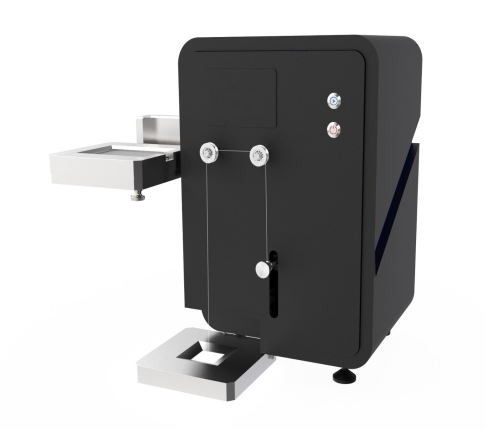
Why Is Wet Cling Property Testing of Apparel Fabrics Necessary
Wet cling property testing of apparel fabrics is conducted to objectively quantify the degree of adhesion between textiles and human skin after the fabrics become saturated with sweat or other liquids. The results are directly related to wearing comfort, particularly the unpleasant sensation of fabrics sticking to the body during perspiration. The test provides scientific support for functional fabric development, quality control, and the establishment of standardized evaluation methods.
1. Evaluating Wear Comfort
When fabrics become wet, they tend to adhere to the skin, producing sensations of stickiness, clinginess, and restriction that can significantly reduce both physiological and psychological comfort. This issue is particularly important for garments worn in close contact with the body, such as sportswear, underwear, activewear, and performance apparel.
Wet cling testing objectively characterizes a fabric's resistance to skin adhesion by measuring parameters such as maximum cling force, adhesion work, and other related indicators. These quantitative data provide a reliable basis for assessing the "anti-cling" performance of textiles under wet conditions.
2. Supporting Product Development and Innovation
The test serves as an important tool for apparel brands, textile manufacturers, and research institutions seeking to improve product performance and wearer comfort.
By analyzing wet cling characteristics, developers can optimize:
Fiber selection and modification, including hydrophilic and hydrophobic treatments;
Fabric structures, such as knitted, woven, or multilayer composite constructions;
Finishing technologies designed to enhance moisture management;
Functional textile designs that offer rapid moisture transport, quick drying, and reduced skin adhesion.
The resulting data facilitate the development of high-performance fabrics that remain comfortable even during intense physical activity or prolonged wear.
3. Establishing Unified and Standardized Evaluation Methods
Traditionally, the assessment of wet cling sensations has relied heavily on subjective wearer trials, which are often influenced by individual perceptions and testing conditions.
In recent years, Chinese group standards and forthcoming industry standards have clearly defined testing methods for evaluating wet cling properties. Wet cling property testers provide a standardized and objective means of conducting compliance testing, eliminating the variability associated with subjective evaluations.
As a result, these instruments have become indispensable tools for generating reliable and reproducible test results.
4. Enhancing Market Credibility and Consumer Confidence
Marketing claims such as "anti-cling," "non-sticky when sweating," and "enhanced comfort" have become increasingly common in the textile and apparel industry. However, without scientific verification, such claims may be misleading.
Wet cling property testing provides repeatable and comparable performance data that support product claims with objective evidence. This helps manufacturers avoid false advertising, strengthens consumer trust, safeguards consumer rights, and promotes fair competition and industry standardization.
5. Filling a Critical Gap in Moisture Comfort Evaluation
Wet cling testing differs fundamentally from other textile moisture-related performance evaluations, such as moisture absorption, moisture vapor transmission, water repellency, or waterproofness.
Rather than focusing solely on how fabrics absorb, transfer, or resist moisture, wet cling testing specifically investigates the mechanical adhesion behavior occurring at the fabric–skin interface in the presence of liquid water.
This aspect has long been overlooked in conventional comfort assessments, yet it represents a critical component of thermo-physiological comfort evaluation. By addressing this gap, wet cling testing provides a more comprehensive understanding of how fabrics perform under real perspiration conditions.
In summary, wet cling property testing of apparel fabrics is essential for objectively evaluating the discomfort associated with fabric adhesion under wet conditions. It plays a vital role in improving wearer comfort, guiding the development of functional textiles, supporting standardized quality assessment, validating product performance claims, and advancing the scientific evaluation of thermo-moisture comfort.By transforming subjective perceptions of "sticky" or "clingy" sensations into measurable and reproducible data, this testing method enables the textile industry to design and manufacture garments that deliver superior comfort and performance in real-world wearing environments.
The Importance of the Wet Cling Property Tester for Fabrics to Consumers
The significance of the Wet Cling Property Tester for Fabrics to consumers lies in its ability to objectively quantify the degree of discomfort caused when clothing adheres to the skin after becoming wet from sweat or other liquids. The test results are directly related to wearing comfort and the authenticity of functional performance claims, helping consumers identify truly high-quality fabrics that offer moisture management and reduced cling. In doing so, the instrument minimizes the influence of marketing hype and helps ensure a more comfortable experience during both daily activities and exercise.
1. Ensuring Genuine Wearing Comfort
One of the primary concerns for consumers is whether garments remain comfortable after perspiration. A fabric that feels soft and breathable when dry may become sticky and uncomfortable once wet.
The Wet Cling Property Tester simulates the interaction between perspiration-wetted fabrics and human skin by measuring parameters such as maximum cling force and adhesion work. These objective indicators reveal the actual tendency of a fabric to stick to the body.
As a result, consumers can distinguish between fabrics that merely absorb moisture and those that genuinely provide a dry, non-clinging wearing experience. Some textiles may absorb sweat effectively but dry slowly, causing them to cling tightly to the skin and create sensations of heat buildup, friction, and discomfort. Wet cling testing exposes these hidden performance differences and reflects the true anti-cling capability of the material.
2. Supporting the Credibility of Functional Claims
Claims such as "moisture-wicking," "quick-drying," "non-clinging," and "dry comfort" are increasingly common in the apparel market. However, without scientific evidence, consumers may find it difficult to determine whether these claims accurately represent product performance.
Based on standardized testing methods and performance grading criteria, wet cling evaluations provide reliable scientific evidence to support promotional statements such as "sportswear that won't stick to the body" or "underwear that stays dry and comfortable."
Objective testing data help reduce the risk of consumers being misled by exaggerated advertising and encourage greater transparency and honesty within the textile industry.
3. Helping Consumers Choose Products That Match Their Needs
Different lifestyles and activity levels require different levels of wet comfort performance.
For example, office workers and commuters who perspire lightly may prioritize softness and low cling during everyday wear, while athletes and fitness enthusiasts often require fabrics that combine rapid drying with effective anti-cling performance during intense physical activity.
Wet cling test data enable manufacturers to classify and optimize products according to their intended applications, allowing consumers to make more informed purchasing decisions and select garments that best suit their personal needs.
4. Indirectly Promoting Health and Safety
Fabrics that exhibit strong wet adhesion often retain sweat for extended periods and may possess poor moisture transmission characteristics. Such conditions can create a warm and humid microenvironment that encourages bacterial growth and increases the likelihood of skin irritation.
By identifying fabrics with superior wet cling performance—characterized by lower adhesion forces and easier separation from the skin—manufacturers can develop garments that help maintain a drier microclimate next to the body.
For consumers, this contributes to improved skin comfort and may help reduce the risk of allergies, chafing, friction-related injuries, and other forms of skin discomfort associated with prolonged exposure to damp clothing.
In summary, the Wet Cling Property Tester for Fabrics plays an important role in protecting consumer interests by transforming subjective sensations of "stickiness" and "clinginess" into objective, measurable, and reproducible performance data. It enables consumers to identify genuinely comfortable and high-performing textiles, supports the credibility of functional product claims, facilitates more targeted purchasing decisions, and indirectly promotes healthier wearing conditions.Ultimately, this testing technology encourages the development of apparel that delivers not only superior functionality but also a more comfortable, trustworthy, and satisfying wearing experience for consumers.
Detailed Working Principle of the Wet Cling Property Tester for Fabrics
The Wet Cling Property Tester for Fabrics is designed to evaluate the sensory discomfort caused when textiles adhere to human skin under sweaty or humid conditions, commonly referred to as the wet cling or sticky-to-skin sensation. By simulating the microenvironment created by perspiration and quantifying the interaction forces between fabrics and a skin-like surface, the instrument provides an objective assessment of the wet comfort performance of textile materials.
Its operating principle mainly consists of the following key stages:
1. Simulated Skin System
The tester is equipped with a specially designed simulated skin platform, typically manufactured from synthetic leather or other skin-mimicking materials to replace the variability associated with human subjects.
The surface of the simulated skin is often engineered with microporous structures and integrated with a precision microfluidic supply system, such as a syringe pump. This system delivers liquid to the skin surface at a predetermined rate, accurately reproducing the perspiration process of the human body.
By controlling the amount and flow rate of the liquid, the instrument creates repeatable wet conditions that closely resemble real wearing situations.
2. Dynamic Liquid Transport Process
During testing, the fabric specimen is secured within a rigid sample holder connected to a force measurement system and brought into contact with the wetted simulated skin surface.
At this stage, the fabric's moisture-related properties—including water absorption, moisture transport, and drying behavior—directly influence the distribution of liquid at the fabric–skin interface.
High-performance fabrics with efficient one-way moisture transport capabilities rapidly transfer liquid away from the skin-contact side toward the outer surface, thereby reducing moisture accumulation at the interface. In contrast, fabrics with poor moisture management tend to retain water near the contact zone, increasing the likelihood of wet cling.
3. Force Application and Data Acquisition
The instrument typically employs either a friction force measurement method or an adhesion/peeling force measurement method to quantify the interaction between the fabric and the simulated skin.
Using a mechanical arm or reciprocating sliding mechanism, the fabric specimen is periodically pulled, pushed, or moved back and forth across the simulated skin under a specified contact pressure.
As the fabric absorbs moisture, the presence of liquid between the textile and the skin surface generates capillary forces and surface tension effects. These forces cause the fabric to adhere more closely to the skin and create resistance during movement or separation.
A high-precision force sensor integrated into the sample fixture continuously records force changes throughout the testing process. Depending on the selected test method, the instrument can determine parameters such as:
Maximum friction force;
Average friction force;
Maximum adhesion force;
Average peeling force;
Adhesion work or separation energy;
Force–displacement curves throughout the testing cycle.
These measurements provide an objective representation of the degree of stickiness experienced by wearers under wet conditions.
4. Quantification of Results and Comfort Evaluation
Beyond measuring instantaneous force values, the Wet Cling Property Tester can evaluate how wet cling behavior evolves under different environmental and physiological conditions.
By adjusting variables such as:
Ambient temperature;
Relative humidity;
Simulated sweating rate;
Liquid supply volume;
Contact duration;
Testing time intervals,
the instrument can generate comprehensive moisture–mechanical response curves that illustrate changes in fabric cling behavior throughout different stages of perspiration.
Generally, lower force values indicate that the fabric is less likely to adhere to the skin, suggesting superior wet comfort and a more pleasant wearing experience. Conversely, higher force values signify stronger adhesion, meaning that the fabric is more prone to sticking to the body and causing sensations of clamminess, dampness, and discomfort.
In summary, the Wet Cling Property Tester for Fabrics transforms the subjective sensation of "wet stickiness" into objective and quantifiable data through a scientifically controlled testing process. By integrating a simulated skin system, precision liquid delivery, force measurement technology, and dynamic environmental control, the instrument provides a comprehensive evaluation of fabric performance under realistic perspiration conditions.The resulting data not only support textile research and product development but also serve as a valuable basis for quality control, performance comparison, and the design of next-generation functional fabrics that deliver enhanced comfort in real-world applications.
How Does the Wet Cling Property Tester for Fabrics Operate
The Wet Cling Property Tester for Fabrics evaluates the wet cling behavior of textiles by simulating the complete process in which a wetted fabric is separated from a skin-like surface. During this process, the instrument measures and records the maximum adhesion force in real time with high precision, thereby providing a scientific and objective characterization of a fabric's wet cling performance.
1. Specimen Preparation
The testing procedure begins with specimen preparation. Pre-cut fabric samples of specified dimensions and shapes—typically circular or square—are placed horizontally and secured flat on a dedicated specimen holder.
A predetermined quantity of testing liquid, such as synthetic sweat containing 9 g/L sodium chloride or distilled water, is then uniformly applied to the fabric according to the relevant testing standard. The wetted specimen is allowed to stand for a specified conditioning period to ensure that the liquid is evenly distributed throughout the textile structure and that a stable wet equilibrium state is achieved.
Proper specimen preparation is essential to ensure the repeatability and reliability of the test results.
2. Separation Test Procedure
Once the conditioning stage is complete, the instrument initiates the peeling test.
The fabric specimen is separated vertically upward from the simulated skin surface at a pre-set constant speed. Throughout the entire separation process, an integrated high-precision force sensor continuously captures and records the normal adhesion force generated between the wetted fabric and the simulated skin interface.
With measurement accuracy reaching up to 0.03% of full scale, the force acquisition system provides highly reliable and repeatable data. The recorded information is automatically processed to generate a detailed force–displacement curve, allowing users to visualize the complete adhesion and separation behavior of the fabric.
3. Evaluation of Key Performance Indicators
Several important parameters can be obtained from the test results, including:
Maximum adhesion force, representing the peak force required to separate the fabric from the simulated skin;
Adhesion work, indicating the total energy required during the peeling process;
Force–displacement characteristics throughout the separation cycle.
Based on relevant testing standards, these results may be classified into four performance grades, ranging from Grade 1 (excellent anti-cling performance) to Grade 4 (poor anti-cling performance).
This grading system enables a systematic assessment of the fabric's resistance to skin adhesion and its wet-state wearing comfort.
4. Simulated Skin System
To reproduce realistic skin–fabric interactions, the tester employs a simulated skin surface, which is commonly manufactured from silicone materials.
Depending on the instrument design, the simulated skin may take the form of a hemispherical structure or a flat plate to mimic the contact characteristics of human skin while maintaining excellent consistency and reproducibility.
Some advanced models are also capable of accurately controlling the amount of simulated perspiration. Through technologies such as microporous liquid delivery systems, these instruments can imitate continuous sweating conditions. However, the pre-wetting method remains the most widely adopted approach in current mainstream testing standards due to its simplicity and high repeatability.
5. Controlled Environmental Conditions
To minimize the influence of external factors, the entire testing procedure is performed under standardized atmospheric conditions.
Environmental parameters such as temperature and relative humidity are strictly controlled throughout the test. This ensures that variations in ambient conditions do not interfere with the measured adhesion forces, thereby improving the accuracy, comparability, and reproducibility of the results.
Conclusion
In summary, the Wet Cling Property Tester for Fabrics operates by reproducing the separation process between a wetted textile and a simulated skin surface and precisely measuring the forces generated during this interaction. Through standardized specimen preparation, controlled wetting procedures, high-accuracy force acquisition, and rigorous environmental control, the instrument transforms the subjective sensation of "wet stickiness" into objective, quantifiable data.As a result, it has become an indispensable tool for evaluating wet-state comfort, supporting functional textile development, conducting quality control, and substantiating performance claims within the textile and apparel industry.We sincerely welcome you to contact us through comments, inquiries, or direct communication to learn more about this technology. Our team would be delighted to provide you with comprehensive product information, detailed technical documentation, and professional support tailored to your specific needs.
Previous: How does the Full Vehicle Sunlight Simulation Test Chamber work?
N e x t : What is a gas pulse testing machine?
