





What is a Compaction Density Measurement System?
2026/06/11
Share:

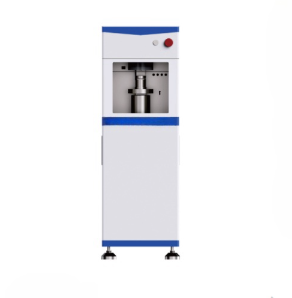
Main Functions and Applications of the Powder Compaction Density Measurement System
Main Functions
1. Multi-Axis Curve Display Function
The Powder Compaction Density Measurement System features a multi-axis curve display capability, allowing various test curves to be presented simultaneously, including:
Load–Displacement Curve
Stress–Strain Curve
Stress–Time Curve
Strain–Time Curve
Multiple curves can be displayed either superimposed within the same coordinate system using different colors or separately for independent observation. This enables users to monitor changes in test parameters intuitively and analyze material behavior more effectively.
2. Powerful Curve Analysis Capability
The system is equipped with advanced curve analysis functions. Various characteristic points and significant events can be automatically identified, displayed, and annotated directly on the test curves.
In addition, users can manually select points on the curves for comparative analysis or allow the software to automatically extract key data points. Curves marked with characteristic points can also be included and printed in the final test reports, providing comprehensive support for data interpretation and technical documentation.
3. Hierarchical User Permission Management
The software adopts a multi-level user authorization system to enhance operational security and management efficiency.
Users are required to log in using their individual usernames and passwords. Based on their assigned authorization levels, the system grants access to the corresponding operational functions and software modules. This effectively prevents unauthorized operations and ensures data integrity.
4. Super Administrator Privileges
The system provides extensive permissions for administrators, including:
(1) User Authorization Management
The super administrator can manage user accounts and assign different software access rights to different operators according to their responsibilities and requirements.
(2) Automatic Test Data Storage
All experimental data are automatically saved during testing, minimizing the risk of data loss caused by unexpected shutdowns, power failures, or other unforeseen interruptions.
5. Fuzzy Search Function for Experimental Data
The system incorporates an intelligent data retrieval function to facilitate efficient data management.
(1) Rapid Data Search
Previously completed test data and results can be quickly located based on criteria such as:
Test date and time;
Test method or program;
File name;
Specific characteristic conditions or keywords.
(2) Comparative Analysis of Historical Data
Data generated from identical testing programs conducted at different times or across different production batches can be merged and opened simultaneously for comparison and analysis, enabling effective reproduction and verification of test results.
Core Applications
1. Measurement of Powder Compaction Density
The primary application of the Powder Compaction Density Measurement System is the determination of the compaction density of powdered materials.
Compaction density refers to the mass per unit volume of a powder after being compressed under specified conditions. This parameter is of great importance for quality control and performance evaluation in industries such as powder metallurgy, pharmaceuticals, food processing, ceramics, and advanced materials manufacturing.
Accurate compaction density measurements help manufacturers maintain product consistency and optimize production processes.
2. Investigation of Powder Physical Properties
The system enables researchers to study various physical characteristics of powders, including:
Flowability;
Compressibility;
Expansion behavior;
Packing characteristics.
Understanding these properties provides valuable insights into powder processing behavior and assists in optimizing manufacturing techniques and improving product performance.
3. Evaluation of Powder Product Quality
The Powder Compaction Density Measurement System can also be used to assess the quality of powder products.
By analyzing compaction characteristics, researchers and manufacturers can evaluate how factors such as particle size distribution, particle morphology, and powder composition influence the final performance of the product. The resulting data provide a scientific basis for raw material selection, process optimization, and quality assurance.
Overall, the Powder Compaction Density Measurement System is an indispensable analytical tool for both research laboratories and industrial production environments. Through precise density determination and comprehensive data analysis, it supports product development, process optimization, and quality control across a wide range of powder-related industries.
Key Features of the Powder Compaction Density Measurement System
1. High-Precision Measurement
The Powder Compaction Density Measurement System is capable of accurately determining the compaction density of powders under different applied pressures, providing precise and reliable data for both material research and industrial production.
By maintaining strict control over testing parameters and utilizing high-accuracy measurement components, the system ensures excellent repeatability and reproducibility of results. The accurate density data obtained can serve as an important basis for material characterization, formulation optimization, and process development.
2. Multifunctionality
In addition to its primary function of measuring powder compaction density, some advanced models offer expanded analytical capabilities to provide a more comprehensive understanding of material properties.
Depending on the system configuration, these instruments may also evaluate parameters such as:
Particle size distribution;
Specific surface area;
Porosity characteristics;
Powder packing behavior and compaction performance.
These additional functions enable researchers and engineers to gain deeper insights into the relationships between powder characteristics and final product performance, thereby supporting more effective material development and quality improvement.
3. Automated Operation
The instrument is equipped with advanced sensors and intelligent control systems that enable automated testing procedures and real-time data acquisition.
During operation, the system can automatically perform tasks such as test execution, parameter monitoring, data collection, calculation, processing, and analysis, significantly reducing the need for manual intervention.
This high level of automation not only improves testing efficiency but also minimizes human error, enhances data accuracy, and ensures greater consistency in experimental results. As a result, laboratories and manufacturing facilities can achieve higher productivity while maintaining strict quality standards.
With its high measurement accuracy, versatile analytical capabilities, and intelligent automated operation, the Powder Compaction Density Measurement System has become an essential instrument for powder characterization and quality control. It provides dependable technical support for scientific research, process optimization, and product innovation across a wide range of powder-based industries.
Preparation Procedures for Operating the Powder Compaction Density Measurement System
To ensure accurate, reliable, and repeatable test results, the following preparation procedures should be carried out before operating the Powder Compaction Density Measurement System.
1. Equipment Inspection and Calibration
Cleaning and Integrity Inspection
Before testing, ensure that the upper and lower anvils, sensors, and molds are clean and free from any residual materials. Carefully inspect all components for signs of damage, such as scratches, deformation, cracks, or excessive wear, as these defects may adversely affect the accuracy of the measurements.
Calibration and Warm-Up
After powering on the instrument, allow it to warm up for approximately 10–15 minutes to achieve stable operating conditions.
Calibrate the pressure sensor and displacement sensor before testing:
Pressure sensor accuracy: ±0.05%
Displacement sensor resolution: 0.001 mm
Verify that the zero-point drift remains within the permissible range, with an allowable error of no more than 3%.
Safety System Verification
Inspect all safety mechanisms to ensure proper operation, including:
Emergency stop button;
Overload protection system;
Hydraulic pressure stability (for hydraulic models such as the HAD-T100F equipped with a constant-pressure hydraulic system).
Proper functioning of these systems is essential to ensure operator safety and equipment reliability.
2. Sample Preparation
Powder Homogenization
The powder specimen should undergo appropriate pretreatment before testing to ensure uniformity.
Recommended procedures include:
Sieving the powder through an appropriate mesh size (e.g., 100-mesh sieve);
Drying the powder to maintain an environmental humidity of ≤65% RH;
Vacuum degassing when required, particularly for lithium battery materials where entrapped air may affect compaction behavior.
Dimensional Measurement
Use a vernier caliper to measure and record the initial dimensions of the specimen, including:
Initial diameter;
Initial height.
The measurement accuracy should be within ±0.01 mm.
If applicable, such as for lithium battery electrode sheets, record the areal density after deducting the thickness contribution of the current collector.
Mold Preparation
The standard mold dimensions are typically:
Inner diameter: 12.8 mm
Height: 25 mm
Customized molds may also be used depending on testing requirements.
The recommended filling volume is approximately 80–90% of the mold cavity capacity to prevent powder overflow during compaction.
3. Parameter Setting and Sample Loading
Pressure and Holding Time Settings
Select the appropriate compaction pressure according to the material type.
Typical examples include:
Lithium battery cathode materials: 10–20 tons;
Lithium battery anode materials: 5–10 tons.
Set the pressure holding time to 30–60 seconds, with an adjustable range typically extending from 0 to 99.9 seconds.
Compression Speed Control
Set the punch displacement speed to approximately 15 mm/min to ensure smooth and stable compression throughout the testing process.
Sample Loading Techniques
Fill the mold gradually in multiple portions and level the powder surface using a scraper to avoid:
Layer separation;
Voids or trapped air;
Uneven packing.
When necessary, a vibration table may be used to assist powder filling and improve packing uniformity.
4. Compression and Data Acquisition
Multi-Stage Pressure Application
Some advanced systems support staged loading procedures.
For example, the specimen may first undergo a 5-second pre-compression stage, followed by loading to the target pressure. This approach helps reduce stress concentration and improves measurement stability.
Real-Time Monitoring
During testing, operators can observe the pressure–displacement curve through the 7-inch touch screen interface or PC software.
The real-time monitoring function allows users to identify abnormal phenomena such as:
Excessive elastic deformation;
Structural collapse;
Irregular compaction behavior.
If abnormalities occur, the test should be interrupted immediately for investigation.
Environmental Monitoring
Built-in sensors automatically record environmental conditions, including temperature and relative humidity.
For lithium battery material testing, environmental conditions are generally controlled at:
Temperature: 25°C ± 2°C.
Maintaining stable environmental conditions contributes to improved test consistency.
5. Data Analysis and Process Optimization
Repeatability Verification
To ensure data reliability, each specimen should be tested at least three times under identical conditions.
Results exhibiting deviations greater than 3% should be considered abnormal and excluded from analysis.
Optimization of Process Parameters
By comparing compaction density values obtained under different pressure conditions, users can determine the optimum compaction parameters for specific materials.
For example, the typical compaction density range for lithium cobalt oxide (LiCoO₂) cathode materials is approximately:
3.8–4.2 g/cm³.
Such data provide valuable guidance for process optimization and product quality improvement.
6. Equipment Maintenance
Immediate Cleaning
After testing, clean the molds and sensors using a soft cloth to remove residual powder.
Avoid using hard objects or abrasive materials that could scratch sensitive surfaces.
For hydraulic systems, anti-wear hydraulic oil should be replaced regularly, generally at intervals of no more than six months.
Periodic Calibration
Routine calibration is recommended to maintain measurement accuracy.
Suggested calibration intervals include:
Pressure sensor: every three months, using certified standard weights;
Displacement sensor: every three months, using calibrated gauge blocks.
Regular maintenance and calibration help ensure long-term instrument performance, measurement reliability, and compliance with testing requirements.
Proper preparation and standardized operating procedures are fundamental to obtaining accurate compaction density measurements. By implementing the practices outlined above, users can maximize testing efficiency, improve data repeatability, extend equipment service life, and provide dependable technical support for powder research, process optimization, and quality control.
What Is the Significance of Measuring Powder Compaction Density
Throughout the entire lifecycle of powder materials, measuring compaction density is far from being an unnecessary step. Instead, it is a critical process that determines whether a material can satisfy application requirements and maintain stable production performance. Its importance is mainly reflected in three aspects: ensuring material performance, optimizing manufacturing processes, and controlling quality risks.
1. Ensuring Material Performance and End-Product Reliability
From the perspective of practical application, the compaction density of powders directly influences the key performance characteristics of the final products.
Whether the powders are used in conductive materials for electronic components, electrode materials for new energy applications, or structural materials in the aerospace industry, the degree of densification achieved during compaction is closely related to the product's functional performance.
If the compaction density is insufficient, the resulting product may exhibit a loose internal structure and inadequate mechanical strength, making it more susceptible to damage during use. Conversely, excessive compaction density may generate internal stresses that can lead to cracking, deformation, or reduced transport efficiency of substances such as ions and heat within the material.
By measuring compaction density, manufacturers and researchers can determine in advance whether a powder material is suitable for subsequent processing and application. This helps ensure that the finished products meet the required performance specifications and prevents application failures caused by improper density characteristics.
2. Optimizing Production Processes and Improving Efficiency
Measuring powder compaction density is also a key factor in process optimization and production efficiency.
Different powder types and production batches often vary in particle morphology, moisture content, flowability, and other physical characteristics. Consequently, the optimal compaction conditions required to achieve the desired density may differ significantly.
Without evaluating compaction density, manufacturers may rely solely on fixed production parameters, resulting in inconsistent product quality—where some products meet specifications while others fail to achieve the required densification standards. This inconsistency can lead to increased material waste and reduced manufacturing efficiency.
Through compaction density measurements, production personnel can better understand the compaction behavior of powders and identify the processing conditions that produce the desired densification effect. Parameters such as compaction pressure, compression speed, and holding time can then be adjusted accordingly to ensure stable and repeatable production outcomes while reducing the costs associated with trial-and-error process adjustments.
3. Strengthening Quality Traceability and Risk Management
Compaction density measurement also serves as an important tool for quality traceability and risk control.
In large-scale manufacturing environments, recording the compaction density data for each batch of powder enables companies to establish comprehensive quality records. If quality issues arise in finished products, these records can be traced back to determine whether the problem originated from abnormal raw material characteristics or deviations in production parameters.
This traceability capability allows manufacturers to identify the root causes of defects quickly and implement targeted corrective actions.
Furthermore, routine compaction density testing can reveal fluctuations in the characteristics of incoming powder materials before they enter the production process. By detecting abnormalities at an early stage, manufacturers can prevent substandard materials from being used, thereby minimizing the risk of large-scale quality incidents and ensuring continuity and stability in production.
Conclusion
In summary, the Powder Compaction Density Measurement System is an indispensable testing instrument for the research, development, and application of powder materials. By providing accurate and reliable compaction density data, it helps ensure material performance, optimize production processes, enhance quality control, and reduce operational risks.As science and technology continue to advance, the performance and functionality of powder compaction density measurement systems will continue to improve, offering even stronger technical support for the development of industries such as powder metallurgy, lithium batteries, pharmaceuticals, ceramics, food processing, and advanced materials.We sincerely welcome you to leave your comments or contact us directly for further information. Our team will be delighted to provide you with detailed product literature, technical consultation, and customized testing solutions tailored to your specific application needs.
Previous: What is the Fabric Light Transmittance Test Machine?
N e x t : What is a Multi-Function Thermal Constants Analyzer?
