





What is a Multi-Function Thermal Constants Analyzer?
2026/06/11
Share:

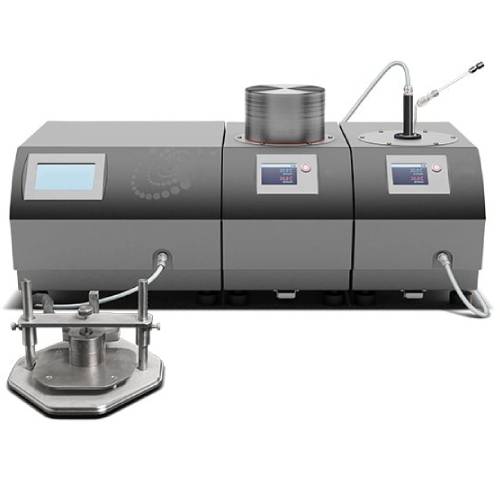
Working Principle and Features of the Multi-Function Thermal Constants Analyzer
Working Principle
The core function of the Multi-Function Thermal Constants Analyzer is to measure three key thermal parameters of materials: thermal conductivity, thermal diffusivity, and specific heat capacity. Its operating principle is primarily based on either the Transient Plane Source (TPS) method or the Laser Flash Analysis (LFA) method.
The TPS method applies an instantaneous heat pulse to the surface of the material. Sensors then record the temperature variation over time, and the thermal properties are calculated using corresponding mathematical models.
The Laser Flash Analysis (LFA) method, on the other hand, heats one surface of the sample using a high-energy laser pulse. An infrared detector captures the rate of temperature rise on the opposite surface, allowing the thermal diffusivity of the material to be determined.
Both methods are non-destructive and highly accurate, making them suitable for testing a wide variety of sample forms, including solids, liquids, powders, and other materials.
For example, in the development of new energy batteries, researchers use a thermal constants analyzer to evaluate the thermal stability of separator materials. If the separator exhibits excessively high thermal conductivity, heat generated during an internal short circuit may spread rapidly and increase safety risks. Conversely, if the thermal conductivity is too low, it may adversely affect the charging and discharging efficiency of the battery.
Product Features
Based on the Transient Plane Source (TPS) technique, one of today's most advanced thermal analysis technologies, featuring the latest technical standards, exceptional flexibility, high efficiency, and outstanding data accuracy.
Fast measurement speed and high testing efficiency, with most tests completed within just a few seconds.
A wide thermal conductivity measurement range of 0.001–1800 W/(m·K), enabling the testing of almost all types of bulk materials encountered in daily applications, industrial production, and scientific research.
Capable of directly measuring three essential thermal constants simultaneously:
Thermal Conductivity,
Thermal Diffusivity,
Volumetric Specific Heat Capacity.
Utilizes an absolute measurement method, eliminating the need for calibration using reference standards while ensuring excellent repeatability and high accuracy.
Requires simple sample preparation; samples only need to meet two basic requirements: appropriate dimensions and one flat surface.
Suitable for samples in a wide variety of states and forms, including solids, liquids, powders, sheets, gels, thin films, and anisotropic materials.
Equipped with powerful yet user-friendly measurement and control software, featuring an intuitive interface, comprehensive functions, and reliable operation.
What Materials Can a Thermal Constants Analyzer Test
In the field of thermophysical property characterization, the Multi-Function Thermal Constants Analyzer has become an indispensable instrument in both scientific research and industrial production, thanks to the technical advantages of the Transient Plane Source (TPS) method. Requiring minimal sample preparation, it can rapidly and accurately determine key thermal parameters such as thermal conductivity, thermal diffusivity, and specific heat capacity. The instrument accommodates materials in various forms and from diverse industries, covering thermal conductivity measurements ranging from highly insulating materials to highly conductive materials, thereby unlocking the fundamental thermal characteristics of materials.
Testing of Solid Materials
Solid materials are the primary testing targets of a thermal constants analyzer, encompassing an extensive range of applications in both research and industry.
Among them, bulk solids are the most common sample type, including:
Metals and alloys (such as stainless steel and brass),
Semiconductors,
Construction materials including concrete, cement, and wood.
Testing can be performed as long as the samples meet the minimum dimensional requirements of 3 mm in thickness and 8 mm in diameter. This capability is widely used in building quality control and material development.
In addition, the analyzer is well suited for sheet and film materials. From flat samples with a thickness of approximately 100 μm to organic thin films as thin as 10 μm, various materials—including metal foils, graphite sheets, flexible glass, and coating materials—can be accurately characterized using dedicated testing modules. These capabilities provide critical support for thin-film research and development in the electronics and new energy industries.
Testing of Powders and Granular Materials
The instrument also demonstrates outstanding performance in the testing of powdered and granular materials, overcoming the traditional difficulties associated with loose sample measurements.
Whether testing:
Thermal insulation powders used in construction,
Granular raw materials used in the chemical industry, or
Electrode powders for lithium batteries and other new energy applications,
the analyzer can directly determine their thermal properties without requiring compaction or molding.
With a measurement accuracy better than ±3% and excellent repeatability, it provides reliable data for material formulation optimization and process development.
Testing of Pastes, Gels, and Liquids
Pastes, gels, and liquids can also be accurately analyzed.
Examples include:
Cosmetic creams and lotions,
Industrial gels,
Pharmaceutical formulations,
Various liquid media.
Through optimized sealing and sample-holding designs, heat loss during testing is effectively minimized, enabling precise determination of thermal constants. These features make the instrument highly suitable for applications in the cosmetics, pharmaceutical, and chemical industries.
Testing of Advanced and Special Materials
The analyzer's ability to characterize materials with unique thermal behaviors further highlights its versatility.
For anisotropic materials, such as:
Carbon fiber composites,
Laminated structures,
3D-printed materials,
specialized anisotropic modules can separately determine in-plane and through-plane thermal transport properties, meeting the stringent requirements of the aerospace, robotics, and advanced manufacturing sectors.
For ultra-low thermal conductivity materials, including:
Aerogels,
Low-density foams,
dedicated low-density/high-insulation modules enable accurate measurements of thermal conductivity values as low as 0.01 W/(m·K), supporting the development of next-generation insulation materials.
In addition, rod-shaped samples can be evaluated using one-dimensional testing modules. Even when only limited amounts of material are available, such as precious metal rods or graphite rods, reliable thermal property data can still be obtained.
A Versatile Solution from Research to Quality Control
From laboratory research to production-line quality assurance, the Multi-Function Thermal Constants Analyzer combines modular adaptability, high accuracy, and rapid testing capability to accommodate materials in virtually every form, including solids, powders, liquids, gels, and pastes.
Its applications span numerous industries, including:
Construction,
Electronics,
New energy,
Aerospace,
Advanced manufacturing.
Featuring a broad measurement range, simple operation, and non-destructive testing, the analyzer not only fulfills the stringent characterization requirements of scientific research but also supports efficient quality control in industrial production. As a result, it has become a key instrument for revealing the thermal behavior of materials and accelerating innovation in material science and engineering.
Application Scenarios of the Multi-Function Thermal Constants Analyzer
1. New Material Research and Development
The Multi-Function Thermal Constants Analyzer plays a vital role in the development and characterization of advanced materials. Researchers use it to investigate the thermal transport properties of a wide range of emerging materials, including nanomaterials, composites, phase-change materials, functional polymers, and advanced ceramics. Accurate thermal property data helps scientists optimize material formulations, understand heat transfer mechanisms, and accelerate innovation from laboratory research to commercial applications.
2. Building Energy Efficiency and Construction Materials
In the construction industry, the analyzer is widely used to determine the thermal conductivity of building materials such as:
Concrete,
Cement,
Bricks,
Wood,
Thermal insulation boards,
Exterior wall insulation materials.
These measurements provide essential data for evaluating the thermal insulation performance of buildings, improving energy efficiency, and ensuring compliance with increasingly stringent green building standards and energy-saving regulations.
3. Electronics Thermal Management
Efficient heat dissipation is critical to the performance and reliability of modern electronic devices. The thermal constants analyzer is extensively applied to measure the thermal properties of electronic components and thermal interface materials, including:
Semiconductor chips,
Heat sinks,
Thermal pads,
Printed circuit boards (PCBs),
Packaging materials,
Flexible electronic substrates.
The obtained data assists engineers in optimizing thermal designs, preventing overheating, extending product lifespan, and improving the overall reliability of electronic systems.
4. Energy Industry Applications
In the energy sector, accurate thermal characterization is essential for resource development, energy conversion, and system optimization. The analyzer can be used to evaluate the thermal conductivity and related properties of energy materials such as:
Petroleum and crude oil,
Natural gas hydrate samples,
Coal and coke,
Fuel cell components,
Battery materials,
Thermal energy storage materials.
These measurements support process simulation, equipment design, energy efficiency improvements, and the development of next-generation energy technologies.
5. Environmental Protection and Geotechnical Studies
The instrument is also valuable in environmental and ecological research. It can determine the thermal properties of environmental materials, including:
Soil,
Sediments,
Water samples,
Sludge,
Waste treatment materials.
Such data contribute to environmental monitoring, geothermal studies, climate research, underground heat transfer analysis, and the design of remediation technologies.
6. Aerospace and Aviation Industries
In the aerospace sector, thermal management directly impacts operational safety and system performance. The Multi-Function Thermal Constants Analyzer is used to characterize the thermal behavior of aerospace materials, including:
Aerospace-grade metals and alloys,
Carbon fiber composites,
Honeycomb structures,
Thermal protection materials,
Lightweight structural materials,
High-temperature resistant composites.
By accurately measuring thermal conductivity, thermal diffusivity, and specific heat capacity, engineers can evaluate a material's heat dissipation capability, thermal stability, and resistance to extreme operating environments, thereby supporting the development of safer, lighter, and more efficient aerospace systems.
With its non-destructive testing capability, rapid measurement speed, high precision, and broad material compatibility, the Multi-Function Thermal Constants Analyzer has become an indispensable tool across scientific research and industrial quality control. From pioneering new materials to optimizing thermal management solutions in construction, electronics, energy, environmental science, and aerospace, it provides the critical thermal data needed to drive technological advancement and product innovation.
The Value and Importance of Using a Multi-Function Thermal Constants Analyzer
A Multi-Function Thermal Constants Analyzer is an instrument designed to determine the thermal characteristics of substances through thermophysical measurements. By accurately evaluating a material's response to heat, it provides critical data for scientific research, product development, quality control, and performance optimization. Its practical value is reflected in a wide range of applications across multiple industries.
1. Material Research and Development
One of the most significant applications of the thermal constants analyzer is in the field of materials science.
By measuring parameters such as thermal conductivity, thermal diffusivity, and heat capacity, researchers can comprehensively evaluate the thermal performance of materials, including:
Heat transfer efficiency,
Thermal response characteristics,
Heat storage capability,
Thermal behavior under different conditions.
These insights help scientists understand the mechanisms of energy storage and heat transfer within materials, providing valuable guidance for the development and optimization of advanced materials such as composites, polymers, ceramics, semiconductors, and thermal interface materials.
2. Chemical Research
In chemical research, thermal properties often reveal important information about the thermodynamic behavior of substances and reactions.
By analyzing the thermal characteristics of samples at different temperatures, researchers can investigate:
Energy transfer processes during chemical reactions,
Thermodynamic properties of reactants and products,
Phase transition behaviors,
Reaction mechanisms and kinetics.
This information is widely applied in fields such as:
Synthetic chemistry,
Materials chemistry,
Catalysis research,
Process development and optimization.
Accurate thermal data enable chemists to better understand reaction pathways and improve the efficiency and safety of chemical processes.
3. Pharmaceutical Research
The thermal constants analyzer also provides valuable support for pharmaceutical research and development.
Using the instrument, pharmaceutical scientists can evaluate the thermophysical properties of drugs and pharmaceutical formulations, including:
Heat capacity,
Thermal expansion characteristics,
Heat of dissolution,
Thermal stability,
Temperature sensitivity.
These parameters offer critical information regarding the stability and performance of pharmaceutical products during manufacturing, storage, and transportation. The results contribute to drug formulation development, safety evaluation, shelf-life assessment, and pharmaceutical quality control.
4. Environmental Analysis
Environmental studies increasingly rely on accurate thermophysical measurements to understand the behavior of natural and engineered systems.
The thermal constants analyzer can be used to characterize the thermal properties of environmental samples such as:
Soil,
Water,
Sediments,
Air-related environmental materials,
Waste treatment materials.
By evaluating how these materials respond to temperature changes, researchers can better understand their physical characteristics and heat transfer behaviors. Such information plays an important role in:
Environmental monitoring,
Pollution control,
Ecological assessment,
Geothermal investigations,
Environmental remediation projects.
These applications ultimately contribute to environmental protection and the safeguarding of public health.
Driving Innovation Through Accurate Thermal Characterization
With its advantages of high precision, rapid measurement, non-destructive testing, and broad sample compatibility, the Multi-Function Thermal Constants Analyzer has become an essential analytical tool in modern research and industry.
From advancing next-generation materials and optimizing chemical processes to supporting pharmaceutical development and environmental protection, the instrument delivers the accurate thermal data required for informed decision-making and technological progress. By revealing the fundamental thermal behavior of materials and substances, it helps researchers and manufacturers improve product performance, enhance safety and reliability, reduce development costs, and accelerate innovation across diverse fields.
The Advantages of Our Direct Sales Model: Triple Assurance in Cost, Efficiency, and Service
Compared with traditional distributor-based sales channels, our factory-direct sales model offers three distinct advantages: better cost control, more efficient technical support, and faster customization services. By working directly with the manufacturer, customers benefit not only from competitive pricing but also from professional expertise and responsive after-sales support throughout the entire lifecycle of the equipment.
1. Greater Cost Control
Under the direct sales model, the additional costs associated with intermediaries and distributor profit margins are eliminated. The savings generated can be invested in continuous product improvements or passed directly on to customers through more competitive pricing.
For research institutions, universities, and small- to medium-sized enterprises operating under limited budgets, this approach significantly reduces the financial barriers to acquiring advanced thermal analysis equipment. Customers gain access to high-performance instruments without compromising quality or exceeding their investment plans.
2. More Direct Technical Support
As the original manufacturer, we maintain a dedicated team of professional engineers capable of providing comprehensive technical assistance throughout the entire user journey, including:
Equipment installation and commissioning,
Operation and application training,
Method development and testing guidance,
Troubleshooting and after-sales support.
For example, when a university laboratory encountered abnormal test results while evaluating a newly developed composite material due to the sample's unique geometry, our engineers provided remote technical assistance and helped optimize the testing parameters. The issue was resolved promptly, enabling the researchers to obtain accurate and reliable data without interrupting their project schedule.
This direct communication with the manufacturer minimizes response times and ensures that users receive authoritative and effective support whenever needed.
3. Faster Response to Customization Requirements
Different industries often require different levels of measurement precision, testing ranges, and sample compatibility. Our direct sales model allows us to respond quickly and flexibly to these diverse application needs through modular solutions tailored to specific testing requirements.
For example:
For high-temperature applications, high-temperature-resistant sensors and accessories can be integrated into the system.
For small or limited-volume samples, high-resolution detectors and dedicated testing modules can be configured to improve measurement sensitivity and accuracy.
For specialized materials with unique thermal characteristics, customized testing solutions can be developed to meet specific research or production objectives.
This modular approach enables customers to obtain a system that precisely matches their operational requirements rather than paying for unnecessary features or compromising on essential capabilities.
Partner Directly with the Manufacturer for Greater Value
Choosing a factory-direct supplier means more than purchasing an instrument—it means establishing a long-term partnership with the team behind the technology.
Through our direct sales model, customers benefit from:
More competitive pricing and better return on investment;
Faster and more professional technical support;
Flexible and efficient customization capabilities;
Comprehensive after-sales service throughout the equipment lifecycle.
By combining advanced thermal analysis technology with manufacturer-direct expertise and support, we help laboratories and enterprises maximize testing efficiency, reduce operational costs, and achieve more reliable research and quality control outcomes. This commitment to cost-effectiveness, efficiency, and customer service is what makes our Multi-Function Thermal Constants Analyzer a trusted choice for users worldwide.
How to Choose the Right Multi-Function Thermal Constants Analyzer
With a wide variety of thermal constants analyzers available on the market, selecting the most suitable instrument can be challenging. To make an informed investment decision, users are advised to evaluate potential systems from the following key perspectives:
1. Measurement Range and Accuracy
The first consideration should be whether the instrument's testing capabilities align with the characteristics of the materials being evaluated.
For example:
Metallic materials generally possess high thermal conductivity and often require a more powerful heat source to achieve rapid and effective thermal excitation.
Polymeric materials are more susceptible to thermal degradation and therefore benefit from lower-energy testing conditions to prevent heat-induced decomposition during measurement.
In addition, the required level of measurement accuracy should be determined according to the intended application:
For scientific research and advanced material characterization, instruments with measurement errors of less than ±3% are typically preferred.
For routine industrial quality control, systems with accuracy levels of approximately ±5% are often sufficient to meet operational requirements while maintaining cost efficiency.
Selecting an analyzer with an appropriate measurement range and precision ensures reliable data without unnecessary investment in capabilities beyond actual needs.
2. Ease of Operation and Workflow Efficiency
User-friendly operation is another important factor when choosing a thermal constants analyzer.
Priority should be given to systems equipped with:
Automated testing procedures,
Intelligent parameter settings,
Integrated data analysis software,
Report generation functions,
Intuitive graphical user interfaces.
These features reduce the learning curve for operators, minimize the risk of human error, and significantly improve testing efficiency.
For instance, one manufacturing enterprise experienced low productivity due to the complicated operating procedures of its previous testing equipment. After upgrading to an intelligent thermal constants analyzer featuring automated workflows, its daily testing capacity increased from 10 sample sets to 50 sample sets, greatly enhancing laboratory efficiency and throughput.
3. After-Sales Service and Technical Support
A reliable after-sales support system is essential to ensuring the long-term performance and availability of testing equipment.
When evaluating suppliers, users should pay close attention to factors such as:
Technical response time,
Availability of application support,
Training services,
Spare parts inventory,
Maintenance capabilities,
Warranty policies.
For example, some factory-direct manufacturers offer commitments such as 24-hour online technical support and spare parts delivery within 48 hours, helping customers minimize downtime and maintain uninterrupted operations.
A strong service network not only protects the user's investment but also provides confidence throughout the entire lifecycle of the instrument.
Conclusion
In summary, the Multi-Function Thermal Constants Analyzer has found extensive applications across numerous industries by providing accurate and reliable information about the thermophysical properties of materials. It enables researchers and engineers to better understand thermal behavior, heat transfer mechanisms, and material stability, thereby supporting the development of innovative materials, advanced pharmaceuticals, and next-generation technologies. At the same time, it also contributes significantly to environmental monitoring, ecological protection, and industrial quality assurance.Whether you are engaged in scientific research, product development, or production quality control, choosing the right thermal constants analyzer can greatly improve testing efficiency and decision-making accuracy.We sincerely welcome you to leave a message or contact us directly. Whether you have questions, would like to share your ideas, or wish to discuss your specific testing requirements, our team will be delighted to assist you. Every inquiry is important to us, as it helps us better understand your application needs and enables us to provide you with more detailed product information, tailored solutions, and professional technical support. We look forward to working with you and becoming your trusted partner in thermal property testing.
Previous: What is a Compaction Density Measurement System?
N e x t : How does the Photovoltaic Acid Mist Test Chamber work?
