





What Is a Luminous Afterglow Performance Tester?
2026/06/12
Share:

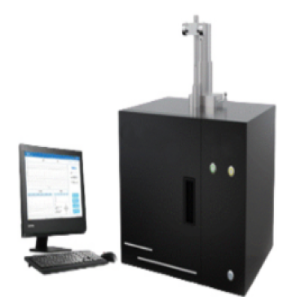
Testing Principle of the Luminous Afterglow Performance Tester
The core operating principle of the Luminous Afterglow Performance Tester follows the process of "excitation → decay → measurement." The specific steps are as follows:
1. Saturation Excitation
Inside a dark chamber, the specimen is uniformly illuminated using a specified standard light source at a defined illuminance level until the photoluminescent material reaches a saturated energy storage state.
2. Termination of Excitation
The excitation light source is rapidly removed or switched off to eliminate external light interference, allowing the specimen to enter a completely dark environment.
3. Dynamic Monitoring
A high-sensitivity luminance meter immediately begins continuously collecting luminance data from the specimen surface, recording the relationship between luminance values and elapsed time throughout the afterglow process.
4. Data Processing
The system automatically generates a luminance-time decay curve and calculates the afterglow luminance at specified time intervals, as well as the time required for the luminance to decay to a predetermined threshold value.
Functions and Applications of the Luminous Afterglow Performance Tester2
The Luminous Afterglow Performance Tester is a precision optical testing instrument specifically designed to measure the decay characteristics of the luminous intensity of photoluminescent materials after the excitation light source has been removed.
Core Functions
Afterglow Luminance Measurement
Precisely measures the luminance of test specimens at different time intervals in a dark environment. The measurement unit is typically candela per square meter (cd/m²).
Afterglow Duration Determination
Records the period from the termination of excitation until the luminance decays to a specified threshold value, thereby determining the effective afterglow duration.
Curve Generation and Analysis
Automatically generates a luminance-time decay curve to visually display the afterglow decay trend, while calculating the initial luminance and luminance values at specified time points.
Excitation Condition Control
Provides a standard light source to saturate the specimen under a fixed illuminance, ensuring consistent and repeatable testing conditions.
Main Applications
Quality Control and Compliance Testing
Evaluates whether the luminous performance of products such as textiles, coatings, and plastics complies with relevant standards and specifications.
Material Research and Formulation Optimization
Helps researchers compare the performance of different phosphors and long-persistent luminescent materials, enabling the optimization of formulations to improve brightness and afterglow duration.
Safety Sign Verification
Assesses the luminous reliability of critical safety products, including fire safety signs, emergency escape route indicators, and instrument panel markings, ensuring their visibility under dark conditions.
Wide Range of Test Specimens
Suitable for testing various photoluminescent materials and products, including fabrics, fibers, yarns, luminous powders, coatings, ceramics, enamel nameplates, and other luminous products.
Instrument Configuration
The Luminous Afterglow Performance Tester typically consists of a fully enclosed light-shielding chamber, a standard excitation light source, a high-precision luminance meter, and automatic data acquisition software. This configuration effectively eliminates stray light interference and ensures the accuracy, reliability, and repeatability of test results.
Practical Application Scenarios of the Luminous Afterglow Performance Tester
The Luminous Afterglow Performance Tester is primarily used to quantitatively evaluate the decay characteristics of the luminance of photoluminescent materials after the excitation light source is removed, commonly referred to as afterglow performance. Its key application scenarios are concentrated in the fields of quality control, safety compliance, research validation, and standardized testing.
1. Safety Signs and Emergency Product Manufacturing
The instrument is widely used to measure the initial luminance and afterglow duration of products such as fire evacuation signs, escape route indicators, and emergency exit signs. It ensures compliance with relevant standards and guarantees the visibility and safety of these products in dark environments.
2. Quality Inspection of Functional Textiles and Garments
For imported, exported, military, and industrial textiles, the tester evaluates the luminance-time decay curves of photoluminescent fibers and printed patterns according to applicable standards. It is used for compliance acceptance testing as well as the verification of anti-counterfeiting performance.
3. Testing of Luminous Components in Watches, Instruments, and Transportation Facilities
The equipment verifies the afterglow persistence and luminance uniformity of watch hands, instrument panels, subway and bus buttons, traffic signs, and road-marking coatings. This ensures reliable readability under low-light conditions. Measurements are often conducted in a dark chamber after excitation using a D65 standard light source.
4. Research and Quality Control of Photoluminescent Paints and Coatings
It is used to evaluate the luminous efficiency and afterglow retention of materials such as strontium aluminate and zinc sulfide under different manufacturing processes and environmental aging conditions. The test results support product classification, quality assurance, and the verification of marketing claims.
5. Third-Party Testing and Certification Institutions
The tester provides objective and reliable afterglow performance reports for applications including procurement inspections, failure investigations, environmental compliance assessments, and the arbitration of anti-counterfeiting material performance.
6. Scientific Research and New Material Development
In universities and research institutes, the instrument is employed to characterize the luminescence kinetics of novel long-persistent phosphorescent materials. It assists researchers in analyzing trap energy levels and optimizing the matching between excitation and emission characteristics, thereby accelerating the development of advanced photoluminescent materials.
With its high sensitivity, precise measurement capability, and excellent repeatability, the Luminous Afterglow Performance Tester has become an indispensable tool for evaluating the performance of photoluminescent materials and products. From ensuring public safety and product compliance to supporting scientific innovation and material development, the instrument plays a vital role in promoting the advancement and application of long-persistent luminescent technologies across a wide range of industries.
Core Value of the Luminous Afterglow Performance Tester
The core value of the Luminous Afterglow Performance Tester lies in its ability to transform the subjective perception of "how bright it glows" into objective, quantifiable data, making it a crucial link connecting material research and development, quality control, and safety compliance.
Core Quantitative Capabilities
Precise Capture of Decay Kinetics
Equipped with a high-precision luminance meter and millisecond-level timing control, the instrument continuously records the entire afterglow process—from the moment the excitation source is removed until the luminance decays to the threshold of human visual perception.
By generating a comprehensive luminance-time decay curve, it overcomes the limitations of visual assessment and accurately determines the true afterglow performance and effective service life of photoluminescent materials.
Standardized Excitation and Measurement
The tester provides a standardized excitation environment with constant illuminance and performs measurements inside a fully enclosed dark chamber that effectively eliminates stray light interference.
This ensures that test results obtained from different production batches and laboratories exhibit a high degree of comparability, consistency, and repeatability, providing a reliable basis for performance evaluation.
Key Application Value
The "Gatekeeper" of Safety Compliance
The instrument directly determines whether safety-related products, such as fire evacuation signs, emergency exit indicators, and protective garments, comply with relevant national and industry standards.
By verifying that these products maintain sufficient effective visibility in dark environments, it plays a vital role in safeguarding public safety and emergency response effectiveness.
The Data Foundation for R&D Optimization
The tester provides critical performance parameters, including initial luminance, afterglow half-life, and luminescence decay characteristics, for the development of advanced long-persistent luminescent materials.
These data enable researchers and manufacturers to optimize material formulations and doping processes, helping achieve an ideal balance between high initial brightness and extended afterglow duration.
A Reliable Basis for Market Access and Dispute Resolution
By eliminating subjective differences in the perception of luminous performance between suppliers and customers, the instrument provides authoritative and impartial third-party data support for import and export inspections, quality dispute arbitration, and the classification of high-end photoluminescent products.
In essence, the Luminous Afterglow Performance Tester is far more than a conventional testing instrument. It serves as a bridge between scientific research and industrial application, converting invisible performance differences into measurable and verifiable indicators.From ensuring product safety and regulatory compliance to accelerating material innovation and facilitating fair market evaluation, this instrument has become an indispensable tool for advancing the development and commercialization of photoluminescent technologies.
Buying Guide for Luminous Afterglow Performance Testers
The Luminous Afterglow Performance Tester is primarily used to evaluate the luminance, afterglow duration, and luminance decay characteristics of textiles, photoluminescent materials, and related products after they have absorbed light energy and continue to emit light in dark environments. As market demands for testing accuracy and regulatory compliance continue to increase, selecting the right instrument has become increasingly important.
I. Clarify Testing Standards and Application Requirements
Before purchasing, it is essential to confirm whether the instrument complies with the standards applicable to your target industry to ensure that the test results are legally valid and widely recognized.
Textile Applications
For the textile industry, the instrument should comply with the relevant standards for testing photoluminescent fibers, fabrics, and printed products used in garments and functional textiles.
General Photoluminescent Materials
If testing particles, films, coatings, ceramic tiles, and other photoluminescent products, attention should be paid to whether the instrument supports applicable Chinese or German testing standards, thereby ensuring compliance with market requirements.
II. Key Technical Specifications
The hardware performance of the instrument directly determines the accuracy and stability of the test results.
Excitation Light Source System
Type:
A standard D65 light source is recommended, as it effectively simulates natural daylight excitation conditions.
Illuminance Adjustment:
The system should provide adjustable illuminance and enable real-time monitoring of excitation light stability.
Spot Uniformity:
The illumination spot diameter at the specimen position is generally required to be within 50–55 mm to ensure uniform excitation.
Luminance Detection System
Detector Type:
A CIE Class A V(λ)-corrected luminance detector is recommended, offering superior linearity and repeatability compared with conventional PMT detectors.
Measurement Range:
The luminance measurement range should typically cover 0.01 mcd/m² to 100 cd/m², with a resolution of 0.01 mcd/m².
Accuracy and Repeatability:
Luminance measurement accuracy should preferably be better than ±5%, while repeatability error should be controlled within 0.1%–0.2%.
Optical Geometry Conditions
The instrument should comply with the CIE 45°/0° illumination and observation geometry, an internationally recognized measurement configuration that effectively minimizes the influence of surface texture on test results.
III. Software Functions and Automation
Modern testing instruments rely heavily on software for data acquisition and analysis.
Fully Automatic Control
The software should automatically control excitation duration, switch between testing modes, and continuously record the luminance-time decay curve.
Data Processing Capability
It should support the automatic generation of reports in both Chinese and English, with data export functions in Excel format to facilitate subsequent analysis and scientific research.
Multi-Sample Testing
High-end models can accommodate multiple specimens simultaneously and perform automatic sequential testing, significantly improving laboratory efficiency.
Database Management
The software should provide historical data retrieval, comparative analysis, and batch export functions for efficient data management.
IV. Structural Design and Environmental Adaptability
Fully Enclosed Dark Chamber Design
The instrument should feature a completely enclosed testing chamber equipped with multiple light-shielding measures to eliminate stray light interference and ensure the accuracy of ultra-low luminance measurements.
Sample Compatibility
The dimensions of the sample holder and the fixture design should be carefully evaluated to ensure secure clamping of specimens with different shapes and sizes.
Dimensions and Weight
Select either a benchtop or floor-standing model according to available laboratory space.
Compact instruments typically occupy approximately 375 × 500 × 600 mm, while large integrated systems may exceed 1 cubic meter in size.
V. Brand and Service Considerations
Certification and Manufacturing Capability
Choose manufacturers that possess ISO certifications and independent research and development capabilities, and avoid purchasing rebranded products without technical support.
After-Sales Service
Confirm whether the supplier provides installation and operation training, regular calibration services, and software upgrade support.
For customers with non-standard testing requirements, the manufacturer should also demonstrate rapid customization and response capabilities.
Recommendations
When selecting a Luminous Afterglow Performance Tester, it is advisable to use the latest applicable standards as the primary reference. Priority should be given to fully automatic, enclosed instruments equipped with CIE Class A luminance detectors and D65 standard light sources.
Particular attention should be paid to the software's automation capabilities and data export functions. In addition, the appropriate specimen fixture configuration should be selected based on the actual sample types to ensure the scientific validity, repeatability, and regulatory compliance of the testing results.
Conclusion
In summary, the Luminous Afterglow Performance Tester is not merely a high-precision measurement instrument; it is also the core benchmark for defining the practical value and safety classification of photoluminescent products within the industry.Through scientific and objective testing data, it fundamentally determines whether innovative photoluminescent materials can successfully transition from laboratory research to large-scale practical applications and ultimately realize their commercial value.We sincerely welcome you to leave a message or contact us directly. Based on your specific testing requirements, we will be pleased to provide detailed technical information, professional consultation, and customized solutions tailored to your needs.
Previous: How does the Photovoltaic Acid Mist Test Chamber work?
N e x t : Why Does Automotive Seat Thermal Testing Require a Thermal Manikin?
