





Why Does Automotive Seat Thermal Testing Require a Thermal Manikin?
2026/06/12
Share:

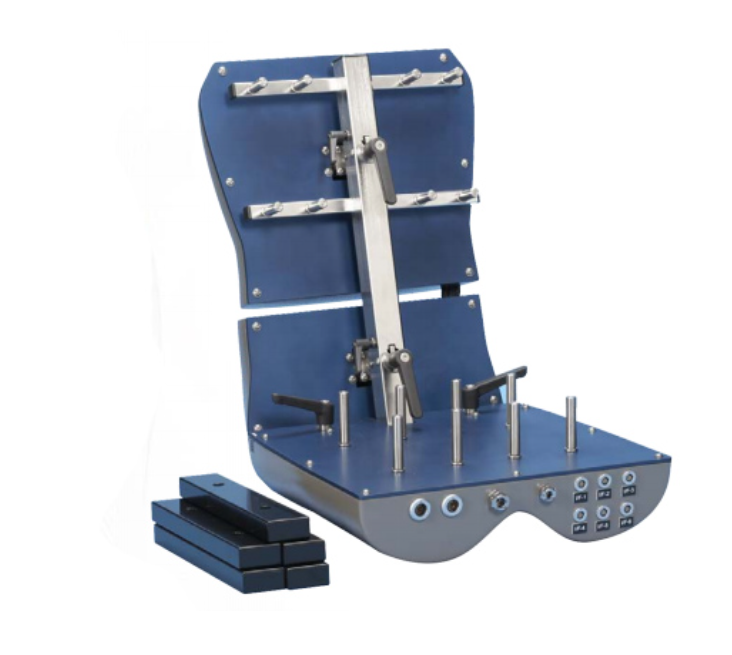
Technical Principles and Core Components of the Seat Thermal Manikin
The Seat Thermal Manikin is a biomimetic testing device used to objectively evaluate the thermal comfort and heat transfer performance of automotive, aerospace, and office seating systems. Its primary function is to simulate the heat transfer and perspiration behavior of human skin. It is important to note that the Seat Thermal Manikin is not a component of a heated seat system, but rather a sophisticated testing instrument designed for seat performance evaluation.
Technical Principles
The Seat Thermal Manikin operates based on active temperature control and sweat simulation technologies.
Through built-in electric heating elements and a liquid evaporation system, the manikin can precisely regulate the surface temperature of multiple body zones while releasing moisture as required to mimic human perspiration.
At the same time, integrated heat flux sensors continuously measure the instantaneous heat exchange between the seat and the manikin. This enables the quantitative assessment of the seat's ability to conduct, store, and dissipate heat and moisture.
Compared with traditional subjective assessments or simple surface temperature measurements, this approach provides a more accurate and objective evaluation of seat thermal performance and occupant comfort.
Core Components
The Seat Thermal Manikin typically consists of the following key components:
Segmented thermally conductive shell, designed to replicate the heat transfer characteristics of the human body;
Independent temperature-controlled thermal zones, enabling precise regulation of different body regions;
Dynamic sweat simulation system, capable of reproducing human perspiration behavior under various conditions;
Heat flux, temperature, and humidity sensor arrays, for real-time monitoring of thermal interactions;
Closed-loop electronic control unit, ensuring stable and accurate control of all testing parameters;
Cooling circulation module, used to maintain thermal equilibrium and support continuous operation;
Dedicated data acquisition and thermal comfort analysis software, which records, processes, and analyzes test data to generate comprehensive thermal comfort evaluations.
By integrating these advanced technologies and components, the Seat Thermal Manikin provides reliable and repeatable data for seat design optimization, helping manufacturers improve thermal comfort, material performance, and overall occupant experience.
Application Scenarios and Testing Procedure of the Seat Thermal Manikin
The Seat Thermal Manikin is primarily used to quantitatively evaluate the thermal comfort and moisture management performance of seats used in automobiles, aircraft, trucks, and office furniture. Its key applications include the development of heated and ventilated seats, HVAC system calibration, validation of material thermal conductivity, and certification testing in accordance with relevant standards.
Application Scenarios
The Seat Thermal Manikin is widely used in the following areas:
Energy transfer efficiency testing of heated and ventilated seats, evaluating the effectiveness of thermal regulation systems;
Cabin thermal environment response assessment, analyzing the interaction between occupants and the vehicle climate control system;
Heat and moisture transfer analysis of seat materials and structures, helping manufacturers select and optimize materials;
Ergonomic thermal comfort optimization, supporting the development of seating systems that enhance occupant well-being;
Compliance and certification testing, ensuring products meet applicable industry standards and regulatory requirements;
Replacement of human subjects for repeatable, high-precision data acquisition, eliminating variability associated with subjective evaluations.
Testing Procedure
The specific testing process is generally carried out as follows:
(1) Manikin Positioning
First, the thermal comfort manikin is accurately installed on the seat using a predefined positioning method. The joints and posture of the manikin are then carefully adjusted to comply with internationally recognized standard occupant seating postures.
(2) System Connection
The manikin's integrated temperature control modules and sweat simulation output systems are connected to the control terminal of the environmental simulation chamber using dedicated cables. This ensures stable signal transmission and reliable system communication throughout the test.
(3) Environmental Conditioning
The environmental chamber is activated to perform a preheating or precooling conditioning process. The chamber environment, the manikin itself, and its internal circulation systems are allowed to reach and maintain the predetermined thermal equilibrium state before testing begins.
(4) Thermal and Moisture Data Acquisition
Once thermal equilibrium has been established, the eight to nine independently controlled thermal zones distributed across the manikin are activated simultaneously with their corresponding multi-channel sweat simulation systems.
At the same time, multidimensional data are continuously collected from each designated body region, including:
Heat flux density;
Surface contact temperature;
Microclimate humidity conditions.
(5) Evaluation of Active Seat Systems
For intelligent seats equipped with active heating or ventilation functions, additional measurements of the seat's actual energy input are required.
High-precision DHS sensors are used to monitor the instantaneous heat exchange dynamics occurring at the interface between the simulated skin surface and the seat under operating conditions.
(6) Thermal Comfort Analysis
All data collected during the test are subsequently imported into specialized thermal comfort calculation models for integrated analysis and processing.
The software then generates a series of quantitative thermal comfort indicators, providing objective assessments of seat performance.
(7) Multi-Condition Validation
To comprehensively evaluate the dynamic response characteristics of the seating system, the entire testing procedure should be repeated under multiple combinations of operating conditions, including variations in:
Ambient temperature;
Relative humidity;
Seat operating modes.
Throughout the testing process, all sensors must be calibrated regularly, while the temperature and flow rate of the cooling water circulation system must be precisely controlled.
In addition, the environmental humidity control accuracy should be maintained within ±3% relative humidity at all times.
A complete testing cycle typically requires 60 to 90 minutes to finish.
By simulating realistic human heat transfer and perspiration behaviors under controlled environmental conditions, the Seat Thermal Manikin provides highly repeatable and objective data for evaluating seat thermal performance. It has become an indispensable tool for the development of next-generation seating systems, helping manufacturers improve occupant comfort, optimize energy efficiency, and ensure compliance with increasingly stringent industry standards.
Technical Advantages and Industry Value of the Seat Thermal Manikin
The Seat Thermal Manikin is a biomimetic thermal physiology testing system designed to precisely quantify the thermal comfort, moisture management, and energy exchange performance of seating systems. Its greatest strength lies in replacing subjective perceptions with objective measurements, enabling thermal environments to be evaluated in a repeatable, standardized, and optimizable manner.
Technical Advantages
1. Highly Accurate Simulation of Human Thermal Physiology
Based on industry-recognized testing methodologies, the Seat Thermal Manikin incorporates an advanced 8–9-zone independent temperature control system combined with a high-precision sweat simulation mechanism.
The system is capable of maintaining the simulated skin surface temperature at 37°C ± 0.1°C, accurately reproducing the complex thermal processes experienced by seated occupants, including:
Heat conduction,
Convective heat transfer, and
Evaporative cooling caused by perspiration.
As a result, the thermal interaction between the occupant and the seat can be replicated in a realistic and scientifically controlled manner.
2. Direct Measurement of Dynamic Energy Exchange
The manikin is equipped with highly sensitive dynamic heat flux sensors, allowing the instantaneous rate of heat transfer between the seat surface and the simulated skin interface to be measured directly and accurately.
This approach effectively eliminates the significant errors associated with traditional evaluation methods that infer thermal comfort solely from surface temperature measurements.
By capturing real-time heat exchange data, the system provides a much more comprehensive understanding of seat thermal behavior.
3. Multi-Condition Testing Capability
The testing platform fully supports performance evaluations under a wide range of operating conditions, including:
Heated seat operation,
Ventilated seat performance,
Passive heat dissipation characteristics, and
Combined thermal management strategies.
Its flexible modular architecture enables easy adaptation to different vehicle platforms, accommodating various H-point positioning requirements and diverse occupant seating postures.
This versatility makes the Seat Thermal Manikin suitable for applications ranging from passenger vehicles and commercial trucks to aircraft seating systems.
Industry Value
1. Driving the Transition from Experience-Based to Data-Driven Development
The adoption of Seat Thermal Manikin technology has fundamentally transformed the development philosophy of automotive cabins and seating systems.
Traditional design approaches that relied heavily on subjective feedback and engineering experience are increasingly being replaced by data-driven methodologies based on objective and precise measurements.
This transition is particularly valuable for the development of new energy vehicles, helping manufacturers optimize vehicle thermal management strategies while significantly improving the real-world thermal comfort experienced by occupants.
2. An Authoritative Tool for Performance Verification
The Seat Thermal Manikin has become an indispensable instrument for evaluating and validating numerous seat-related performance claims.
It is widely regarded as the industry's authoritative testing tool for:
Verifying the effectiveness of therapeutic and wellness functions claimed by seat manufacturers;
Assessing the rationality and efficiency of seat ventilation duct designs;
Evaluating the thermal conductivity and heat dissipation characteristics of different seating materials; and
Conducting standardized thermal comfort assessments in accordance with industry requirements.
By providing objective evidence, it bridges the gap between product claims and measurable performance.
3. Accelerating Certification and Product Development
For manufacturers and testing laboratories, implementing this technology offers substantial commercial and operational benefits.
The Seat Thermal Manikin can assist organizations in meeting the technical requirements associated with CNAS, CMA, and other national laboratory accreditation systems, supporting the establishment of compliant testing capabilities.
At the same time, the availability of accurate and repeatable thermal performance data can reduce product validation and development cycles by more than 30%, enabling faster time-to-market.
4. Supporting the Next Generation of Intelligent Cabin Technologies
As the automotive industry moves toward concepts such as the "Healthy Cabin" and "Intelligent Thermal Comfort", the need for scientific and quantifiable evaluation methods continues to grow.
The Seat Thermal Manikin provides the essential data foundation required to define, develop, and optimize these advanced features. Its ability to generate reliable thermal comfort metrics makes it a critical enabler for future innovations in occupant experience and smart mobility solutions.
In summary, the Seat Thermal Manikin is far more than a thermal testing instrument. It represents a technological bridge between human thermal physiology and modern seat engineering.By converting subjective sensations into measurable and repeatable indicators, it enables manufacturers to design safer, more comfortable, and more energy-efficient seating systems. From accelerating product development and supporting laboratory accreditation to driving innovation in intelligent cockpit technologies, the Seat Thermal Manikin has become a strategic tool for enhancing competitiveness and advancing the future of the seating industry.
Selection Guide and Precautions for Using a Seat Thermal Manikin
The selection and use of a Seat Thermal Manikin should closely align with applicable testing standards, simulation accuracy requirements, safety considerations, and environmental compatibility. The instrument is primarily used to evaluate the thermal comfort and heat-moisture transfer performance of automotive, office, and aircraft seating systems.
Key Considerations for Equipment Selection
When selecting a Seat Thermal Manikin, the following factors should be carefully considered:
1. Compliance with Relevant Standards
Priority should be given to a 50th-percentile adult male partial-body model, typically representing the back, buttocks, and thighs, as this configuration is widely accepted by industry standards for seat thermal comfort evaluation.
2. Number and Precision of Thermal Zones
The manikin should incorporate 8–9 independently controlled thermal zones. Each zone should be equipped with:
Dedicated heating elements;
Temperature sensors with an accuracy of ±0.1°C;
Independent overheating protection mechanisms.
This configuration ensures accurate simulation of localized thermal responses.
3. Material and Structural Design
The shell material should preferably be manufactured from thermally conductive carbon fiber/epoxy composite materials, providing thermal characteristics similar to those of the human body.
In addition, the manikin should support active cooling functions to enable accurate testing of heated and ventilated seats.
Users should also confirm whether the system is equipped with:
Dynamic heat flux sensors; and
A controllable sweat simulation system.
These features are essential for comprehensive thermal comfort assessment.
4. Power Output and Operating Temperature Range
The heating capacity and operating temperature range of the equipment should match the intended testing scenarios to ensure both performance accuracy and operational safety.
Prerequisites for Use
Before operation, several supporting conditions must be met.
Supporting Equipment Requirements
The Seat Thermal Manikin should be used together with:
A temperature-controlled chiller unit;
A stable 220 V or 380 V AC power supply;
Dedicated control and analysis software.
Sensor Calibration
Prior to testing, all measurement systems should be calibrated, including:
Temperature sensors: ±0.1°C accuracy;
Humidity sensors: ±3% RH accuracy;
Heat flux sensors.
Proper calibration is essential for obtaining reliable and repeatable results.
Ergonomic Positioning
The positioning of the manikin must comply with H-point ergonomic standards, ensuring that the compression and contact conditions between the manikin and the seat accurately represent real occupant seating conditions.
Operational Precautions
The following precautions should always be observed during testing:
Avoid Improper Operation
Dry heating operation is strictly prohibited.
The equipment must never be operated beyond its rated power capacity.
Pre-Test Inspection
Before each test, verify that:
The insulation performance of all thermal zones is intact;
The cooling pipelines are free from leakage.
Heated Seat Testing
When evaluating heated seats, the active cooling system must be enabled to prevent overheating of the manikin, which could otherwise lead to distorted measurement results.
Environmental Restrictions
The equipment should not be used in environments characterized by:
Excessive dust contamination;
Strong electromagnetic interference;
Flammable or explosive atmospheres.
Post-Test Maintenance
After each testing cycle:
Clean the manikin surface thoroughly;
Drain all water circuits completely to prevent mold growth and pipeline blockage.
In addition, the control software should be updated regularly, and the data acquisition frequency should be maintained at no less than 1 Hz to ensure sufficient temporal resolution.
Safety Guidelines
Although the system typically operates at a 36 V safety extra-low voltage, additional precautions are still necessary.
Electrical and Cooling System Safety
Appropriate leakage protection measures must be implemented for the cooling water circulation system to prevent electrical hazards.
Sensor Protection
Operators must never:
Cover the simulated skin surface;
Obstruct or shield the sensors.
Doing so may affect both measurement accuracy and equipment safety.
Personnel Safety
Operators should maintain a safe distance from any moving mechanical components during testing.
Long-Term Storage
If the equipment will remain unused for an extended period:
Disconnect the power supply;
Store the system in a dry environment.
Consumable components such as heating wires and permeable sweat membranes should be replaced according to the manufacturer's recommendations, typically every one to two years.
Common Misconceptions
Several misunderstandings should be avoided when using a Seat Thermal Manikin.
Do Not Confuse Different Types of Thermal Manikins
A Seat Thermal Manikin should not be mistaken for a full-body sweating thermal manikin, as the two systems are designed for different testing objectives and cannot be used interchangeably.
Do Not Ignore Environmental Stabilization
Insufficient stabilization time within the environmental chamber can significantly compromise test reliability. The chamber temperature and humidity must reach equilibrium before measurements begin.
Sweat Simulation Is Not Always Standard
The sweating function is not a standard feature on all models.
Without a controllable sweat simulation system, the equipment can only evaluate dry thermal resistance and cannot assess humid thermal comfort performance.
Conclusion
In today's increasingly competitive mobility market, enhancing occupant comfort and continuously improving seat performance have become important objectives for manufacturers.The Seat Thermal Manikin has emerged as an advanced and highly efficient testing solution that enables engineers to objectively evaluate and optimize seat thermal behavior through scientific data.By supporting standardized development, improving product validation efficiency, and enhancing the overall driving and riding experience, this technology plays a vital role in the future of seating innovation.We sincerely welcome you to leave a message or contact us directly. Our team will be pleased to provide detailed product information, professional technical guidance, and customized solutions tailored to your specific testing requirements.
Previous: What Is a Luminous Afterglow Performance Tester?
N e x t : What is a fabric induction static electrical meter?
