





What is the safety feature of the headrest?
2026/06/15
Share:

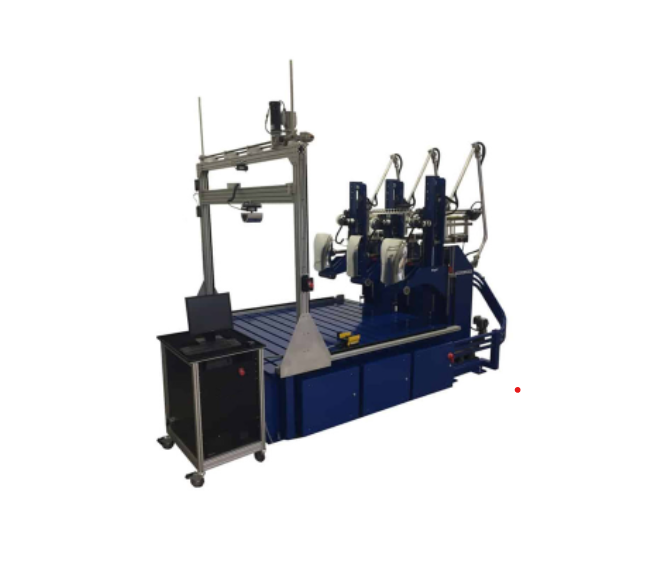
Technical Features of the Automotive Head Restraint Strength Tester
The Automotive Head Restraint Strength Tester is designed to evaluate the insertion/extraction durability and mechanical performance of automotive seat head restraints. By accurately simulating real-world operating conditions, the instrument provides reliable data to verify whether head restraint systems meet relevant safety and durability requirements. Its main technical features are as follows:
1. Wide Insertion and Extraction Force Measurement Range
The tester is capable of accurately measuring the insertion and extraction forces generated during the installation and removal of the head restraint. The measurement range is generally determined according to the head restraint design and testing requirements. In many applications, the force measurement capacity can reach 500 N or higher, enabling the evaluation of a wide variety of seat head restraint systems.
2. High Measurement Accuracy
Measurement accuracy is critical when assessing the durability and operational performance of head restraints. The tester is designed with high-precision force sensing technology to ensure the reliability of test results. In general, the force measurement accuracy can achieve ±1% of the indicated value or better, providing dependable and repeatable data for product evaluation.
3. Adjustable Insertion and Extraction Stroke
The insertion and extraction stroke refers to the maximum travel distance of the head restraint during testing. The instrument can simulate the actual movement range encountered in daily use, ensuring that the test accurately reflects real operating conditions. The specific stroke length can be adjusted according to the head restraint design specifications and applicable testing standards.
4. Variable Testing Speed
The tester features an adjustable insertion and extraction speed, allowing users to accommodate different testing requirements and standards. The testing speed can be configured based on the seat type and relevant regulatory specifications, ensuring both flexibility and compliance during durability evaluations.
5. Programmable Cycle Count
To reproduce long-term usage conditions, the instrument allows users to preset the number of insertion and extraction cycles required for durability testing. The cycle count can be adjusted in accordance with specific testing standards and product requirements, ensuring that the evaluation is sufficiently rigorous and representative of actual service conditions.
6. Advanced Data Recording and Analysis
Modern Automotive Head Restraint Strength Testers are typically equipped with sophisticated data acquisition, recording, and analysis systems. During testing, the system can monitor and record critical parameters in real time, including:
Insertion and extraction force;
Insertion and extraction stroke;
Testing speed;
Number of completed cycles.
The collected data can be further processed, analyzed, and exported, enabling users to gain a comprehensive understanding of the durability characteristics and performance trends of the head restraint system.
7. Comprehensive Safety Protection
To ensure operator safety and equipment reliability, the tester incorporates multiple safety features, including:
Overload protection systems to prevent excessive loading;
Emergency stop buttons for immediate shutdown in abnormal situations;
Protective mechanisms that enhance operational safety throughout the testing process.
In addition, the equipment is designed to comply with relevant electrical safety standards and mechanical safety requirements, ensuring stable, safe, and reliable operation.The Automotive Head Restraint Strength Tester combines high-precision measurement, flexible parameter adjustment, intelligent data management, and comprehensive safety protection into a single testing platform. It provides manufacturers, testing laboratories, and research institutions with a scientific and reliable means of evaluating the durability and mechanical performance of automotive head restraints. By ensuring compliance with applicable standards and improving product quality, the instrument plays a vital role in enhancing occupant protection and reducing the risk of whiplash injuries during vehicle collisions.
Applications of the Automotive Head Restraint Strength Tester
The Automotive Head Restraint Strength Tester is widely used to evaluate the strength and safety performance of various types of automotive seat head restraints. It ensures that head restraint systems comply with applicable safety standards and provide effective protection for vehicle occupants under different usage conditions. Its primary application areas include the following:
1. Front Seat Head Restraints
The tester is suitable for evaluating front seat head restraints, including those installed on both the driver's seat and the front passenger seat. Whether the head restraint features manual adjustment or electric adjustment, it falls within the scope of testing.
As these head restraints can be positioned according to the preferences and physical requirements of drivers and passengers, the tester can assess their structural strength and mechanical performance under various adjustment positions, ensuring consistent safety throughout their operating range.
2. Rear Seat Head Restraints
The instrument is equally applicable to rear seat head restraints, including both fixed and adjustable designs.
Rear-seat occupants vary in age, size, and seating posture, requiring head restraints to provide reliable protection under diverse conditions. The tester comprehensively evaluates the strength performance of rear head restraints to verify that they satisfy safety requirements across different usage scenarios.
3. Original Equipment Manufacturer (OEM) Head Restraints
OEM head restraints, supplied as integral components of the vehicle, represent one of the primary testing targets of the instrument.
Vehicle manufacturers must ensure that all head restraint systems comply with relevant regulations and performance standards during the production process. The tester enables rigorous evaluation of OEM head restraints, helping manufacturers maintain product quality and provide fundamental safety protection for vehicle occupants.
4. Replacement Head Restraints
The tester is also suitable for assessing the strength of aftermarket replacement head restraints sold as independent spare parts.
When original head restraints become damaged or require replacement, consumers often purchase aftermarket alternatives. By testing these replacement products, the instrument helps prevent substandard components from entering the market, thereby safeguarding driving safety and protecting consumers from potential risks associated with inferior products.
The Automotive Head Restraint Strength Tester has a broad range of applications covering front and rear seat head restraints, adjustable and fixed configurations, original equipment products, and aftermarket replacement components. Through accurate and reliable strength evaluation, the instrument assists vehicle manufacturers, component suppliers, testing laboratories, and quality inspection agencies in ensuring compliance with safety requirements and improving product reliability.Ultimately, it plays a crucial role in enhancing occupant protection, maintaining automotive quality standards, and reducing the likelihood of neck injuries, including whiplash, during vehicle collisions.
Working Principle and Testing Procedure of the Automotive Head Restraint Strength Tester
I. Working Principle
The Automotive Head Restraint Strength Tester is designed to evaluate the static strength and safety performance of automotive seat head restraints by simulating the loads experienced during rear-end collisions. The head restraint specimen is securely fixed to a rigid test fixture, and static loads are applied through an electric or hydraulic loading system. During the loading process, force and displacement data are continuously collected to assess whether the head restraint meets the specified performance requirements.
1. Standard Headform Loading
The equipment utilizes an electric or hydraulic drive system to propel a standard metallic headform, typically with a diameter of 165 mm to simulate the human head. The headform applies pressure to the head restraint at a specified speed or under quasi-static loading conditions, reproducing the loading scenario defined in relevant testing standards.
2. Force-Displacement Data Acquisition
During loading, the built-in high-precision load cells and displacement encoders simultaneously record the complete force-displacement curve. This enables the tester to capture the entire deformation process of the head restraint, from elastic deformation to plastic deformation and, if applicable, eventual structural failure.
3. Automatic Performance Evaluation
The control system automatically compares the acquired data with preset acceptance criteria. It determines whether:
The rearward displacement of the head restraint exceeds the allowable limit under a specified moment load (for example, 373 N·m);
The displacement remains within the standard requirement, typically not exceeding 102 mm;
The head restraint experiences fracture, detachment, or functional failure under the specified ultimate load, such as 890 N.
This automated analysis ensures objective and reliable compliance evaluation.
II. Testing Procedure
1. Specimen Installation and Positioning
Secure the seat assembly to the mounting base of the test platform and ensure that all fixtures are properly tightened.
For adjustable head restraints, position the head restraint at its highest setting, representing the most unfavorable testing condition. Use the H-point positioning system to calibrate the seat's R-point location, ensuring that the loading reference position is accurate.
2. Establish the Initial Reference Line
Start the testing equipment and apply an initial moment of 373 N·m to the seat back using the backform device.
After the backform displacement stabilizes, the system automatically records the resulting torso line as the initial reference line (r₁). This reference line serves as the zero point for subsequent displacement measurements.
3. Headform Loading and Displacement Measurement
Determine the headform loading point at a location 65 mm below the initial reference line.
Control the headform to apply a rearward load perpendicular to the reference line until the moment relative to the R-point reaches 373 N·m. Measure and record the resulting rearward displacement of the head restraint.
According to standard requirements, the measured displacement should not exceed 102 mm.
4. Ultimate Strength Verification
After successfully completing the displacement evaluation, continue increasing the applied load until it reaches 890 N, or another ultimate load specified by the applicable standard.
Maintain the load for a minimum of 5 seconds to verify whether the head restraint frame and its fixing mechanisms experience:
Structural fracture;
Component separation or pull-out;
Permanent deformation;
Functional failure.
This step evaluates the structural integrity of the head restraint under extreme loading conditions.
5. Data Export and Result Evaluation
Once the test is completed, the system automatically stops and generates a complete force-displacement curve together with a detailed test report containing all key parameters.
The operator should analyze the curve characteristics, such as the presence of sudden changes or abnormal peaks, and examine the final deformation condition of the specimen. Based on the applicable testing standards, a final determination regarding product compliance can then be issued.
III. Precautions
1. Synchronization for Bench Seat Testing
For long bench-type seats, such as three-passenger rear seats, advanced testing systems may feature three-station synchronized loading capability.
In such cases, the synchronization error among the three loading mechanisms should be controlled within 1% to accurately simulate the overall force distribution that occurs during actual collision events.
2. Environmental Conditioning of Specimens
Prior to testing, specimens should be conditioned under standard laboratory conditions of:
Temperature: 23 ± 5°C;
Relative Humidity: 50 ± 10%.
Maintaining these conditions for an adequate period minimizes the influence of material temperature sensitivity and environmental factors on test results.
3. Safety Measures During Testing
Operators must verify that the emergency stop function is operating correctly before commencing the test.
This precaution is particularly important during ultimate strength and destructive testing, as fractured components or flying debris may damage the equipment or pose a risk of personal injury. Proper safety procedures should always be followed to ensure safe and reliable operation.
In Conclusion,The Automotive Head Restraint Strength Tester combines precise loading technology, intelligent data acquisition, and automated analysis to provide a scientific assessment of head restraint safety performance. By accurately evaluating rearward displacement, structural integrity, and failure characteristics under specified loading conditions, the instrument helps automotive manufacturers, component suppliers, and testing laboratories ensure compliance with international safety standards. Ultimately, it plays a vital role in improving occupant protection and reducing the risk of whiplash injuries during rear-end collisions.
Importance of the Automotive Head Restraint Strength Tester
The Automotive Head Restraint Strength Tester is a critical piece of equipment for ensuring occupant cervical spine safety and achieving regulatory compliance before products enter the market. Its importance can be understood from the following four key dimensions:
1. The "Last Line of Defense" Against Severe Neck Injuries
Suppressing Whiplash Injuries
During rear-end collisions, the tester simulates impact conditions to verify whether the head restraint can provide timely support to the occupant's head and effectively limit excessive rearward movement of the neck. By evaluating this protective capability, the instrument helps significantly reduce the risk of soft tissue injuries, cervical strain, and even cervical vertebral fractures associated with whiplash.
Quantifying Biomechanical Injury Indicators
The equipment accurately records force-displacement curves and acceleration data, enabling the calculation of critical biomechanical parameters such as the Neck Injury Criterion (NIC). By assessing the balance between the head restraint's energy-absorbing characteristics and structural rigidity, the tester helps ensure that the forces transmitted to the neck remain within acceptable human tolerance limits.
2. A Mandatory Passport for Global Regulatory Compliance
Compliance Verification
In accordance with applicable international and regional standards, the Automotive Head Restraint Strength Tester is an indispensable tool for verifying both the static strength and, where required, the dynamic impact performance of head restraint systems.
Essential for Market Access
Seat assemblies that fail to pass head restraint strength evaluations cannot obtain mandatory certifications or type approvals, such as CCC certification for the Chinese market or overseas homologation approvals. Failure to comply with these requirements directly prevents products from being legally introduced into the marketplace.
3. A Data Engine for Product Development and Optimization
Supporting Structural Improvement
The tester provides highly accurate data regarding applied loads, displacement behavior, and residual deformation, allowing engineers to optimize:
Head restraint frame structures;
Cushion and foam density distribution;
Locking mechanisms;
Activation strategies of active head restraint systems.
These data-driven improvements contribute to enhanced occupant protection and product performance.
Validation Across Multiple Usage Scenarios
The equipment supports comprehensive evaluations of various head restraint designs, including:
Integrated head restraints;
Separate adjustable head restraints;
Active head restraint systems.
By combining static and dynamic testing capabilities, manufacturers can verify the effectiveness of occupant protection for individuals of different body sizes and seating positions under diverse operating conditions.
4. A Benchmark for Long-Term Reliability and Quality Assurance
Durability Assessment
In addition to evaluating collision performance, the tester can be used to assess the long-term reliability of adjustment and locking mechanisms through repeated operation cycles. This helps prevent safety hazards caused by component fatigue, wear, or locking failure after prolonged use.
Production Consistency Control
As a core instrument used in both third-party testing laboratories and factory quality inspections, the tester ensures that mass-produced products maintain performance consistency with validated prototype designs. This minimizes the risk of batch-related quality issues and enhances overall product reliability.
Conclusion
In simple terms, the Automotive Head Restraint Strength Tester is far more than a compliance verification tool. It transforms the abstract concept of "safety design" into quantifiable, measurable, and verifiable physical evidence, directly determining how effectively a vehicle can protect occupants' necks during an accident.By combining precise testing technology with comprehensive performance evaluation, the instrument plays a vital role in safeguarding occupant safety, supporting engineering innovation, maintaining manufacturing quality, and facilitating global market access.We sincerely welcome you to contact us at any time with your questions or specific requirements. Whether through leaving a message or communicating directly with our team, we will be pleased to provide you with comprehensive product information, professional technical guidance, and dedicated support tailored to your needs.
Previous: What is a fabric induction static electrical meter?
N e x t : What is the apparatus for thermal conductivity?
