





What is the apparatus for thermal conductivity?
2026/06/15
Share:

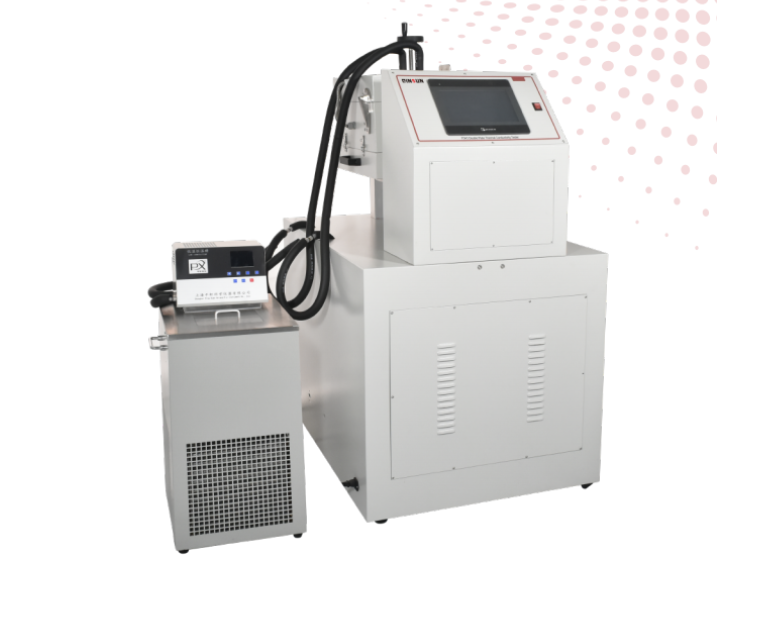
Working Principle of the Double Plate Thermal Conductivity Apparatus
The Double Plate Thermal Conductivity Apparatus operates based on the steady-state heat transfer method. When heat passes through a test specimen at a constant and stable rate, the instrument determines the material's thermal conductivity by measuring the temperature difference across the specimen and the heat flux transmitted through it.
The thermal conductivity is calculated according to Fourier's Law of Heat Conduction:
[Q=-kA\frac{\Delta T}{L}]
Where:
Q = Heat transfer rate (W);
k = Thermal conductivity of the material (W/m·K);
A = Heat transfer area (m²);
ΔT = Temperature difference across the specimen (K or °C);
L = Thickness of the specimen (m).
By rearranging the equation, the thermal conductivity can be expressed as:
[k=\frac{QL}{A\Delta T}]
This formula enables the instrument to accurately determine the thermal conductivity of the test material once the relevant parameters have been measured.
Q=-kA\frac{\Delta T}{L}
Fundamental Assumptions of the Steady-State Method
The steady-state method assumes that:
Heat is transferred through the specimen in a one-dimensional direction;
The dimensions of the specimen are sufficiently larger than its thermal diffusion length;
A stable thermal equilibrium is achieved during testing, ensuring that the heat flow remains constant over time.
These conditions are essential for obtaining accurate and repeatable measurement results.
Testing Principle
During the experiment, the test specimen is positioned between two parallel plates, namely a heating plate and a temperature-controlled plate.
One plate serves as the heating source, continuously supplying heat.
The other plate is maintained at a constant temperature by the integrated thermostatic system.
When a temperature difference exists between the two plates, heat flows through the specimen from the hot side to the cold side. The specimen absorbs thermal energy from the heated plate and transfers it toward the constant-temperature plate, causing heat exchange between the two sides.
Using high-precision temperature sensors and heat flux measurement devices, the instrument continuously monitors:
The temperature difference across the specimen;
The heat flux passing through the specimen;
The specimen thickness and effective heat transfer area.
Based on these measured values and Fourier's Law, the system automatically calculates the thermal conductivity coefficient of the material.
Advantages of the Measurement Principle
The steady-state double-plate method offers several notable advantages:
High measurement accuracy and reliability;
Direct determination of thermal conductivity without complex data fitting;
Excellent repeatability under controlled conditions;
Suitability for a wide variety of heat-resistant and thermal insulation materials;
Computer-controlled data acquisition and automatic result calculation, reducing human error.
In summary, the Double Plate Thermal Conductivity Apparatus utilizes the steady-state heat transfer principle and Fourier's Law to quantitatively evaluate a material's ability to conduct heat. By accurately measuring the temperature gradient and heat flow through a specimen under stable conditions, the instrument provides precise thermal conductivity data for material development, quality control, scientific research, and performance evaluation of heat-resistant and insulation products.
Advantages of the Double Plate Thermal Conductivity Apparatus
The Double Plate Thermal Conductivity Apparatus offers numerous advantages in the evaluation of thermal conductivity, making it a valuable instrument for material research, quality control, and industrial testing. Its key benefits are outlined below:
1. Rapid Measurement
The Double Plate Thermal Conductivity Apparatus provides fast testing performance, enabling thermal conductivity measurements to be completed within a relatively short period of time. This makes it particularly suitable for applications requiring the rapid assessment of material thermal properties, thereby improving testing efficiency and productivity.
2. High Accuracy
The instrument delivers high measurement accuracy with minimal error, allowing it to meet the stringent requirements of scientific research and quality inspection. Through precise temperature control, stable heat transfer conditions, and advanced sensing technology, reliable thermal conductivity data can be obtained consistently.
3. Wide Range of Applications
One of the major advantages of the Double Plate Thermal Conductivity Apparatus is its broad applicability. It can be used to determine the thermal conductivity of various types of materials, including:
Solid materials;
Powdered materials;
Slurries and pastes;
Liquid substances.
This versatility provides extensive application potential across multiple industries and research fields.
4. Simple Operation
The instrument features a user-friendly operating procedure. In general, users only need to place the specimen between the two parallel plates, set the required testing parameters—such as heating conditions and measurement duration—and initiate the test.
Combined with computerized control and automated data processing, the simplified operation reduces the complexity of testing and minimizes the possibility of operator error.
5. Excellent Repeatability
The Double Plate Thermal Conductivity Apparatus maintains stable testing conditions throughout the measurement process, resulting in excellent repeatability of experimental data.
Its ability to generate highly consistent results makes it particularly suitable for applications involving:
Comparative studies;
Routine quality control inspections;
Verification testing;
Scientific experiments requiring repeated measurements.
In summary, the Double Plate Thermal Conductivity Apparatus combines the advantages of rapid measurement, high accuracy, broad material compatibility, ease of operation, and outstanding repeatability. These characteristics make it an ideal solution for evaluating the thermal conductivity of heat-resistant and thermal insulation materials.Whether employed in manufacturing enterprises, quality inspection laboratories, universities, or research institutions, the instrument provides dependable thermal performance data that support material development, process optimization, product quality assurance, and scientific innovation. Its efficient operation and reliable results have made it an indispensable tool in the field of thermal property testing.
Applications of the Double Plate Thermal Conductivity Apparatus
The Double Plate Thermal Conductivity Apparatus has a wide range of applications across numerous industries and research fields. By accurately determining the thermal conductivity of materials, the instrument provides valuable data for material selection, product development, process optimization, and quality control. Its major application areas include the following:
1. Building Materials Industry
In the building materials industry, thermal conductivity is one of the most important indicators used to evaluate the insulation performance of construction materials.
The Double Plate Thermal Conductivity Apparatus can accurately measure the thermal conductivity of various materials, including:
Thermal insulation materials;
Wall construction materials;
Building panels and boards;
Energy-saving composite materials.
The resulting data provide essential support for architectural design and material development. By optimizing the thermal performance of building materials, manufacturers and designers can reduce building energy consumption, improve energy efficiency, and enhance indoor comfort.
2. Electronics Industry
In the electronics industry, thermal management has become increasingly critical as electronic devices continue to evolve toward higher integration and greater power density.
By measuring the thermal conductivity of materials used in electronic components and heat dissipation systems, the instrument helps engineers:
Optimize heat sink designs;
Improve thermal interface materials;
Select suitable packaging materials;
Enhance cooling efficiency.
Effective thermal management contributes to improved operational reliability, prolonged service life, and enhanced performance of electronic products.
3. Aerospace Industry
In the aerospace sector, controlling heat transfer under extreme operating conditions is essential to maintaining the safety and stability of aerospace systems.
The Double Plate Thermal Conductivity Apparatus provides accurate thermal conductivity data for a variety of aerospace materials, including:
Thermal protection materials;
High-temperature insulation materials;
Structural composites;
Specialized lightweight materials.
These measurements support thermal analysis and material evaluation, helping engineers design more reliable spacecraft and aerospace components capable of withstanding demanding environments.
4. Metallurgical Industry
In the metallurgical industry, the thermal conductivity of materials directly influences production efficiency and process performance.
By evaluating the thermal conductivity of commonly used metallic materials, the instrument assists manufacturers in:
Improving the accuracy of metallurgical process design;
Optimizing heat treatment procedures;
Enhancing energy utilization efficiency;
Reducing manufacturing costs;
Improving product quality and consistency.
Accurate thermal property data enable more efficient production planning and contribute to technological advancement within the metallurgical sector.
Operating Procedure of the Double Plate Thermal Conductivity Apparatus
The basic operating procedure of the Double Plate Thermal Conductivity Apparatus includes several stages, namely specimen preparation, instrument preheating and calibration, test setup, specimen installation, test execution, and data recording and analysis. Following a standardized testing procedure helps ensure the accuracy, repeatability, and reliability of the measurement results.
1. Specimen Preparation
Before testing, prepare the specimen according to the applicable testing requirements and standards.
Machine the specimen to the specified dimensions and shape.
Ensure that the specimen surfaces are flat, smooth, and free from defects, such as cracks, voids, contamination, or surface irregularities.
Verify that the specimen thickness and dimensions meet the instrument specifications and test standards.
Proper specimen preparation is essential for achieving accurate heat transfer measurements.
2. Instrument Preheating and Calibration
After specimen preparation, switch on the instrument and allow it to preheat until it reaches a stable operating condition.
Activate the thermostatic control system and wait for thermal equilibrium.
Use certified standard reference materials to calibrate the instrument.
Confirm that all sensors and measurement channels are functioning correctly.
Verify that the calibration results fall within the acceptable tolerance range.
Calibration prior to testing ensures the accuracy and reliability of subsequent measurements.
3. Test Parameter Setup
Using the computer control interface, enter the relevant specimen information and testing conditions.
Typical input parameters include:
Specimen dimensions;
Specimen thickness;
Material density;
Identification number or sample name;
Temperature gradient settings;
Testing duration;
Other parameters required by the applicable standard.
Accurate parameter configuration ensures that the instrument performs calculations correctly.
4. Specimen Installation
Carefully place the prepared specimen between the two parallel plates.
During installation, ensure that:
The specimen is positioned correctly;
The specimen remains centered between the plates;
Both surfaces maintain close contact with the heating and cooling plates;
No air gaps or foreign particles exist at the contact interfaces.
Good thermal contact is critical to minimizing contact resistance and improving measurement accuracy.
5. Start the Test
Once all settings have been confirmed, initiate the testing program.
After the test begins, the instrument automatically performs the following operations:
Controls and stabilizes the heating and cooling systems;
Establishes the required temperature difference;
Maintains steady-state heat transfer conditions;
Monitors heat flow through the specimen;
Collects temperature and heat flux data continuously;
Stores all measurement data in real time.
The fully automated testing process minimizes human intervention and improves operational efficiency.
6. Data Export and Processing
Upon completion of the experiment, export the recorded test data from the instrument.
The data may then be processed using the accompanying software package or customized analytical programs to determine the thermal conductivity value of the specimen.
The final report typically includes:
Thermal conductivity results;
Test conditions;
Temperature measurements;
Heat flux values;
Calculation parameters;
Statistical information.
7. Data Cleaning and Validation
Data processing is one of the most critical stages of thermal conductivity testing.
Initially, the raw data should be reviewed and validated by:
Identifying abnormal values;
Removing noise or invalid data points;
Confirming the integrity of the measurement records;
Ensuring that only reliable data are used for further analysis.
This step enhances the authenticity and credibility of the test results.
8. Calculation of Temperature Gradient and Heat Flux
Based on the sensor measurements, calculate the temperature gradient and heat flux distribution within the specimen.
The analysis generally includes:
Determining the temperature difference across the specimen;
Calculating the temperature gradient;
Evaluating the heat flux density passing through the material;
Applying Fourier's Law to obtain the thermal conductivity value.
These calculations form the foundation of the final thermal performance evaluation.
9. Error Analysis
After obtaining the calculated results, an error assessment should be conducted.
This typically involves:
Evaluating instrument uncertainty;
Assessing sensor accuracy;
Analyzing the influence of environmental conditions;
Identifying possible contact resistance effects;
Estimating the overall measurement uncertainty and acceptable error range.
Understanding potential error sources helps improve testing accuracy and confidence in the results.
10. Comparison and Discussion of Results
Finally, compare the measured thermal conductivity values with:
Published literature data;
Reference material values;
Theoretical predictions;
Previous experimental results.
Any discrepancies should be analyzed to identify their causes and potential influencing factors, such as material heterogeneity, specimen preparation methods, testing conditions, or measurement limitations.Through comprehensive data interpretation, researchers and engineers can gain a deeper understanding of the material's heat transfer characteristics.
Avoiding Common Purchasing Pitfalls: Three Key Factors to Consider
Selecting a thermal conductivity testing instrument is not simply a matter of choosing the most advanced or expensive model. Different testing applications require different measurement technologies and configurations. Understanding your actual testing requirements is the key to making the right investment. The following three factors can help users avoid common purchasing mistakes.
1. Choose the Appropriate Testing Method Based on Material Characteristics
Different materials possess distinct thermal properties, and selecting the proper testing method is essential for obtaining accurate and reliable results.
Low thermal conductivity materials (such as insulation wool, foam insulation, and thermal insulation boards):
It is recommended to prioritize instruments based on the Guarded Hot Plate Method, which provides highly accurate measurements for insulating materials under steady-state conditions.
Highly conductive metallic materials:
Instruments equipped with Laser Flash Analysis (LFA) technology are more suitable. The pulse-based measurement technique enables rapid and precise determination of the thermal diffusivity and thermal conductivity of metals and other high-conductivity materials.
Liquids and powdered materials:
Hot Wire Thermal Conductivity Testers are generally preferred, as they can effectively measure materials that are difficult to evaluate using conventional plate-contact methods and are particularly suitable for fluid and particulate samples.
Selecting a testing principle that matches the material type not only improves measurement accuracy but also enhances testing efficiency and long-term usability.
2. Balance Accuracy and Testing Efficiency
The ideal instrument should provide a balance between precision and productivity according to the intended application.
Research and Development Laboratories
For scientific research, material development, and certification testing, high precision is often the primary concern. In such cases, it is advisable to select instruments offering:
Repeatability errors of ±1% or better;
Advanced temperature control systems;
Comprehensive data analysis capabilities;
Enhanced measurement stability.
These features ensure the reliability and reproducibility required for demanding research applications.
Production Quality Control
For routine inspection on manufacturing lines, testing speed and throughput are often more important than achieving the highest possible precision.
In these situations, instruments with:
Measurement errors within ±3%;
Faster testing cycles;
Simplified operating procedures;
Automated pass/fail determination functions,
can effectively satisfy quality control requirements while improving operational efficiency.
3. Consider Adaptability to Special Operating Environments
Testing conditions can vary significantly depending on the application environment. Therefore, environmental adaptability should not be overlooked during equipment selection.
High-Temperature Applications
For materials intended for elevated-temperature service, the instrument should be equipped with:
High-temperature-resistant sensors;
Reliable thermal insulation components;
Efficient cooling systems;
Stable temperature control mechanisms.
These features ensure measurement accuracy and equipment safety under demanding thermal conditions.
Corrosive Environments
If the testing environment involves corrosive media or harsh industrial conditions, it is advisable to select equipment featuring:
Fully stainless-steel sealed structures;
Corrosion-resistant components;
Enhanced environmental protection designs.
Such configurations improve equipment durability and reduce maintenance costs over extended periods of operation.
There is no universal thermal conductivity tester that is ideal for every application. The most suitable instrument is not necessarily the one with the highest specifications, but rather the one that best aligns with your specific testing scenarios and core requirements.
Importance and Functions of the Double Plate Thermal Conductivity Apparatus
The Double Plate Thermal Conductivity Apparatus is widely recognized as one of the internationally accepted absolute methods for thermal conductivity measurement. It provides high-precision benchmark data for building energy conservation, material research and development, and quality control. Owing to its outstanding accuracy and reliability, it plays an irreplaceable role in the field of thermal property evaluation.
1. A Metrological Benchmark for Thermal Conductivity Measurement
Based on the Guarded Hot Plate Method (steady-state method), the Double Plate Thermal Conductivity Apparatus complies with internationally recognized testing principles and standards. As an absolute measurement method, it serves as a traceable reference for calibrating other rapid thermal conductivity testing instruments.
Its authoritative data provide a reliable foundation for:
Establishing measurement traceability;
Instrument calibration and verification;
Standard laboratory evaluations;
Comparative studies among different testing methods.
Because of its benchmark status, the credibility of its measurement results is unmatched by many indirect or transient testing techniques.
2. Ensuring Energy Efficiency and Safety
Thermal conductivity is the most critical parameter used to assess the performance of thermal insulation materials.
The Double Plate Thermal Conductivity Apparatus can accurately determine the thermal resistance and thermal conductivity of various building insulation materials, including:
Expanded Polystyrene (EPS);
Extruded Polystyrene (XPS);
Fiberboards and mineral wool products;
Foamed insulation materials;
Other heat-resistant and insulating building materials.
Accurate thermal property data directly influence:
Building energy consumption calculations;
Energy-saving design strategies;
Thermal insulation effectiveness;
Fire protection and heat resistance evaluations.
As a result, the instrument contributes significantly to improving building energy efficiency and ensuring construction safety.
3. High Precision and Low Measurement Uncertainty
One of the major advantages of the Double Plate Thermal Conductivity Apparatus is its exceptional measurement accuracy.
Through its symmetrical dual-specimen design and the incorporation of guarding units to minimize lateral heat loss, the instrument effectively reduces systematic errors associated with heat leakage.
Typical performance characteristics include:
Measurement accuracy of up to ±3%;
Repeatability of approximately ±1%;
Stable and reliable steady-state testing conditions;
Reduced uncertainty when evaluating low thermal conductivity materials.
Compared with transient methods, which may introduce model-dependent errors when testing highly insulating materials, the guarded hot plate technique offers more dependable and scientifically robust results.
Conclusion
In conclusion, the Double Plate Thermal Conductivity Apparatus is a high-precision testing instrument that plays an indispensable role in the field of material science and thermal property evaluation. As an internationally recognized absolute measurement method, it provides authoritative and traceable thermal conductivity data that support scientific research, industrial production, regulatory compliance, and product certification.By gaining a deeper understanding of its working principles, technical advantages, and application fields, users can better utilize this powerful tool in both research and industrial practice. Furthermore, as testing technologies continue to evolve and market demands continue to expand, the Double Plate Thermal Conductivity Apparatus is expected to demonstrate even broader application prospects and deliver increasingly outstanding performance in the future.We sincerely welcome you to leave us a message or contact us directly should you require further information. Our professional team will be pleased to provide you with comprehensive product literature, detailed technical specifications, and expert support tailored to your specific testing needs.
Previous: What is the safety feature of the headrest?
N e x t : How Do Environmental Test Chambers Improve Vehicle Reliability and Safety?
