





How Do Environmental Test Chambers Improve Vehicle Reliability and Safety?
2026/06/16
Share:

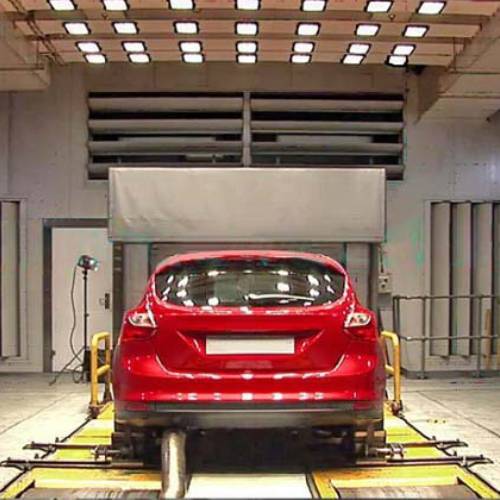
Key Performance Features of the Full Vehicle Environmental Performance Test Chamber
1. Temperature Control
Temperature control is one of the core technologies of a full vehicle environmental test chamber. The chamber should be capable of providing a wide range of temperature conditions, including high-temperature, low-temperature, and ambient-temperature environments, to meet the requirements of different testing scenarios. In addition, the temperature control system must offer high precision and excellent stability to ensure the accuracy and repeatability of test results.
2. Humidity Control
Humidity control is another essential function of the full vehicle environmental test chamber. The chamber should be able to generate various humidity conditions, such as high-humidity and low-humidity environments, to simulate the moisture conditions encountered during actual vehicle operation. Like temperature control, humidity regulation requires high precision and stability to ensure reliable test outcomes.
3. Contaminant Control
The full vehicle environmental test chamber should also possess contaminant control capabilities, enabling the simulation of real-world pollutant conditions such as dust, odors, and airborne particles. The contaminant control system must maintain a high degree of precision and stability to guarantee the accuracy of the testing results.
4. Wind Tunnel Testing Capability
The chamber should incorporate wind tunnel testing functions to simulate aerodynamic characteristics experienced during actual driving, including aerodynamic drag and wind-induced noise. Wind tunnel testing requires highly accurate measurement and control systems, as well as advanced data processing systems, to ensure the precision and repeatability of the test results.
5. Durability Testing
Durability testing is one of the key functions of the full vehicle environmental performance test chamber. Under various environmental conditions, the chamber can conduct long-duration, high-intensity durability tests on complete vehicles and their components to evaluate their durability and reliability throughout real-world service life.
6. Road Condition Simulation
The full vehicle environmental test chamber can also simulate a wide range of driving scenarios, including urban traffic conditions, highway operation, and mountainous terrain. This capability provides comprehensive and realistic testing data to support vehicle research and development.
7. Real-Time Data Acquisition and Monitoring
The chamber should be equipped with real-time data acquisition and monitoring functions, enabling continuous observation of the testing process and instant collection of critical test data. The data acquisition and monitoring system must deliver high precision and operational stability to ensure the accuracy and integrity of the test results.
8. Safety Assurance
The full vehicle environmental performance test chamber should incorporate comprehensive safety protection measures, including emergency stop systems, safety alarms and warning systems, protective markings, and safeguarding facilities. These measures help ensure the safety, reliability, and smooth operation of the entire testing process.
What Extreme Environmental Conditions Can a Full Vehicle Environmental Performance Test Chamber Simulate
The Full Vehicle Environmental Performance Test Chamber is designed to recreate a wide range of extreme and real-world environmental conditions encountered by vehicles throughout their service life. By conducting tests under controlled laboratory conditions, manufacturers can evaluate vehicle performance, durability, and reliability before mass production.
1. Temperature Control
The chamber can accurately simulate severe temperature variations to assess vehicle performance under different climatic conditions.
Typical operating temperature range: -40°C to +85°C
Temperature control accuracy: approximately ±1°C
Capable of reproducing:
Extremely cold winter environments
Scorching desert conditions
Moderate ambient temperatures
Rapid temperature transition scenarios
These tests help verify the performance of powertrains, batteries, HVAC systems, electronic components, and vehicle materials under extreme temperatures.
2. Humidity and Solar Radiation Simulation
To evaluate the effects of moisture and sunlight exposure, the chamber can precisely control humidity and simulate natural solar radiation.
Relative humidity range: 10% to 98% RH
Equipped with a full-spectrum solar simulation system
Maximum solar radiation intensity: up to 1200 W/m²
This capability enables the simulation of:
Tropical hot and humid climates
Dry desert environments
Prolonged sun exposure
Thermal aging caused by ultraviolet and solar heat loading
Such testing is essential for assessing cabin comfort, air-conditioning performance, material aging, coating durability, and the reliability of electrical systems.
3. Wind Speed and Atmospheric Pressure Simulation
The chamber can reproduce aerodynamic and altitude-related operating conditions experienced during vehicle use.
Simulated headwind speed range: 0–120 km/h
Vacuum systems can simulate low-pressure environments equivalent to altitudes of approximately 5.000 meters above sea level
These tests are used to evaluate:
Aerodynamic performance
Wind-induced noise characteristics
Engine combustion efficiency
Cooling system effectiveness
High-altitude starting capability
The performance of electronic and electrical systems in low-pressure environments
4. Special Environmental Simulations
Certain advanced environmental chambers are capable of reproducing additional harsh environmental conditions that vehicles may encounter worldwide.
These include:
Salt spray corrosion testing
Rainfall and water ingress simulation
Snow accumulation and icing conditions
Freeze-thaw cycling tests
Such capabilities allow engineers to recreate challenging environments such as:
Coastal regions with high salt concentrations
Areas where de-icing salts are frequently used during winter
Heavy rainfall conditions
Snow-covered and icy roads
These tests are critical for evaluating corrosion resistance, sealing performance, structural durability, and the long-term reliability of vehicles and components.
Main Testing Items of the Full Vehicle Environmental Performance Test Chamber
The Full Vehicle Environmental Performance Test Chamber supports a wide variety of testing programs throughout the vehicle development process. From conventional performance validation to new energy vehicle assessments and intelligent system verification, it provides comprehensive data to ensure vehicles can operate safely and reliably under diverse environmental conditions.
1. Basic Performance Testing
Basic performance testing evaluates whether a vehicle can start and function properly under extreme environmental conditions.
Typical test items include:
Cold Start Testing – Verifies the vehicle's ability to start and operate normally in extremely low-temperature environments.
Hot Start Testing – Assesses restart performance after prolonged exposure to high temperatures.
Heating Performance Testing – Evaluates the efficiency and effectiveness of the cabin heating system in cold climates.
Air Conditioning and Cooling Testing – Measures the cooling capacity and comfort performance of the HVAC system under high-temperature conditions.
Defrosting and Defogging Testing – Determines the effectiveness of removing frost and condensation from windows and windshields to maintain visibility.
Thermal Balance Testing – Examines the thermal equilibrium of the vehicle to ensure stable operation of the powertrain, cooling systems, and cabin environment.
These tests help determine whether the vehicle can maintain normal functionality and occupant comfort in severe weather conditions.
2. Emissions and Durability Testing
Environmental chambers also play an important role in evaluating vehicle compliance and long-term reliability.
Testing capabilities include:
Exhaust Emissions Testing – Measures whether vehicle emissions comply with applicable regulatory standards and environmental requirements.
High-Intensity Durability Testing – Conducts extended operation under demanding environmental conditions to simulate years of real-world use.
Component Life Evaluation – Assesses the service life and degradation characteristics of critical vehicle components.
Failure Rate Analysis – Identifies potential weaknesses and predicts component reliability throughout the vehicle lifecycle.
These tests enable manufacturers to improve product durability while ensuring compliance with emissions regulations.
3. Dedicated Testing for New Energy Vehicles
With the rapid development of electric vehicles, environmental chambers have become indispensable tools for validating the performance and safety of new energy systems.
Key testing items include:
Thermal Management Evaluation of the Three-Electric Systems (battery, electric motor, and motor controller)
Battery Safety Testing
Fast-Charging Stability Testing
Battery Performance Verification Under Extreme Temperatures
Energy Efficiency Assessment Across the Full Temperature Range
For example, the chamber can verify the energy efficiency and operational performance of electric vehicles within a full-temperature range of –42°C to +60°C, ensuring stable operation in both severe cold and extreme heat.
4. Intelligent System Validation
Some advanced full vehicle environmental test facilities are also equipped to evaluate intelligent vehicle technologies under controlled environmental conditions.
These tests include:
Smart Cockpit Acoustic Testing – Evaluates sound quality and audio performance inside the cabin.
Head-Up Display (HUD) Verification – Assesses display clarity, visibility, and readability under varying temperatures and lighting conditions.
Night Vision System Testing – Verifies the effectiveness and reliability of night vision technologies in simulated environments.
Advanced Driver Assistance System (ADAS) Visual Validation – Evaluates the performance of cameras and vision-based sensing systems under specific climatic and lighting conditions.
Such testing ensures that intelligent systems continue to operate accurately and reliably regardless of environmental challenges.
Application Areas of the Full Vehicle Environmental Performance Test Chamber
The Full Vehicle Environmental Performance Test Chamber has become an indispensable tool throughout the automotive industry. By reproducing realistic environmental conditions within a controlled laboratory setting, it supports vehicle development, quality assurance, regulatory compliance, and the advancement of emerging automotive technologies.
1. New Vehicle Development
The full vehicle environmental test chamber provides comprehensive and realistic testing conditions for new vehicle development. It enables engineers to evaluate the performance, reliability, and safety of new models throughout the design and validation stages.
Its applications in vehicle development include:
Assessing vehicle performance under extreme environmental conditions;
Verifying the functionality of vehicle systems before production;
Identifying potential design weaknesses at an early stage;
Optimizing vehicle calibration and engineering solutions;
Ensuring that new vehicles comply with applicable regulations and industry standards before market launch.
By reducing development risks and shortening validation cycles, the chamber significantly improves the efficiency of automotive research and development.
2. Technological Upgrading and Innovation
As automotive technologies continue to evolve, manufacturers require increasingly sophisticated testing capabilities. By simulating more complex and realistic driving environments, the full vehicle environmental performance test chamber provides strong support for technological innovation and advancement.
It contributes to the development of:
More efficient powertrain technologies;
Advanced thermal management systems;
Intelligent vehicle functions;
Improved vehicle comfort and energy efficiency;
Next-generation automotive solutions designed for diverse global markets.
Through comprehensive environmental validation, manufacturers can accelerate innovation while maintaining high standards of reliability.
3. Quality Control
In automotive manufacturing, environmental testing plays a crucial role in quality assurance. The chamber can perform environmental simulation tests on vehicles produced on the assembly line, helping manufacturers identify and resolve potential quality issues before products reach customers.
Benefits include:
Early detection of manufacturing defects;
Verification of production consistency;
Improvement of process stability;
Reduction of warranty claims and maintenance costs;
Assurance of long-term product reliability.
These capabilities help manufacturers deliver vehicles with consistent and dependable quality.
4. Cabin Air Filter Testing
The full vehicle environmental performance test chamber can also be used to evaluate the filtration efficiency of automotive air-conditioning filters under varying particulate concentrations.
Typical testing applications include:
Measuring filter efficiency under different PM2.5 concentration levels;
Evaluating the purification performance of cabin air filtration systems;
Assessing the effectiveness of particulate removal technologies;
Optimizing HVAC filtration design to improve passenger health and comfort.
Such testing addresses consumers' increasing expectations for superior in-cabin air quality and healthier driving environments.
5. Regulatory Certification
The environmental chamber is widely used for regulatory certification testing to ensure that vehicles comply with national and international requirements.
Common certification tests include:
Vehicle emissions performance testing;
Low-temperature performance certification;
Air-conditioning performance evaluation;
Environmental adaptability assessments;
Verification against applicable automotive standards and regulations.
These tests provide manufacturers with the technical evidence required for product approval and market access in different regions around the world.
The Importance of the Full Vehicle Environmental Performance Test Chamber
As a core infrastructure for automotive research, development, and validation, the Full Vehicle Environmental Performance Test Chamber plays a vital role in accurately reproducing extreme natural environments, comprehensively evaluating vehicle performance under all operating conditions, and significantly improving development efficiency and safety. As the automotive industry transitions toward electrification and intelligent mobility, environmental test chambers have evolved from simple climate simulation facilities into integrated testing platforms capable of coupling multiple physical fields, including temperature, humidity, solar radiation, atmospheric pressure, and wind speed.
Its significance is primarily reflected in the following aspects:
I. Extreme Environmental Simulation: Breaking Geographical Limitations and Enabling Global Adaptability Validation
The Full Vehicle Environmental Performance Test Chamber can artificially recreate extreme and typical climatic conditions encountered around the world within a controlled laboratory environment, eliminating the constraints of geography and seasonality.
Full-Range Temperature Coverage
The chamber offers a wide temperature control range from –40°C to +85°C, while some advanced systems can reach temperatures as low as –70°C.
It enables the simulation of:
Cold-start performance in severe winter conditions;
Battery activity degradation in extremely low temperatures;
Thermal balance challenges in hot climates;
Vehicle functionality under rapid temperature fluctuations.
This capability ensures that vehicles can operate reliably in diverse climates worldwide.
Complex Weather Reproduction
Through highly precise environmental control systems, the chamber can simulate various meteorological conditions, including:
High-humidity environments;
Low-humidity conditions;
Heavy rainfall;
Water spray exposure;
Snow accumulation;
Ice formation and freezing scenarios.
These tests verify:
Vehicle body sealing performance;
Defrosting and defogging effectiveness;
Waterproof and moisture-resistant characteristics of electrical systems.
High-Altitude and Low-Pressure Simulation
To address the demands of plateau and mountainous regions, the chamber can reproduce low-pressure environments equivalent to altitudes ranging from 0 to 5.000 meters above sea level.
Testing focuses on evaluating:
Heat dissipation efficiency under reduced oxygen conditions;
Battery safety at high altitudes;
Stability of electronic control systems;
Overall vehicle reliability across different terrains.
This ensures dependable vehicle operation regardless of geographical conditions.
II. Validation of New Energy Vehicle Core Components: Ensuring Safety and Efficiency of the Three-Electric System
In the field of new energy vehicles, the environmental test chamber has become an indispensable tool for validating the performance and safety of the "three-electric" system.
Battery Thermal Management and Safety Testing
The chamber precisely simulates the effects of different environmental temperatures on battery systems to evaluate:
Thermal runaway risks under high temperatures;
Driving range degradation in cold environments;
Airtightness performance at high altitudes;
Battery swelling risks caused by pressure variations.
These tests provide critical assurance for battery safety throughout the vehicle lifecycle.
Energy Efficiency Optimization and Range Calibration
When integrated with a chassis dynamometer, the chamber enables:
Whole-vehicle energy consumption measurements under specified temperature and humidity conditions;
Optimization of HVAC operating strategies;
Refinement of battery thermal management systems;
Improvement of overall vehicle energy utilization efficiency.
These capabilities contribute directly to extending driving range and enhancing efficiency.
Ultra-Fast Charging Compatibility Testing
Combined with megawatt-level ultra-fast charging systems, the chamber can verify:
Thermal management performance during high-power charging;
Charging stability under extreme environmental conditions;
Safety margins during rapid charging events.
This testing supports the commercialization and reliability of next-generation fast-charging technologies.
III. Comprehensive Performance Evaluation: Realistic Driving Simulation Through Multi-Physics Coupling
Modern environmental test chambers extend beyond climate simulation by integrating wind, solar radiation, and road-load simulation technologies to recreate real driving experiences.
Solar Simulation and Thermal Load Analysis
Equipped with full-spectrum solar simulation systems, the chamber can reproduce the effects of sunlight on vehicle operation.
Applications include:
Interior temperature rise evaluation;
Material aging assessments;
Smart cockpit display visibility verification;
Occupant comfort studies;
Visual safety development.
These tests support both comfort optimization and product durability.
Aerodynamic and NVH Testing
High-speed airflow systems, combined with acoustic technologies, enable the evaluation of:
Aerodynamic drag coefficients;
Wind noise characteristics;
Vehicle aerodynamic performance;
Noise, vibration, and harshness (NVH) behavior.
This helps manufacturers improve efficiency while enhancing ride comfort.
Emissions and Regulatory Certification
Under strictly controlled environmental conditions, the chamber supports regulatory testing such as:
Cold-start emissions evaluations;
Hot-start testing;
Evaporative emissions measurements;
Exhaust emissions certification.
These assessments ensure compliance with China VI regulations and increasingly stringent global emissions standards.
IV. Enhancing Development Efficiency and Quality Control: Shorter Cycles and Lower Risks
Accelerating Development Iterations
Through automated testing procedures and multi-channel data acquisition systems, environmental chambers can reproduce months or even years of natural environmental exposure within a significantly shorter timeframe.
Benefits include:
Reduced development timelines;
Faster product validation;
Increased engineering efficiency;
Accelerated market introduction.
Early Identification of Potential Issues
Testing during the prototype stage allows manufacturers to detect hidden design weaknesses before mass production.
This helps to:
Prevent costly recalls;
Reduce post-launch corrective actions;
Lower warranty expenses;
Improve customer satisfaction.
Standardization and Traceability
Environmental chambers provide highly stable and repeatable testing conditions, ensuring that results are both accurate and comparable.
This creates:
Reliable technical evidence;
Consistent quality control benchmarks;
Strong support for continuous product improvement;
Traceable validation records throughout the development process.
V. Supporting Emerging Technologies: Empowering Intelligent Mobility and the Low-Altitude Economy
As automotive technologies continue to evolve, the application scope of environmental test chambers is expanding beyond traditional vehicles.
Intelligent Cockpit and Communication Validation
By integrating electromagnetic compatibility capabilities, advanced facilities can evaluate:
Vehicle communication systems;
OTA antenna signal stability;
Connectivity performance in complex environments;
Environmental adaptability of intelligent driving algorithms.
These tests support the development of increasingly connected and autonomous vehicles.
Expansion into Emerging Industries
Some cutting-edge environmental chambers have extended their capabilities to support testing for:
Flying cars;
Electric Vertical Take-Off and Landing (eVTOL) aircraft;
Embodied intelligent robots;
Other next-generation mobility solutions.
This expansion opens new opportunities for environmental validation within the low-altitude economy and robotics industries.
Conclusion
The emergence of the Full Vehicle Environmental Performance Test Chamber undoubtedly represents a major breakthrough in automotive research and development. By overcoming the limitations imposed by natural environments, it enables comprehensive vehicle testing under a wide variety of extreme conditions. This not only shortens development cycles and reduces R&D costs, but also significantly improves vehicle performance, quality, reliability, and safety.Looking ahead, as technology advances and the automotive industry continues its transformation toward electrification, intelligence, and sustainability, we anticipate the development of even more sophisticated testing technologies that will drive automotive innovation to new heights.We sincerely welcome friends and partners from around the world to contact us at any time. Whether through email, telephone, or online consultation, our team is always ready to provide professional support. We would be delighted to offer detailed product information, technical specifications, customized testing solutions, and comprehensive service assistance to help you find the most suitable solution for your testing needs.
Previous: What is the apparatus for thermal conductivity?
N e x t : What is the color fastness grade?
