





What is the color fastness grade?
2026/06/16
Share:

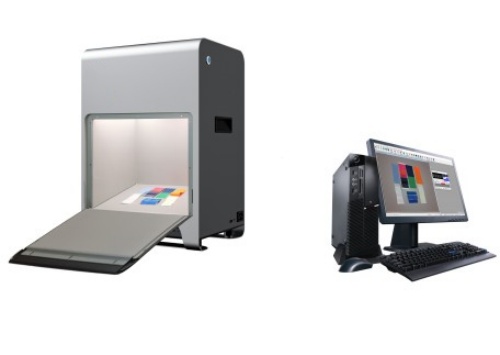
Color Fastness: The "Color Defense Line" of Textile Quality
In the field of textile production and quality inspection, color fastness is one of the most critical indicators used to evaluate product quality. The essence of color fastness assessment lies in the quantification of color differences—transforming visible color changes perceived by the human eye into objective and accurate data indicators. This approach eliminates the limitations of subjective judgment and enables standardized, precise, and consistent quality control.
Color fastness, also known as dyeing fastness or fastness to dyeing, refers to the ability of a textile material to resist various external influences during processing, transportation, and use while maintaining its original color. The evaluation is primarily based on two criteria: the degree of color change of the test specimen itself and the degree of staining on the undyed adjacent fabric. The final fastness rating is determined through a comprehensive assessment of these two aspects.
As a routine and essential component of intrinsic textile quality testing, color fastness testing covers a wide range of specific application scenarios to meet different end-use requirements. Common test categories include color fastness to light, color fastness to weathering, color fastness to washing, color fastness to rubbing, and color fastness to perspiration. In addition, for special textile products or unique service environments, specialized evaluations such as color fastness to chlorine bleaching and color fastness to saliva may also be required. These tests ensure that textile products maintain their appearance, safety, and performance throughout their intended lifecycle.
Principle of the Textile Color Fastness Automatic Grading System
The textile color fastness automatic grading system operates based on the integrated principles of standard light-source imaging, optical data acquisition, color space analysis, and intelligent algorithm-based comparison.
The equipment is equipped with a standard simulated daylight light source that complies with national standards. Inside a fully enclosed, light-interference-free detection chamber, textile samples—after undergoing tests such as rubbing, light exposure, or washing—are captured through high-resolution optical imaging. The system accurately collects chromaticity, brightness, and color difference data from both the color-changing areas and the staining regions of the samples.
The collected color information is then converted into professional color space parameters, which are automatically compared with a national standard gray scale rating database using intelligent computational algorithms. By simulating the visual judgment logic of human inspectors, the system automatically calculates and outputs ratings for color change fastness, staining fastness, as well as fastness levels for dry and wet rubbing, light resistance, and other test categories.
By replacing human visual assessment with machine-based optical detection, the system eliminates subjective human error and environmental lighting interference. This enables standardized, objective, high-precision, and highly repeatable color fastness grading, significantly improving consistency and efficiency in textile quality evaluation.
Structural Design of the Textile Color Fastness Automatic Grading System
The color fastness grade of textiles is an important indicator for evaluating textile quality, and grading is one of the most critical steps in color fastness testing. At present, both domestic and international color fastness evaluation methods mainly include manual grading and instrument-based grading, with manual grading still being the dominant approach. However, manual evaluation is easily affected by external environmental factors and human subjectivity, leading to significant differences in grading results for samples of the same level. In contrast, instrument-based grading is more objective, less affected by external conditions, and provides more stable and consistent results.
System Design Concept
The system is designed to control image acquisition and spectrophotometric color measurement through a color fastness automatic grading workstation. It obtains sample positioning information and color difference data separately, then performs calculation and output to realize automatic evaluation of textile color fastness grades.
The core components of the grading system are the high-performance image acquisition system and the color measurement system. The performance of these two modules directly determines the accuracy of grading results; therefore, strict selection criteria are applied during system design.
1. Image Acquisition System
The image acquisition system is responsible for capturing both the position and color information of the tested sample. It works in coordination with visual recognition and a motorized positioning system to simulate human visual assessment of color depth, enabling accurate evaluation of color fastness.
To ensure sufficient precision, the imaging system is required to have a resolution of no less than 24 million pixels (24 MP).
2. Color Measurement Instrument
The colorimeter (spectrophotometer) is the core component of the grading system, making its selection particularly critical. A suitable instrument should meet the following requirements:
Capable of accurately measuring textile color fastness
Equipped with a light source with a service life of 5 years / 1.5 million measurements
Able to provide data interfaces according to user requirements
Easy to purchase with fast and reliable after-sales service support
3. Positioning System
The positioning system must support three-dimensional movement, with a sufficiently large operating range and no blind spots. Its performance requirements include:
Positioning error less than 0.3 mm
Controllable lifting force, ensuring sufficient sample pressing without causing deformation
System Performance Characteristics
High Accuracy and Consistency:
Based on CIE Lab color space calculations for color difference evaluation, combined with spectral reconstruction or high-resolution image analysis, the system achieves grading results highly consistent with standard gray scales and expert evaluation. The relative standard deviation of repeated measurements is typically below 0.81%, significantly outperforming manual grading.
Non-contact Measurement:
A closed, adjustable standard light box combined with a high-precision imaging capture device eliminates environmental light interference. It enables non-contact measurement of color changes on curved or irregular textile surfaces while preserving sample integrity.
Multi-standard Compatibility:
The built-in algorithm supports international standards such as ISO, AATCC, and GB/T, and can automatically classify both color change and staining levels, outputting standard grades such as 1–5 or 1–8 scale results.
Resistance to Human Interference:
The system completely eliminates the influence of evaluator fatigue, emotional fluctuations, and individual color perception differences, ensuring that data remains comparable and traceable across different operators and time periods.
Operating Procedure of the Textile Color Fastness Automatic Grading System
1. Power-On Preparation
Connect the power supply of the equipment, start the instrument and its supporting software, and allow the system to preheat in standby mode. At the same time, calibrate the light source and grayscale reference standard to ensure that the imaging optical path and illumination environment fully meet the required testing standards.
2. Sample Preparation
After color fastness testing, textile samples should be cut and arranged neatly, ensuring they are flat and free of wrinkles and frayed edges. Prepare different types of specimens separately, including color change samples, staining samples, dry/wet rubbing samples, and light fastness samples, ensuring that the fabric surface is clean and free of stains or contaminants.
3. Sample Placement
Open the test chamber door and place the samples flatly on the sample platform. Ensure correct alignment without tilting or bulging. After positioning, close the chamber door to prevent external stray light from interfering with imaging accuracy.
4. Selection of Test Items
On the operating interface, select the corresponding grading mode according to the test type, such as color change fastness, staining fastness, dry/wet rubbing fastness, or light fastness. The system will automatically match the appropriate national standard evaluation algorithm.
5. Automatic Image Acquisition and Grading
Start the testing process. The system automatically performs high-resolution imaging and collects fabric color data. The built-in algorithm compares the results with the standard gray scale and automatically calculates and outputs the color fastness grade (typically on a 1–5 scale).
6. Data Storage and Output
The system displays grading results and color difference parameters. It can save original images and test data, and generate a complete test report with one click. The report supports export, printing, and archiving.
7. Shutdown and Cleaning
Remove the samples, clean the sample platform, and shut down the software and equipment power supply. Perform routine dust-proof maintenance to ensure the equipment remains in good working condition.
Importance of the Textile Color Fastness Automatic Grading System
The importance of the textile color fastness automatic grading system lies in its use of digital and automated technologies to address the core limitations of traditional manual grading, such as strong subjectivity, low efficiency, and inconsistent standards. It has become a key tool for ensuring textile quality consistency and compliance in international trade.
Core Importance
1. Eliminating human error and ensuring objective results
Traditional manual visual grading is easily influenced by differences in observer vision, fatigue, and ambient lighting conditions, often leading to different experts assigning different grades to the same sample. In contrast, the automatic system calculates color differences based on color space models and algorithmic analysis, providing repeatable and unbiased objective data, significantly reducing disputes in grading results.
2. Improving testing efficiency and laboratory throughput
The system supports batch processing and rapid image acquisition, with single measurement times reduced to the second level. This greatly shortens laboratory turnaround time and meets the modern textile supply chain’s demand for fast response and high efficiency.
3. Unifying international standards and facilitating trade
The system integrates major standards such as ISO, AATCC, and GB/T, ensuring that data generated across different regions and laboratories remains comparable and mutually recognizable. This reduces trade barriers and return risks caused by inconsistencies in standard implementation.
4. Ensuring health safety and brand reputation
Poor color fastness may cause dye molecules or heavy metals to transfer to human skin through sweat and friction, posing potential health risks. The automatic system can detect even slight fading with high precision, helping to eliminate substandard products at the source, thereby protecting consumer safety and enhancing brand reputation.
Technical Advantages
Non-contact measurement:
Prevents contamination or deformation of samples, making it especially suitable for soft, delicate, or specially textured fabrics.
Data traceability:
Automatically stores images and grading reports, supports cloud synchronization and historical review, facilitating quality audits and process improvement analysis.
In summary, this system transforms color fastness evaluation from experience-based judgment into data-driven decision-making, serving as a cornerstone of digital quality management in the textile industry.We sincerely welcome you to contact us or leave a message for further communication. Your valuable feedback and requirements are extremely important to us. Through such interaction, we can better understand your specific needs and provide more detailed, targeted product information and professional support.
Previous: How Do Environmental Test Chambers Improve Vehicle Reliability and Safety?
N e x t : What Is a Plastic Biodegradation Testing System?
