





What Is a Plastic Biodegradation Testing System?
2026/06/16
Share:

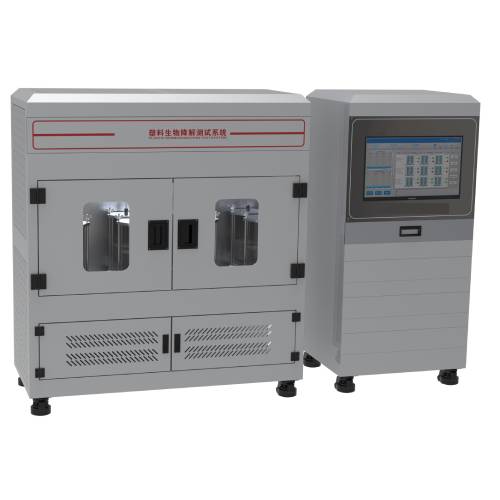
Technical Features of the Plastic Biodegradation Testing System
The plastic biodegradation testing system is an integrated analytical device used to evaluate the microbial degradation capability of materials under specific environmental conditions. Its main technical features are as follows:
High-level automation and intelligent laboratory system
The system integrates testing, data recording, real-time display, and scientific report generation into a single platform. This high level of automation significantly reduces reliance on operator skill, lowers labor requirements, and improves efficiency, saving both time and effort.
Its modular design allows easy upgrading and maintenance. In addition, multiple devices can be connected via a network adapter, enabling seamless interconnection and expanded analytical processing capability.
Real-time gas volume and flow measurement with compositional estimation
The system can measure gas volume and flow in real time and further estimate the main gas components. Its software is specially designed for a wide range of aerobic and anaerobic batch tests requiring accurate gas volume or flow measurement, as well as respiration-based biological metabolic analysis.
Flexible measurement resolution options
Two measurement resolutions are available—2 mL and 9 mL. These can be flexibly configured within the same system according to experimental requirements, allowing the system to meet diverse testing conditions and research needs.
User-friendly operation with remote access capability
The software interface is intuitive and easy to navigate, enabling users to conveniently set up experiments, monitor progress at any time and from any location, and download test data. The system provides a high level of experimental visualization and supports remote access for improved usability.
Real-time temperature and pressure compensation
The system is equipped with real-time temperature and pressure compensation functions, which reduce measurement errors caused by environmental variations. The embedded software standardizes data processing and result calculation, ensuring that data from different laboratories worldwide can be reliably compared.
These high-quality data outputs also enable the extraction of important fermentation kinetics information, helping researchers better understand the dynamic processes and microbial activity characteristics involved in biodegradation testing.
Application Scenarios of the Plastic Biodegradation Testing System
Environmental material research and development:
The system provides essential data support for developing more environmentally friendly plastic products and helps screen materials with better biodegradation performance. By testing the biodegradation behavior of different plastic materials, researchers can understand degradation mechanisms and influencing factors, enabling targeted material design and improvement to develop plastics with higher environmental performance.
Product evaluation and optimization:
Enterprises can use the system to evaluate the biodegradation performance of their products and optimize product design to enhance environmental sustainability. During product development, different formulations and processes can be tested to determine the optimal solution, ensuring products better meet market demands and environmental requirements.
Quality control and compliance verification:
In the production process of plastic products, the system is used to test sample biodegradation performance to ensure compliance with relevant degradation standards and regulations. This helps companies maintain product quality and avoid legal risks and market losses caused by non-compliance.
Scientific research and education:
The system provides an experimental platform for research institutions and universities to study plastic degradation mechanisms and influencing factors, as well as to conduct related teaching activities. Researchers can use the system for in-depth studies and explore new degradation methods and materials, while universities can apply it in teaching to enhance students’ practical skills and research capabilities.
Three Testing Methods of the Plastic Biodegradation Testing System
The plastic biodegradation testing system includes several experimental approaches to evaluate the microbial degradation ability of materials under specific conditions. The three main testing methods are as follows:
Microbial Degradation Method
This method evaluates plastic degradation by inoculating specific microbial communities and observing how they break down plastic materials. It simulates natural environmental microbial degradation processes, making it closer to real-world conditions. Researchers can select different types and combinations of microorganisms to study how various microbial populations affect plastic degradation behavior.
Enzymatic Degradation Method
This approach uses specific enzymes to directly act on plastic materials, simulating the biodegradation process. Enzymes have high efficiency and specificity, enabling them to selectively break chemical bonds within plastic molecules. This method eliminates interference from microbial growth and metabolic activities, allowing for a more direct study of enzymatic effects on plastic degradation.
Biofilm Degradation Method
In this method, microorganisms are cultured on biofilms, enabling plastic materials to degrade on or within the biofilm structure. A biofilm is a complex matrix composed of microorganisms and their extracellular polymeric substances, providing a stable environment that enhances microbial degradation capability. This approach is used to study biofilm formation mechanisms and its influence on plastic biodegradation processes.
The Importance of the Plastic Biodegradation Testing System
The importance of the plastic biodegradation testing system lies in its role as a critical technological bridge connecting material research and development, market access, and environmental protection. It serves as a core safeguard for verifying the authenticity of “biodegradable” claims and promoting the development of a green circular economy. With increasingly stringent global environmental regulations and the widespread implementation of plastic restriction policies, the system demonstrates irreplaceable value in the following four aspects:
1. Foundation for Compliance and Market Access
Under updated national standards and strengthened regulatory frameworks, biodegradation testing has shifted from an optional procedure to a mandatory requirement.
Meeting mandatory standards: According to international and domestic regulations, only materials that pass systematic biodegradation testing—proving that they can be converted into carbon dioxide, water, and biomass under specified conditions—can obtain legal market authorization.
Avoiding legal and commercial risks: Without compliant testing reports or if performance fails to meet standards, companies may face rectification orders, fines, project delays, or even market withdrawal. Certification reports such as CMA/CNAS-accredited documentation are essential for regulatory inspections and export clearance.
2. Combating “Pseudo-biodegradable” Materials and Maintaining Market Order
Some materials on the market only undergo physical fragmentation without true biodegradation, posing even greater environmental risks.
Scientific verification of real biodegradability: The system accurately distinguishes true biodegradation (biomineralization) from mere physical disintegration by monitoring key indicators such as CO₂ evolution, oxygen consumption, fragmentation rate, and residual analysis.
Preventing false claims: Objective and traceable data helps curb misleading marketing practices, protect consumer rights, and guide the industry toward genuinely sustainable materials.
3. Core Tool for R&D Optimization and Quality Control
For material manufacturers, the system is not only a testing tool but also an engine for innovation.
Rapid formulation iteration: In the development of new materials such as PLA (polylactic acid) and PHA (polyhydroxyalkanoates), the system supports multi-chamber parallel testing, enabling rapid comparison of degradation rates and final biodegradation efficiency across different formulations, thereby reducing R&D cycles and costs.
Full-process quality control: From raw materials and masterbatches to final products (e.g., packaging bags, agricultural films), the system enables lifecycle performance evaluation. Strict production-line testing ensures product consistency and prevents non-compliant products from entering the market.
4. Comprehensive Assessment of Environmental and Ecological Safety
Biodegradation testing not only evaluates whether a material disappears but also assesses the environmental impact of its degradation process and byproducts.
Ecotoxicity evaluation: Integrated analysis modules can assess the effects of degradation residues on soil, water, and plant growth (such as seed germination rates and earthworm survival), ensuring that degradation products are non-toxic and do not cause secondary pollution.
Multi-scenario simulation capability: Advanced systems can simulate various end-use environments such as industrial composting, home composting, soil, freshwater, and marine conditions, providing a full assessment of environmental fate and supporting scientific waste management strategies.
In summary, the plastic biodegradation testing system establishes a scientific evaluation framework for biodegradable materials by providing high-precision, multi-dimensional, and standardized testing data. It serves as a powerful tool for regulatory supervision, a technological competitive advantage for enterprises, and an indispensable infrastructure for achieving plastic pollution control and sustainable development goals.We sincerely welcome you to contact us or leave a message so that we can better understand your needs and provide more detailed and comprehensive product information.
Previous: What is the color fastness grade?
N e x t : How Can You Find the Best Pharmaceutical Stability Chamber for Your Needs?
